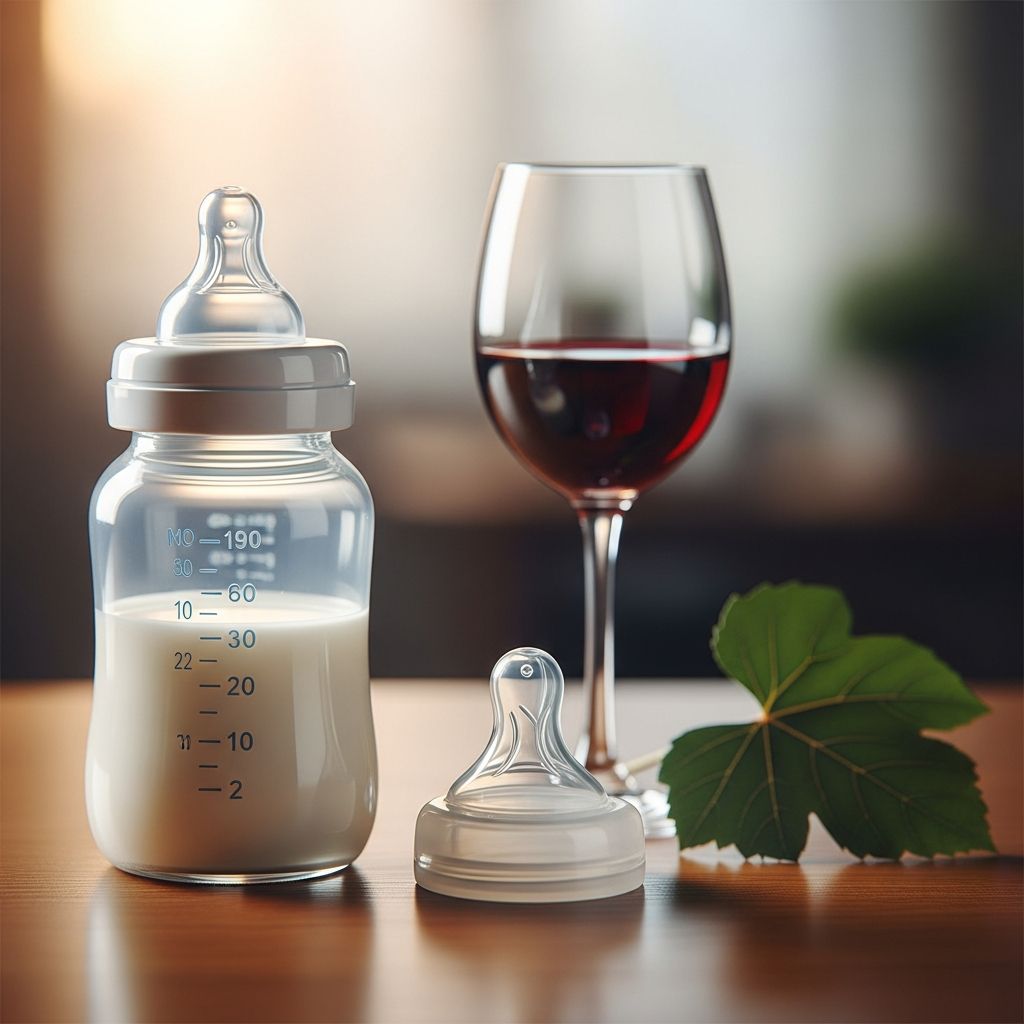
Many breastfeeding parents wonder if they can ever enjoy a drink again, how much alcohol is safe, and what it means for their baby and milk supply. This guide brings together current medical guidance and research so you can make informed choices about drinking while breastfeeding.
How Alcohol Interacts With Breast Milk
Alcohol does not stay only in your stomach or liver. Once you drink, it enters your bloodstream and from there passes into your breast milk in similar concentrations to your blood alcohol level.
- Onset: Alcohol levels in milk usually peak about 30–60 minutes after a drink on an empty stomach, or up to 90 minutes if you drink with food.
- Parallel levels: When your blood alcohol level falls, the alcohol level in your milk falls at roughly the same pace.
- No “trapping” in milk: Alcohol is not stored in your milk; it moves back and forth with the blood. This is why time, not pumping, removes alcohol from milk.
Because milk and blood levels are closely linked, the safest rule of thumb is: if you are sober enough to drive and care for your baby, your milk alcohol level is usually low as well.
How Much Alcohol Is Considered Moderate While Breastfeeding?
Different health organizations use slightly different wording, but their advice is broadly similar: occasional, low-level drinking with careful timing is unlikely to harm a healthy, full-term baby.
| Guidance source | General recommendation |
|---|---|
| National health services (e.g., NHS, Mayo Clinic) | Best to avoid alcohol; if you drink, limit to up to 1 standard drink on a day you choose to drink and wait at least about 2 hours before breastfeeding. |
| Public nutrition programs (e.g., WIC) | Advise avoiding alcohol; if you drink once in a while and baby is at least about 3 months old, wait about 4 hours before feeding. |
| Lactation references (LactMed, professional reviews) | Occasional low-to-moderate drinking with timed feeds is compatible with breastfeeding; heavy or daily use can reduce milk intake and supply. |
One standard drink is typically defined as roughly:
- About 150 ml (5 oz) of wine (~12% alcohol)
- About 350 ml (12 oz) of beer (~5% alcohol)
- About 45 ml (1.5 oz) of spirits (~40% alcohol)
These examples are approximate; stronger drinks or larger pours count as more than one drink.
What Alcohol Can Do to Breastfed Babies
Small amounts of alcohol reach your baby through breast milk. The effect depends on your baby’s age, how much you drink, and how often you drink.
Short-term effects seen in studies
- Reduced milk intake: After 1–2 drinks, babies may drink about 20–23% less milk during the next feeding period, even though mothers often feel a stronger letdown sensation.
- Changes in sleep: Even small amounts of alcohol in human milk have been associated with more disrupted and shorter sleep in infants.
- Behavior changes: Some research and case reports describe infant agitation, lighter or deeper than usual sleep, and weaker sucking after exposure to higher alcohol levels in milk.
Risks from heavy or repeated exposure
Occasional light drinking with careful timing is very different from frequent or heavy use. Studies and clinical reports have raised concerns about:
- Poor growth: Chronic exposure to alcohol-contaminated milk has been linked with lower body weight and slower growth trajectories in children.
- Developmental effects: Some research suggests possible psychomotor delays when mothers drink two or more drinks daily over time.
- Acute intoxication: There are rare but serious case reports of very young infants showing signs of alcohol poisoning when mothers consumed large amounts over a short period.
Premature, medically fragile, or very young newborns may be more sensitive to alcohol because their livers process it more slowly and they rely heavily on small, frequent feeds.
Impact of Alcohol on Milk Production and Letdown
Many myths claim that beer boosts milk supply, but research has consistently found that alcohol can interfere with the hormones that drive milk production and release.
- Oxytocin suppression: Alcohol inhibits oxytocin, the hormone responsible for letdown, which can slow or weaken milk flow during feeds.
- Prolactin changes: Higher doses of alcohol blunt the normal rise in prolactin after nipple stimulation, which may contribute to lower milk production over time.
- Decreased supply with heavy use: Repeated heavy drinking has been associated with reduced milk supply and shorter overall breastfeeding duration.
Some parents feel a warm, strong letdown sensation after drinking and assume supply is increased. In controlled studies, however, infants take in less milk despite the mother’s sensation that flow is stronger.
Planning a Drink: Timing Feeds and Minimizing Risk
If you choose to drink while breastfeeding, planning ahead can help reduce your baby’s exposure and protect your milk supply.
Practical timing strategies
- Nurse or pump right before you drink: Emptying your breasts just before drinking gives your body more time to clear alcohol before the next feed.
- Allow time for each drink: Many experts advise waiting about 2 hours per standard drink before breastfeeding or pumping milk for your baby.
- Use previously expressed milk: Keep a small stash of frozen or refrigerated milk or have formula available if feeds fall before the waiting period has passed.
- Avoid routine daily drinking: Occasional use is less concerning than patterns that involve alcohol most days of the week.
Do you need to “pump and dump”?
Simply discarding your milk does not make alcohol leave your body faster. Alcohol clears from milk only as it clears from your blood.
- You may still pump for comfort: If you are skipping or delaying a feed while waiting for alcohol to clear, pumping can prevent engorgement and help maintain supply.
- Label pumped milk accurately: If you pump while alcohol might still be in your system, store and label that milk. You can decide later—with your clinician’s guidance—whether to use it or discard it.
Situations Where Avoiding Alcohol Is Strongly Recommended
Certain scenarios call for greater caution or complete avoidance of alcohol during breastfeeding.
- Heavy drinking or binge episodes: If you drink to the point of intoxication, you should not breastfeed until you are fully sober, both for your baby’s safety and your ability to provide safe care.
- Dependence or difficulty cutting back: If you find it hard to limit alcohol, consider this a health signal and speak with a healthcare professional for support.
- Fragile or premature infants: Extra caution is warranted for preterm babies or those with medical problems, who may be more vulnerable to alcohol exposure.
- Co-sleeping while intoxicated: Alcohol significantly increases the risk of unsafe sleep situations; parents who have been drinking should not share a sleep surface with their baby.
Myths and Misconceptions About Alcohol and Nursing
Misleading advice can make decision-making harder. Here are some common myths and what research shows instead.
- Myth: “Beer increases milk supply.”
Reality: Alcohol-containing drinks can delay letdown and reduce infant milk intake. Any temporary sensation of stronger letdown does not reflect increased supply. - Myth: “Pumping after you drink gets the alcohol out of your milk.”
Reality: Pumping removes milk currently in the breast but does not affect how quickly alcohol leaves your bloodstream or future milk. Only time lowers alcohol levels. - Myth: “If the baby seems fine, the amount you drink doesn’t matter.”
Reality: Babies may still take in less milk, sleep differently, or experience subtle effects even if they do not appear outwardly ill. Studies show measurable changes in intake and sleep with relatively small amounts of alcohol. - Myth: “All breastfeeding parents must completely abstain.”
Reality: Major medical organizations generally say it is safest not to drink, but they also note that occasional low-level drinking with careful timing is compatible with breastfeeding for most healthy, full-term infants.
Balancing Your Well-being and Your Baby’s Safety
Your mental health and social life matter, especially in the postpartum period. For some, the option of an occasional drink can feel like a welcome return to normalcy; for others, abstaining may feel simpler or safer. Both choices are valid.
When deciding what works for your family, consider:
- Your baby’s age and health status
- How often and how much you would like to drink
- Your own medical history and any medications
- Available support (someone sober to help with baby care)
If you are unsure, discussing your specific situation with a pediatrician, lactation consultant, or obstetric clinician can provide tailored guidance.
Frequently Asked Questions About Alcohol and Breastfeeding
Can I have a single glass of wine and still breastfeed?
For a healthy, full-term baby, many experts consider up to one standard drink occasionally compatible with breastfeeding if you wait at least about 2 hours before nursing or pumping milk for your baby. If you prefer a wider safety margin, you can wait longer or feed previously expressed milk.
How long should I wait to breastfeed after two drinks?
A common rule is to allow roughly 2 hours per standard drink, so for two drinks, around 4 hours is often recommended before breastfeeding or using that milk for your baby. This timing can vary with your body weight, food intake, and overall health, so when in doubt, waiting longer is more cautious.
Is there ever a time I must not breastfeed after drinking?
If you feel drunk, unsteady, or too impaired to safely hold and care for your baby, you should not breastfeed until you are fully sober. Use previously expressed milk or formula, and seek help from a sober adult to care for your baby during that time.
Does non-alcoholic beer or wine affect my baby?
Most non-alcoholic drinks contain very small amounts of alcohol. Studies of low-alcohol beers (about 0.4% alcohol) have found either undetectable or extremely low alcohol levels in breast milk, unlikely to affect infants. Always check labels and choose truly low- or no-alcohol options if you want to minimize exposure.
I drank before I knew I was pregnant and I’m breastfeeding now. Did I harm my baby?
Past drinking before pregnancy recognition is common and usually not a reason to stop breastfeeding now. The more important question is how you drink currently. If your baby is growing well and your healthcare team is not concerned, you can focus on making informed choices going forward and seek personalized advice if you are worried.
Should I avoid alcohol completely if I’m trying to increase my milk supply?
If you are working to build or recover supply, avoiding alcohol is a reasonable strategy. Alcohol can interfere with letdown and, in heavier amounts, may reduce production over time. Frequent effective milk removal (nursing or pumping) and support from a lactation professional will be more helpful than any drink marketed as a supply booster.
References
- Breastfeeding and drinking alcohol — NHS. 2023-10-16. https://www.nhs.uk/baby/breastfeeding-and-bottle-feeding/breastfeeding-and-lifestyle/alcohol/
- Alcohol – Drugs and Lactation Database (LactMed) — National Library of Medicine. 2021-12-13. https://www.ncbi.nlm.nih.gov/books/NBK501469/
- Alcohol and breastfeeding: What are the risks? — Contemporary OB/GYN. 2020-08-01. https://www.contemporaryobgyn.net/view/alcohol-and-breastfeeding-what-are-the-risks-
- Breastfeeding and Alcohol, Drugs, and Smoking — USDA WIC Breastfeeding Support. 2021-05-10. https://wicbreastfeeding.fns.usda.gov/breastfeeding-and-alcohol-drugs-and-smoking
- Boozing while breastfeeding impacts health of newborns — University of California Riverside News. 2023-04-19. https://news.ucr.edu/articles/2023/04/19/boozing-while-breastfeeding-impacts-health-newborns
- When can you breastfeed after drinking alcohol? — Nebraska Medicine. 2023-02-02. https://www.nebraskamed.com/health/questions-and-answers/womens-health/you-asked-we-answered-when-can-you-breastfeed-after
- Breastfeeding and alcohol: Is it OK to drink? — Mayo Clinic. 2022-07-22. https://www.mayoclinic.org/healthy-lifestyle/infant-and-toddler-health/expert-answers/breast-feeding-and-alcohol/faq-20057985
- Alcohol and breastfeeding — La Leche League GB. 2022-06-01. https://laleche.org.uk/alcohol-and-breastfeeding/