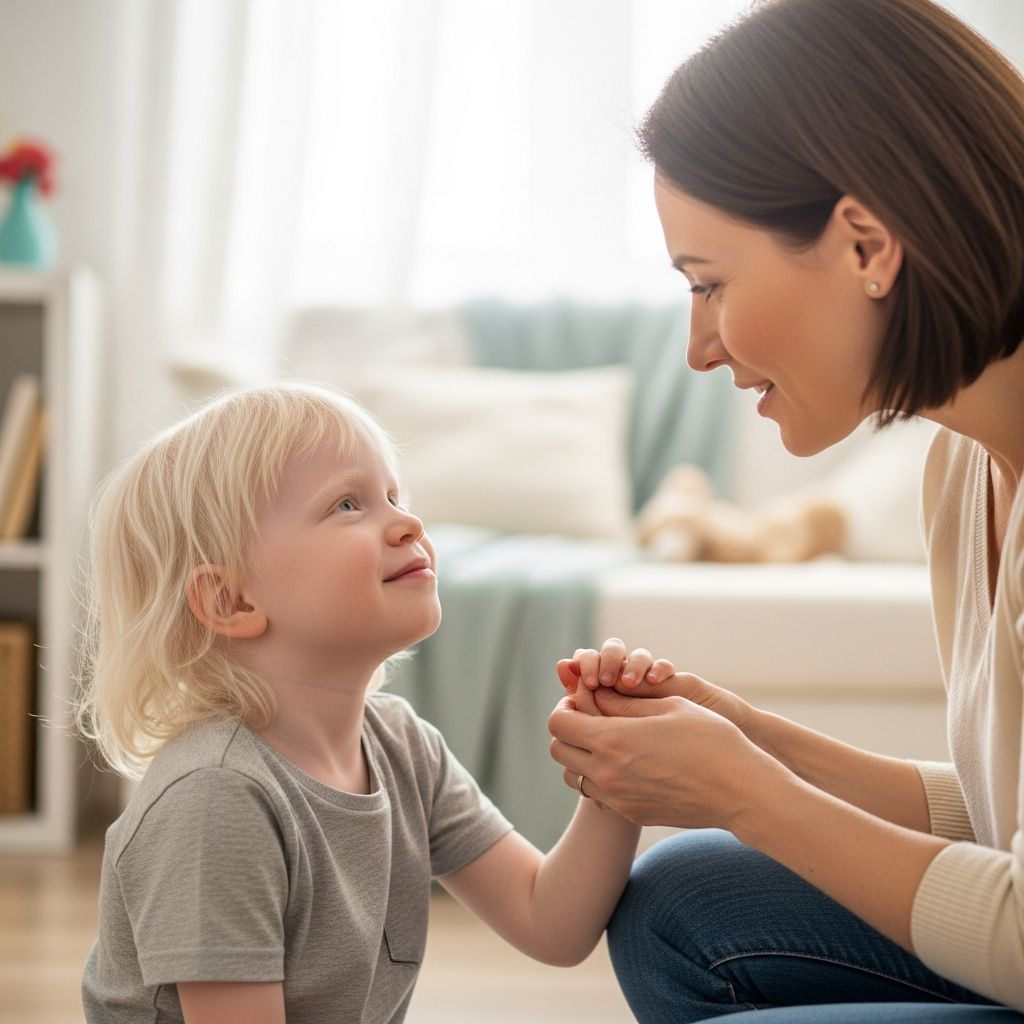
Albinism is a lifelong genetic condition that affects how much pigment (color) a person’s body makes for the skin, hair, and eyes. It can feel worrying at first, but with the right medical care, sun protection, and emotional support, most children with albinism can grow, learn, and thrive like their peers.
How Pigment Works and Why Albinism Happens
To understand albinism, it helps to start with melanin, the pigment that gives color to the skin, hair, and eyes. In albinism, certain genes involved in making or handling melanin do not work in the usual way, so the body makes very little or, in some types, almost no melanin.
These gene changes are present at birth and are inherited, meaning they are passed down from parents through their DNA. Parents may carry these gene changes without having albinism themselves, and only discover this when they have a child with the condition.
Different Ways Albinism Can Affect the Body
Albinism is not the same for everyone. The amount of pigment can vary from person to person, even within the same family, and different types of albinism affect different parts of the body.
- Oculocutaneous albinism (OCA): Involves the skin, hair, and eyes. Children may have very light skin and hair and vision differences from early infancy.
- Ocular albinism (OA): Involves mainly the eyes. Skin and hair may look more typical for the child’s family background, but there are specific vision changes.
- Albinism with additional conditions: In some rare genetic syndromes, albinism appears along with issues such as bleeding problems, frequent infections, or lung or bowel disease. In these cases, a specialist team usually follows the child closely.
Health professionals use a combination of appearance, eye exams, family history, and sometimes genetic testing to better understand which type of albinism a child has.
Common Signs Parents May Notice
Some signs of albinism are visible shortly after birth, while others become clearer as a child grows and starts to use their vision more actively. Not every child will show every sign, but certain features are very common.
Skin and Hair Features
- Very light skin compared with parents or siblings, especially in families with naturally darker complexions.
- Pale blond, white, or light reddish hair, although some children with albinism may have light brown or darker hair.
- Skin that burns easily in the sun and rarely tans, even with brief sun exposure.
Eye and Vision Features
- Eyes that appear very light blue, gray, hazel, or light brown, sometimes seeming pinkish in certain lighting.
- Sensitivity to bright light, leading a child to squint, turn away, or prefer dim environments.
- Small, quick, back-and-forth eye movements that the child cannot control (called nystagmus).
- Eyes that do not look in exactly the same direction at the same time, sometimes called a “crossed eye” or strabismus.
- Difficulty seeing details, such as recognizing faces from across a room or reading small print, even with glasses.
Many children with albinism also take a little longer to coordinate hand–eye movements, so they may seem clumsy at first, but this often improves with time and practice.
How Doctors Diagnose Albinism
If parents or healthcare providers notice features that suggest albinism, the child is usually referred to an eye specialist (ophthalmologist) or a pediatric specialist for a detailed evaluation. An early diagnosis helps families plan for school supports, visual aids, and sun protection routines.
The evaluation often includes a physical exam, a careful look at the eyes, and questions about family history. In some cases, genetic testing is available to confirm the specific type of albinism and to give parents more information about the chance of having another child with the condition.
| Area Checked | What the Clinician Looks For |
|---|---|
| Skin and hair | Amount and pattern of pigment compared with family members, presence of sun damage, and overall skin health. |
| Eyes | Eye color, light sensitivity, eye movements, eye alignment, and overall structure of the front and back of the eye. |
| Vision | Ability to see near and far objects, clarity of vision, depth perception, and whether glasses or other devices help. |
| Family history | Relatives with albinism or unexplained vision problems, patterns that suggest a genetic condition. |
| Genetic testing (when offered) | Specific gene changes that explain the child’s albinism and guide counseling for the family. |
How Albinism Affects Vision
Albinism changes how the eyes develop before birth, not just how they look on the outside. Because melanin helps guide the growth and wiring of the eye, low pigment can affect several parts of the visual system, from the retina in the back of the eye to the way signals travel to the brain.
Children with albinism usually have some level of low vision, which means that even with glasses they may not see as clearly as other children. However, many can read print, move around independently, and participate in regular classes with the right supports.
Common Vision Differences
- Blurry vision caused by differences in how the front of the eye is shaped or how the retina has formed.
- Difficulty seeing small print or distant objects, such as the board at school, street signs, or faces far away.
- Reduced depth perception, which can make catching a ball or judging steps and curbs more challenging.
- Eye misalignment and nystagmus, which can make it harder for the eyes to work together efficiently.
Because each child’s vision is unique, regular visits with an eye specialist and early involvement of a low-vision team or teacher of students with visual impairments can make a big difference.
Sun Safety and Skin Care
Children with albinism are especially vulnerable to sun damage because their skin has less natural protection from ultraviolet (UV) rays. Sunburn can happen quickly, even on cloudy days or through car windows, so building careful sun habits early is important.
Good sun protection not only prevents painful burns but also helps lower the long-term risk of skin changes and skin cancer in adulthood. Parents and caregivers play a key role in teaching children that sun safety is a normal, everyday part of self-care.
Daily Sun Protection Checklist
- Use a broad-spectrum sunscreen with a high SPF on all exposed skin, and reapply it as recommended, especially after swimming or sweating.
- Choose wide-brimmed hats that shade the face, ears, and neck, and encourage children to keep them on during outdoor play.
- Dress children in tightly woven, long-sleeved shirts and long pants or skirts when possible, or use clothing labeled with UV protection.
- Plan outdoor activities for early morning or late afternoon, when the sun’s rays are less intense, and seek shade whenever possible.
- Schedule regular skin checks with a healthcare provider to monitor for any unusual spots, moles, or areas of damage.
Medical Care and Helpful Treatments
There is currently no way to change how much melanin the body makes in albinism, but there is a lot that medical teams can do to support a child’s health and functioning. The goal of treatment is to protect the skin and eyes and to make the most of the child’s vision.
Care often involves a team that may include a pediatrician, dermatologist, ophthalmologist, low-vision specialist, and sometimes a genetic counselor. Working together, they can create a plan that fits the child’s age, type of albinism, and daily life.
Common Supports and Interventions
- Glasses or contact lenses: To correct nearsightedness, farsightedness, or astigmatism and sharpen vision as much as possible.
- Tinted lenses or sunglasses: To reduce light sensitivity and make outdoor and indoor lighting more comfortable.
- Low-vision devices: Such as magnifiers, large-print materials, or electronic tools that enlarge text or adjust contrast.
- Eye muscle surgery (in some cases): To reduce severe eye misalignment or nystagmus, which may help head posture or comfort, even if it does not fully normalize vision.
- Regular monitoring: Follow-up appointments to track any vision changes, adjust prescriptions, and check skin health.
School, Learning, and Classroom Support
Most children with albinism attend mainstream schools, and with a few adjustments, they can participate fully in classroom activities. The key is to recognize that low vision and light sensitivity can affect reading, writing, and seeing the board, and then plan around those needs.
Parents, teachers, and vision specialists can work together to create an educational plan that ensures the child has equal access to information and feels included in all aspects of school life.
Practical Classroom Strategies
- Seat the child near the front of the room and away from glare from windows or bright lights.
- Allow the child to move closer to the board or presentation area whenever needed, without drawing unnecessary attention.
- Offer materials in large print or digital formats that can be zoomed in on tablets or computers.
- Use high-contrast markers and fonts on the board and handouts, and avoid pale colors that are difficult to see.
- Include the child and family in discussions about what helps or hinders learning, and adjust the plan as the child grows.
| Challenge | Possible Accommodation |
|---|---|
| Difficulty seeing the board | Front-row seating, enlarged copies of board work, or access to digital notes. |
| Strain from bright lights | Permission to wear hats or tinted glasses indoors and adjustments to classroom lighting. |
| Slow reading speed | Extra time on tests and assignments and electronic devices that enlarge text. |
| Outdoor activities in strong sun | Shade breaks, flexible scheduling, and sun-protective clothing written into school plans. |
Emotional Well-Being and Self-Esteem
Albinism affects appearance in a visible way, which can sometimes lead to questions, stares, or unkind comments, especially as children reach school age. Parents can prepare their child with simple explanations and reassure them that their differences are just one part of who they are.
Building strong self-esteem starts with how adults talk about albinism at home. When caregivers speak calmly, use clear language, and focus on the child’s skills and personality, children learn to see themselves as capable and deserving of respect.
Ways to Support Confidence
- Practice age-appropriate scripts for answering questions, such as short, honest statements about why their hair or eyes look different.
- Encourage friendships and activities that highlight strengths—whether in music, art, technology, storytelling, or sports adapted to their visual needs.
- Model positive attitudes by treating albinism as something to understand and manage, not as something to hide or be ashamed of.
- Watch for signs of teasing or bullying and work closely with schools to create a safe, inclusive environment.
- Consider connecting with other families or support groups so children can meet peers who share similar experiences.
Family Planning and Genetic Questions
Many parents naturally wonder whether future children might also have albinism and what this means for other family members. Because albinism is genetic, the chance of having another child with the condition depends on which type is present and which genes are involved.
A genetic counselor can explain inheritance patterns in plain language, discuss testing options for parents or siblings, and help families consider their choices for the future. This information can be reassuring and empowering rather than frightening when presented clearly and respectfully.
Living Well With Albinism
While albinism brings certain medical and social challenges, it does not limit a child’s potential to lead a full and meaningful life. With proper sun protection, regular eye care, and supportive environments at home and school, children with albinism can grow into independent adults who pursue education, work, relationships, and interests like anyone else.
Parents who learn about the condition, advocate for needed services, and encourage open conversation about differences help their children feel understood and supported. Over time, many families find that albinism becomes one important part of their story—not the entire story.
Frequently Asked Questions About Albinism
Is albinism contagious?
No. Albinism is not an infection and cannot be passed from person to person through contact. It is a genetic condition present from birth, caused by changes in certain genes that affect pigment production.
Do children with albinism have other health problems?
Most children with common forms of albinism are otherwise healthy aside from their vision and skin sensitivity. However, a few rare syndromes combine albinism with bleeding problems, immune issues, or other organ concerns, so it is important to follow the guidance of specialists if such a syndrome is suspected.
Can glasses “fix” the vision problems in albinism?
Glasses and contact lenses can correct nearsightedness, farsightedness, or astigmatism and often improve clarity, but they cannot completely change how the eyes developed before birth. Many children still have some level of low vision and benefit from additional tools like magnifiers or large-print materials.
Will my child’s appearance change over time?
Some children with albinism gain a bit more pigment in their hair, skin, or eyes as they grow, while others remain very light. These changes are usually gradual and do not mean the albinism is going away, since it is a lifelong genetic trait.
Can people with albinism drive or live independently as adults?
Many adults with albinism live independently, work in a variety of careers, and, depending on their level of vision and local regulations, are able to drive using appropriate visual aids. Early support with vision services, orientation and mobility skills, and self-advocacy can help children work toward those goals.
Where can families find support?
Support can come from several places: healthcare providers with experience in albinism, teachers and school teams, local or national organizations focused on visual impairment, and online or in-person support groups for families living with albinism. Connecting with others who share similar experiences often provides both practical tips and emotional reassurance.