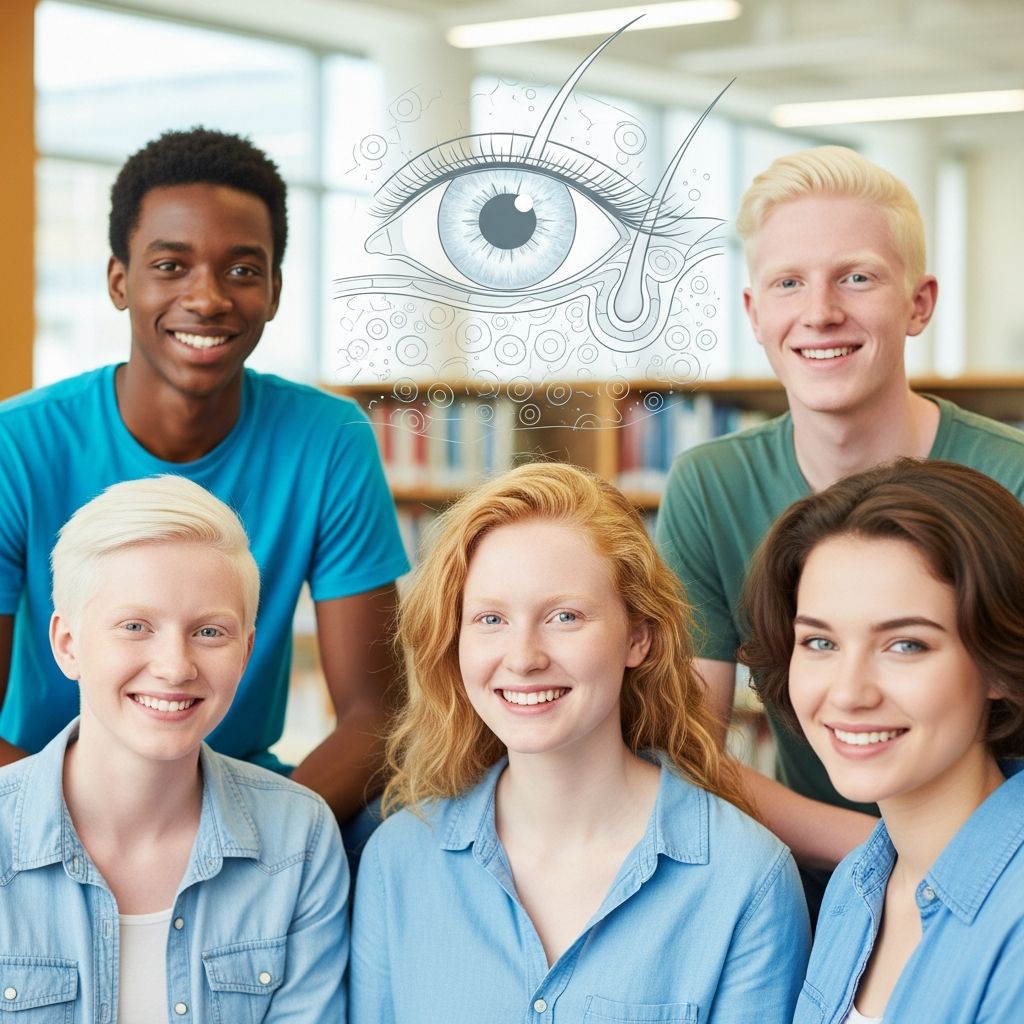
Albinism is a genetic condition that affects the color of a person’s skin, hair, and eyes, and it can also change how clearly they see.
Even though it may make someone look different from their family or classmates, albinism itself is not an illness that spreads, and many people with it live active, healthy lives.
How Albinism Affects the Body
Albinism happens when the body makes less of a natural pigment called melanin, or in some cases almost none at all.
Melanin is responsible for the color of skin, hair, and eyes, and it also plays an important role in how the eyes develop before birth, which is why vision is often affected.
- Less melanin usually means lighter skin than close relatives.
- Hair can look white, very light blond, light brown, or even reddish depending on the type of albinism and a person’s ethnic background.
- The irises of the eyes may appear blue, gray, green, light brown, or sometimes seem reddish in certain light.
Types of Albinism Explained Simply
Not all albinism looks the same, because several different genes are involved and each type influences the body in its own way.
Doctors usually divide albinism into two main groups: those that affect the skin, hair, and eyes together and those that mainly affect the eyes.
| Type | Main Features | Who It Affects |
|---|---|---|
| Oculocutaneous albinism (OCA) | Affects skin, hair, and eyes; pigment is much lighter than usual; vision problems are common. | Can occur in people of any sex and any ethnic background. |
| Ocular albinism (OA) | Mostly affects the eyes and vision; skin and hair can look closer to family members’ coloring. | Often occurs more frequently in males in some forms. |
Some rare genetic syndromes include a form of albinism along with other health issues, so people with those conditions usually see specialists for additional testing and care.
What Albinism Looks and Feels Like
The most noticeable sign of albinism is very light skin compared with family members of the same background, especially in people who come from families with darker complexions.
Because melanin is reduced, the skin tends to burn faster in the sun and usually does not tan, making sun care especially important.
Common physical features
- Pale skin that may freckle or burn quickly in sunlight.
- Hair that ranges from white or silvery to light blond or light brown.
- Eye colors that are lighter than other family members, such as light blue, gray, green, or pale brown.
How the eyes can be affected
Because melanin helps guide the development of the eyes, people with albinism often have changes in how the retina and optic nerve form, and this can reduce sharpness of vision.
Teens may notice that they have trouble seeing small print, seeing the board at school, or focusing on objects that are very near or far.
- Rapid, side-to-side eye movements called nystagmus.
- Eyes that do not point in the same direction (sometimes called a “lazy eye” or strabismus).
- Sensitivity to bright light or glare, known as photophobia.
- Difficulty with depth perception or judging distances, especially in sports or driving practice.
Genetics: How Albinism Is Inherited
Albinism is caused by changes in specific genes that tell the body how to make or handle melanin, and these gene changes are passed from parents to children.
In many cases, both parents carry one changed gene but do not have albinism themselves, and when two of these changed copies come together in a child, that child has the condition.
- Most forms that affect skin, hair, and eyes follow an autosomal recessive pattern, meaning a person needs two changed copies of the gene.
- Some forms that mainly affect the eyes are linked to a gene on the X chromosome, so they may show up more in males.
- Genetic counseling can help families understand the chances of having another child with albinism.
Health, Vision, and Skin Care
Most teens with albinism do not have more infections or general illnesses than others, but their vision and skin need extra protection and attention.
Regular checkups with eye specialists and careful sun safety habits make a big difference in comfort and long-term health.
Eye care tips
- See an eye doctor (an optometrist or ophthalmologist) regularly for eye exams and updated prescriptions.
- Use glasses or contact lenses that correct focusing problems like nearsightedness, farsightedness, or astigmatism if recommended.
- Ask about low-vision aids, such as magnifiers, large-print materials, or electronic devices that enlarge text.
- Wear sunglasses or clip-on shaded lenses outside to reduce glare and light sensitivity.
Sun protection habits
Because lower melanin levels reduce the body’s natural protection against ultraviolet (UV) rays, people with albinism face a higher risk of skin damage and skin cancers over time.
Effective sun safety is not about avoiding the outdoors, but about using smart strategies every day.
- Apply a broad-spectrum sunscreen with a high SPF to all exposed skin, and reapply as directed, especially after swimming or sweating.
- Wear wide-brimmed hats, long sleeves, and long pants made from tightly woven fabrics when in strong sunlight.
- Seek shade during midday hours when the sun’s rays are strongest.
- Use UV-blocking sunglasses to protect both the eyes and the delicate skin around them.
School, Sports, and Everyday Life
Teens with albinism can join in sports, clubs, and other activities, but may need a few adjustments so they can see well and stay comfortable in bright light.
Simple changes in the classroom or on the field often make a big difference and help reduce frustration.
Classroom supports
- Sitting closer to the board or front of the room to see notes and presentations better.
- Using large-print textbooks, digital copies, or screen-magnification tools on tablets and laptops.
- Asking teachers for handouts or slides in advance to read them at a comfortable distance.
- Making sure lighting is not shining directly into the eyes, which can cause glare and discomfort.
Sports and outdoor activities
- Choosing sports where depth perception challenges are easier to work around, or practicing extra to build skills and confidence.
- Wearing hats, sunscreen, and UV-protective clothing during outdoor practices and games.
- Talking with coaches about vision needs so they understand why certain positions or visual aids might work better.
Feelings, Identity, and Social Life
Looking noticeably different from friends or relatives can be emotionally challenging, especially in the teen years when fitting in feels very important.
Some teens with albinism experience curiosity, staring, or unkind comments, but many also find supportive peers, teachers, and online communities that help them feel accepted.
Building confidence
- Learning accurate facts about albinism can make it easier to answer questions from classmates confidently.
- Finding role models with albinism in media, advocacy groups, or local communities can boost self-esteem.
- Talking with a counselor or therapist can help manage stress, anxiety, or sadness related to feeling different.
- Staying involved in hobbies and interests shifts focus from appearance to skills and personality.
Handling questions and myths
People sometimes have mistaken ideas about albinism, such as thinking it only affects certain ethnic groups or that it is always linked to poor health, which is not accurate.
Short, direct responses like “It’s a genetic condition that affects my pigment and vision, but I’m healthy” can help correct myths without turning every conversation into a long explanation.
When to See a Doctor
Teens with albinism should stay in contact with eye specialists, skin doctors, and their regular healthcare providers to stay ahead of any issues.
New or changing skin spots, worsening vision, or headaches from squinting or eye strain are all reasons to ask for a medical appointment.
- Regular eye exams to track changes in vision and adjust prescriptions.
- Skin checks to look for sun damage or early signs of skin cancer, especially for those who spend a lot of time outdoors.
- Genetic counseling for families who want to understand inheritance patterns or future pregnancy risks.
Quick Facts About Albinism
- Albinism is a genetic, inherited condition; it is not contagious.
- It affects people of all races and ethnic backgrounds worldwide.
- Most people with albinism have some level of permanent vision difference.
- Proper sun protection greatly lowers the risk of serious skin problems later in life.
- With support, accommodations, and self-advocacy, teens with albinism can succeed in school, sports, and future careers.
FAQs About Albinism
Is albinism a disease that can be cured?
Albinism is not an infection or a temporary illness; it is a lifelong genetic difference in how the body makes melanin, and there is currently no way to change that.
Even though the underlying gene change cannot be reversed, many of the challenges linked to albinism, such as vision issues and sun sensitivity, can be managed with medical care, glasses, low-vision aids, and careful skin protection.
Can someone with albinism play sports or drive?
Many people with albinism participate in sports, from school teams to recreational leagues, though they may need small adjustments such as choosing positions where depth perception matters less or using shaded eyewear in bright light.
Whether a person can drive depends on the laws in their region and their individual level of vision, and eye specialists can help determine if they meet the standards or if adaptive devices might help.
Does albinism only affect appearance?
Albinism clearly affects physical appearance by making skin, hair, and eyes lighter, but it also affects how the eyes are built and how well they work.
Vision challenges and higher sensitivity to sunlight are part of the condition, so it is important to think of albinism as affecting both appearance and certain aspects of health.
Can people with albinism have children without albinism?
Yes, people with albinism can have children whose pigment looks typical, because the chance of passing on the condition depends on which gene changes are present in both parents.
Genetic counseling gives families personalized information about how albinism is inherited and what the odds are for each pregnancy.
Is it okay to ask someone about their albinism?
Curiosity is natural, but questions should always be respectful and recognize that not everyone wants to talk about personal health details.
If someone chooses to share, listening carefully and avoiding jokes or stereotypes helps create a more supportive and inclusive environment.