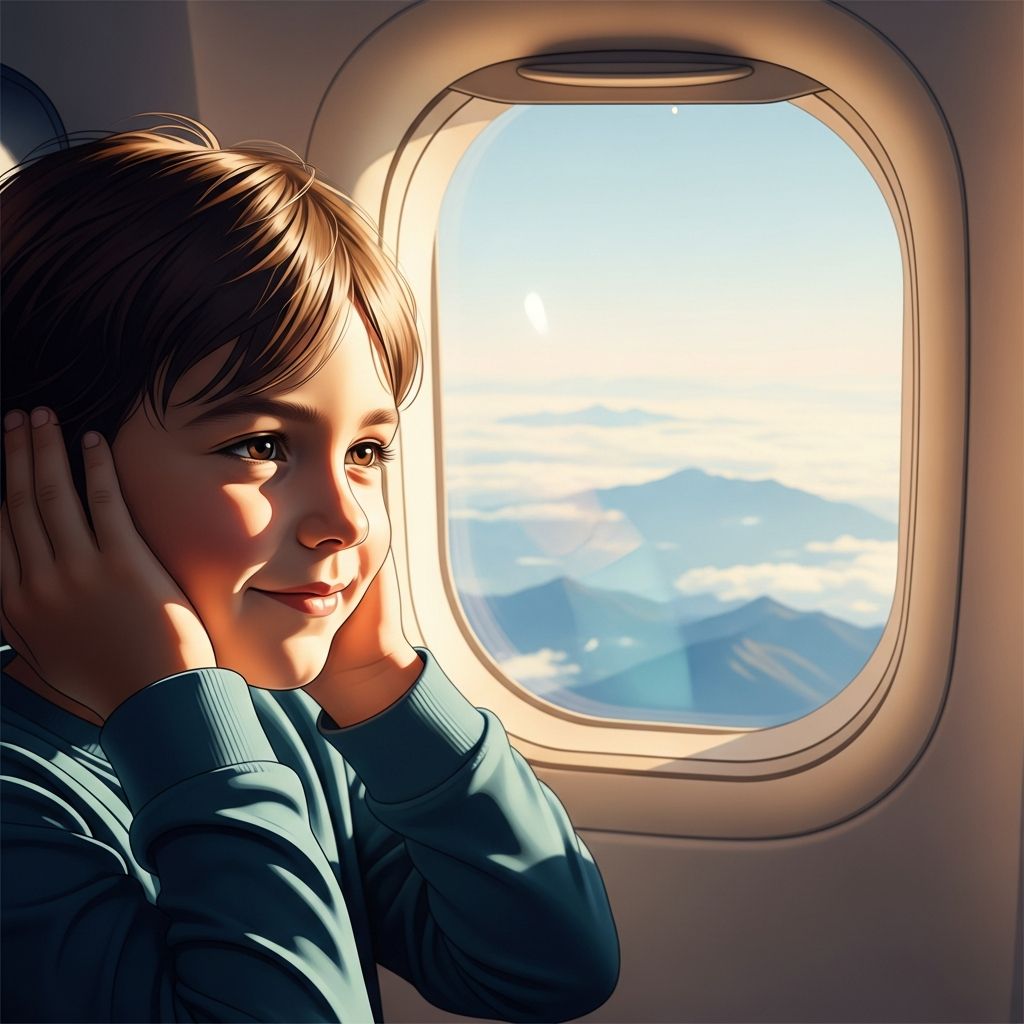
Many children complain that their ears hurt during takeoff and landing, and some even cry from the pain. This common problem, often called “airplane ear” or ear barotrauma, happens when the air pressure around your child changes faster than their ears can adjust. Understanding why it happens and how to prevent it can make family air travel far more comfortable.
What Is “Airplane Ear” in Children?
Airplane ear is the discomfort, pain, or pressure a child feels in one or both ears during a flight, particularly when the plane is climbing shortly after takeoff or descending for landing. It can also happen in situations with quick pressure changes, like mountain driving or scuba diving, but flying is by far the most common trigger for kids.
The medical term for this problem is ear barotrauma. It usually causes temporary symptoms and goes away once the pressure equalizes, but in some children it can be quite painful and, rarely, lead to complications like fluid buildup or eardrum injury.
How the Ear Balances Pressure
To understand why kids get airplane ear, it helps to know a little about ear anatomy. Each ear has three main parts:
- Outer ear: the visible ear and ear canal where sound enters.
- Middle ear: an air-filled space behind the eardrum that contains tiny hearing bones.
- Inner ear: the part that sends sound and balance information to the brain.
A narrow passage called the Eustachian tube connects the middle ear to the back of the nose and upper throat. Its job is to:
- Let air move in and out of the middle ear.
- Keep air pressure on both sides of the eardrum roughly equal.
- Drain normal fluid from the middle ear.
The Eustachian tube opens briefly when your child swallows, yawns, or chews, allowing pressure to equalize. In babies and young kids, these tubes are narrower and more horizontal, which makes them clog more easily and can increase the risk of airplane ear.
Why Kids’ Ears Hurt on Planes
When an airplane changes altitude, the pressure inside the cabin also changes. Even though the cabin is pressurized, it still does not match ground-level pressure, and it changes fastest during takeoff and landing.
Ear barotrauma happens when:
- Cabin pressure changes rapidly during ascent or descent.
- The Eustachian tube does not open well.
- Pressure becomes different on each side of the eardrum.
When pressure is not equal, the eardrum is pulled inward or pushed outward, which can cause a feeling of fullness, popping, or pain. If the imbalance is strong or lasts long enough, the middle ear can develop fluid or, rarely, the eardrum can tear (perforate).
Common Triggers in Children
Several situations make kids especially likely to have trouble equalizing pressure:
- Colds and upper respiratory infections: congestion can block the Eustachian tubes and trap pressure.
- Ear infections (otitis media): fluid or inflammation in the middle ear interferes with pressure equalization.
- Allergies and sinus problems: swelling in the nose and throat can narrow the tube opening.
- Being very young: infants and toddlers have small, less efficient Eustachian tubes.
- Sleeping during descent: a child who is asleep is not chewing, swallowing, or yawning, so the tubes may stay closed through the biggest pressure change.
What Ear Barotrauma Feels Like for a Child
Symptoms of airplane ear can affect one ear or both. According to major medical centers, typical signs and symptoms include:
- Ear fullness or pressure (“ears feel stuffed or blocked”).
- Ear pain ranging from mild discomfort to sharp, severe pain.
- Muffled hearing or the sense that sounds are far away.
- Popping, crackling, or clicking when the child swallows or yawns.
In more serious cases, children might also experience:
- Significant hearing loss right after the flight.
- Ringing or buzzing in the ears (tinnitus).
- Dizziness or vertigo, sometimes with nausea.
- Fluid or blood seen in the ear canal if the eardrum ruptures.
Most of the time, symptoms improve within minutes to a few hours after the plane lands, as the pressure gradually equalizes. However, discomfort can occasionally last longer if fluid has built up in the middle ear.
How Long Does Airplane Ear Last?
For most kids, airplane ear is short-lived. Mild pressure, popping, or slight muffling often fades soon after landing, especially if the child is swallowing or drinking.
However, if the pressure difference is large or the Eustachian tube remains blocked (for example, with a bad cold), symptoms like hearing fullness or mild hearing loss can last several hours to a few days until the tube opens and fluid is reabsorbed.
Persistent symptoms beyond a few days, severe pain, or obvious hearing difficulty should be evaluated by a healthcare professional.
How Parents Can Help Prevent Ear Pain on Flights
Parents cannot control cabin pressure, but there is a lot they can do to help their child’s ears adjust more easily. Many of these strategies encourage frequent swallowing or help keep the Eustachian tubes open during takeoff and landing.
Before You Fly
- Avoid flying with a fresh ear infection if possible. Ask your child’s doctor whether it is safe to travel if your child recently had an ear infection or ear surgery.
- Manage allergies and congestion. If your child has seasonal allergies or a lingering cold, talk with the pediatrician about appropriate allergy medicines or nasal sprays before travel.
- Pack “ear helpers”:
- For babies: bottles, breast milk, or pacifiers.
- For toddlers and older kids: sippy cups, water bottles, chewy snacks, or gum (if old enough to chew safely).
During Takeoff and Landing
Pressure changes fastest right after the plane leaves the runway and in the last 20–30 minutes before landing. This is when prevention matters most.
- Encourage swallowing often:
- Offer drinks in small, frequent sips.
- Give older children gum or chewy snacks.
- Allow infants to nurse, bottle-feed, or use a pacifier.
- Keep kids awake during descent so they can swallow and yawn. If your child tends to nap, gently wake them when the seatbelt sign comes on for landing.
- Teach kids to do gentle “popping” maneuvers (for school-age children):
- Swallow repeatedly, like dry swallowing.
- Pretend to yawn with their mouth closed.
- For older children, a gentle Valsalva maneuver (pinching the nose, closing the mouth, and gently blowing as if blowing up a balloon) can help open the tubes—only if they can follow directions carefully.
What About Special Earplugs or Medicines?
Some families use pressure-regulating earplugs designed for flying, which may slow the rate of pressure change at the eardrum. Evidence is limited, but some people find them helpful, especially for older children who tolerate earplugs well.
Regarding medicines:
- Decongestants: These may help adults with congestion, but are not always recommended for children and can have side effects. Always ask your child’s doctor before using them.
- Pain relievers: If your child tends to get bad ear pain when flying, the pediatrician may recommend giving an age-appropriate dose of acetaminophen or ibuprofen shortly before descent.
Home Care If Your Child Has Ear Pain After Flying
If your child is uncomfortable after a flight but otherwise seems well, you can usually care for them at home while you monitor symptoms.
- Encourage swallowing: Offer drinks, popsicles, or warm fluids to promote swallowing and tube opening.
- Use approved pain relievers: Give an age-appropriate dose of acetaminophen or ibuprofen if your child is in pain, following dosing instructions carefully.
- Warm compresses: A warm (not hot) washcloth placed over the affected ear can feel soothing.
- Keep the head elevated: For older children, resting with the head slightly raised may help middle ear drainage.
Most mild cases improve gradually over the first day or two. If your child’s symptoms appear severe at any point, or show no signs of improvement, contact a healthcare professional.
When Ear Pain After a Flight Is an Emergency
While serious complications from airplane ear are uncommon, they do happen. Seek urgent or emergency care if your child has any of the following after flying:
- Severe, sudden ear pain that does not get better with pain medicine.
- Fluid, pus, or blood draining from the ear.
- Marked hearing loss or inability to hear on one or both sides.
- Intense dizziness, vertigo, or trouble walking.
- High fever, extreme fussiness, or signs your child is very unwell.
These can be signs of a middle ear infection, fluid buildup, eardrum rupture, or inner ear involvement, all of which require prompt medical attention.
Possible Complications of Untreated Airplane Ear
Most children recover completely from airplane ear without long-term problems. However, if pressure imbalances are intense or repeated, or if underlying ear disease is present, complications can include:
- Persistent middle ear fluid (also called barotitis), which can cause temporary hearing loss and a feeling of fullness.
- Eardrum perforation (a small tear or hole), sometimes with bloody discharge.
- More frequent ear infections due to fluid and poor drainage.
- Rare inner ear injury, which can lead to long-lasting dizziness or hearing changes.
Most perforated eardrums heal on their own, but any suspected tear should be evaluated by a doctor, who can also advise on keeping water out of the ear and whether further treatment is needed.
Helping Children Who Fly Often
Some children fly frequently due to family situations, sports, or shared custody arrangements. If your child experiences ear pain on many flights, consider working with their healthcare team for a long-term plan.
- Schedule a hearing and ear exam with a pediatrician or ear, nose, and throat (ENT) specialist to look for chronic fluid, allergies, or structural issues.
- Address chronic congestion from allergies or sinus problems, which can significantly lower the risk of barotrauma.
- Learn specific equalization techniques appropriate to your child’s age, such as safe ways to perform gentle pressure maneuvers during descent.
- Discuss medical options if your child has severe, recurrent barotrauma. In rare, persistent cases, ENT specialists may consider interventions like small ear tubes to help ventilate the middle ear.
Sample Flight-Prep Checklist for Parents
| Time | What Parents Can Do |
|---|---|
| 1–2 days before flight |
|
| At the airport |
|
| During takeoff |
|
| Before and during descent |
|
| After landing |
|
Frequently Asked Questions (FAQs)
Why do babies seem to cry more during landing?
Babies have smaller, less efficient Eustachian tubes and cannot easily explain the sense of pressure or fullness, so they often respond with crying. Pressure changes are also greater near landing, which is why infants may seem suddenly distressed as the plane descends.
Is it safe for my child to fly with an ear infection?
Flying with an active ear infection can be more painful and carry a higher risk of barotrauma. Always ask your child’s doctor first. In some cases, they may advise delaying travel, especially if there is severe pain, fever, or eardrum problems.
Can airplane ear cause permanent hearing loss in kids?
Most cases of airplane ear are temporary and do not cause permanent hearing damage. However, severe or repeated barotrauma, especially if it affects the inner ear or leads to chronic fluid, can occasionally cause longer-term issues, which is why persistent symptoms should be evaluated by a healthcare professional.
Do special airplane earplugs really work?
Some families find pressure-regulating earplugs helpful for children old enough to wear them correctly. They are designed to slow pressure changes at the eardrum. They are not a guarantee against pain, but they may be part of a broader prevention plan that includes swallowing and managing congestion.
When should I call the doctor after a flight?
Call your child’s healthcare provider if your child has ear pain that lasts more than a day, noticeable hearing problems, fever, fluid from the ear, or any concerning dizziness or balance issues after flying.
References
- “Airplane ear” — A neglected yet preventable problem — Agarwal K et al., Journal of Family Medicine and Primary Care / U.S. National Library of Medicine (PMC). 2019-09-30. https://pmc.ncbi.nlm.nih.gov/articles/PMC6779601/
- Ear Barotrauma (Airplane Ear): Symptoms and Treatment — Cleveland Clinic. 2023-10-12. https://my.clevelandclinic.org/health/diseases/17929-airplane-ear
- Ear barotrauma — MedlinePlus Medical Encyclopedia, U.S. National Library of Medicine. 2022-06-05. https://medlineplus.gov/ency/article/001064.htm
- Traveler’s Ear Discussion (Barotitis) — McGovern Medical School, UTHealth Houston. 2017-01-01. https://med.uth.edu/orl/online-ear-disease-photo-book/chapter-5-travelers-ear/travelers-ear-discussion/
- Ear Barotrauma — Cedars-Sinai Health Library. 2020-08-01. https://www.cedars-sinai.org/health-library/diseases-and-conditions/e/ear-barotrauma.html
- Ears and Altitude (Barotrauma) — ENT Health, American Academy of Otolaryngology–Head and Neck Surgery. 2018-05-01. https://www.enthealth.org/conditions/ears-and-altitude-barotrauma/
- Barotrauma: Symptoms, Causes & Treatments — Cleveland Clinic. 2022-09-20. https://my.clevelandclinic.org/health/diseases/22071-barotrauma