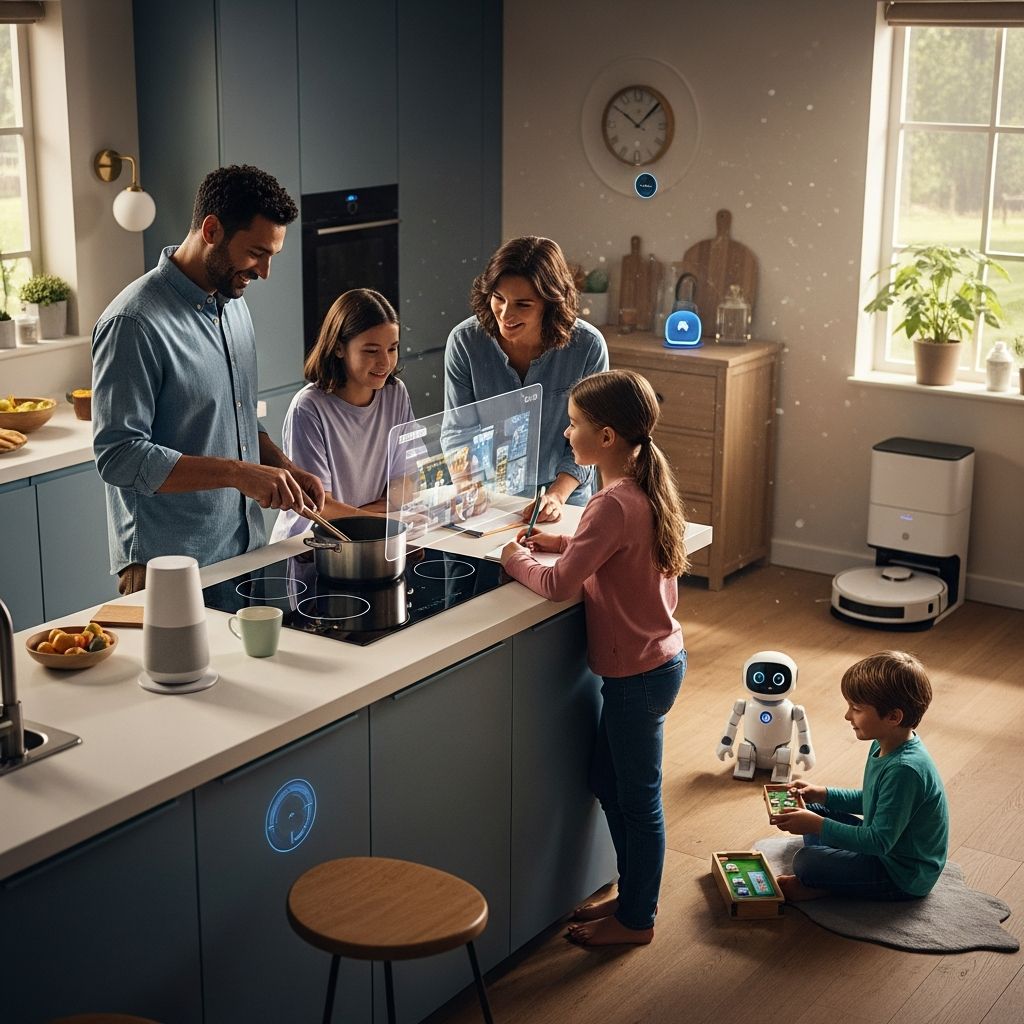
The Digital Revolution in Family Management
The landscape of parenting has undergone a profound transformation over the past decade, driven largely by technological advancement and the emergence of sophisticated artificial intelligence systems. As families navigate increasingly complex schedules, competing demands for attention, and the pressure to provide optimal care across multiple dimensions of child development, many households are turning to AI-powered solutions as a fundamental component of their daily routines. Rather than viewing these tools as a departure from traditional parenting, a growing body of evidence suggests that thoughtfully implemented AI applications can enhance family dynamics by reducing decision fatigue and creating space for more meaningful human connection. The recognition that technology can serve as a supportive partner rather than a replacement for parental involvement marks a significant shift in how modern families approach childcare and household management.
Automating Daily Operations to Enhance Presence
One of the most practical applications of artificial intelligence in family life involves the automation of routine logistical tasks that consume considerable mental energy throughout any given day. Parents utilizing AI tools report significant relief from the cognitive burden associated with meal planning, grocery list generation, schedule coordination, and household organization. By delegating these repetitive decisions to intelligent systems, families free up mental resources that can be redirected toward direct engagement with children. Research indicates that 67% of parents in the United States rely on digital tools to support parenting decisions, with adoption rates accelerating as these platforms become more intuitive and responsive to family-specific needs. The market validation of this trend is evident in growth projections, with the global AI in family and childcare market expected to reach $5.2 billion by 2030, demonstrating widespread recognition of AI’s value in household management.
The psychological benefit extends beyond simple time savings. When parents describe using AI assistants, they frequently emphasize that the technology enables them to be more present during critical family moments because they are not simultaneously managing logistical complexities in their minds. Rather than mentally cycling through dinner options, household tasks, and schedule conflicts while interacting with children, parents equipped with AI support can concentrate fully on conversation, play, and emotional connection. This distinction between presence and distraction represents a fundamental reframing of how technology intersects with parental engagement. Psychological research has long established that children benefit from parents’ undivided attention, and to the extent that AI tools facilitate this quality of interaction, they contribute meaningfully to family well-being.
Personalized Learning and Educational Support
Educational enrichment stands as another domain where AI demonstrates particular promise for modern families. Adaptive learning platforms powered by artificial intelligence create individualized educational pathways that respond dynamically to each child’s progress and learning style. Unlike static curricula, these systems assess a child’s current understanding in real time and adjust the difficulty, pacing, and content delivery to maintain an optimal challenge level—neither so easy as to cause boredom nor so difficult as to create discouragement. This personalized approach addresses a persistent challenge in education: the wide variation in developmental readiness across any group of same-aged children.
Beyond traditional academic subjects, AI-driven educational tools extend into domains such as language development. Speech and language applications employ sophisticated analysis to evaluate a child’s vocal patterns and communication development, identifying potential delays with greater precision than informal observation alone. More than 40% of caregivers believe AI can help detect health or developmental issues earlier than traditional methods, highlighting the technology’s potential to enable early intervention when outcomes are most favorable. This capability transforms what might have been a concern identified during a medical visit into a condition flagged during routine home interaction, potentially altering developmental trajectories through timely specialist engagement.
Health Monitoring and Preventive Care Integration
The intersection of artificial intelligence and child health represents a particularly significant frontier in family well-being. Smart baby monitors equipped with AI capabilities track multiple physiological parameters simultaneously—sleep cycles, breathing patterns, movement signatures—and transmit real-time alerts to parental devices when irregularities emerge. This continuous, objective monitoring provides parents with quantifiable data about their infant’s condition while reducing the anxiety that often accompanies nighttime parenting during infancy.
Wearable health devices designed for children extend this monitoring principle across the full spectrum of pediatric development. These devices measure physical activity levels, sleep quality, and vital signs, generating longitudinal datasets that inform both parents and healthcare providers. The accumulation of such data creates opportunities for pattern recognition that human observation alone might miss. Rather than relying on a parent’s general impression that a child “seems less active lately,” these systems can provide specific metrics demonstrating actual changes in activity levels, enabling data-driven conversations between families and pediatric providers.
Cognitive Load Reduction and Stress Management
The psychological burden of modern parenting has received increasing attention from researchers and mental health professionals. Parents frequently report feeling overwhelmed by the sheer number of decisions requiring their attention daily—from nutritional choices to educational approaches to safety considerations. The phenomenon known as “decision fatigue” describes the deteriorating quality of decision-making that occurs as the cognitive load accumulates throughout the day. AI systems that handle routine decisions and provide structured information reduce this burden substantially.
Consider the experience of a parent planning a birthday party. Rather than manually researching venue options, cost comparisons, age-appropriate activities, and logistical coordination, AI tools can synthesize this information quickly, presenting organized options tailored to the family’s preferences and constraints. The mental relief is immediate: instead of feeling responsible for discovering every possible option and comparing each manually, the parent receives a curated starting point from which to make selections. This delegation of information synthesis to algorithmic systems allows parental cognitive capacity to remain available for higher-order decisions that truly require human judgment.
Addressing Privacy Considerations in Digital Family Life
Despite the clear benefits AI offers families, legitimate concerns about data privacy and security require serious attention. Privacy concerns present the most significant challenge when AI systems collect detailed information about children’s health, development, behaviors, and family routines. Unlike physical objects that a family can control access to, digital data can be transmitted, stored, and potentially compromised in ways that are invisible to users. Companies implementing AI parenting tools must implement robust security protocols to protect the sensitive information that families entrust to their platforms.
A secondary concern involves algorithmic bias—the tendency for AI systems trained on biased datasets to produce recommendations that disadvantage particular demographic groups. If an adaptive learning algorithm was primarily trained on data from affluent, English-speaking populations, its recommendations for children from other backgrounds may be less accurate or appropriate. Parents utilizing AI tools should maintain awareness that these systems reflect the data and design choices made by their creators, and those choices necessarily include particular perspectives and values.
Maintaining Human Judgment in an Increasingly Automated World
While the capabilities of artificial intelligence continue to expand, child development experts emphasize that technology cannot replicate the intuitive understanding, emotional attunement, and contextual knowledge that parents bring to childcare decisions. The appropriate role of AI in family life involves augmenting parental capability rather than replacing parental judgment. The fundamental challenge parents face in 2026 involves developing wise judgment about when to leverage AI tools, when to rely entirely on human instinct, and when to step back from technology entirely.
This balance requires parents to maintain confidence in their own observations and instincts even while utilizing AI tools. A parent might use an AI tutoring system to identify areas where their child struggles with reading, but the decision about how to support that child—whether through professional assessment, additional practice, or investigation of underlying learning differences—must ultimately rest with the parent who understands the child’s full context. Similarly, while virtual parenting assistants can remind parents about vaccination schedules, the decision about specific immunizations involves parental values, medical history, and consultation with trusted healthcare providers.
Accessibility and Economic Implications
The democratization of sophisticated technology has historically followed a pattern: early adoption by affluent households, gradual cost reduction, and eventual widespread availability. However, significant accessibility barriers persist for lower-income families, as high-quality AI parenting solutions remain expensive relative to household budgets. This economic reality threatens to exacerbate existing disparities in educational opportunity and healthcare access. Families with resources can access personalized tutoring, early speech detection, and continuous health monitoring, while families with limited means cannot.
This concern extends beyond simple fairness to touch fundamental questions about equality in child development opportunity. If AI-enhanced educational systems genuinely improve learning outcomes, then limiting access to these systems on economic grounds creates a new form of educational inequality. Policymakers and technology developers increasingly recognize this problem, but solutions remain nascent. Some initiatives involve subsidized access to AI tools for lower-income families, while others focus on developing low-cost or open-source alternatives to expensive proprietary systems.
Future Evolution of AI in Family Contexts
The trajectory of AI development suggests continued expansion of parenting applications in coming years. Startups and established technology companies maintain substantial investments in family-focused AI products, driving innovation across multiple domains simultaneously. Emerging platforms incorporate early language analysis with sophisticated understanding of developmental milestones, emotional health tracking integrated with caregiver support communities, and educational content paired with health monitoring. Some systems are beginning to recognize patterns that might suggest underlying developmental concerns, offering parents earlier alerts than would occur through routine pediatric visits.
The sophistication of these systems raises important questions about the future of parenting itself. If artificial intelligence becomes deeply integrated into family decision-making across health, education, and daily logistics, how will this transformation shape parental identity and confidence? Will parents develop deeper expertise and stronger judgment through selective, thoughtful use of AI, or will heavy reliance on these systems erode parental capabilities over time? These questions lack simple answers, but they deserve serious consideration as families navigate technological integration.
Foundational Principles for Healthy Technology Integration
Moving forward, several foundational principles can guide families in approaching AI tools thoughtfully:
- Intentionality over convenience: Adopt AI tools because they serve specific family goals, not merely because they are available or trendy.
- Transparency with children: Age-appropriately explain to children when AI is involved in family decisions and help them understand the role of technology in daily life.
- Regular reassessment: Periodically evaluate whether adopted AI tools are genuinely improving family life or simply becoming habitual background noise.
- Privacy protection: Research data handling practices and privacy policies before entrusting sensitive family information to any platform.
- Preserved human connection: Maintain activities and family time that intentionally exclude technology, creating space for unmediated human interaction and problem-solving.
Frequently Asked Questions
Q: Does using AI tools for parenting tasks mean I’m outsourcing parenthood?
A: No. Many parents describe AI tools as creating space for presence rather than replacing parental involvement. By handling logistical tasks, these tools enable parents to invest mental and emotional energy in direct engagement with children. The distinction is crucial: automation of decisions differs fundamentally from abdication of responsibility for child well-being.
Q: How can I ensure AI recommendations are appropriate for my child?
A: Maintain awareness that AI systems reflect the data and values embedded in their design. Compare AI recommendations against your understanding of your child’s unique context, consult trusted healthcare providers or educators, and treat AI suggestions as starting points for decision-making rather than definitive guidance.
Q: What privacy protections should I verify before using a family AI tool?
A: Review the platform’s data handling practices, encryption protocols, and policies about data retention and sharing. Verify that the company has disclosed how child data is used, whether it is sold to third parties, and what security measures protect against breaches. Consider starting with platforms from established companies with strong privacy reputations.
Q: Can AI tools detect developmental delays better than pediatricians?
A: AI tools can identify certain patterns—such as speech development variations or sleep irregularities—continuously throughout daily life, potentially enabling earlier alerts than periodic pediatric visits alone. However, professional medical assessment remains essential for diagnosis and treatment planning. AI serves best as an early warning system that prompts professional evaluation.
Q: How much screen time should children have while using AI learning tools?
A: This depends on your child’s age and your family values. AI-powered educational tools should follow the same screen time guidelines as other digital content. Many experts recommend limiting screen time for young children, monitoring content quality, and balancing digital learning with physical play and offline activities.
References
- What is AI for Parenting: Top AI Use Cases, Benefits and Challenges — American SPCC. January 2026. https://americanspcc.org/what-is-ai-for-parenting-top-ai-use-cases-benefits-and-challenges/
- From story time to stress relief: How AI is reshaping modern parenting — Good Morning America. January 2026. https://www.goodmorningamerica.com/family/story/ai-parenting-123843563
- 6 Parenting Trends to Keep on Your Radar in 2026 — The Bump. January 2026. https://www.thebump.com/a/rising-parenting-trends
- Growing Up with AI: What 2026 Means for Parents and Children — Kids and Screens. January 2026. https://www.kidsandscreens.co.uk/post/growing-up-with-ai-what-2026-means-for-parents-and-children
- AI’s Role in Parenting: How Technology Is Changing the Way We Raise Our Children — PN Magazine. January 2026. https://www.pnmag.com/ais-role-in-parenting/
- Meet Gen Beta: 2026 Babies and the Childhood They’ll Experience — Baby Yum Yum. January 2026. https://babyyumyum.com/meet-2026-babies-gen-beta-and-the-world-theyll-grow-up-in/