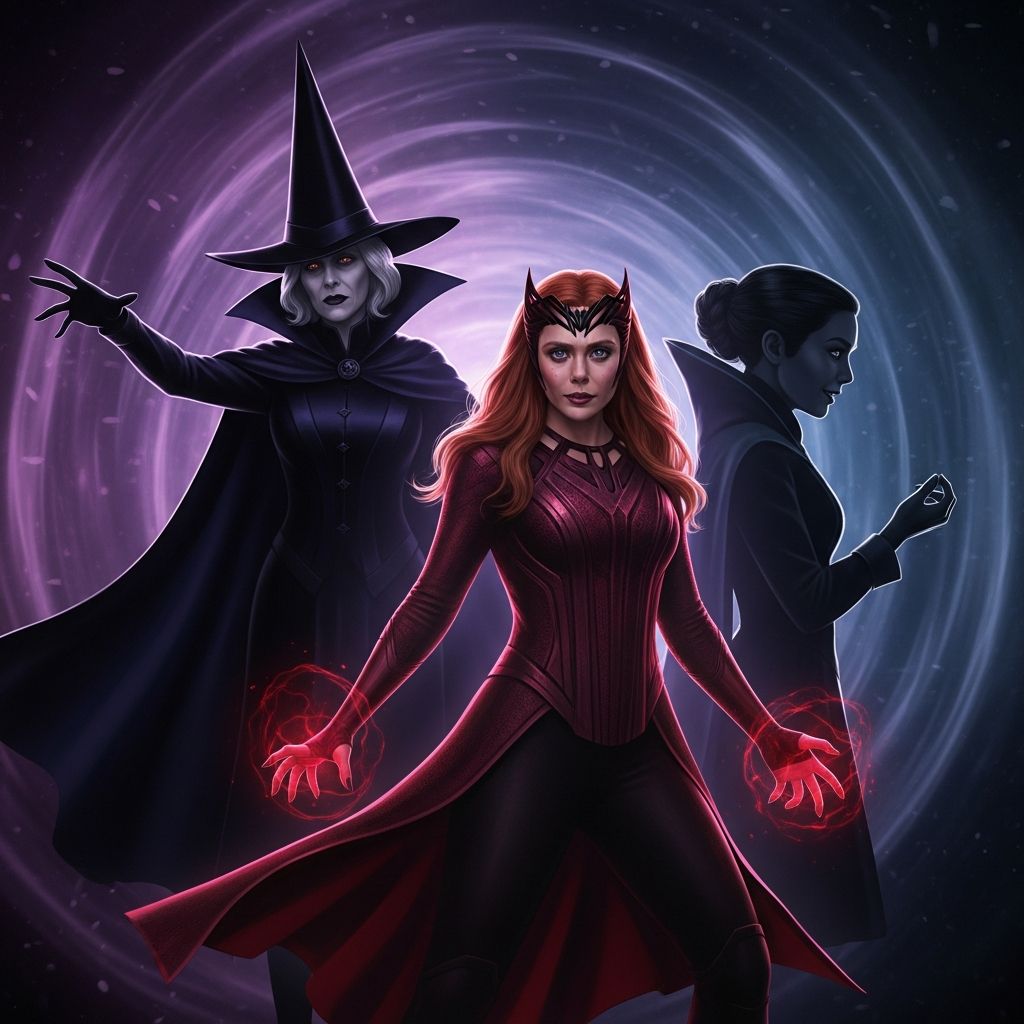
When WandaVision first introduced Agnes as the overly friendly neighbor who always happened to knock at the perfect (or worst) moment, she seemed like a harmless sitcom trope. By the time her true name, Agatha Harkness, echoed through that unforgettable theme song, it was clear Marvel had planted a major supernatural force right next door.
This article dives into how Agnes operates inside the fictional town of Westview, why the Agatha twist matters for Wanda’s journey, and how the character bridges television nostalgia, grief, and Marvel Comics lore.
From Laugh Track to Hex: Why Agnes Stood Out
Even before the reveal, Agnes never behaved like a typical Westview resident. While most townspeople appeared confused, restrained, or outright terrified when cracks in the illusion appeared, Agnes seemed oddly comfortable flirting with the edges of reality.
- Convenient entrances: She arrives exactly when Wanda needs a babysitter, a prop, or a plot device for the fake sitcom world.
- Fourth-wall awareness: At one point she casually asks if they should “take it from the top,” hinting she knows they are performing a script-like life.
- Unusual independence: She moves around Westview with more freedom and self-possession than other characters.
These details marked her as someone who understood the nature of the Hex, even while pretending to be just another neighbor.
The Reveal: Agnes Is Agatha Harkness
The seventh episode finally confirms what fans and comic readers suspected: Agnes is an alias for Agatha Harkness, a powerful witch hiding in plain sight. This twist turns the bright, comforting sitcom fantasy into something darker and more unpredictable.
According to Marvel’s own character materials and episode guides, Agatha is a centuries-old witch obsessed with understanding and harnessing magic, especially when it comes from rare sources like Wanda’s Chaos Magic. Agatha’s MCU incarnation uses the mask of the nosy neighbor not simply as camouflage, but as a way to insert herself into every key moment of Wanda’s fabricated life.
Agatha Harkness in the Comics vs. the Show
Agatha’s reveal matters more if you understand her place in Marvel Comics history. In the comics, she has a long, complicated connection to Wanda Maximoff that blends mentorship, manipulation, and tragedy.
| Aspect | Comics Agatha Harkness | WandaVision Agatha |
|---|---|---|
| Origin | Ancient witch, tied to events as far back as Salem in Marvel lore. | Shown surviving a witch trial by draining her coven’s magic. |
| Role with Wanda | Mentor who helps Wanda develop her magic, later becomes a tragic victim of Wanda’s breakdown. | Opposes Wanda, interrogating how she created the Hex and trying to seize that power. |
| Alignment | Usually morally gray but often an ally to heroes like the Fantastic Four and Scarlet Witch. | Initially positioned as an antagonist and secret puppeteer of many Westview events. |
| Connection to Families | Acts as a nanny and guardian in different storylines, including for Franklin Richards. | Targets Wanda’s children and uses them to lure Wanda into a magical confrontation. |
The show reshapes Agatha from a sometimes-mentor into a sharp, probing adversary. But the core idea remains: she is one of the few magic users who can look at Wanda and say, with authority, “I know what you are, and I want to understand how you did this.”
The Witch Next Door: How Agatha Manipulates Westview
Once viewers know Agnes is Agatha, earlier scenes take on new significance. Her behavior stops looking like quirky comic relief and starts reading as intentional interference.
Moments That Hit Different After the Reveal
- Helping shape Wanda’s storylines: Agatha often nudges Wanda into specific scenarios—like stage shows, neighborhood fundraisers, or key social encounters—ensuring the Hex evolves in certain directions.
- Hovering around the twins: She is present every time Wanda’s children undergo suspiciously rapid changes, hinting at a deeper interest in their existence and magical nature.
- Testing Vision’s awareness: A roadside conversation in the Halloween episode places Agatha in exactly the right position to push Vision toward an escape attempt, amping up the show’s stakes.
Rather than directly controlling Wanda, Agatha subtly steers the edges of the story, encouraging conflict and pushing the illusion toward its breaking point.
Power vs. Pain: Why Wanda’s Magic Fascinates Agatha
Agatha’s obsession is not simply curiosity; it is professional jealousy. She recognizes that Wanda is wielding a type of magic far beyond the structured witchcraft Agatha has spent centuries mastering. Marvel’s official commentary identifies Wanda’s power as Chaos Magic, a rare and reality-warping force that allows Wanda to rewrite matter, memory, and space on an enormous scale.
In MCU terms, this raises crucial questions:
- How can someone without formal magical training surpass a seasoned witch?
- Why is Wanda’s power bound up with trauma, grief, and unresolved loss?
- Could Agatha harness that power for herself or at least learn to duplicate it?
By capturing Wanda and dissecting her past, Agatha is effectively running a brutal case study: follow each layer of pain, each formative memory, and each magical milestone to uncover what transformed Wanda into the Scarlet Witch.
Grief as the Engine of Magic
One of WandaVision’s most striking choices is tying reality-warping power directly to emotional devastation. Wanda’s grief over Vision’s death becomes the catalyst for the Hex and the life inside it. Psychological research has long noted that profound loss can distort perception, memory, and a person’s sense of time and self. WandaVision literalizes this with superhero logic: instead of a distorted view of reality, Wanda produces a distorted version of reality.
In-universe, Agatha reads this not as tragedy, but as opportunity. She treats Wanda’s pain as a formula she can decode. Where a therapist might explore coping strategies, Agatha looks for spell structures and energy sources. She recognizes that Wanda’s denial, bargaining, and acceptance phases have all been broadcast as sitcoms—and she wants to learn how to do that level of magic herself.
How the Sitcom Aesthetic Hides a Horror Story
WandaVision cycles through half a century of television styles, from black-and-white domestic comedies to mockumentary-style modern sitcoms. On the surface, this is a stylistic homage. Deeper down, it is Wanda’s subconscious building a padded cell out of nostalgia.
Agatha’s presence in every era highlights three important themes:
- Control vs. intrusion: Wanda tries to script a life free of pain, but Agatha keeps slipping into frame, a glitch she cannot completely erase.
- Performance vs. authenticity: Agnes thrives in exaggerated sitcom tropes—the loud laugh, the over-the-top entrance—because that is where Wanda’s reality is most artificial and easiest to exploit.
- Audience complicity: The catchy “it was Agatha all along” sequence reframes earlier episodes, inviting viewers to re-examine their own enjoyment of a fantasy also built on other people’s suffering.
The contrast between bright studio lighting and creeping dread turns Agnes/Agatha into a bridge between genres: she is both the classic sitcom neighbor and the lurking horror villain who has been in the house the entire time.
What Agatha Wants: Villain, Rival, or Something in Between?
Labeling Agatha as purely evil oversimplifies her role. She undeniably does cruel things—manipulating Wanda’s kids, killing the family dog, and tormenting trapped townspeople—but her underlying motives are more complicated than “world domination.”
Layers to Agatha’s Agenda
- Professional envy: As a witch obsessed with power, she cannot accept that Wanda wields unprecedented magic without training.
- Self-preservation: If Wanda’s uncontrolled abilities are dangerous to the fabric of reality, understanding them might be Agatha’s way to stay on top of the magical food chain.
- Curiosity about prophecy: The concept of the “Scarlet Witch” as a figure of myth implies Wanda’s existence affects the entire magical ecosystem, something that directly impacts Agatha’s world.
This makes Agatha less of a mustache-twirling villain and more of a ruthless researcher who is willing to sacrifice anyone else to answer her questions.
Why Agatha Matters for the Larger MCU
WandaVision is not just a character study; it is also Marvel’s first real deep dive into formal magic lore on television. Agatha is the lens that clarifies how magic sits alongside science and cosmic forces in the MCU.
Marvel’s broader storytelling has increasingly blended mysticism with superheroics, particularly through projects like Doctor Strange, which introduce structured magical disciplines, mystical texts, and multiverse concepts. Agatha’s presence connects Wanda’s improvisational, emotion-driven power to a larger, organized world of witches, covens, and magical rules.
Her survival—and any future stories she appears in—opens the door to:
- More exploration of magical hierarchies and rivalries.
- Connections to other mystical artifacts or locations already established in Marvel films and series.
- Further development of Wanda as not just a superhero, but a figure of magical prophecy.
Parenting, Power, and the Threat to the Twins
Agatha’s interest in Wanda’s children is not incidental. In superhero fiction, children often symbolize both vulnerability and amplified power. WandaVision leans into that by making the twins literal products of Wanda’s magic-laced reality. In comic book storylines, the fate of Wanda’s children has repeatedly triggered some of her most catastrophic and emotionally charged decisions.
By drawing the boys into her home and using them as leverage, Agatha attacks Wanda at the most emotionally exposed point. This is not just cruelty; it is a deliberate stress test to see how Wanda’s powers behave when she is pushed to her absolute limit.
Frequently Asked Questions About Agnes and Agatha
Is Agnes originally from the WandaVision comics?
The specific “Agnes” identity is a creation of the show, but it is widely understood as a cover name for Agatha Harkness, a long-standing Marvel Comics witch closely tied to Wanda Maximoff.
Was Agatha controlling Wanda the whole time?
No. Wanda creates the Hex and the sitcom reality on her own, driven by grief and latent power. Agatha infiltrates that closed world later, manipulating events from within to learn how Wanda did it and to try to tap into that Chaos Magic.
Is Agatha always a villain in Marvel stories?
In the comics, Agatha is more ambiguous. She has served as an ally, mentor, and sometimes victim of Wanda. WandaVision presents her as an antagonist, but her motives are rooted in curiosity and survival rather than sheer malice.
How does Agatha’s magic differ from Wanda’s?
Agatha uses structured witchcraft drawn from centuries of study, rituals, and coven-based power. Wanda’s abilities, labeled Chaos Magic in the series, allow her to warp reality itself in ways that even experienced witches like Agatha find unprecedented and dangerous.
Will Agatha return in future Marvel projects?
Marvel has not publicly detailed every future appearance, but the character’s survival and the popularity of her portrayal position her as a flexible figure for upcoming stories tied to magic, the Scarlet Witch, and the supernatural corner of the MCU.
References
- So What’s the Deal with WANDAVISION’s Agnes? — Nerdist. 2021-02-12. https://nerdist.com/article/wandavision-agnes-theories/
- Agatha Harkness in WandaVision | Agnes’ character explained — Radio Times. 2021-02-23. https://www.radiotimes.com/tv/sci-fi/wandavision-agnes-agatha-harkness/
- Agatha Harkness | Marvel Cinematic Universe Wiki — Fandom/Marvel. Last updated 2023. https://marvelcinematicuniverse.fandom.com/wiki/Agatha_Harkness
- We Need to Talk About Agnes on WandaVision — The Mary Sue. 2021-02-03. https://www.themarysue.com/agnes-wandavision/
- WandaVision: What Does Agnes Really Want? — Den of Geek. 2021-02-19. https://www.denofgeek.com/tv/wandavision-all-the-agnes-agatha-clues-so-far/
- Doctor Strange: The Sorcerer Supreme’s Powers and Origins — Marvel Entertainment. 2016-10-28. https://www.marvel.com/articles/movies/doctor-strange-from-marvel-studios
- WandaVision and Grief: How Marvel Explores Loss — The Atlantic. 2021-03-05. https://www.theatlantic.com/culture/archive/2021/03/wandavision-marvel-grief/618165/
- Diagnostic and Statistical Manual of Mental Disorders (5th ed., text rev.) — American Psychiatric Association. 2022. https://doi.org/10.1176/appi.books.9780890425787