Introduction to Early Childhood Responsibility
Parents often wonder when their young children are ready to take on household responsibilities. The truth is that children as young as 14 months can begin participating in simple household tasks, though their involvement will look quite different from what older children can accomplish. Introducing age-appropriate responsibilities during the early childhood years establishes positive habits, builds confidence, and helps children feel like valued members of the family unit. Rather than waiting until children are older and more independent, starting early with simple, supervised tasks creates a foundation for lifelong responsibility and work ethic.
The key to successfully involving young children in household tasks is understanding their developmental capabilities at each stage. Children develop motor skills, attention spans, and cognitive abilities progressively, and matching tasks to these developmental milestones ensures both success and safety. This guide explores the spectrum of household responsibilities that are realistic and beneficial for children during their earliest years.
The Developmental Benefits of Early Task Involvement
Assigning age-appropriate household responsibilities offers far more than a clean home. When young children participate in family tasks, they experience numerous developmental advantages. Tasks that involve movement—such as carrying items, sweeping, or organizing toys—help develop gross motor skills and coordination. Fine motor activities like folding cloth items or placing objects into containers strengthen hand strength and dexterity.
Beyond physical development, household participation builds cognitive skills. Children learn cause and effect (when toys are put away, the floor is clear), develop planning abilities (organizing steps in a task), and improve memory and sequencing. Emotionally, children gain a sense of accomplishment and belonging when they contribute meaningfully to family life. They learn that they are capable of completing tasks and that their efforts matter. This foundation of competence and contribution supports healthy self-esteem and motivation throughout childhood.
Tasks for the Youngest Participants: 14-18 Months
Children in this developmental stage are just beginning to understand simple instructions and can follow one-step directions with significant adult support. Their tasks should be extremely basic and require constant supervision. At this age, children are naturally drawn to activities involving movement and exploration, making this the perfect opportunity to introduce the concept of helping.
- Throwing items into bins: Children can place large, soft items into a basket or toy bin. This teaches basic object placement and helps them understand the concept of organizing.
- Carrying soft objects: With supervision, children can carry light, unbreakable items a short distance, such as fabric items from one room to another.
- Pulling out clothing from baskets: Though the clothing may not be sorted correctly, the motion of pulling items develops their ability to handle objects.
- Wiping surfaces with cloths: Supervised wiping motions with a damp cloth, even if minimal cleaning occurs, engage fine motor skills.
- Helping with pet care routines: Holding a pet’s leash, watching feeding time, or pointing to where the pet’s food bowl sits introduces them to caregiving concepts.
Parents should expect that these tasks will take significantly longer than if completed alone, and the results will be imperfect. The goal at this stage is participation and familiarity rather than completion quality. Keeping expectations minimal prevents frustration for both child and parent.
Expanding Abilities: 19-24 Months
As children approach two years old, their ability to follow two-step instructions improves, and their attention span begins to lengthen slightly. Their independence is growing, though they still require significant supervision and guidance. Tasks can become slightly more complex, but should remain simple and concrete.
- Putting toys into designated storage: Children can learn that specific toys belong in specific places. Using picture labels or color-coding makes this easier for children who cannot read.
- Placing dirty clothes into a hamper: This straightforward task teaches basic categorization—clothes belong in a specific container.
- Helping sort laundry by color: Under supervision, children can place light and dark items into separate piles, developing sorting skills.
- Dusting low surfaces: Using a soft cloth or duster, children can wipe low-level furniture and baseboards.
- Assisting with simple snack preparation: Handing items to an adult during snack assembly or placing items onto a plate introduces kitchen involvement.
- Helping feed pets: With a pre-portioned bowl, children can place food in a pet’s dish, though an adult should supervise.
At this stage, children benefit from clear, simple language and visual demonstrations. Showing the task once or twice before asking the child to attempt it significantly increases success rates.
Growing Independence: 2-3 Years Old
Two- to three-year-old children can typically handle one or two simple tasks with decreasing levels of supervision. Their vocabulary expands, allowing for better communication about tasks. Their motor skills improve substantially, making more physical tasks possible. This is an exciting period where children truly begin to understand and complete responsibilities with minimal help.
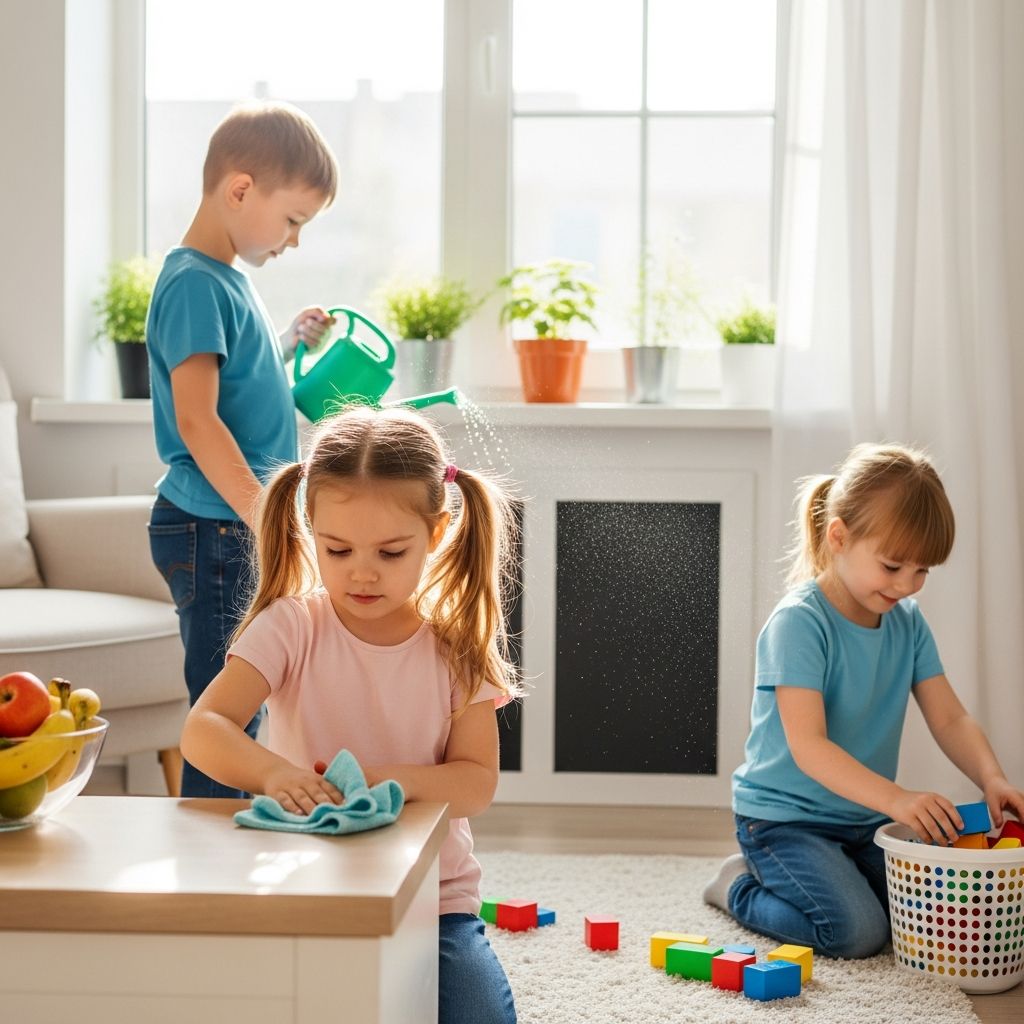
- Putting toys away after playtime: Children can clean up toys independently or with minimal prompting, though organizing by category may require guidance.
- Placing items in the trash: Non-hazardous waste items can be thrown away, teaching basic household organization.
- Helping set the table: With adult assistance, children can place unbreakable items like napkins or plastic utensils at place settings.
- Wiping tables after meals: With a damp cloth and minimal supervision, children can wipe down table surfaces.
- Watering plants: Using a small, lightweight watering can, children can water indoor or outdoor plants under supervision.
- Helping wash dishes: Children can hand items to an adult or participate in simple rinsing, though they should not handle breakable items.
- Folding simple items: Washcloths or other soft items can be folded by children, even if imperfectly.
- Hanging up coats: Placing their own coat on a low hook teaches responsibility for personal belongings.
Children at this age enjoy repetition and benefit from consistent routines. Building a daily rhythm where certain tasks happen at the same time each day helps children anticipate and engage with their responsibilities.
Expanding Responsibility: 3-4 Years Old
Children in this age group develop stronger attention spans and better ability to follow multi-step instructions. They can understand simple cause and effect and take pride in their accomplishments. Tasks can become more varied and require less direct supervision, though adult oversight remains essential for safety.
- Making the bed with assistance: With help arranging blankets, children can participate in tucking sheets and pillows.
- Clearing their place after meals: Children can carry their plate and cup to the sink with reminders and help.
- Helping select and put away groceries: Children can unpack lighter items and place them in designated cupboards or the refrigerator.
- Loading and unloading the washing machine: With adult supervision, children can place items into the machine and remove dry items.
- Dusting furniture: More thorough dusting becomes possible as children develop better control of fine motor movements.
- Watering plants independently: With a filled watering can nearby, children can water plants with minimal assistance.
- Sweeping with a child-sized broom: Children can attempt to sweep floors, though the results may be incomplete.
- Selecting and putting away their own clothing: With labeled drawers or shelves, children can place folded items in their room.
- Helping with simple food preparation: Washing vegetables, tearing lettuce, or placing items on a plate becomes possible with supervision.
Children at this age respond well to charts and visual reminders. Drawing pictures or using photographs of tasks helps children remember their responsibilities without constant verbal reminders.
Building Confidence: 4-5 Years Old
Preschool-aged children possess significantly improved abilities to plan, sequence, and complete tasks independently. Most tasks can be accomplished with minimal supervision, though safety guidance remains necessary. Children at this age often take genuine pride in their work and can understand the connection between their efforts and household functioning.
- Making their bed independently: While not perfectly arranged, children can arrange blankets and pillows without assistance.
- Getting dressed autonomously: Children can select and don clothing, though they may need help with buttons, zippers, or fasteners.
- Clearing the table after meals: Children can clear their place and help clear others’ items with reminders.
- Preparing simple snacks: With safety precautions, children can assemble basic snacks like cereal, crackers with spreads, or fruit.
- Sorting and folding laundry: Children can match socks, fold simple items, and place their own laundry in drawers.
- Unloading safe dishwasher items: Plastic and non-breakable items can be unloaded and put away with minimal supervision.
- Watering plants and basic gardening: Children can tend to plants and help with simple gardening tasks like pulling weeds.
- Taking out trash: Children can carry light trash bags to outdoor bins with help.
- Organizing their room: With guidance, children can straighten toys, books, and personal items.
- Setting the entire table: Children can place plates, cups, and utensils at place settings with supervision.
Creating Success: Implementation Strategies
Simply assigning tasks is not enough to ensure success with young children. Several strategies increase the likelihood that children will engage positively with their responsibilities. First, model the task clearly before expecting the child to attempt it. Show the beginning, middle, and end of the process, narrating as you go. Children learn primarily through observation at these young ages.
Second, keep expectations realistic and celebrate efforts rather than perfection. When a two-year-old places most toys in the bin or a four-year-old’s folded item is not neat, acknowledge their effort enthusiastically. This builds motivation for future participation. Third, maintain consistency by assigning similar tasks at similar times each day or week. Predictability helps children understand expectations and reduces negotiation.
Finally, ensure safety by supervising all tasks initially and removing hazards. Use child-sized tools when possible, as smaller brooms, dusters, and watering cans are easier for young hands to manage. Keep cleaning products and dangerous items completely out of reach, and provide only materials and tasks appropriate for your child’s age and ability.
Troubleshooting Common Challenges
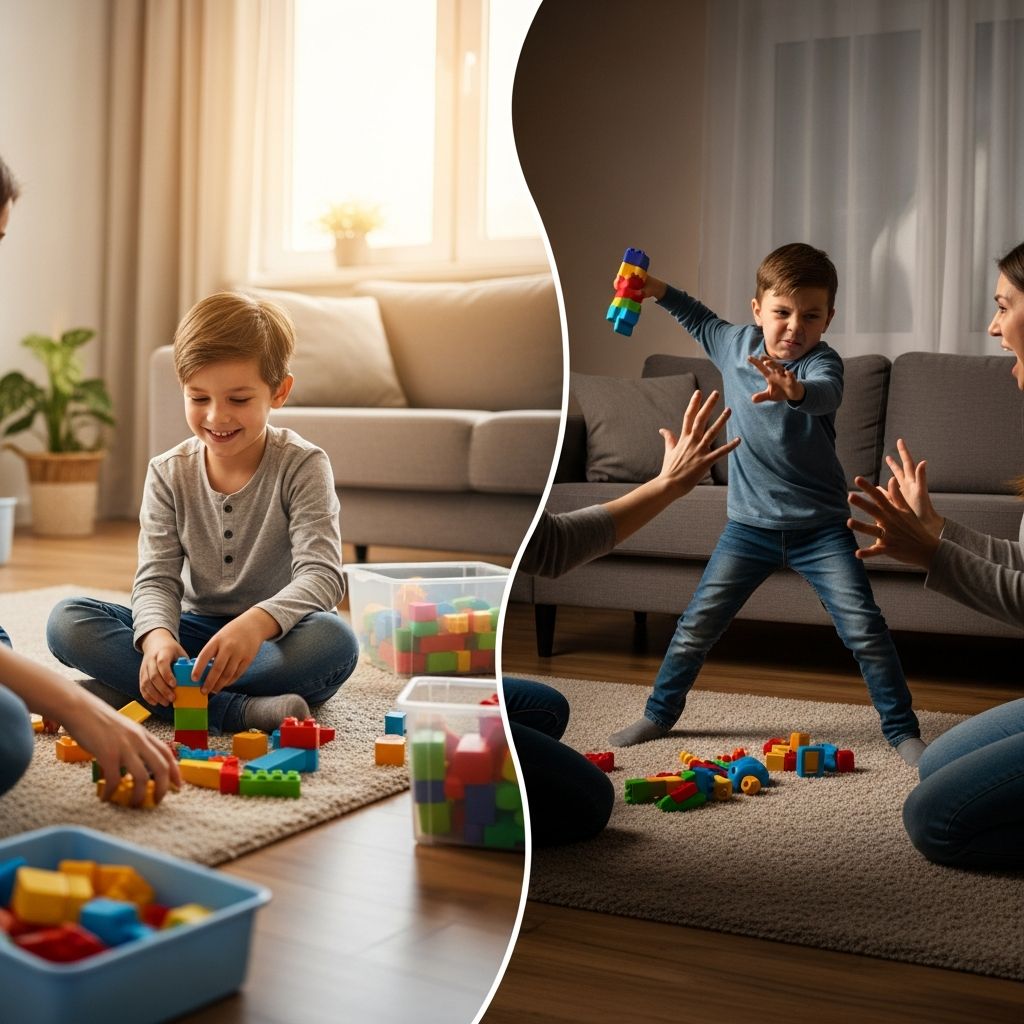
Resistance to tasks: If your child resists participating, try making the activity more enjoyable. Play music, work alongside your child, or turn it into a game. Never force participation, as this creates negative associations with responsibility.
Incomplete or messy results: Remember that the goal is participation and skill-building, not a perfectly completed task. A toddler’s cleanup attempt teaches them the concept of organization, even if items are not perfectly sorted.
Safety concerns: If a child struggles with a task’s safety requirements, either simplify the task further or wait until they develop greater self-control and understanding of safety principles.
Loss of interest: Young children’s interests change frequently. Rotate tasks every few weeks to maintain enthusiasm and prevent boredom.
Frequently Asked Questions
At what age should children start doing chores?
Children can begin participating in simple household tasks as early as 14-18 months. At this age, tasks are extremely simple and require constant supervision, but children benefit from feeling included in family activities.
How long should tasks take at young ages?A: Tasks will take significantly longer when young children participate compared to completing them independently. A two-year-old may take 10 minutes to put away toys that an adult could organize in one minute. This extended time is normal and valuable for skill development.
Q: What if my child refuses to do their assigned task?
Refusal is common, especially when introducing new responsibilities. Avoid power struggles by taking a break and trying again later. Make the task more appealing by working together, adding music, or trying a different task. Never force participation, as this creates negative associations.
Should young children receive rewards for completing chores?A: Praise and encouragement are the most important rewards. Young children benefit more from verbal recognition and feeling proud of their contribution than from sticker charts or treats. Intrinsic motivation builds stronger long-term responsibility.
Q: How do I know if a task is too difficult for my child?
If your child consistently cannot complete a task despite multiple attempts and instructions, it likely exceeds their current developmental ability. Simplify the task by breaking it into smaller steps, or wait several months before trying again as skills develop.
Q: Can I assign the same chores to all young children regardless of age?
A: While some tasks overlap across ages, expectations for completion and independence should vary significantly. A three-year-old putting toys away with help differs from a five-year-old organizing toys independently. Adjust the complexity and independence level, not just the task itself.
References
- Chores and Children — American Academy of Child and Adolescent Psychiatry (AACAP). Accessed February 2026. https://www.aacap.org/AACAP/Families_and_Youth/Facts_for_Families/FFF-Guide/Chores_and_Children-125.aspx
- Developmentally Appropriate Chores for Children — Little Round Schoolhouse. Accessed February 2026. https://www.littleroundschoolhouse.com/blog/choresforchildren
- 34 Age-Appropriate Chores for Toddlers — Happiest Baby. Accessed February 2026. https://www.happiestbaby.com/blogs/toddler/toddler-chores
- Ideas for Household Chores for Preschoolers — The Gardner School. Accessed February 2026. https://www.thegardnerschool.com/blog/household-chores-and-tasks-for-preschoolers/
- Chore Lists for Children and Kids by Age [Free Printable Checklist] — Treehouse Schoolhouse. Accessed February 2026. https://treehouseschoolhouse.com/blog/chore-lists-for-kids-by-age-printable-checklist
- Age-Appropriate Chores For Kids — Focus on the Family. Accessed February 2026. https://www.focusonthefamily.com/parenting/age-appropriate-chores-for-kids/