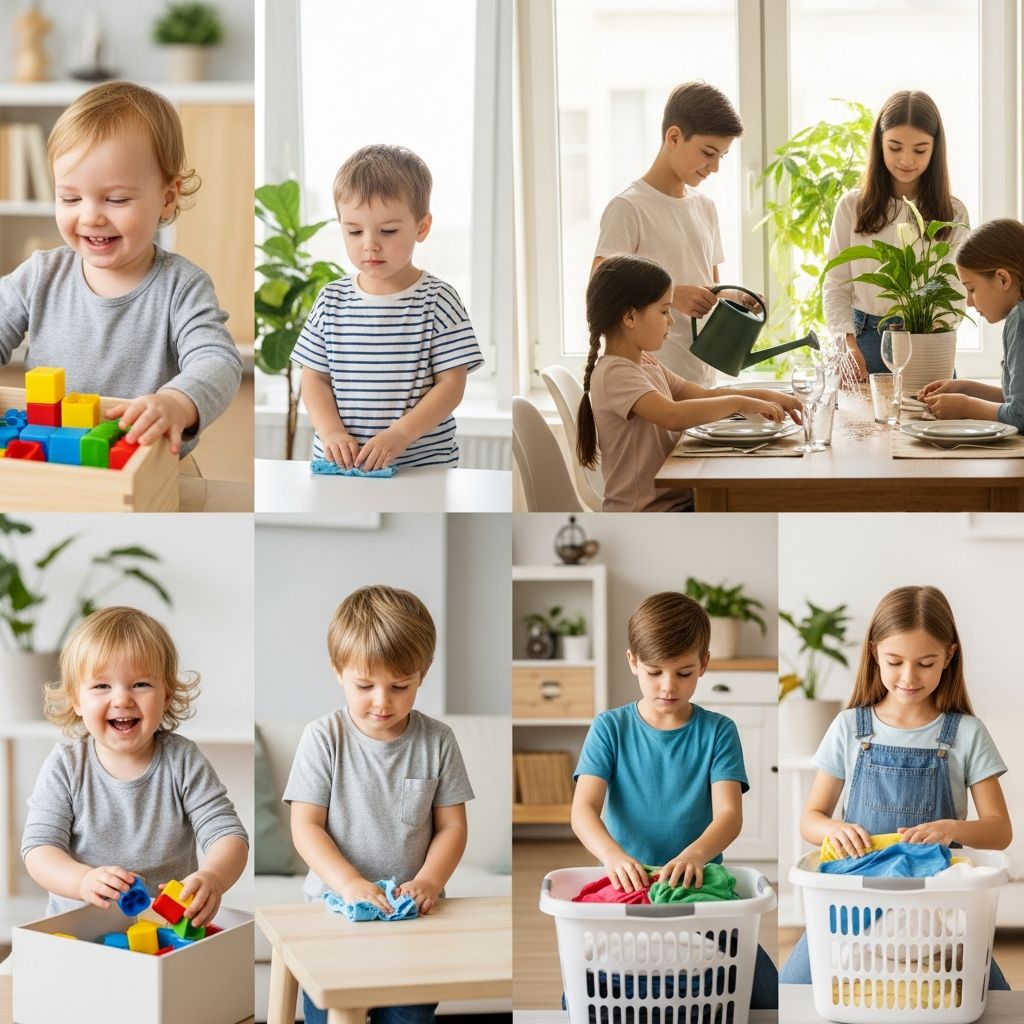
Assigning household tasks to children at the right developmental stages helps cultivate responsibility, self-reliance, and a strong work ethic. Starting from early childhood, these chores match a child’s physical abilities, cognitive growth, and attention span, turning routine duties into opportunities for learning and contribution. Research from child development experts emphasizes that consistent chore involvement correlates with better executive functioning and emotional maturity in youth. This guide outlines progressive responsibilities across age groups, drawing from established pediatric recommendations to ensure tasks are safe, achievable, and rewarding.
Why Chores Matter for Child Development
Household chores do more than maintain a tidy home; they equip children with essential life skills. For instance, simple tasks teach sequencing and follow-through, while complex ones build time management and problem-solving. The American Academy of Child and Adolescent Psychiatry notes that children who participate in chores from age two onward show improved self-esteem and family cohesion. Pediatric guidelines from the American Academy of Pediatrics further support that age-matched duties prevent frustration and encourage persistence. Parents should introduce chores positively, with supervision for safety, clear instructions, and praise for effort to foster intrinsic motivation.
Key benefits include:
- Enhanced **responsibility** and accountability.
- Development of **fine and gross motor skills**.
- Improved **family dynamics** through shared contributions.
- Preparation for **independent living** in adulthood.
- Boosted **confidence** from mastering achievable tasks.
Chores for Toddlers (Ages 2-3): Sparking Initial Interest
At this stage, focus on playful, supervised activities that build basic habits without overwhelming short attention spans. Tasks emphasize gross motor skills and simple matching, always under close parental watch to ensure safety. Toddlers thrive on repetition and immediate feedback, so pair chores with fun elements like songs or timers.
- Place toys in bins after playtime.
- Carry lightweight items like a single book or sippy cup to shelves.
- Help fill pet bowls with pre-measured food.
- Drop dirty clothes into the laundry basket.
- Wipe small spills with a damp sponge (supervised).
- Dust low, safe surfaces using a sock-covered hand.
These activities typically take 5-10 minutes daily, helping toddlers feel capable while learning cleanup routines.
Preschoolers (Ages 4-5): Fostering Independence
Preschoolers can handle slightly more structure, such as using child-sized tools. They enjoy routines, making this ideal for introducing family chore charts. Tasks promote fine motor control and following multi-step directions with minimal help. Expect imperfections—praise progress over perfection.
| Personal Tasks | Family Tasks |
|---|---|
| Make bed (pull up covers) | Set table with napkins or unbreakable plates |
| Dress self with easy clothes | Water indoor plants |
| Put away backpack or shoes | Sort clean laundry by color |
| Brush teeth with reminder | Match pairs of socks |
Daily sessions of 10-15 minutes build habits. Supervision ensures safe tool use, like small brooms for crumbs.
Early School Age (Ages 6-7): Routine and Hygiene Focus
Children here gain stamina for daily responsibilities, managing personal care independently. Introduce electric tools like lightweight vacuums with guidance. This phase strengthens organizational skills and introduces team-oriented duties.
- Fully make their own bed daily.
- Handle full personal hygiene routines.
- Empty small wastebaskets.
- Sweep or spot-vacuum floors.
- Fold simple laundry items like towels.
- Assist in meal prep, like washing veggies.
- Care for pet needs, including fresh water.
Aim for 15-20 minutes per session, rotating tasks weekly for variety.
Middle Childhood (Ages 8-9): Expanding Capabilities
With improved strength and focus, kids tackle more thorough cleaning and basic self-sufficiency. They can follow recipes or chore lists, promoting autonomy. Safety training for appliances like dishwashers is key.
- Load and unload dishwasher safely.
- Vacuum or dust multiple rooms.
- Prepare simple snacks independently.
- Rake leaves or pick up yard debris.
- Put away all groceries from bags.
- Wipe counters, sinks, and appliances.
- Take out trash to outdoor bins.
These 20-30 minute chores teach accountability; use checklists for tracking.
Pre-Teens (Ages 10-12): Advanced Household Management
Pre-teens handle complex, multi-step processes, including laundry cycles and basic cooking. They benefit from budgeting chores against allowances, building financial literacy. Independent completion is feasible with initial training.
| Indoor Duties | Outdoor/Personal Duties |
|---|---|
| Wash dishes by hand or machine | Wash family vehicle exteriors |
| Clean bathrooms (toilet, sink) | Pull weeds or shovel light snow |
| Operate washer/dryer fully | Babysit siblings (parent home) |
| Prepare full family meals | Manage weekly allowance tracking |
30-45 minutes daily prepares them for teen independence.
Teens (Ages 13-18): Full Autonomy and Leadership
Teenagers manage comprehensive home maintenance, often unsupervised. Tasks mirror adult responsibilities, including planning and execution. This builds readiness for college or work.
- Deep clean kitchen appliances and fridge.
- Mow lawns or handle full yard work.
- Grocery shop with lists and budgets.
- Babysit or pet-sit independently.
- Prepare multi-course meals from scratch.
- Clean all windows, mirrors, and fixtures.
- Organize family recycling and waste.
- Assist with minor home repairs.
Expect 45-60 minutes or more, with flexibility for schedules.
Implementing Chores Effectively: Tips for Parents
Success hinges on strategy. Start small, model tasks, and use visual aids like charts. Tie chores to non-monetary rewards initially, transitioning to intrinsic value. Consistency matters—assign fixed times or rotations. Address resistance with empathy, adjusting for individual paces. Common pitfalls: overloading young kids or micromanaging teens. Track progress weekly to celebrate growth.
- Customize by child: Adapt for abilities, not just age.
- Safety first: Teach chemical and tool handling.
- Family meetings: Discuss and vote on chore rotations.
- Positive reinforcement: Verbal praise outperforms material rewards long-term.
Frequently Asked Questions (FAQs)
What if my child resists chores?
Break tasks into fun steps, offer choices, and lead by example. Short sessions prevent burnout; consistency builds habit over time.
Should I pay for chores?
Optional for extra tasks; core family duties teach contribution without pay. Discuss family values around money.
How often should kids do chores?
Daily personal tasks, 3-5 family chores weekly, scaled by age for balance.
Can chores help with ADHD or special needs?
Yes, structured routines aid focus; tailor with timers and visuals per expert advice.
What tools work best for young kids?
Child-sized brooms, dusters, and step stools ensure safety and success.
References
- Chores and Children — American Academy of Child and Adolescent Psychiatry (AACAP). 2023-10-01. https://www.aacap.org/AACAP/Families_and_Youth/Facts_for_Families/FFF-Guide/Chores_and_Children-125.aspx
- Age-Appropriate Chores for Children — HealthyChildren.org (American Academy of Pediatrics). 2024-05-15. https://www.healthychildren.org/English/family-life/family-dynamics/communication-discipline/Pages/Chores-and-Responsibility.aspx
- Age Appropriate Chores — Focus on the Family Australia. 2023-08-20. https://families.org.au/article/age-appropriate-chores/