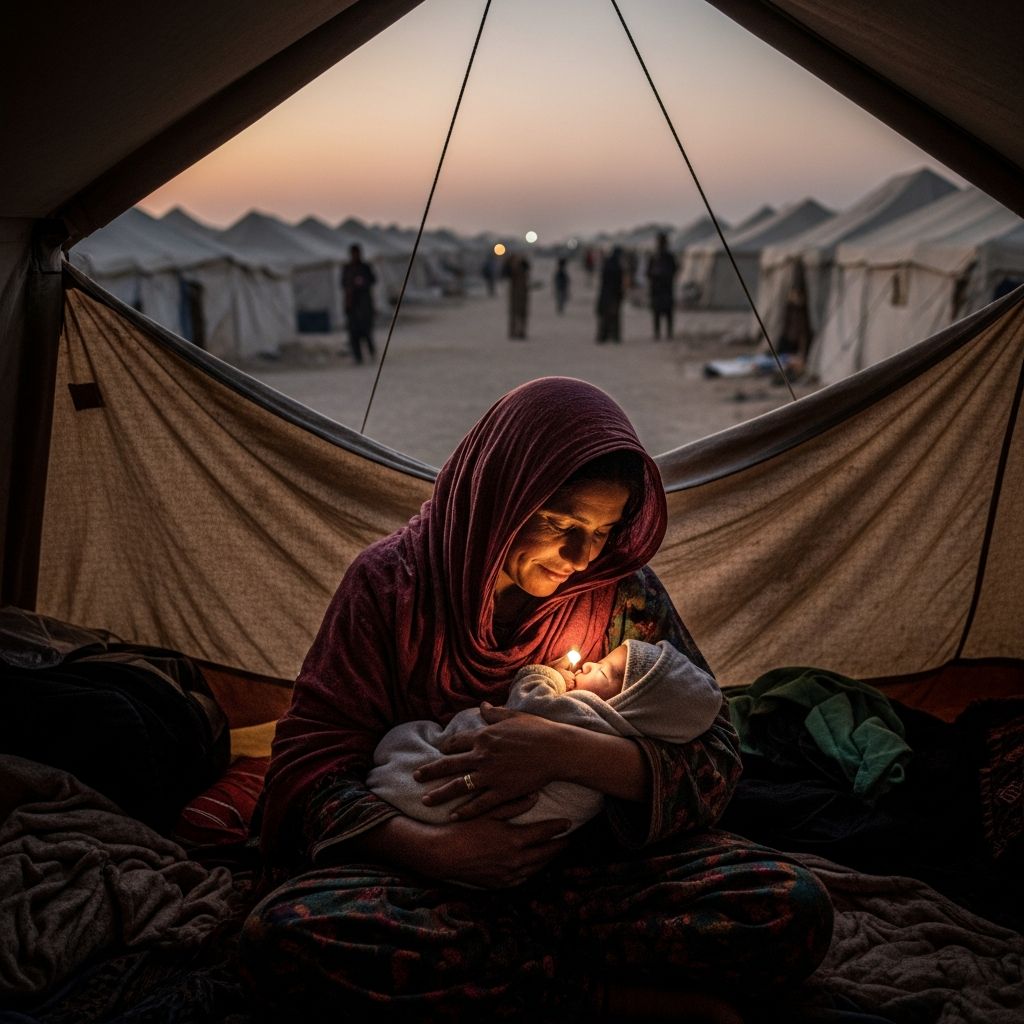
In the midst of geopolitical upheaval and personal peril, the arrival of new life serves as a profound symbol of hope. Afghan women, fleeing Taliban control and seeking safety abroad, have given birth under the most extraordinary circumstances—from crowded evacuation aircraft to chaotic border zones. These stories illuminate the unyielding human spirit while underscoring the dire needs for improved refugee support systems.
The Broader Context of Afghan Displacement
The Taliban resurgence in August 2021 triggered one of the largest and swiftest mass evacuations in modern history. Over 120,000 people were airlifted from Kabul’s Hamid Karzai International Airport in just weeks, with countless more crossing land borders into Pakistan and beyond. Pregnant women among them faced compounded risks, navigating labor pains alongside the terror of airstrips overrun by desperate crowds.
Border crossings, particularly at Torkham and Chaman between Pakistan and Afghanistan, became scenes of daily tragedy and triumph. Up to 6,000 individuals traversed these points each day in late 2023, many enduring multi-day treks without adequate food, water, or medical aid. For expectant mothers, these journeys amplified vulnerabilities, turning routine childbirth into life-or-death ordeals.
- Mass repatriations from Pakistan affected hundreds of thousands, including families like Salima’s, who traveled six days from Karachi.
- U.S.-led Operation Allies Refuge prioritized vulnerable groups, yet logistical strains led to births in unconventional settings.
- International organizations reported heightened maternal mortality risks due to disrupted healthcare access post-Taliban takeover.
Reach: A Name Born on a U.S. Military Flight
One of the most poignant tales emerged from a C-17 Globemaster cargo plane, call sign Reach 828. On August 21, 2021, shortly after landing at Ramstein Air Force Base in Germany, an Afghan mother went into labor amid the aircraft’s cargo bay. Her baby girl, facing complications from the mother’s plummeting blood pressure, was delivered safely by medical personnel on board.
The newborn was christened “Reach,” honoring the flight that carried her family to safety. General Tod D. Wolters, then NATO Supreme Allied Commander, confirmed this was one of three babies born during the evacuations—Reach uniquely arriving on the plane itself, while the others were born at Landstuhl Regional Medical Center. All infants thrived, a rare bright spot in the operation.
“The baby’s name reflects not just survival, but the reach for freedom that defined the evacuation.”
This event captured global attention, symbolizing the frantic yet heroic U.S. airlift. The mother’s identity remains private, but her story underscores the improvised heroism of military medics trained for combat, not obstetrics.
Soman Noori’s Delivery En Route to the UK
Another remarkable birth occurred on a chartered evacuation flight from Dubai to the United Kingdom. Soman Noori, a 26-year-old Afghan woman, delivered her baby girl mid-air in 2021. Departing amid the evacuation frenzy, Noori’s labor began unexpectedly, prompting swift action from onboard staff and passengers.
Medics and fellow evacuees assisted in the delivery, ensuring both mother and child arrived safely in Britain. Noori’s journey from Taliban-threatened regions to a new life exemplifies the global scramble to rescue Afghans with ties to Western forces or at risk for persecution. Her story, reported by BBC News, highlighted the patchwork nature of evacuation efforts involving multiple nations.
Muhajira: Born at the Afghanistan-Pakistan Border
Land borders presented even graver challenges. Salima, a mother of three already pregnant during forced repatriation from Pakistan, endured a six-day odyssey from Karachi. On April 21, amid the teeming Torkham crossing, she gave birth to a girl named Muhajira—meaning “migrant” in Dari.
The delivery unfolded in chaos, with thousands pressing forward daily. Salima described it as “deeply traumatic,” lacking proper sanitation or professional care. The International Federation of Red Cross and Red Crescent Societies (IFRC) documented her case, noting the perilous conditions for returning refugees amid Afghanistan’s economic collapse.
| Birth Story | Location | Date | Outcome |
|---|---|---|---|
| Reach | C-17 Globemaster, Ramstein AFB | Aug 21, 2021 | Mother & baby healthy |
| Soman Noori’s daughter | Flight Dubai-UK | 2021 | Safe arrival in UK |
| Muhajira | Torkham Border | Apr 21 (year unspecified) | Traumatic but successful |
Challenges Faced by Refugee Mothers
Pregnant Afghan refugees confronted multifaceted dangers. Malnutrition, exhaustion, and lack of prenatal care were rampant. The World Health Organization (WHO) reported a 25% spike in maternal deaths in Afghanistan post-2021 due to clinic closures and medicine shortages. Evacuation flights offered no maternity facilities, relying on ad-hoc teams.
Psychological trauma compounded physical strains. Mothers like Salima spoke of fear for their other children amid crowd crushes. Post-delivery, newborns required immediate warming and feeding in substandard conditions, heightening infection risks.
- Medical Gaps: No onboard ultrasound or epidemicidal supplies reliance on basics.
- Logistical Hurdles: Overcrowded transports delayed access to hospitals.
- Long-term Needs: Resettlement involves integrating into foreign healthcare systems.
Humanitarian Response and Lessons Learned
Organizations like the IFRC and UNHCR stepped in with mobile clinics at borders, providing postnatal care and vaccinations. U.S. Air Force teams, drawing from combat medic training, adapted protocols for such scenarios. These births prompted policy reviews, emphasizing priority boarding for pregnant women.
Today, with ongoing repatriations, aid groups advocate for dedicated maternal health corridors. The U.S. State Department notes sustained support for Afghan evacuees, including family reunifications.
Frequently Asked Questions (FAQs)
What was the significance of the baby named Reach?
Reach was born on a U.S. C-17 evacuation flight, named after its call sign Reach 828, symbolizing hope during the 2021 Kabul airlift.
How common were births during the Afghan evacuations?
At least three babies were born during U.S.-led operations, with Reach’s being the only one on a plane; others occurred at medical facilities nearby.
What challenges do refugee mothers face at borders?
They endure multi-day treks without sanitation or medical aid, facing crowd dangers and health risks, as in Salima’s case at Torkham.
Which organizations aid these mothers?
The IFRC, UNHCR, and WHO provide mobile clinics, supplies, and advocacy for better evacuation protocols.
Have evacuation policies changed post-2021?
Yes, priorities now include vulnerable groups like pregnant women, informed by these real-time birth stories.
The Enduring Symbolism of These Births
These narratives transcend individual survival, representing collective resilience. In planes humming with uncertainty and borders pulsing with desperation, new lives emerged—reminders that humanity persists amid crisis. They compel ongoing global commitment to refugee protections, maternal health, and safe passages. As Afghanistan’s diaspora grows, such stories inspire action, ensuring future journeys end not in trauma, but in welcome.
References
- A Baby Born To Mom Fleeing Afghanistan Is Named After The Evacuation Flight — WUNC. 2021-08-26. https://www.wunc.org/2021-08-26/a-baby-born-to-mom-fleeing-afghanistan-is-named-after-the-evacuation-flight
- Muhajira: A girl born on the border between Afghanistan and Pakistan — International Federation of Red Cross and Red Crescent Societies (IFRC). 2023 (approx.). https://www.ifrc.org/article/muhajira-girl-born-border-between-afghanistan-and-pakistan
- Afghan woman gives birth on evacuation flight heading to the UK — The Jerusalem Post. 2021-09-01. https://www.jpost.com/international/afghan-woman-gives-birth-on-evacuation-flight-heading-to-the-uk-678029
- Afghanistan Maternal Mortality — World Health Organization (WHO). 2023-06-15. https://www.who.int/emergencies/diseases/novel-coronavirus-2019/regions/afghanistan
- Operation Allies Refuge After Action Review — U.S. Department of State. 2022-02-10. https://www.state.gov/afghanistan-evacuation/