Animated shows have always tried to balance goofy fun for children with a few winks at adults. Adventure Time goes much further. It slips big ideas about loss, identity, and growing up into a candy-colored world of singing rain clouds and talking dogs. For many parents, that raises a question: is this show just absurd nonsense, or is there something meaningful happening beneath the weirdness?
This guide breaks down what is going on in Adventure Time, why it hits so hard for both kids and adults, and how you can use it as a springboard for thoughtful family conversations.
What Is Adventure Time, Really?
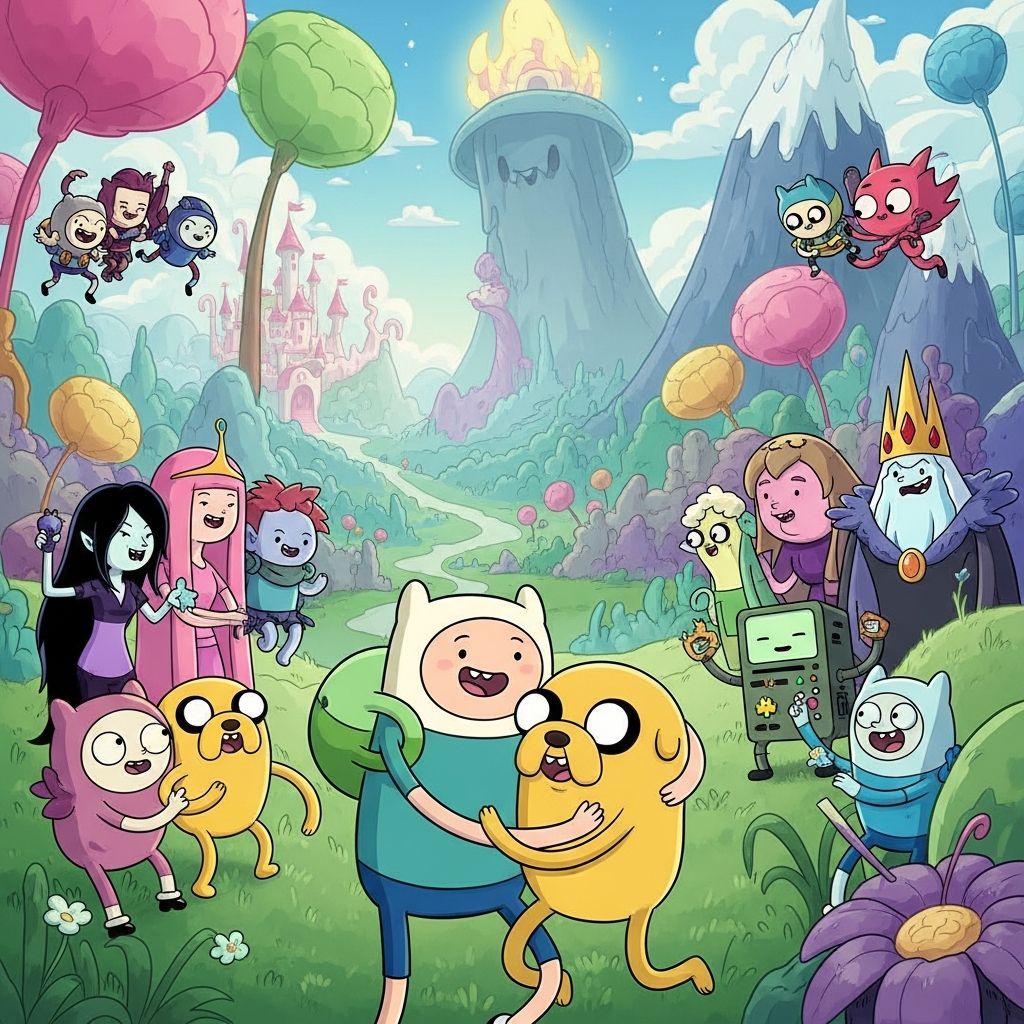
Adventure Time is an American animated fantasy series created by Pendleton Ward for Cartoon Network. It follows Finn the Human, a brave boy, and his magical dog-brother Jake as they explore the surreal, post-apocalyptic Land of Ooo.
| Aspect | What Parents Should Know |
|---|---|
| Format | Short, 11-minute episodes that often pair into a half-hour block. |
| Target audience | Produced as a kids’ show, but designed to appeal strongly to teens and adults. |
| Setting | A whimsical fantasy world built on the ruins of a distant, implied nuclear war. |
| Tone | Playful, absurd, and colorful on the surface; surprisingly emotional and philosophical underneath. |
| Recognition | Multiple Emmy Awards and a Peabody Award for storytelling and innovation. |
The show ran from 2010 to 2018 and gradually layered in a complex mythology about the world’s past, the nature of its magic, and the history of key characters.
The Strange World of Ooo: Silly on Top, Serious Underneath
At first glance, Ooo looks like pure chaos: candy kingdoms, vampire queens who play bass, and a shape-shifting dog who treats danger like a game. Underneath that sugar rush, though, the show quietly reveals that Ooo exists long after a catastrophic “Mushroom War”, a thinly veiled reference to nuclear devastation.
Why the Post-Apocalyptic Setting Matters for Parents
- Shows that bad things happened without dwelling on gore. The world is strange and broken, but not graphically violent.
- Models resilience. Characters rebuild, form new communities, and find joy in a damaged world, a pattern young viewers can internalize.
- Invites questions. Kids may ask why some landscapes look destroyed or why there are ruins; this opens the door to age-appropriate discussions about history, war, and consequences.
Research on children’s media suggests that how troubling events are framed matters more than the fact they are present at all: stories that contextualize difficult topics with emotional support and hopeful outcomes can help children process complex feelings more safely.
Finn and Jake: A Blueprint for Imperfect but Loving Family Bonds
At the center of the show are Finn and Jake, adoptive brothers who function as both best friends and a kind of odd-couple parent-child dyad.
Finn the Human: Growing Up in Real Time
- Starts as a heroic kid obsessed with fighting monsters and “being the good guy.”
- Gradually confronts real problems like heartbreak, guilt, bodily changes, and moral gray areas.
- Voice and age evolve over the series, letting kids literally hear him grow up.
For parents, Finn is a useful mirror of childhood and adolescence. He messes up, overreacts, apologizes, and learns. Research on youth media finds that watching characters navigate emotions and then recover with support can help children practice social and emotional skills.
Jake the Dog: The Laid-Back Mentor Who Sometimes Gets It Wrong
- Acts like a chill older sibling or uncle more than a strict guardian.
- Uses humor and avoidance when things get too intense, then usually comes around.
- Models affection and loyalty even when his advice is questionable.
Their bond shows that family doesn’t require perfection. It requires showing up, apologizing when needed, and sticking together when things get weird.
Major Characters and the Feelings They Represent
Adventure Time’s side characters carry much of its emotional weight. Each one can help kids explore a different kind of feeling or life situation.
Princess Bubblegum: Responsibility and Control
- Hyper-competent leader of the Candy Kingdom, often depicted as a scientist and ruler.
- Represents pressure to be perfect and to protect others at any cost.
- Invites conversations about boundaries, leadership, and when caring turns into over-controlling.
Marceline the Vampire Queen: Loneliness and Identity
- Cool, sarcastic musician with centuries of history, much of it painful.
- Embodies themes of abandonment, memory, and found family.
- Her songs often deal with hurt feelings in ways tweens and teens may find especially relatable.
The Ice King: Mental Health and Misunderstood Villains
- Introduced as a comedic villain who kidnaps princesses and behaves erratically.
- Later seasons reveal a tragic backstory involving a magical crown that damages his mind, hinting at cognitive decline and personality change.
- Provides an accessible way to talk about how illness can change a person’s behavior without erasing who they were.
Psychologists have noted that allegorical portrayals of mental health, when framed with compassion, can reduce stigma and foster empathy in young viewers.
Themes Parents Will Notice (Even If Kids Don’t Yet)
Although many episodes are simply funny quests, the show repeatedly returns to a set of deeper themes that grow more explicit as Finn ages.
1. Change Is Inevitable—and Often Uncomfortable
Across ten seasons, bodies, relationships, and even kingdoms transform. Friendships drift, buildings crumble, and characters literally molt, age, or mutate. Developmental psychologists emphasize that helping children see change as a normal part of life can support resilience and adaptability.
With your child, you can highlight:
- Characters who feel scared or sad about change but move forward anyway.
- Ways that change can bring new friends, skills, or chances to repair old mistakes.
2. Good and Evil Are More Complicated Than Fairytales
Villains rarely stay flat in Adventure Time. Many former enemies become allies after their histories are revealed, while some seemingly noble characters make harmful choices.
- Helps kids question snap judgments. Why is someone acting this way? What might have happened to them?
- Encourages empathy without ignoring harm. Children can learn to care about a character while still recognizing that certain actions are not okay.
3. Grief, Memory, and Letting Go
Several characters wrestle with lost relationships, long lives, or fading memories. Instead of presenting grief as a one-time event, the show depicts it as something that resurfaces and evolves.
- Normalizes sadness. Heroes cry, reminisce, and write songs about their pain.
- Shows multiple coping tools. Music, friendship, humor, and quiet reflection all appear as ways of working through difficult feelings.
Potential Concerns: What Might Be Too Much for Some Kids?
Despite its bright palette and jokes, Adventure Time is not a perfect fit for every child at every age. Parents should be aware of a few recurring elements.
- Mild but frequent fantasy violence. Sword fights, monsters, and magical battles are common, though usually stylized and brief.
- Occasional body horror or unsettling visuals. Shapeshifting, gooey creatures, and mutated forms may worry more sensitive kids.
- Emotional intensity. Themes like abandonment, heartbreak, or existential dread appear more often in later seasons.
- Dark humor and surreal logic. Some jokes rely on absurdity or morbid twists that younger children may misinterpret.
Media guidance organizations typically recommend that parents of younger children co-view more complex shows, especially when themes of violence or loss appear, so that adults can answer questions and offer reassurance.
Strategies for Watching Adventure Time With Your Kids
Handled thoughtfully, Adventure Time can be more than a distraction—it can become a shared language for talking about growing up, relationships, and hard feelings.
Before You Start
- Preview a few episodes alone. Especially from later seasons, to check tone and content.
- Consider starting earlier in the run. Early seasons are generally lighter and more episodic; later story arcs grow denser and more intense.
- Match episodes to your child’s temperament. If your child is sensitive, avoid the spookier or more heartbreaking stories at first.
Questions to Spark Conversation
After an episode, open-ended questions can help kids process what they’ve seen and connect it to their own experiences.
- “How do you think Finn felt when that happened? Have you ever felt like that?”
- “Why do you think that character acted mean? What could be going on inside them?”
- “What was your favorite part? Was there anything that bothered you?”
- “If you were in Ooo, what kind of person (or creature) would you want to be?”
Using the Show to Talk About Real-World Topics
The show’s whimsical distance from our world makes it a safer way to approach heavy subjects. For example:
- War and consequences: Ruined landscapes and old technology can lead into simple explanations about real-world conflict and why peace matters.
- Mental health: Characters like the Ice King can introduce ideas about how illness may change behavior while the person remains worthy of care.
- Different families and identities: Found families, magical transformations, and fluid identities can help kids understand that not all families or bodies look the same.
Why Adults Get Hooked Too
Many parents discover that they end up watching Adventure Time even after their kids leave the room. That is not an accident; the show was intentionally built to operate on multiple levels.
- Nostalgia and genre play. It riffs on video games, fantasy epics, and classic animation in ways that older viewers recognize.
- Long-form storytelling. Background details in early seasons pay off years later, rewarding attention and re-watches.
- Emotional honesty. Episodes tackle adult-sized dilemmas: romantic regret, caring for aging loved ones, and questioning one’s purpose.
- Art and music. A distinctive visual style and eclectic soundtrack make it feel more like an indie project than a typical toy-driven kids’ show.
Critics have praised this multi-layered approach as one reason the show helped usher in a wave of more ambitious animated television.
Is Adventure Time Right for Your Family?
Every family’s comfort level is different. Some households embrace darker, emotionally complex stories; others prefer simpler comfort viewing. You can use a quick mental checklist to decide:
- Does your child enjoy fantasy and a bit of weirdness?
- Are they already asking big questions about death, fairness, or identity?
- Do you have time and energy to co-watch at least some episodes and talk afterward?
- Are you okay with occasional mild scares or unsettling images if they are balanced by warmth and humor?
If you answer “yes” to most of these, Adventure Time can be not just acceptable but genuinely valuable family media. If not, you might wait a year or two and revisit it when your child is ready for heavier themes.
Frequently Asked Questions (FAQs)
What age is Adventure Time appropriate for?
It is rated for children, but many media experts suggest that its themes land best with kids around 8 and up, with co-viewing recommended for younger or sensitive children due to occasional dark or emotional content.
Is Adventure Time too scary or dark for my child?
Most episodes are light and funny, but some include monsters, eerie imagery, or intense emotional moments. Previewing a handful of episodes and skipping storylines that feel too heavy is a practical way to tailor the show to your child.
Does the show have educational value, or is it just silly?
While it is not educational in the traditional academic sense, it offers strong social and emotional learning opportunities by modeling friendship, conflict resolution, emotional expression, and moral complexity.
Do I need to watch Adventure Time in order?
Early seasons are more episodic, so you can dip in almost anywhere. However, character development and major story arcs build over time, so watching roughly in order helps older kids and adults appreciate the long-term payoffs.
How can I tell if an episode will be too intense before my child watches it?
Look up brief synopses or content notes on reputable review sites, or simply pre-screen episodes yourself. If an episode centers on war flashbacks, big character deaths, or horror imagery, save it for when your child is older or watch it together with extra support.
References
- Adventure Time — Wikipedia. 2024-05-20. https://en.wikipedia.org/wiki/Adventure_Time
- Adventure Time (TV Series 2010–2018) — IMDb. 2024-06-01. https://www.imdb.com/title/tt1305826/
- Media and Young Minds — American Academy of Pediatrics. 2016-10-21. https://publications.aap.org/pediatrics/article/138/5/e20162591/60622/Media-and-Young-Minds
- The Case of Adventure Time — The Black Case Diaries. 2020-09-01. https://www.blackcasediaries.com/season-6/the-case-of-adventure-time-jcaj7-mjpc5-ekf2d