Adult coloring pages have evolved from a nostalgic throwback into a widely used tool for relaxation, self-expression, and everyday stress relief. Instead of being a childish pastime, coloring is now embraced as a simple, low-cost way to pause, breathe, and focus on something beautiful.
Whether you are navigating a demanding job, parenting, caregiving, or simply feeling overwhelmed by constant digital noise, a few minutes of focused coloring can create a much-needed pocket of calm. With the right pages, tools, and mindset, this gentle hobby can support your mental well-being in surprisingly powerful ways.
Why Coloring Works for Stressed-Out Adults
Coloring taps into a unique blend of focus and relaxation that many adults rarely experience in their day-to-day routines. The repetitive, simple motions of filling in shapes give your mind something clear and manageable to focus on, which can help interrupt cycles of worry and rumination.
Because coloring does not require expert skill or complex decision-making, it can feel safe and approachable even when you are mentally drained. Instead of scrolling on a phone or watching another show, it offers an active but soothing alternative that keeps your hands busy and your mind gently engaged.
Key Benefits of Adult Coloring
- Built-in stress relief: Focusing on shapes, lines, and colors can gently pull your mind away from anxious thoughts and to-do lists.
- Mindfulness in motion: Coloring encourages you to stay present with simple sensations like the feel of the pencil and the gradual appearance of color.
- Creative outlet without pressure: You can experiment with color combinations and shading without worrying about being a “real artist.”
- Screen-free downtime: Coloring provides a break from digital overwhelm and constant notifications.
- Nostalgic comfort: Many adults find that coloring reconnects them with the simple joys of childhood play.
Types of Adult Coloring Pages and Who They Suit
Not all adult coloring pages are the same. Some are quick and simple for busy days, while others are detailed and intricate for when you want a deep, immersive session. Choosing the right style for your energy level and personality makes coloring much more satisfying.
Below is an overview of common types of adult coloring pages and the kinds of people who may enjoy them most.
Popular Styles of Adult Coloring Pages
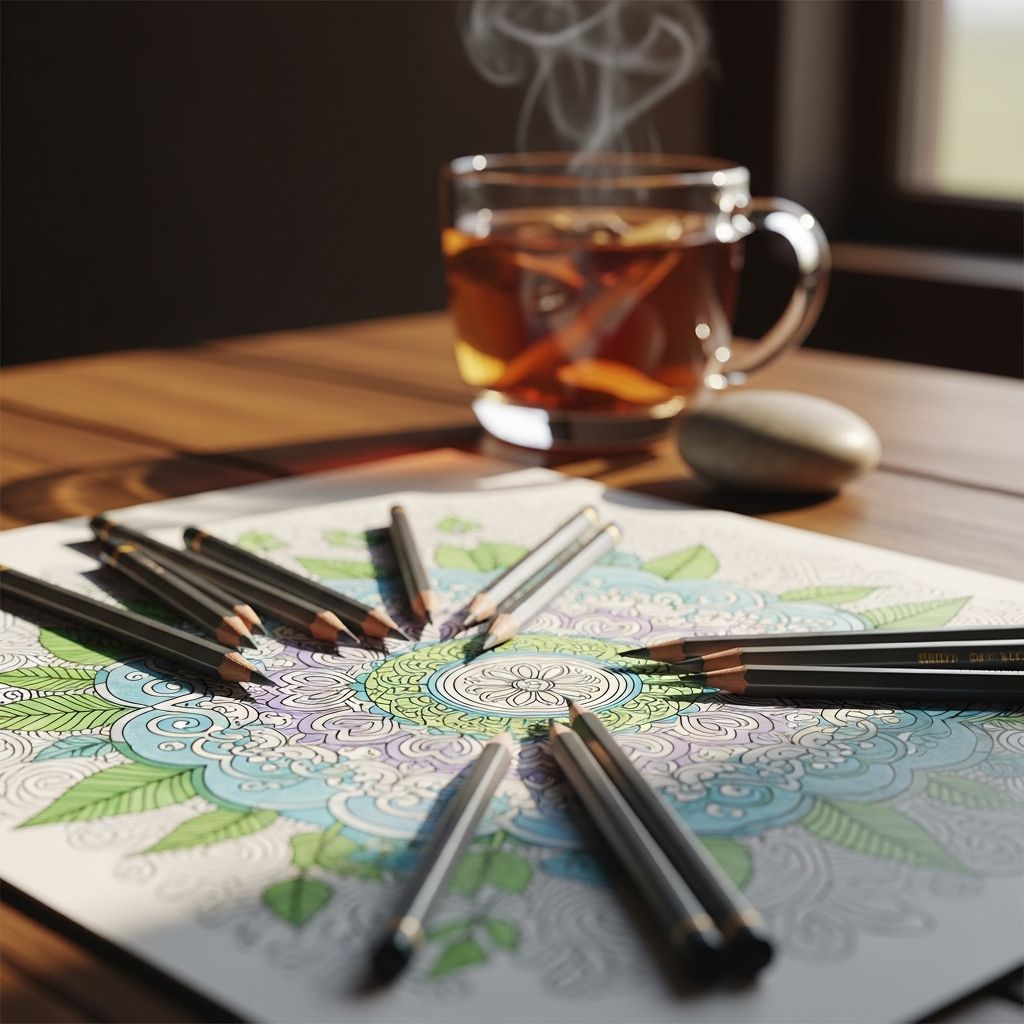
- Mandala and geometric designs: Circular or repeated patterns ideal for people who enjoy symmetry and meditative repetition.
- Nature and botanical pages: Flowers, leaves, forests, and animals suited for those who find calm in natural imagery.
- Inspirational and word art: Pages featuring uplifting phrases with decorative lettering, great for daily motivation or journaling companions.
- Abstract and doodle art: Free-form shapes and whimsical drawings for creative explorers who dislike strict rules.
- Scenes and storytelling pages: Cityscapes, rooms, or fantasy worlds that invite you to imagine a story as you color.
- Holiday and seasonal themes: Pages tied to specific celebrations or times of year, perfect for creating a festive mood.
Matching Coloring Page Styles to Your Mood
| Page Style | Best For | Ideal Mood or Situation |
|---|---|---|
| Mandala / Geometric | People who like structure and rhythm | When you feel scattered and want focus and calm |
| Nature / Botanical | Nature lovers and daydreamers | When you want gentle, soothing imagery and soft color palettes |
| Inspirational Words | Goal setters and journal keepers | When you need encouragement or want to pair coloring with reflection |
| Abstract / Doodle | Creative, spontaneous personalities | When you do not want rules or a “right way” to color |
| Scenes / Story Pages | Readers, storytellers, and imaginative thinkers | When you have more time and want to get lost in a world |
Essential Supplies: What You Really Need (and What You Don’t)
One of the biggest advantages of adult coloring is how easy it is to start. You do not need a full art studio or a huge budget; a single printed page and a handful of pencils can provide a satisfying session.
As your interest grows, you may choose to experiment with different tools and paper types, but it is wise to begin with a simple setup and let your collection evolve naturally.
Basic Tools for Adult Coloring
- Colored pencils: Versatile, precise, and easy to layer for shading; a great all-purpose choice.
- Gel pens: Ideal for fine lines, accents, and metallic or glitter effects on intricate designs.
- Markers: Good for bold, vibrant color, though some may bleed through thin paper.
- Fine liners or pens: Useful for outlining, adding details, or enhancing black lines on a design.
Nice-to-Have Extras
- Thicker paper or cardstock: Helps prevent bleeding and allows for blending or layering.
- Blending tools: Colorless blenders, blending pencils, or cotton swabs for smoother gradients.
- Storage cases: Keep pencils and pens organized so coloring is easy to start anytime.
- Clipboards or drawing boards: Helpful if you like to color on the couch, in bed, or on the go.
How to Turn Coloring into a Relaxing Ritual
Coloring becomes most powerful when it shifts from a random activity to a small ritual you can return to regularly. You do not need long sessions; even ten minutes can feel restorative when approached intentionally.
By paying attention to your surroundings, your breath, and your sensory experience, you transform simple coloring into a mindful break that supports emotional balance.
Step-by-Step Mindful Coloring Routine
- Choose your space: Pick a spot with comfortable seating, decent lighting, and minimal distractions.
- Set a soft intention: Decide what you want from this session, such as calm, focus, or simple enjoyment.
- Gather only what you need: Select one page and a limited set of colors so the choices do not feel overwhelming.
- Breathe before you begin: Take a few slow breaths and consciously relax your shoulders and jaw.
- Color slowly: Focus on each stroke, how the color appears on the page, and the pressure of your hand.
- Ignore perfection: If you go outside the lines or dislike a color choice, simply keep going without judgment.
- End with gratitude: When you are done (even if the page is unfinished), notice how you feel compared to when you started.
Creative Ways to Use Finished Coloring Pages
Completed pages do not have to remain hidden in a drawer or coloring book. With a little creativity, they can be repurposed as decor, gifts, or personal reminders that your time and care matter.
Using your pages in tangible ways can also reinforce the idea that your relaxation time has real value, not just for your mood but for your environment and relationships.
Practical and Decorative Uses
- Wall art: Frame your favorite pages or create a small gallery wall above a desk or reading chair.
- Bookmarks: Cut strips from a colored page, laminate if desired, and punch a hole for a ribbon.
- Greeting cards: Fold a colored sheet or glue part of it onto blank cardstock for a handmade card.
- Journal covers and inserts: Tape or glue colored designs to the front of notebooks or use them as divider pages.
- Gift tags and wrapping: Trim sections into tags, or use a full colored page as unique gift wrap for small items.
Incorporating Coloring into Daily Life
For many adults, the biggest challenge is not interest but time. The good news is that coloring fits easily into small pockets of your day, and it does not require a large uninterrupted block to be beneficial.
By anchoring coloring to existing routines and choosing formats that match your schedule, you can make it a consistent part of your self-care instead of something you “never get around to.”
Simple Ideas for Busy Schedules
- Morning coffee ritual: Keep a printed page and a small pencil set near where you drink your coffee, and color for five minutes before reaching for your phone.
- Post-work transition: Use coloring as a buffer between work and home responsibilities to signal to your brain that the workday is over.
- Bedtime wind-down: Spend a few minutes with soft lighting and soothing colors instead of late-night screen time.
- Coloring with kids: Print a page for yourself and simpler ones for children so everyone can participate together at their own level.
- Travel and waiting rooms: Carry a small notebook of mini designs and a travel pencil case for flights, trains, or long appointments.
Choosing or Creating the Right Adult Coloring Pages
With thousands of options available, it helps to be selective about the coloring pages you bring into your space. The right design can feel calming and inviting; the wrong one may feel busy, frustrating, or uninspiring.
As you try different pages, notice which ones you naturally reach for and which ones you avoid. Over time, you will build a personal “library” of designs that truly support your relaxation.
What to Look For in a Coloring Page
- Line thickness: Thicker lines are generally easier on the eyes and more forgiving; very thin lines may feel fussy.
- Level of detail: Choose simpler designs for short breaks and more detailed pages for extended, immersive sessions.
- Theme and imagery: Pick subjects that feel comforting or inspiring to you personally, not just what is trendy.
- Print quality: Crisp lines on decent paper will be more pleasant to color than blurry or grainy designs.
Designing Your Own Pages
If you are feeling adventurous, consider sketching your own coloring pages. These do not have to be perfect; simple shapes, repeating patterns, or hand-drawn words are enough to get started.
Draw in black pen or marker, scan or photograph your design if you want to print multiple copies, and enjoy coloring your own artwork. This extra step of creation can deepen the sense of ownership and satisfaction you feel when the page is complete.
Common Myths About Adult Coloring
Despite its popularity, several myths can discourage people from trying or enjoying adult coloring pages. Clearing up these misunderstandings makes it easier to approach coloring with curiosity rather than pressure or self-criticism.
Below are a few misconceptions that often come up, along with more helpful ways to think about this simple practice.
Myth vs. Reality
| Myth | Why It’s Misleading | Helpful Reframe |
|---|---|---|
| “Coloring is only for kids.” | Assumes play and creativity are not appropriate for adults. | Playful, low-stakes activities are healthy at any age and can reduce stress. |
| “You have to be artistic to enjoy it.” | Confuses coloring with creating original illustrations from scratch. | Designs are already drawn; your role is simply choosing and applying colors. |
| “If I can’t finish a page, it’s not worth starting.”} | Treats coloring like a chore rather than a process. | Even a few minutes of coloring can be beneficial, whether the page is finished or not. |
| “It’s a waste of time compared to ‘productive’ activities.” | Ignores the value of rest and nervous system regulation. | Short, restorative breaks can improve focus, mood, and long-term productivity. |
Frequently Asked Questions About Adult Coloring Pages
How long should I color to feel a benefit?
There is no strict minimum, but many people notice a shift in their mood or tension level after about ten to twenty minutes of focused coloring. Shorter sessions can still be helpful, especially if done consistently.
Is coloring a replacement for therapy or medical treatment?
No. Coloring can be a supportive self-care tool, but it does not replace professional care for mental or physical health conditions. If you are struggling with persistent anxiety, low mood, or other concerning symptoms, it is important to seek guidance from a qualified health professional.
What if I am easily frustrated when I make mistakes?
It may help to start with simpler designs, thicker lines, and larger spaces so you feel less pressure. You can also choose darker colors or more forgiving mediums, like colored pencils instead of permanent markers, and treat each “mistake” as part of the charm of a hand-colored page.
Can I color on a tablet instead of paper?
Yes, many people enjoy digital coloring apps using a tablet and stylus. While this does not provide the same tactile experience as paper, it still offers focus, creativity, and visual satisfaction, and may be more convenient for travel or small spaces.
Are there ways to combine coloring with other wellness practices?
Absolutely. Some people pair coloring with calming music, aromatherapy, or gentle breathing exercises. Others incorporate it into journaling, gratitude lists, or goal-setting by coloring pages that include affirmations or meaningful words.
Bringing It All Together
Adult coloring pages are a simple yet powerful way to introduce more calm, creativity, and mindful presence into a busy life. With minimal supplies and no pressure to be “good at art,” this practice is accessible to almost anyone.
By choosing designs that suit your mood, creating a small ritual around the process, and allowing yourself to enjoy the journey rather than chasing perfection, you can turn coloring into a supportive habit that brightens your days—one stroke of color at a time.