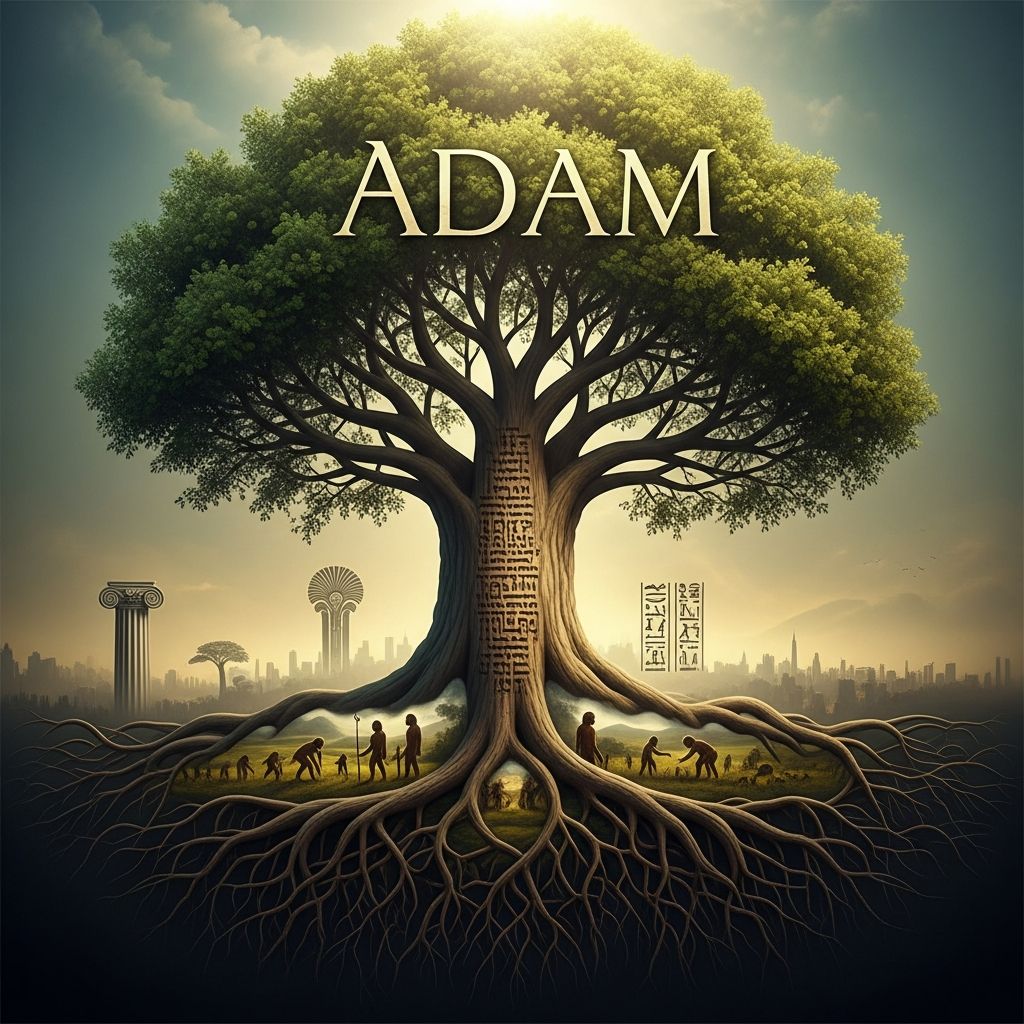
The name **Adam** carries profound historical and spiritual weight, originating from ancient Hebrew traditions where it symbolizes the essence of humanity itself. Derived from the word for ‘ground’ or ‘man,’ it evokes the biblical narrative of creation, making it a perennial favorite among parents seeking names with deep meaning and simplicity.
Deep Roots in Hebrew Etymology
At its core, Adam stems from the Hebrew term adam, which translates to ‘man’ or ‘humanity.’ This connects directly to adamah, meaning ‘earth’ or ‘soil,’ reflecting the Genesis account of the first human formed from the dust of the ground. Linguists note additional layers: the root dmm implies ‘to begin’ or ‘produce,’ positioning Adam as the ‘beginning’ of humankind or even ‘red man’ due to soil’s hue and ties to blood (dam).
This multifaceted etymology underscores humanity’s bond with the earth—humans as tillers of soil, bearers of life force through blood, and originators of civilization. In biblical Hebrew, it paints a picture of people emerging from land, shaped by geography much like early humans altered their environments. Such interpretations highlight Adam not just as a personal name but as a philosophical emblem of existence.
Biblical Significance and Cultural Resonance
In the Hebrew Bible, Adam is the progenitor of all people, created by God and placed in Eden, symbolizing innocence, curiosity, and the human condition. This story resonates across Abrahamic faiths—Judaism, Christianity, and Islam—ensuring the name’s global reach. The Quran similarly portrays Adam as the first prophet, reinforcing its sacred status in Muslim communities.
Beyond religion, Adam embodies universality. Its straightforward sound transcends languages, adapting minimally while retaining biblical prestige. This has sustained its use for millennia, bridging ancient texts with modern nurseries. Parents often choose it for its moral undertones: strength from earth, vitality from blood, and primacy as ‘the first.’
Global Variations and Adaptations
Adam’s adaptability shines in its international forms, each echoing the original while fitting local phonetics. Here’s a table of key variants:
| Language/Region | Variant | Meaning/Notes |
|---|---|---|
| Spanish/Portuguese | Adán/Adão | Direct biblical renderings, popular in Latin America. |
| Italian | Adamo | Emphasizes melodic flow in Romance languages. |
| Arabic/Turkish | Aadam/Adem | Common in Middle East, tied to Quranic lore. |
| Lithuanian/Hungarian | Adomas/Adám | Slavic influences add regional flair. |
| Russian/Polish | Адам | Cyrillic form preserves Hebrew essence. |
These variations demonstrate Adam’s transcultural endurance, from Europe to the Middle East, often ranking high in Christian and Muslim nations. Rarely used for girls, though sparse records exist, affirming its masculine identity.
Historical Popularity Trends
Adam’s chart performance reveals steady appeal. In the U.S., it peaked in the 1980s-1990s, hovering in top 100s recently per Social Security data, valued for brevity and strength. The UK mirrors this, with surges tied to biblical revivals. Globally, its consistency stems from unchanged spelling across alphabets, unlike trendier names.
- 1980s Boom: Rose amid renewed interest in Old Testament names.
- Modern Stability: Ranks solidly, appealing to traditionalists avoiding fleeting fashions.
- International Peaks: Tops charts in Arabic-speaking countries, France, and Scandinavia.
Factors like celebrity influence and media (e.g., Adam Sandler, Adam Levine) bolster its visibility without diluting heritage.
Illustrious Figures Bearing the Name
Countless notables have elevated Adam’s legacy:
- Adam Smith (1723-1790): Scottish economist, ‘father of modern economics’ via Wealth of Nations.
- Adam Levine: Maroon 5 frontman, blending music fame with style icon status.
- Adam Driver: Acclaimed actor in Star Wars and Marriage Story, showcasing intensity.
- Historical: Adam of Dryburgh (1140s theologian), Adam the Welshman (12th-century bishop).
- Modern: Adam Peaty (Olympic swimmer), exemplifying athletic prowess.
These icons—from thinkers to entertainers—illustrate Adam’s versatility across eras and fields.
Why Adam Endures for New Generations
Parents gravitate to Adam for its blend of antiquity and accessibility. Pronounced universally as AD-uhm, it pairs seamlessly with surnames. Nicknames like Ad or Addie add playfulness, while meanings inspire values of groundedness and vitality.
In diverse families, it honors Judeo-Christian roots without exclusivity. Data shows rising use in secular contexts, signaling timeless elegance over novelty. Its earthy symbolism resonates amid environmental awareness, positioning Adam as both classic and contemporary.
Practical Considerations for Naming
Choosing Adam means considering:
- Sibling Harmony: Complements names like Eve, Noah, or Seth for thematic unity.
- Middle Name Pairings: Flows with James (Adam James), strong monosyllables, or ethnic middles.
- Potential Teases: Minimal due to solid reputation; avoids overly quirky vibes.
- Global Travel: Recognizable everywhere, easing international life.
Ultimately, Adam offers reliability—profound yet unpretentious.
Famous Adams in Pop Culture
Pop culture amplifies Adam’s allure:
- Movies/TV: Adam West (Batman), Adam Brody (The O.C.).
- Music: Adam Lambert (glam rock star).
- Sports: Adam Scott (golfer), Adam Jones (baseball).
These amplify its cool factor for Gen Z parents.
Frequently Asked Questions (FAQs)
Is Adam a biblical name?
Yes, Adam is the first man in Genesis, formed from earth, central to Judeo-Christian and Islamic traditions.
What does Adam mean in Hebrew?
It means ‘man,’ ‘humanity,’ or ‘ground/earth’ (adamah), with ties to ‘red,’ ‘blood,’ and ‘beginning’.
How popular is the name Adam today?
Consistently top 100-200 in the U.S./UK, peaking 1980s; strong globally in faith-heavy regions.
Are there female versions of Adam?
Rarely; primarily masculine, though occasional feminine uses noted historically.
What are cute nicknames for Adam?
Ad, Addy, Adamski—versatile and affectionate.
Final Thoughts on Choosing Adam
With layers of meaning—from earth’s humility to life’s origin—Adam stands as a beacon of enduring strength. Its simplicity belies rich history, making it ideal for parents crafting legacies. Whether drawn to faith, nature, or fame, this name promises a strong start.
References
- The Amazing Name Adam: Meaning and Etymology — Abarim Publications. Accessed 2026. https://www.abarim-publications.com/Meaning/Adam.html
- Adam Baby Name Meaning, Origin, Popularity Insights — Momcozy. Accessed 2026. https://momcozy.com/blogs/baby-names/adam
- Adam (given name) — Wikipedia. Accessed 2026. https://en.wikipedia.org/wiki/Adam_(given_name)
- Adam – Etymology, Origin & Meaning — Etymonline. Accessed 2026. https://www.etymonline.com/word/Adam
- Adam: Meaning and Origin of First Name — Ancestry.com. Accessed 2026. https://www.ancestry.com/first-name-meaning/adam