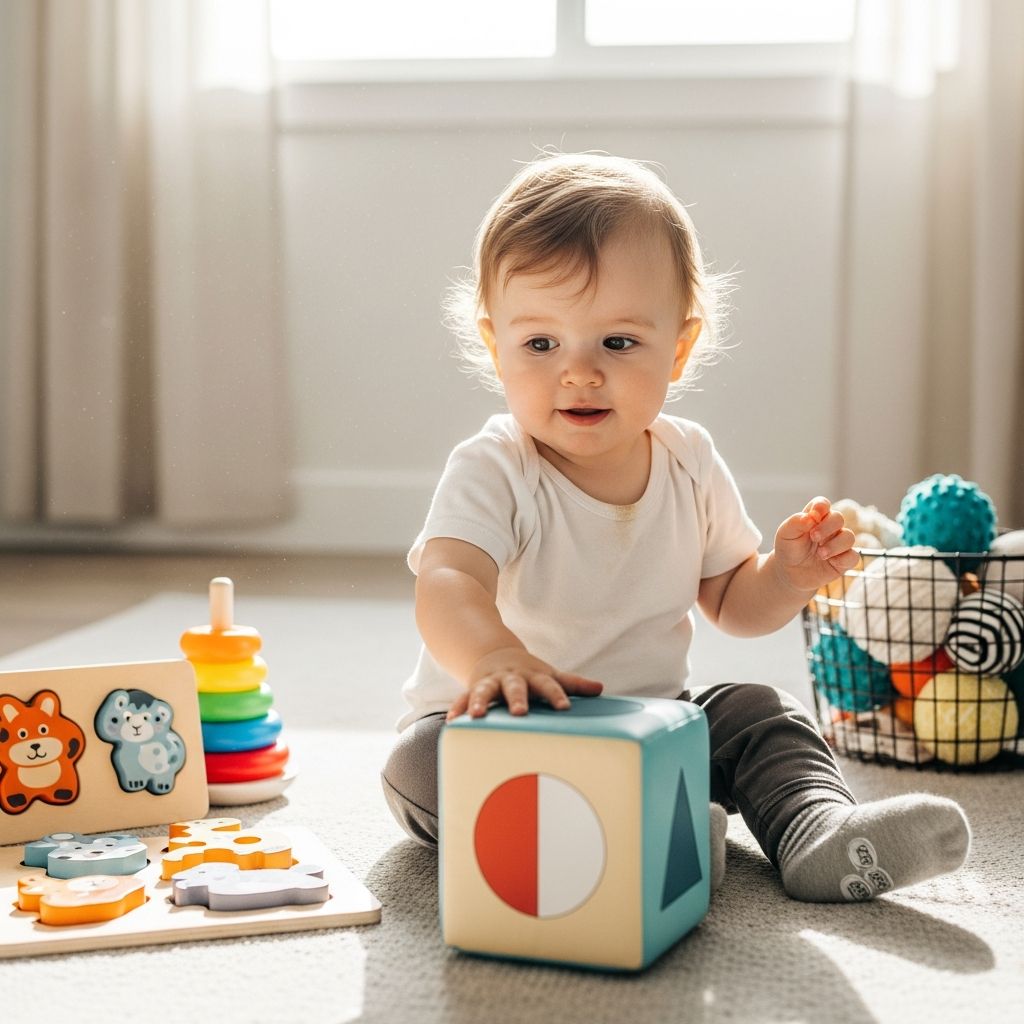
One-year-olds learn best through play, exploration, and connection with their caregivers. At this age, everyday moments become opportunities to build language, movement, problem-solving, and social-emotional skills. The ideas below focus on simple, realistic activities you can do at home without special equipment.
Understanding Your One-Year-Old
Around the first birthday, many children are becoming more mobile, curious, and social. Some may be walking, while others are cruising along furniture or crawling quickly. All of these are normal variations. The goal of activity time is not to push milestones but to create safe chances to practice new skills.
Short bursts of play are usually more successful than long sessions. Expect your child’s attention to shift frequently and follow their lead when possible. Repeating the same simple games day after day is not boring for a one-year-old; it is how they learn.
Simple Sensory Explorations
Sensory play lets your child use touch, sight, sound, smell, and sometimes taste to understand the world. Keep it simple and always supervise closely, especially with anything that could be a choking hazard or messier materials like water.
Texture Discovery Basket
Gather a small collection of safe household items with different textures and place them in a shallow basket or container.
- Examples: a soft washcloth, a silicone spatula, a wooden spoon, a smooth plastic lid, a crinkly paper towel roll.
- Sit with your child and name what they touch: “Soft cloth,” “Cold spoon,” “Bumpy brush.”
- Let your child pull items out, bang them together, or move them from one container to another.
Water Play at the Sink or Basin
Water is endlessly fascinating to one-year-olds and can be offered in a very controlled way.
- Fill a shallow basin or baking dish with a small amount of warm water.
- Offer a few cups, a sponge, and a spoon. Show simple actions like scooping and pouring.
- Stay within arm’s reach and keep water shallow; even a little water requires active supervision.
Sound Shakers
Make simple instruments using items you already have.
- Use clean, empty plastic bottles or small food containers with tight lids.
- Fill each with a different material (such as a few dry beans, rice, or pasta) and seal securely with tape.
- Shake fast, slow, loud, and soft; pause to let your child try and copy your rhythm.
Movement and Gross Motor Play
Gross motor activities strengthen big muscles and support balance, coordination, and confidence. You do not need a big space; a small living room or hallway can be enough.
Pillow Pathway
Create a soft obstacle course for crawling, cruising, or early walking.
- Lay couch cushions or pillows on the floor to form a short “path.”
- Encourage your child to crawl over, step between, or cruise around them while you hold their hand if needed.
- Cheer for their efforts rather than just the results to build confidence.
Push-and-Pull Adventures
Push toys and simple household objects can encourage walking and balance.
- Offer a sturdy push toy, laundry basket, or upside-down cardboard box they can lean on and push across the floor.
- Place a favorite toy at the other end of the room and encourage, “Let’s go get it!”
- Keep the floor clear of small items to reduce slipping or tripping.
Follow-the-Leader Dance
Movement plus music is a fun way to support coordination.
- Play a short song and do simple motions: clapping, marching in place, gentle spinning, or lifting arms up and down.
- Pause the music and freeze; exaggerate your still pose so your child can notice and imitate.
- Let your child “lead” sometimes by copying their movements instead of asking them to copy yours.
Fine Motor and Problem-Solving Activities
Fine motor skills involve the small muscles of the hands and fingers, and they develop alongside early problem-solving abilities. Everyday objects make excellent tools for this kind of play.
Container and Lid Matching
Use food storage containers to help your child experiment with size, shape, and spatial awareness.
- Gather 3–5 containers and their matching lids of different sizes.
- Let your child take lids off and try to put them back on, helping as needed.
- Talk about concepts like “big,” “small,” “on,” and “off” while you play.
Simple Posting Game
Posting toys—putting objects into slots or holes—are very satisfying for this age.
- Cut a slot in the lid of a clean cardboard box or container.
- Offer large, safe objects to drop in, such as chunky blocks or big, smooth bottle caps.
- Open the box together to “find” the items again, then repeat.
Stacking and Knocking Down
Stacking teaches cause-and-effect, control, and patience—even when the tower falls.
- Use soft blocks, nesting cups, or even cardboard boxes that stack.
- Build a short tower and invite your child to knock it down, then gradually encourage them to help stack.
- Count the blocks as you stack and celebrate every attempt, not just the “perfect” tower.
Language-Rich Daily Routines
One-year-olds are soaking up language long before they can speak in full words or sentences. Simple, repetitive phrases during routine tasks are powerful for communication and early literacy.
Everyday Narration
Turn ordinary tasks into language lessons without adding extra time to your day.
- During diaper changes, baths, and meals, describe what you are doing in short sentences.
- Name objects your child looks at or reaches for: “Cup,” “Ball,” “Spoon.”
- Pause regularly to allow your child to babble, point, or respond in their own way.
Interactive Book Time
Reading with a one-year-old is more about engagement than finishing a story from start to finish.
- Choose sturdy board books with clear pictures and few words.
- Let your child turn pages, tap pictures, or close the book when they are done.
- Ask simple questions like “Where is the dog?” and then point it out if they do not respond.
Gestures and Early Words
Gestures often come before spoken words and help your child communicate their needs.
- Gently model common gestures like waving “hi,” blowing a kiss, or clapping for “yay.”
- Pair gestures with words: wave and say “Hello,” clap and say “You did it!”
- Respond enthusiastically when your child uses any gesture or sound to communicate.
Social-Emotional and Imaginative Play
At one year, children are starting to show preferences, imitate adults, and seek comfort from familiar people. Simple pretend games help them practice new roles and feelings in a safe way.
Mini Helper Games
Inviting your child to “help” taps into their natural desire to imitate you.
- Offer a small cloth so they can “wipe” the table next to you.
- Let them carry a light item from one room to another as part of tidying up toys.
- Praise effort more than accuracy to build a positive sense of contribution.
First Pretend Play
Pretend games do not need props; your actions and voice are enough.
- Pretend to drink from an empty cup and then offer a “sip” to your child or their stuffed animal.
- Use a small towel or blanket to “put the teddy to bed,” saying goodnight and patting gently.
- Follow your child’s ideas—if they put a shoe on their hand, turn it into a silly puppet moment.
Peekaboo Variations
Peekaboo remains a favorite because it supports anticipation and connection.
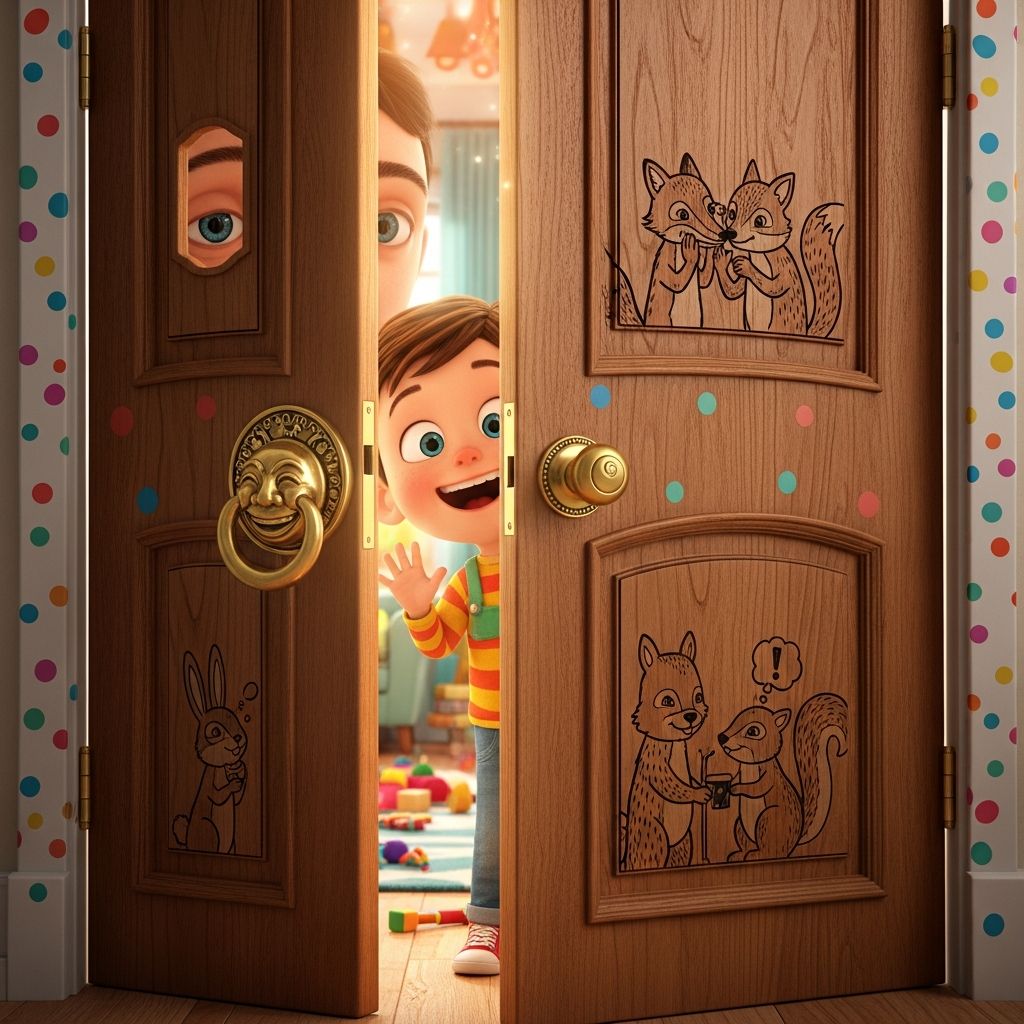
- Hide behind a door frame or piece of furniture and pop out with a big smile.
- Place a small toy under a cloth and let your child lift it to find the “hidden” object.
- Slow the game down sometimes to build suspense and encourage your child to initiate the “boo.”
Sample Daily Play Mix
Each child’s day will look different, but many families find it helpful to think in terms of a mix of play types rather than a rigid schedule. A balanced day might include movement, quiet time, sensory play, and plenty of cuddles.
| Time of Day | Type of Play | Example Activity |
|---|---|---|
| Morning | Movement & language | Pillow pathway followed by a short book on the couch |
| Midday | Sensory & fine motor | Water play in a shallow basin and container-lid matching |
| Afternoon | Social-emotional | Pretend feeding a stuffed animal and peekaboo |
| Evening | Calming connection | Simple songs, gentle rocking, and a short bedtime story |
Safety and Realistic Expectations
Safety is the foundation of all activities. Always supervise closely, avoid small objects that could be swallowed, secure heavy furniture, and be cautious with water, cords, and breakable items. If an activity seems too advanced or stressful, scale it back or pause and try again another day.
Remember that one-year-olds learn through repetition and gentle challenge, not pressure. It is normal for them to lose interest quickly, explore in unexpected ways, or repeat the same small action many times. Viewing play as practice rather than performance can make activity time more enjoyable for both of you.
FAQs About Activities for One-Year-Olds
How long should my one-year-old play with an activity?
Many one-year-olds move between activities every few minutes. If they stay engaged for 5–10 minutes, that is already meaningful practice. Instead of forcing them to continue, rotate through a few simple options and allow them to return to favorites throughout the day.
Do I need special toys to help my child develop?
Specialized toys can be fun but are not necessary. Items like containers, spoons, pillows, boxes, and cloths are often just as engaging. What matters most is that activities are safe, age-appropriate, and done with a responsive adult.
What if my child is not walking yet?
Children reach motor milestones at different times. Many one-year-olds are still crawling or cruising, and that can be completely typical. You can still offer movement games like crawling through pillow paths, pulling up at the couch, or pushing a sturdy object across the floor.
How many activities should we do each day?
There is no ideal number. Focus on weaving play into ordinary routines instead of counting activities. A few short, playful moments during dressing, meals, and wind-down times can be just as valuable as planned “activity sessions.”
How can I tell if an activity is too hard?
If your child becomes frustrated quickly, turns away, or shows no interest after a few attempts, the task might be a little advanced. Try simplifying it by offering fewer choices, helping more with your hands, or breaking it into smaller steps. You can always reintroduce the idea in a week or two.