The Auditory Brainstem Response (ABR) test is a specialized hearing test that measures how a child’s hearing nerve and brainstem respond to sound. It is commonly recommended for newborns who do not pass their first hearing screen, as well as for older babies and children who cannot reliably participate in regular hearing tests. This guide explains the test in simple language so parents know what to expect and how to support their child.
What the ABR Test Actually Measures
Hearing starts in the outer ear but depends on a chain of structures all the way to the brain. The ABR test focuses on how sound signals travel along the hearing nerve to the lower parts of the brain, called the brainstem. By recording tiny electrical responses from this pathway, the test shows whether sound is being carried from the ear to the brain as expected.
Unlike regular hearing tests, the ABR does not rely on a child raising a hand, pressing a button, or turning toward a sound. Instead, it measures automatic responses in the nerve and brain using small sensors placed on the skin. This makes it especially useful for infants, toddlers, and children with developmental or communication challenges.
When Doctors Recommend an ABR Test
Doctors and audiologists may suggest an ABR for several reasons. The goal is either to confirm or rule out hearing problems and to guide early treatment when needed. Common situations include newborns who do not pass the hospital hearing screen or children who show signs that they are not hearing normally.
- A baby does not pass the newborn hearing screening done shortly after birth.
- Parents or caregivers notice that a child does not respond consistently to sounds or voices.
- Speech and language seem delayed compared with other children of the same age.
- A child has a medical condition or developmental difference that makes standard hearing tests unreliable.
- Doctors suspect an issue with the hearing nerve or brainstem, not just the eardrum or middle ear.
Because hearing is closely tied to speech, language, and learning, an ABR test can be an important step in making sure a child receives support as early as possible.
How the ABR Test Works
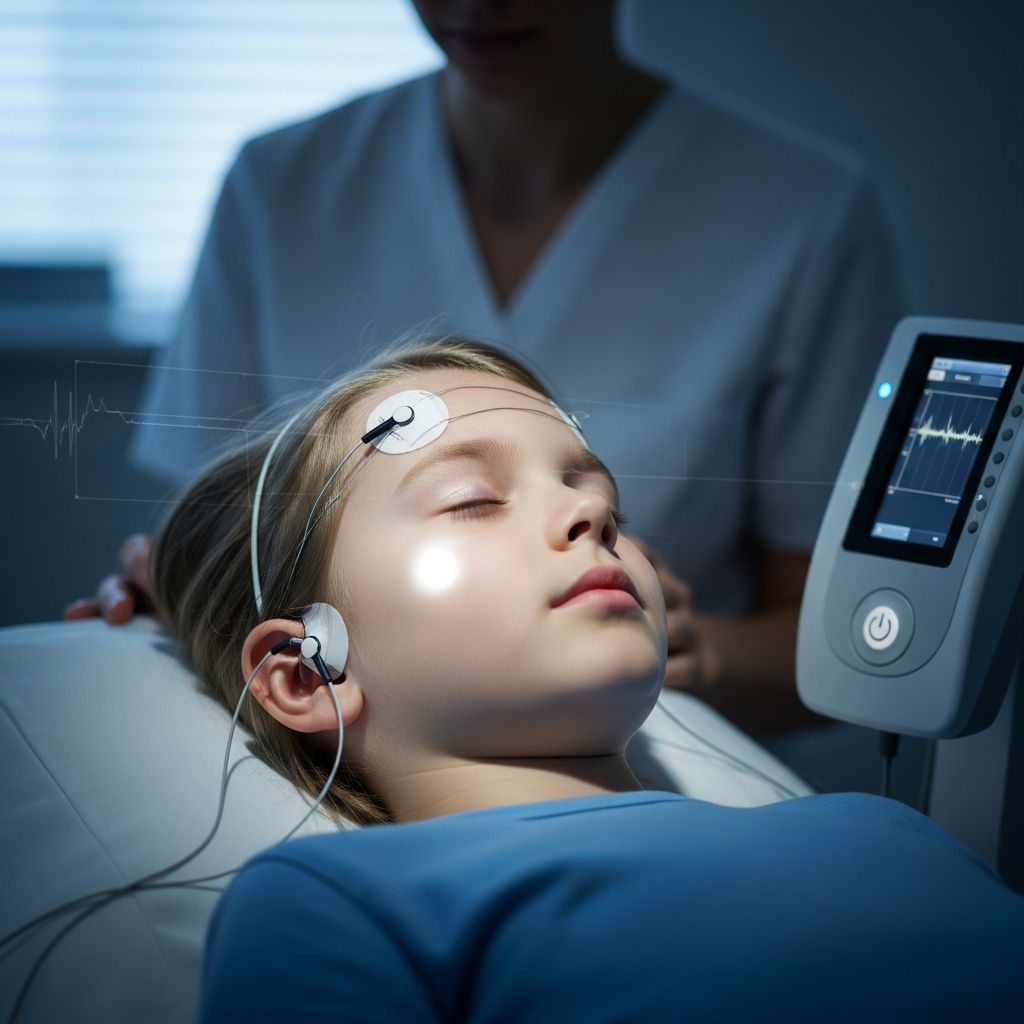
The ABR test uses soft earphones and small sticker-like sensors called electrodes. The earphones send gentle clicking sounds or tones into the ears, while the electrodes pick up the brain’s automatic responses to those sounds. A computer records these responses as wave-like patterns that the audiologist can interpret.
The test is painless. The sensors only “listen” to natural electrical signals from the hearing nerve and brainstem. No electricity is sent into the child’s body. Because muscle movement can interfere with the recording, the results are easiest to read when the child is very still or sleeping.
ABR Test Steps: What Parents Usually See
Although details may vary by hospital or clinic, most ABR tests follow a similar sequence. Understanding the basic steps can help families feel more comfortable and prepared.
- Check-in and brief medical review: A nurse or audiologist will confirm the child’s identity, ask about medical history, medications, and allergies, and explain the process.
- Skin preparation: Small areas on the forehead and near or behind the ears are gently cleaned to help the electrodes stick and pick up clear signals.
- Electrode placement: Soft adhesive sensors are placed on the prepared skin sites. These sensors are connected to thin wires that lead to the testing computer.
- Earphones or ear inserts: Tiny foam earphones or small cups are positioned in or over the child’s ears to deliver the sounds.
- Quiet or sleep time: The room is dimmed and kept calm. For babies, parents may be encouraged to feed or rock them to sleep. Older children are asked to relax and stay still.
- Sound presentation: The audiologist plays a series of clicks and tones at different volumes and sometimes different pitches through the earphones.
- Recording and analysis: The computer collects the responses and displays them as waveforms. The audiologist studies these patterns to determine hearing levels and the function of the hearing nerve.
Testing can take anywhere from about 30 minutes to over an hour, depending on the child’s age, how easily they sleep or relax, and whether both ears are tested at several sound levels.
Natural Sleep vs. Sedated ABR
For young infants, especially under several months of age, an ABR test is often done while the baby sleeps naturally. Parents may be asked to bring the baby tired and hungry, then feed them at the start of the appointment to help them fall into a deep sleep. Once the baby is sleeping, the audiologist can place the electrodes and complete the test.
For older babies and children, staying completely still and quiet for the entire test can be hard. In these cases, the medical team may recommend sedation or anesthesia so the child can sleep through the procedure. This decision is based on age, medical history, and safety considerations, and is usually made together with an anesthesiologist or sedation specialist.
Key Differences Between Natural Sleep and Sedated ABR
| Aspect | Natural Sleep ABR | Sedated/Anesthetized ABR |
|---|---|---|
| Typical age group | Newborns and young infants | Older infants and children |
| How child sleeps | Rocking, feeding, or soothing | Medication given by trained medical staff |
| Preparation | Keep child tired; adjust feeding schedule | Fasting instructions; anesthesia or sedation consent forms |
| Monitoring | Routine observation by audiology staff | Continuous monitoring of breathing, heart rate, and oxygen |
| Recovery | Wake naturally at the end of the test | Observation in a recovery area until fully awake |
Parents should feel comfortable asking who will be present for sedation, how the child will be monitored, and what to expect during recovery. Safety is always the top priority.
How to Prepare Your Child for an ABR Test
Simple preparation can make the appointment smoother and more successful. The exact instructions depend on the child’s age and whether sedation is planned, but some general tips apply to most families.
- Follow feeding and sleep instructions: If the test is done during natural sleep, you may be asked to keep your baby awake before the appointment and delay feeding until the test begins.
- Respect fasting rules: For sedated or anesthetized ABR, follow directions about when your child must stop eating and drinking to reduce the risk of nausea or complications.
- Bring comfort items: Favorite blankets, pacifiers, or stuffed animals can help the child feel secure and relaxed.
- Dress comfortably: Choose loose, two-piece clothing so electrodes can be placed on the forehead and near the ears without fully undressing the child.
- Plan ahead for time: Allow enough time for check-in, testing, and recovery, especially if medication is used.
Parents should also bring a list of medications, allergies, and important medical history. This helps the care team tailor the safest approach for each child.
What the ABR Results Can Show
Once the test is complete, the audiologist reviews the recorded waveforms and determines how softly each ear can hear specific sounds. This approximate “hearing threshold” can be compared with normal hearing levels for children. The pattern of responses also gives clues about whether the problem lies in the inner ear, the hearing nerve, or somewhere along the brainstem pathway.
Some children will have ABR results within the typical range, suggesting that the hearing nerve and brainstem are responding well. Others may show signs of hearing loss, ranging from mild to profound. The test may also suggest whether the loss is likely conductive (related to the outer or middle ear), sensorineural (related to the inner ear or nerve), or a mixed pattern involving more than one area.
Sample Ways ABR Results Are Used
- Confirming or ruling out permanent hearing loss after an abnormal newborn screen.
- Identifying how much amplification (volume boost) a child might need from hearing aids.
- Guiding decisions about cochlear implants for children with severe or profound loss.
- Helping doctors look for signs of nerve or brainstem disorders that affect hearing.
The audiologist and doctor interpret ABR results alongside other information, such as middle ear tests, medical imaging, and observations of how the child reacts to sound in daily life.
After the ABR: Next Steps for Families
At the end of the appointment, parents are usually given an overview of the findings, though a full written report may follow later. The next steps depend on whether the results suggest normal hearing or some degree of hearing loss.
- If hearing appears normal: The team may recommend routine monitoring, especially if the child has risk factors such as certain infections, syndromes, or noisy NICU stays.
- If hearing loss is detected: The child may be referred quickly to an ear, nose, and throat (ENT) specialist and early intervention services for speech, language, and developmental support.
- If results are unclear: A repeat ABR or additional tests may be scheduled to confirm the findings.
Parents are encouraged to ask for written explanations, copies of reports, and clear contact information for follow-up questions. Understanding the results helps families make informed decisions about their child’s care.
Potential Risks and Safety Considerations
The ABR itself is considered safe and noninvasive. The electrodes rest on the skin and the sounds are within safe listening levels. Most children sleep through the test or remain relaxed with little discomfort, especially when the staff is experienced in pediatric care.
When sedation or anesthesia is used, there are additional considerations. These medications always carry some risk, particularly for children with complex medical problems. That is why sedation is supervised by trained professionals, and children are monitored closely during and after the test. Parents should discuss benefits and risks with the medical team and share any history of breathing problems or reactions to anesthesia.
Why Early Hearing Testing Matters
Identifying hearing problems early can make a major difference in how a child learns to communicate. When hearing loss is detected promptly, families can explore options such as hearing aids, cochlear implants, communication therapies, and educational support. These interventions help children develop speech, language, and social skills closer to the pace of their hearing peers.
The ABR test is one of the key tools that makes early detection possible, especially for babies who cannot describe what they hear. By providing objective information on how sound travels from the ear to the brain, it helps clinicians and families create a plan tailored to each child’s needs.
Supporting Your Child Emotionally
Even though the ABR is safe, many parents feel anxious when their child needs any kind of test. Children can sense this stress, so staying calm and prepared can help everyone feel more comfortable. Bringing favorite toys, talking in a soothing voice, and asking questions ahead of time can all reduce worry.
If the test confirms hearing loss, it is normal to experience strong emotions. Support from audiologists, doctors, counselors, and parent groups can help families adjust. Over time, many families find that, with the right tools and services, their children can thrive at home, in school, and in the community.
Frequently Asked Questions About the ABR Test
Is the ABR test painful for my child?
No. The ABR test is painless. The electrodes rest on the skin like stickers, and the earphones play sounds at safe volumes. Children may be briefly fussy while electrodes are placed, but they typically calm down once they are settled or asleep.
How long does the ABR test take?
The length of the appointment varies. Many tests take about 30 to 90 minutes, depending on how quickly the child falls asleep, how still they remain, and how many different sound levels or frequencies need to be tested.
Will my child need more tests after the ABR?
Sometimes, yes. If results show hearing loss or are hard to interpret, doctors may suggest repeat ABR testing, middle ear evaluations, behavioral hearing tests when the child is older, or imaging studies. These additional tests help build a complete picture of your child’s hearing health.
Can my child use hearing aids or cochlear implants based on ABR results?
ABR results are often a key part of deciding whether hearing aids or cochlear implants are appropriate. The test helps estimate how much sound your child can hear now and how much assistance they might need. Final decisions are made by a team that may include audiologists, ENT surgeons, and other specialists, together with your family.
What if my baby passes the ABR but I still have concerns?
Even if the ABR suggests normal hearing, parents should trust their instincts. If you notice that your child does not react to sounds, has unclear speech, or seems to struggle with language, share those concerns with your pediatrician. Ongoing monitoring and, if needed, repeat testing can make sure that any later changes in hearing are recognized promptly.
Key Takeaways for Parents
- The ABR test measures how the hearing nerve and brainstem respond to sound without needing active cooperation from the child.
- It is a safe, painless, and powerful tool for checking hearing in newborns, infants, and children who cannot complete traditional hearing tests.
- Results from the ABR can guide important decisions about hearing aids, cochlear implants, and early intervention services.
- Early identification and treatment of hearing issues support better speech, language, and learning outcomes.
By understanding what the ABR test involves and how it fits into your child’s overall care, you can approach the appointment with confidence and partner effectively with the healthcare team.