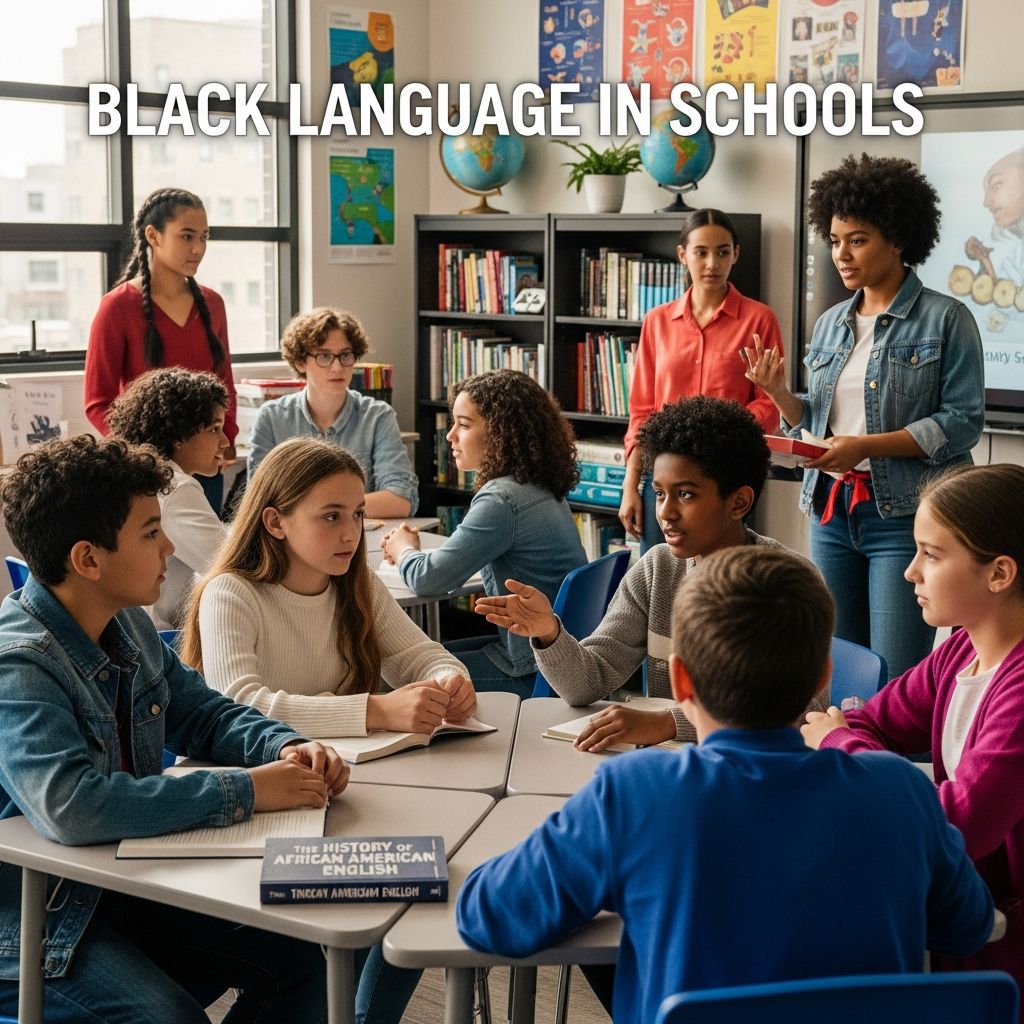
Understanding Linguistic Diversity in Educational Settings
Language serves as more than a communication tool—it is a bridge between cultural identity and academic achievement. For Black students in American schools, the use of African American Vernacular English (AAVE) represents a complex intersection of heritage, social dynamics, and educational opportunity. This linguistic reality has existed in classrooms for generations, yet its role in shaping student experiences remains frequently overlooked or misunderstood by educators and policymakers.
The linguistic choices that students make—particularly their ability to navigate between their home dialect and Standard American English—represent a critical skill set that can influence their long-term academic and economic prospects. Understanding this dynamic requires examining not only what language students speak, but why, when, and how they employ different linguistic registers.
The Historical and Cultural Foundations of AAVE
African American Vernacular English evolved through centuries of American history, shaped significantly by the lived experiences of African Americans from the era of slavery through the contemporary period. This dialect is not simply a variant of English—it is a linguistically complete system with its own grammatical structures, vocabulary patterns, and communication norms that reflect the cultural narratives and social realities of Black communities.
The roots of AAVE run deep in American soil, emerging from the complex interactions between African languages, English, and the unique circumstances of African American communities. This linguistic system carries within it generations of creativity, resilience, and cultural identity. It functions as a marker of belonging within African American communities and serves important social and emotional functions beyond mere communication.
Recognizing AAVE’s historical legitimacy is essential for educators who work with Black students. Rather than viewing this dialect as a deficiency or obstacle to overcome, educational professionals must acknowledge it as a distinct and sophisticated linguistic system worthy of respect and understanding.
Code-Switching: Navigating Multiple Linguistic Worlds
Code-switching—the ability to move fluidly between AAVE and Standard American English depending on social context—represents a sophisticated linguistic skill that many Black students naturally develop. This capacity demonstrates cognitive flexibility and social awareness, yet schools often fail to recognize or value this ability.
Students who code-switch effectively possess what linguists call bidialectal competence, meaning they can employ different dialects appropriately based on their communicative environment. This skill has concrete advantages for academic and professional success. Research shows that individuals who develop strong bidialectal abilities experience improved educational outcomes and enhanced economic mobility.
However, the development of code-switching ability should not place the entire burden of adaptation on students themselves. The ability to shift between dialects emerges most readily when students grow up in environments that expose them to speakers of Standard American English and provide clear models for when and how such shifting is appropriate. Socioeconomic factors, neighborhood composition, and educational resources all influence students’ capacity to develop these linguistic skills.
Environmental Influences on Linguistic Development
Research demonstrates that neighborhood characteristics significantly influence how frequently students use AAVE versus Standard American English. Students who move from high-poverty neighborhoods to more economically advantaged communities show measurable shifts in their linguistic patterns. This occurs not because poverty inherently determines language use, but because residential environments shape the peer groups students interact with, the linguistic models they encounter, and the perceived social value of different speech patterns.
When families relocate to neighborhoods with lower poverty rates, students tend to encounter a larger population of adults with college degrees and access to higher-ranked schools. These environmental factors create increased exposure to Standard American English and may reduce peer pressure to maintain exclusive use of AAVE. The result is improved bidialectal competence—a genuine educational advantage that opens doors in academic and professional settings.
Academic Achievement and Linguistic Identity
The relationship between language use and academic performance presents educators with a critical challenge. Students who primarily speak AAVE may encounter significant obstacles when navigating literacy instruction centered on Standard American English norms. This mismatch between home language and school language can impede reading comprehension, writing development, and overall academic engagement.
Writing assessments particularly highlight these disparities. Because standardized writing evaluations prioritize Standard American English conventions, students who employ AAVE features in their written work often receive lower scores, not because their ideas lack merit or their thinking lacks rigor, but because their linguistic choices differ from expected norms. This creates a system in which students must essentially translate their thoughts into an unfamiliar linguistic register to demonstrate academic competence.
Reading development presents additional complexities. Early literacy instruction focuses on mapping speech sounds onto standardized letter representations. When instructors do not recognize and account for phonetic variations between AAVE and Standard American English, students may struggle with phonics instruction and sound-symbol relationships. What appears to be a reading deficiency may actually reflect a mismatch between instructional methods and students’ linguistic background.
Inclusive Pedagogical Approaches
Educators committed to supporting Black students must adopt teaching practices that acknowledge linguistic diversity as an asset rather than a liability. Several evidence-based strategies can create more inclusive classrooms:
- Implement contrastive analysis approaches that explicitly teach the grammatical differences between AAVE and Standard American English, helping students understand the rules governing each system rather than treating one as simply “wrong”
- Employ culturally responsive teaching practices that validate students’ home language and cultural backgrounds while building proficiency in Standard American English
- Design phonics and early literacy instruction with awareness of how AAVE phonetics differ from Standard American English, ensuring students can successfully map their speech sounds to written symbols
- Characterize Black English-speaking students as bidialectal speakers with valuable linguistic resources, rather than as students with language deficits
- Incorporate diverse texts and materials that reflect African American culture, language patterns, and lived experiences into classroom curricula
The Role of Teacher Knowledge and Attitudes
Perhaps the most critical factor in supporting linguistically diverse students is educator knowledge about and attitudes toward AAVE. Teachers who understand the linguistic structure of AAVE—its grammatical rules, vocabulary patterns, and communication conventions—are better equipped to support students’ development across both dialects.
This knowledge need not be highly technical. Educational resources including nontechnical books and articles about AAVE linguistics are available to help educators develop foundational understanding. More importantly, teachers should view learning about AAVE as seriously as they would approach learning the structure of Spanish or any other language they taught.
Equally important is shifting attitudinal perspectives. When educators view AAVE as a legitimate dialect rather than a deficiency, students experience validation of their linguistic identity. This affirmation improves self-esteem, increases motivation for academic engagement, and reduces the negative psychological effects of linguistic prejudice that many Black students internalize.
Addressing Systemic Barriers and Discrimination
While individual teachers can implement supportive practices, systemic change requires broader policy interventions. Dialect discrimination operates at multiple levels—in hiring decisions, educational placements, disciplinary practices, and social hierarchies within schools. Students who use AAVE frequently face explicit or implicit stigma that affects their school experiences and future opportunities.
Addressing this requires moving beyond individual teacher efforts to examine institutional policies and practices that marginalize AAVE speakers. Schools must develop explicit anti-discrimination policies protecting students’ linguistic rights and establish practices that value linguistic diversity. Additionally, examination of residential economic and racial segregation patterns reveals how neighborhood composition shapes students’ access to diverse linguistic models and educational resources.
Public policies that reduce economic and racial segregation in residential areas may indirectly improve Black students’ educational outcomes by increasing their exposure to diverse language models and more highly resourced schools. When students grow up in integrated communities with access to quality education, their ability to develop bidialectal competence increases, potentially reducing the effects of dialect-based discrimination in schools and workplaces.
Critical Language Awareness for Student Empowerment
Beyond teaching students to code-switch, educators should foster critical language awareness—an understanding of how language connects to social power, cultural identity, and systemic inequality. This perspective helps students recognize that dialect prejudice is not rooted in linguistic deficiency but in social hierarchies and discriminatory attitudes.
When students develop critical language awareness, they understand the value of their native dialect and can resist internalizing stigma associated with AAVE use. They recognize code-switching not as capitulation to superiority of Standard American English, but as a strategic communication skill that allows them to navigate diverse social contexts while maintaining authentic identity. This reframing is psychologically protective and educationally powerful.
Early Childhood Education Considerations
Supporting Black language users must begin in early childhood, where foundational language and literacy skills develop. Early childhood educators should embrace a pro-Black language perspective that validates the linguistic practices of African American children from infancy through the preschool years.
Early intervention should focus on sound play, letter identification, phonics, and word recognition strategies while recognizing how speech sounds vary across dialects. When early childhood programs acknowledge and work with the linguistic patterns children bring from home, rather than against them, children develop stronger phonological awareness and reading readiness.
Looking Forward: Creating Equitable Linguistic Environments
The presence of AAVE and code-switching in schools is neither new nor problematic—it reflects the linguistic reality of many Black students. The challenge lies not in eliminating students’ use of their home dialect but in creating educational environments where linguistic diversity is recognized, valued, and leveraged for academic growth.
Schools must move beyond narrow conceptions of language education focused solely on Standard American English acquisition. Instead, comprehensive approaches should develop students’ full linguistic repertoires, recognizing that bidialectal competence represents genuine cognitive and communicative sophistication. This shift requires investment in teacher professional development, curriculum redesign, and institutional policy changes that affirm linguistic diversity.
When educators understand AAVE’s linguistic legitimacy, when school policies protect students’ linguistic rights, and when curricula incorporate diverse language patterns, Black students experience validation of their identity alongside development of academic skills. This combination—respect for home language paired with access to dominant linguistic codes—creates the foundation for both academic success and maintained cultural identity.
Frequently Asked Questions
Is AAVE simply poor grammar or incorrect English?
No. AAVE is a linguistically complete dialect with its own systematic grammatical rules and structures. It differs from Standard American English in consistent, rule-governed ways, not through random errors or deficiency.
Will teaching students to code-switch cause them to lose their cultural identity?
Research and educator practice show that teaching code-switching can actually strengthen cultural identity. When students understand they are mastering a second dialect rather than replacing their first, and when schools validate their home language, students maintain strong connections to their linguistic and cultural heritage while developing additional communicative resources.
What specific classroom strategies help support AAVE-speaking students?
Effective strategies include contrastive analysis teaching, culturally responsive instruction, phonics approaches that account for dialect differences, explicit instruction in code-switching, and incorporation of diverse texts reflecting African American experiences and language patterns.
How do socioeconomic factors influence students’ linguistic development?
Neighborhood characteristics, family resources, school quality, and exposure to speakers of Standard American English all influence whether and how students develop bidialectal competence. Students in more economically advantaged areas typically have greater exposure to diverse linguistic models and educational resources that support code-switching development.
Can teachers effectively support AAVE speakers without formal linguistics training?
Yes. Teachers can access nontechnical resources about AAVE structure and develop foundational knowledge through professional reading and professional development. The most important starting point is recognizing AAVE as a legitimate dialect and committing to learning about its linguistic features and cultural significance.
References
- Neighborhoods influence use of African American Vernacular English — Stanford News. 2015-09-10. https://news.stanford.edu/stories/2015/09/vernacular-language-rickford-091015
- African American Vernacular English and Inclusive Literacy Education — Texas State University Digital Repository. 2023. https://docs.gato.txst.edu/657265/10.%20Nsentip%20Blog%20Fall%2023.pdf
- Supporting Students Who Use African American English — American Federation of Teachers. 2023-10. https://www.aft.org/ae/fall2023/charityhudley_mallinson_samuels_bigelow
- Writing while Black: African American Vernacular English (AAVE) and Writing Assessment — James Madison University Libraries. 2020. https://commons.lib.jmu.edu/masters202029/129/
- Everyday African American Vernacular English is a dialect born from conflict and creativity — San Diego Voice & Viewpoint. https://sdvoice.info/everyday-african-american-vernacular-english-is-a-dialect-born-from-conflict-and-creativity/
- Including Black Language in Early Childhood Education — National Association for the Education of Young Children. 2024-01. https://www.naeyc.org/resources/pubs/yc/winter2024/including-black-language-ece