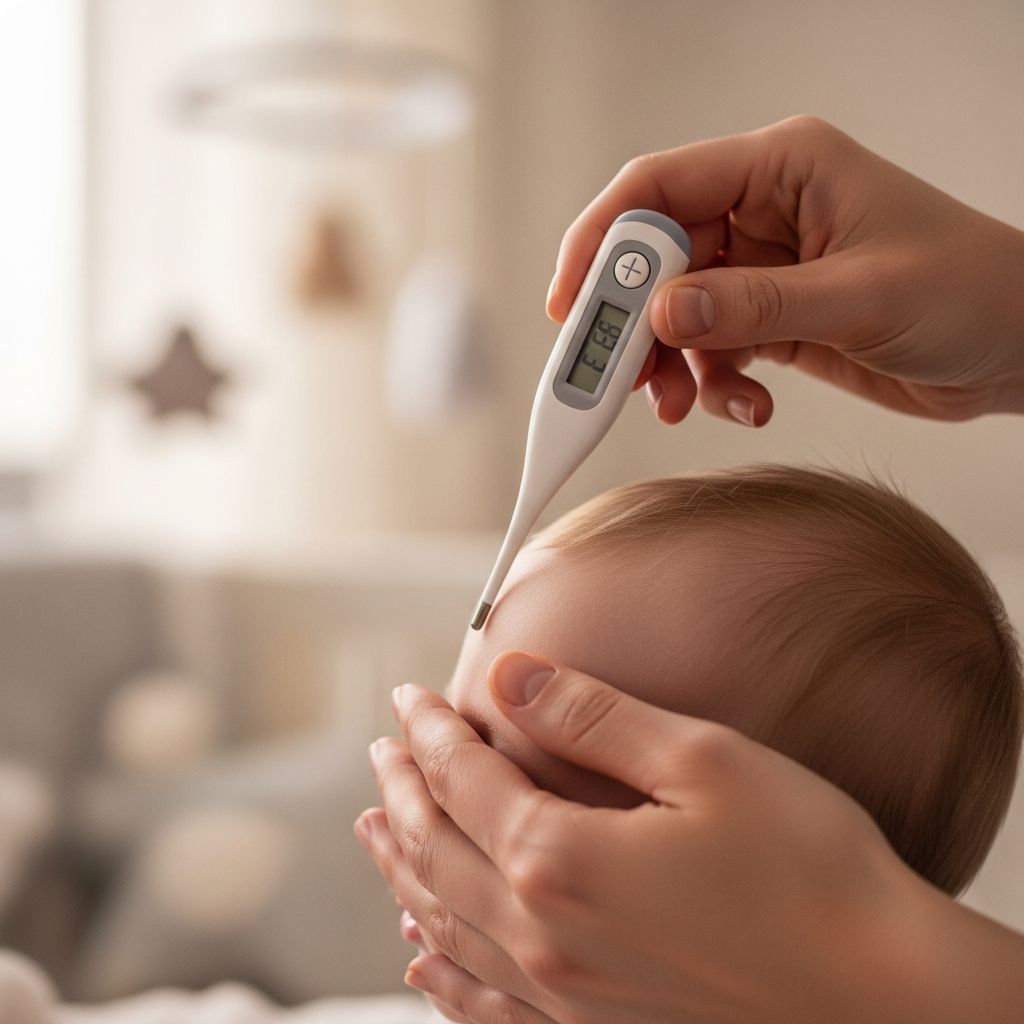
Fevers in young infants can alarm parents, but the American Academy of Pediatrics (AAP) provides clear, evidence-based protocols to guide care for well-appearing babies aged 8 to 60 days with temperatures of 100.4°F (38°C) or higher. These recommendations, developed after reviewing decades of research, categorize infants into three groups: 8-21 days, 22-28 days, and 29-60 days, offering tailored evaluation, testing, and management strategies.
Why Fevers Matter in Newborns and Infants
A fever in a baby under two months signals the body’s response to infection, but young immune systems struggle to fight serious bacterial infections like urinary tract infections (UTIs), bacteremia, or meningitis. About 14 out of every 1,000 full-term infants develop such fevers, and while most are viral and benign, prompt assessment prevents complications. The AAP guidelines exclude infants under 8 days, those born preterm before 37 weeks, or those appearing ill with focal infections, focusing solely on healthy, term babies who seem well.
Historically, all febrile infants underwent full sepsis workups, including lumbar punctures and hospitalization. Updated protocols incorporate advanced diagnostics, viral testing, and shared decision-making to reduce unnecessary invasive procedures while prioritizing safety.
Defining Fever and When to Act
A fever is a rectal temperature of at least 100.4°F (38°C), measured accurately as axillary or temporal methods are less reliable in newborns. Parents should seek immediate medical attention if the fever persists over 24 hours or if the infant shows signs like lethargy, poor feeding, rash, or breathing issues. For well-appearing infants, follow AAP age-based pathways.
Management Protocols by Age Group
The AAP divides care into three precise age brackets, each with algorithms balancing risk and intervention.
Infants 8-21 Days: Full Sepsis Evaluation
For the youngest group, the risk of serious bacterial infection (SBI) is highest, around 10-15%. All require:
- Hospital admission.
- Full blood work: complete blood count (CBC), blood culture, procalcitonin (PCT) or C-reactive protein (CRP) if available.
- Urine studies: urinalysis and culture via catheterization.
- Lumbar puncture for cerebrospinal fluid (CSF) analysis and culture.
- Empiric antibiotics (e.g., ampicillin and gentamicin or cefotaxime) pending results.
Viral testing (e.g., RSV, influenza) may guide management if positive, but does not eliminate bacterial risk. Hospital observation continues until cultures are negative at 24-36 hours.
Infants 22-28 Days: Initial Testing with Options
Here, SBI risk drops slightly. Protocol includes:
- Blood: CBC, culture, inflammatory markers (PCT/CRP).
- Urine: urinalysis and culture.
If results are normal (e.g., WBC 5,000-15,000/mm³, normal urinalysis, low PCT/CRP), shared decision-making determines next steps: optional lumbar puncture, home monitoring with close follow-up, or hospital admission. If abnormal, proceed to full evaluation including CSF and antibiotics.
Infants 29-60 Days: Risk-Stratified Approach
Lowest SBI risk (5-10%). Start with:
- Blood and urine tests as above.
- Optional viral studies.
Low-risk criteria: Normal labs, well-appearing. Discharge home with oral antibiotics if UTI suspected, or observation if viral. No routine lumbar puncture or admission unless CSF indicated.
High-risk: Abnormal labs prompt full sepsis workup, IV antibiotics, and hospitalization.
Key Tests and Their Role
Understanding diagnostics empowers parents:
| Test | Purpose | Thresholds for Concern |
|---|---|---|
| Blood Culture | Detects bacteremia | Positive growth |
| Urinalysis/Culture | Identifies UTI (most common SBI) | >10 WBC/hpf or positive culture |
| LP (CSF) | Rules out meningitis | High WBC, positive Gram stain/culture |
| PCT/CRP | Inflammatory markers | PCT >0.5 ng/mL; CRP >20 mg/L |
These guide whether to escalate care.
Shared Decision-Making: Partnering with Providers
A hallmark of new guidelines, this involves discussing risks (e.g., 1-2% SBI miss rate in low-risk), family factors, and follow-up access. Tools like decision aids help weigh home vs. hospital monitoring for 22-60 day olds with reassuring labs.
Treating Fever at Home Safely
While awaiting evaluation:
- Acetaminophen (10-15 mg/kg every 4-6 hours) or ibuprofen (for >6 months, 5-10 mg/kg) if uncomfortable. Never aspirin.
- Dress lightly; maintain hydration with frequent feeds.
- Avoid alcohol baths or excessive bundling.
These comfort measures do not treat the cause.
Risks of Serious Infections and Prevention
SBIs include UTI (60-70% of cases), bacteremia (5%), meningitis (1%). Vaccinations (e.g., Hep B at birth) and hygiene reduce risks. Epidemiology shifts: fewer herpes simplex, more enterovirus.
Changes from Prior Guidelines
Pre-2021, blanket full workups prevailed. Now, tech advances (rapid PCR, biomarkers) enable targeted care, cutting LP by 50% in older infants and admissions via shared decisions.
Common Parental Concerns Addressed
- Can I manage fever myself? No for under 60 days; always contact pediatrician.
- What if tests are normal? Low-risk infants can go home with follow-up.
- Follow-up timeline? 24-48 hours or sooner if worsening.
Frequently Asked Questions
What temperature is a fever in a baby?
Rectal reading of 100.4°F (38°C) or higher.
Do all fevers need a hospital visit?
For 8-60 days, yes for evaluation; management varies by age and labs.
Is lumbar puncture always needed?
Mandatory for 8-21 days; optional in others if low-risk.
Can viruses cause high fevers?
Yes, but bacterial rule-out is essential.
What antibiotics are used?
Empiric IV ceftriaxone or ampicillin/gentamicin for high-risk.
Empowering Parents in Fever Management
Stay calm, use rectal thermometers accurately, document symptoms, and trust AAP-guided care. Pediatricians use these protocols to minimize harm while maximizing safety. Early intervention saves lives—always err on caution.
(Word count: 1678)
References
- Infant Fever — American Academy of Pediatrics. 2023. https://www.aap.org/en/patient-care/infant-fever/
- Evaluation and Management of Young Febrile Infants — PubMed (Pediatrics). 2023-02-01. https://pubmed.ncbi.nlm.nih.gov/36854834/
- Evaluation and Management of Young Febrile Infants: An Overview — AAP Pediatrics in Review. 2023. https://publications.aap.org/pediatricsinreview/article/44/3/127/190667/Evaluation-and-Management-of-Young-Febrile-Infants
- Updated AAP Guidelines for Febrile Infants — Children’s Hospital Colorado. 2023. https://www.childrenscolorado.org/health-professionals/publications/charting-pediatrics-podcast/febrile-infants/
- Management of Fever in Infants and Young Children — American Academy of Family Physicians. 2020-06-15. https://www.aafp.org/pubs/afp/issues/2020/0615/p721.html
- Fever – HealthyChildren.org — American Academy of Pediatrics. 2023. https://www.healthychildren.org/English/health-issues/conditions/fever/Pages/default.aspx
- Evaluation and Management of Well-Appearing Febrile Infants 8 to 60 Days Old — AAP Pediatrics. 2021. https://publications.aap.org/pediatrics/article/148/2/e2021052228/179783/Evaluation-and-Management-of-Well-Appearing