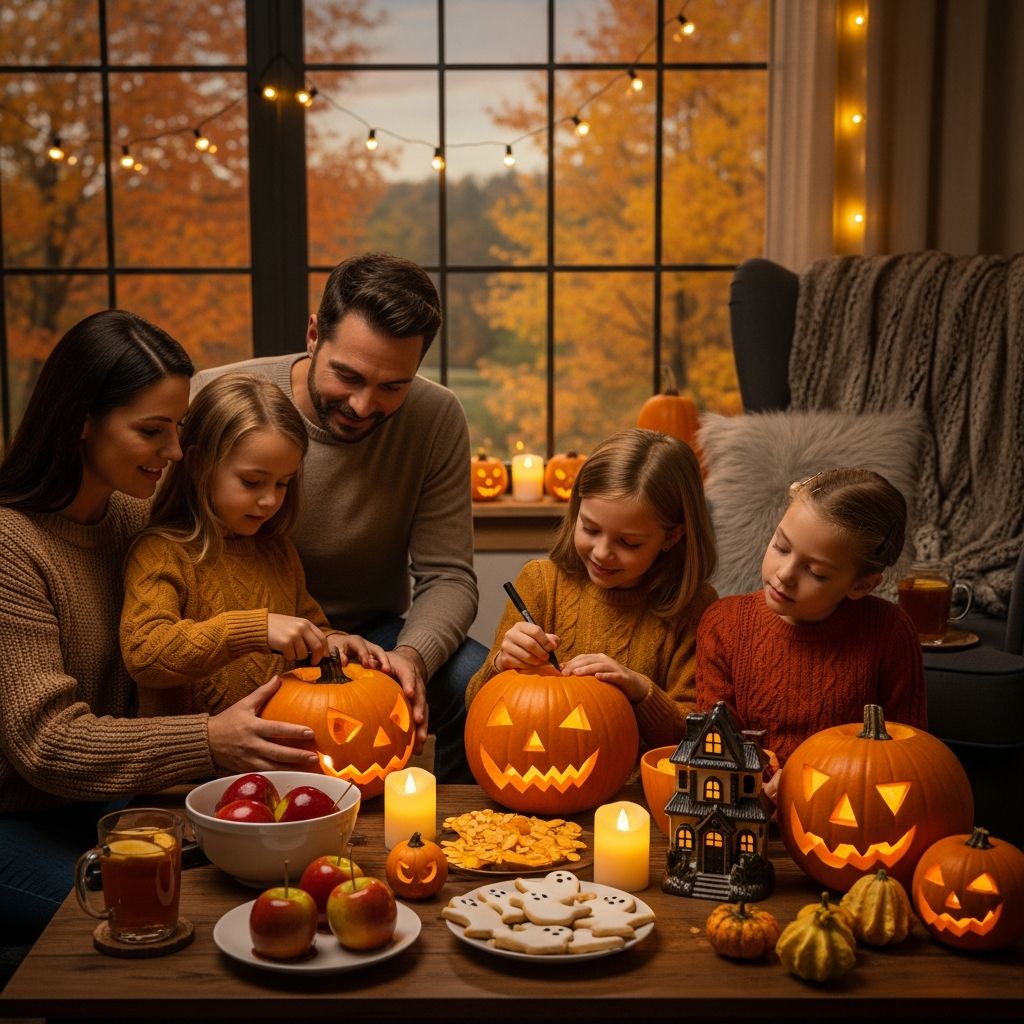
Halloween can be more than costumes and candy. It can become a yearly opportunity to slow down, connect with your children, and create memories that feel cozy instead of chaotic. This guide offers ideas, structures, and scripts to help you design a Halloween that fits your child’s temperament and your family’s values.
Why Rethink Halloween?
For many families, October becomes a whirlwind of sugar, late nights, and overstimulation. Kids may love the excitement, but they often melt down from disrupted routines, scary imagery, and social pressure to participate in events that feel overwhelming. Parents can feel torn between wanting their children to “have fun” and wanting a peaceful home.
Rethinking Halloween does not mean giving up costumes or treats. It means:
- Choosing activities that match your child’s age, sensitivity level, and sensory needs.
- Planning for connection and calm first, then adding spookiness in age-appropriate doses.
- Turning commercial traditions into meaningful family rituals kids will remember.
Guiding Principles for a Calmer Halloween
Before planning specific activities, it helps to establish a foundation. A few simple principles can make the entire season feel grounded rather than frantic.
- Connection over perfection: A slightly lopsided pumpkin or mismatched decorations are still a success if everyone feels seen and loved.
- Predictability reduces anxiety: Kids feel safer when they know what to expect, especially on high-energy evenings like Halloween.
- Emotions are welcome: Fear, excitement, jealousy, and disappointment all show up in October. Treat them as normal, not as misbehavior.
- Choice builds cooperation: Offer manageable options—Which costume? Which activity first?—so kids feel ownership in the celebration.
Designing Your Family’s Halloween Vision
Instead of signing up for every event, start by asking what you want this season to feel like. This simple reflection can prevent over-commitment and last-minute stress.
Questions to Discuss as a Family
- How spooky do we want our Halloween to be—silly, slightly spooky, or super scary (for older kids only)?
- Where do we most enjoy spending time—at home, in the neighborhood, or at community events?
- Which traditions do we truly love, and which do we do only out of habit or pressure?
Write down a brief “Halloween statement” together, such as, “This year, we want a cozy, playful Halloween with time to bake, craft, and visit a few neighbors.” Keep this in mind when saying yes or no to invitations.
Calm-Start Activities for Younger Kids
For babies, toddlers, and preschoolers, Halloween is mostly about sensory exploration, routine, and feeling safe. Aim for gentle, predictable experiences rather than jump scares or dark, crowded events.
Simple Sensory-Friendly Ideas
- Soft-costume dress-up hour: Choose costumes without itchy seams, tight masks, or heavy makeup. Let kids try them on at home a few times before the big day.
- Orange-and-black play bin: Fill a tray or bin with orange pom-poms, black bottle caps, cotton balls as “ghost clouds,” and measuring cups for scooping.
- Gentle Halloween music: Play light, playful tunes instead of intense sound effects. Have a short dance party before dinner to release energy.
Keep sessions short, with plenty of chances to pause, cuddle, or return to familiar toys if kids seem unsure.
Creative Projects That Encourage Connection
Halloween crafts and projects can easily become perfect moments for side-by-side conversation, practicing patience, and learning to handle frustration. Focus less on the end result and more on shared process.
Connection-Boosting Craft Ideas
- Family story lanterns: Decorate paper bags or jars with silhouettes (cats, moons, friendly ghosts) and add LED candles. As you work, make up a gentle Halloween story together.
- Gratitude pumpkins: Instead of only carving faces, write or draw things your family appreciates about autumn on small pumpkins, then display them on a shelf.
- “Feelings mask” art: Cut paper masks where kids can paint or draw “brave,” “silly,” “curious,” or “worried” faces. Use them to talk about times they feel each emotion.
At-Home Halloween Adventure Night
If trick-or-treating feels overwhelming, or you want an alternative, create an at-home adventure night. This can be just as exciting for kids, while letting you control noise levels, lighting, and length.
Sample Evening Plan
| Time | Activity | Purpose |
|---|---|---|
| Late afternoon | Costume practice, simple snack | Prevent hunger meltdowns, test comfort of costumes |
| Early evening | Indoor or backyard treasure hunt | Physical movement, excitement in a safe space |
| After hunt | Family game or craft | Transition from high energy to calmer focus |
| Before bed | Cozy storytime with warm drink | Signal winding down, restore sense of safety |
Ideas for Indoor Adventure Stations
- “Potion lab” kitchen table: Bowls of water, food coloring, and spoons. Kids mix colors and give their potions silly, non-scary names.
- Shadow wall: A flashlight or lamp and a plain wall for making hand shadows or silhouette puppet shows.
- Costume fashion runway: A hallway or rug “runway” where each family member takes a turn walking, twirling, and having their costume admired.
Mindful Trick-or-Treating (If You Choose It)
For many children, walking the neighborhood in costume is a highlight of the season. With a bit of preparation, it can also be a chance to practice manners, courage, and self-advocacy instead of becoming a sugar-fueled meltdown.
Preparing Kids Ahead of Time
- Walk or drive the route earlier in the week so younger kids recognize landmarks.
- Agree on a time limit, number of houses, or streets to visit instead of wandering indefinitely.
- Practice what to say if a house looks too scary: “It’s okay to skip this one.”
Explain in simple terms what will happen: people may wear masks, some houses may be loud or decorated, and it is always okay to hold your hand or ask to go home.
Supporting Sensitive or Anxious Children
Some children experience Halloween as overwhelming rather than fun. Loud noises, crowds, dark streets, and unfamiliar costumes can all trigger anxiety. A peaceful approach honors these feelings instead of pushing kids to “be brave” before they are ready.
Strategies That Help
- Create an “opt-out” plan: Offer a clearly acceptable alternative, such as handing out candy with a parent, reading in a quiet room, or watching a gentle movie.
- Adjust the costume: If masks are frightening, choose face paint or a hat. If capes feel confining, try themed pajamas.
- Use code words: Agree on a word kids can say when they need a break or want to leave a house or event.
When a child shows fear, stay close and name what you see: “Those decorations feel too spooky for you. Let’s step back together.” This validates their experience and teaches healthy boundary-setting.
Managing Candy Without Power Struggles
Candy is often the biggest source of conflict around Halloween. Parents worry about sugar; kids worry about losing control of their haul. With some planning and clear communication, you can reduce battles and teach balanced decision-making.
Options for Candy Agreements
- Candy window: Allow free choice for a short time after trick-or-treating, then switch to a daily treat limit (for example, two pieces after dinner).
- Candy trade-in: Offer kids the option to trade a portion of candy for a small toy, book, or special outing.
- “Save for later” box: Store candy in a shared family container in the kitchen, not the bedroom, so it does not interfere with sleep.
Involve kids in deciding which system to use, emphasizing that the goal is to enjoy candy while caring for their bodies and teeth. This collaborative approach reduces sneaking and resentment.
Building Meaningful Traditions Beyond Candy
When the focus shifts away from sugar and toward experiences, Halloween becomes an opportunity to practice generosity, creativity, and reflection. Consider adding one tradition that connects your family to your values.
Tradition Ideas to Consider
- Kindness porch basket: Place a basket of non-candy treats or small notes of encouragement on your porch for trick-or-treaters.
- Annual “memory pumpkin”: Each year, write the year on the bottom of one pumpkin and record a few favorite Halloween moments in a small notebook.
- Neighbor appreciation night: Deliver a few cookies or a card to an elderly neighbor or someone new on the street to welcome them.
Screen-Light Halloween Fun
Screens can be part of the celebration without dominating it. The key is intentional use—choosing content and timing that support your goals of connection and calm.
Balanced Ideas for Media Use
- Themed short film night: Watch one short, age-appropriate Halloween cartoon, then do an activity inspired by it (drawing a character, re-enacting a scene, or making a snack).
- Digital costume show-and-tell: Arrange a short video call with relatives so kids can show their costumes and share their favorite moment from the day.
- Interactive playlist: Create a family Halloween playlist and take turns choosing songs for a ten-minute living-room dance party.
Sample Halloween Plans by Age Group
Every child is unique, but having a rough template can make planning easier. Adjust based on naps, school schedules, and your own energy.
| Age Group | Core Focus | Example Activities |
|---|---|---|
| Toddlers (1–3) | Comfort and routine | Soft costumes, early dinner, short indoor treasure hunt, early bedtime story |
| Preschoolers (3–5) | Playful exploration | Crafts, porch-only trick-or-treating at a few trusted homes, simple games |
| Early elementary (6–8) | Independence with support | Neighborhood walk, kid-led decorating, more complex scavenger hunts |
| Older kids (9+) | Choice and responsibility | Helping plan events, assisting younger kids, themed baking or movie night |
Helping Kids Handle Scary Imagery
Even if you keep things gentle at home, kids may encounter frightening decorations or costumes elsewhere. Preparing them ahead of time reduces nighttime worries and surprise reactions.
Tools for Discussing Scary Scenes
- “Real vs. pretend” game: Look at pictures or decorations and ask, “Is this real or pretend?” Talk about how costumes and props are made.
- Draw the fear: Invite your child to draw or paint the scariest thing they saw, then add funny or friendly elements together (a ghost with heart-shaped glasses, a zombie holding a bouquet).
- Bedtime check-in: Add a quick nightly question in October: “Did you see anything today that stuck in your mind?” This gives fears somewhere to go other than into dreams.
Supporting Sibling Dynamics During Halloween
Differences in age, bravery levels, and candy amounts can stir up sibling conflict. Planning ahead and acknowledging these differences openly helps keep peace.
Ideas to Reduce Conflict
- Pre-arranged candy sharing rules: Decide together how trades and swaps will work so older siblings do not dominate negotiations.
- Role choices: Offer older kids special roles (lantern carrier, map reader, candy-counter helper) that do not involve teasing or scaring younger siblings.
- Private cool-down spots: Before the evening starts, show each child a place they can go to calm down if they feel overwhelmed or frustrated.
Frequently Asked Questions
How do I know if an activity is too scary for my child?
Watch your child’s body language and behavior during milder Halloween images first. If they cling, look away, or bring it up repeatedly later, they may not be ready for haunted houses, loud decorations, or darker themes. When in doubt, choose the gentler option and revisit the idea next year.
What if my child refuses to wear their costume at the last minute?
This is common, especially in younger kids. Keep a backup plan, such as a festive T-shirt, hat, or face paint that can be added or removed easily. Validate their discomfort rather than forcing the original costume, which can turn the whole evening into a power struggle.
How can I include food allergies or dietary restrictions?
Consider non-food treats like stickers, small toys, or glow bracelets, both for your own children and for visitors to your home. If your child is trick-or-treating, bring a labeled bag for safe items and a separate container for anything that needs adult review before eating.
Is it okay to skip trick-or-treating entirely?
Yes. There is no requirement that a “real” Halloween must involve going door to door. An at-home celebration with crafts, games, costumes, and a few chosen treats can be just as special, especially for children who are very sensitive, tired, or easily overstimulated.
How do I handle next-day tiredness and sugar crashes?
Plan for a slower morning if possible—simple breakfasts, limited commitments, and extra patience. Some families choose to celebrate on the closest weekend instead of the actual date if school or work schedules make late nights difficult, turning Halloween into a flexible season rather than a single exhausting evening.
Making Halloween Yours—Every Year
When you consciously design your family’s Halloween around connection, emotional safety, and realistic energy levels, the holiday shifts from chaotic obligation to cherished tradition. Over time, your children will remember the warmth of storytime, the laughter of homemade games, and the feeling of being accepted for who they are—brave or cautious, noisy or quiet.
Each year, revisit what worked and what did not, adjusting as kids grow. A peaceful, joyful Halloween is not about doing everything. It is about choosing a few meaningful activities and being fully present for them, together.