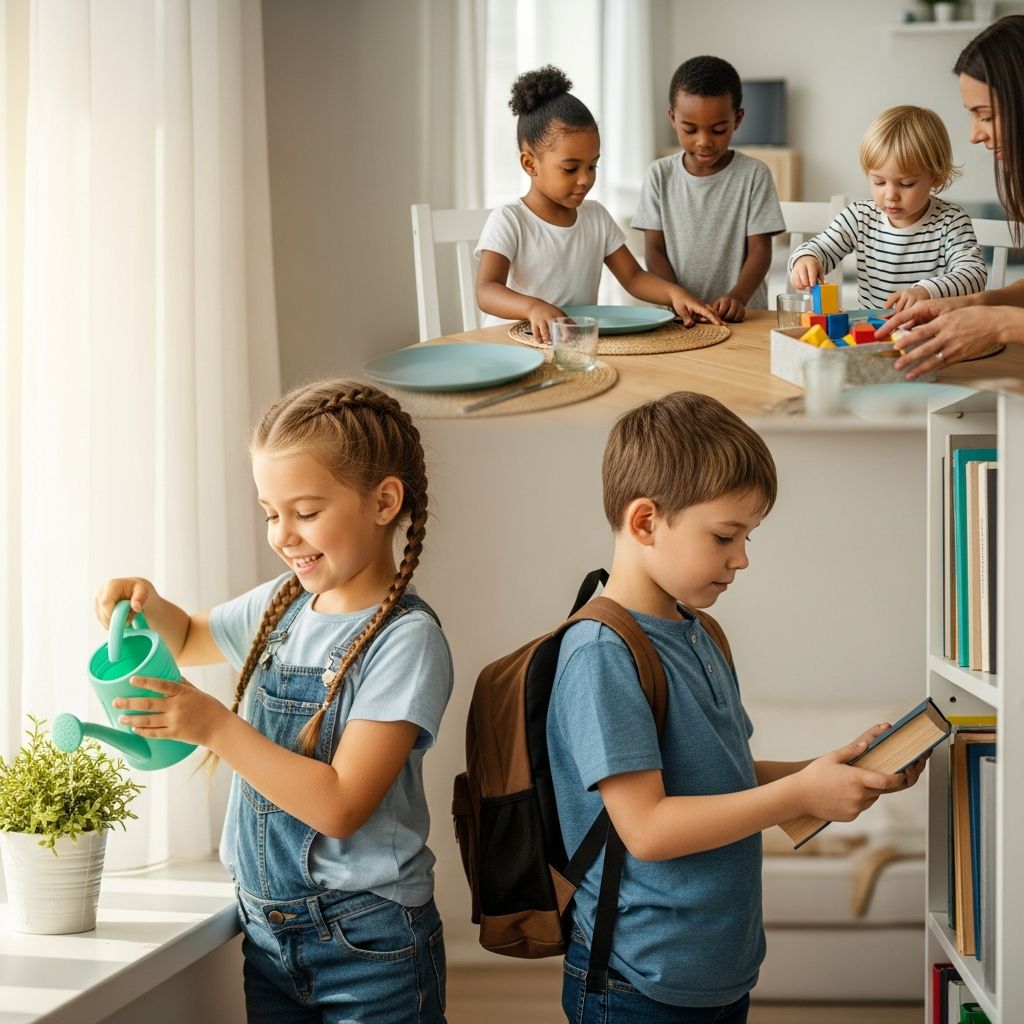
Responsibility is not something children suddenly gain at 18. It is a skill that grows slowly, day by day, through age-appropriate expectations, consistent routines, and many opportunities to practice. When parents intentionally teach responsibility, children learn to care for themselves, respect others, and contribute to the household and community.
Why Teaching Responsibility Matters
Children who develop responsibility early tend to be more confident, more resilient, and better prepared for the demands of school, work, and relationships. They learn that their choices have consequences and that they can influence outcomes by following through on commitments.
Teaching responsibility is not about perfection or harsh discipline; it is about gradually transferring ownership from the parent to the child. As kids gain skills in daily life, they also build self-esteem and a healthy sense of independence.
Overview: 9 Ways to Teach Kids Responsibility
- Structure and goal-setting
- Teaching kids to manage their own wake-up time
- Using chores to build life skills
- Homework and school responsibilities
- Managing money and allowance
- Natural and logical consequences
- Modeling responsible behavior
- Giving choices and ownership
- Using praise, reflection, and problem-solving
1. Use Structure and Goal-Setting
Children thrive when they know what is expected and when. Clear routines and simple goals help kids understand their responsibilities and reduce power struggles. A predictable structure gives them a sense of security and shows them that their contributions matter.
Start by identifying key parts of the day that cause the most chaos, such as mornings, after school, or bedtime. Then assign small, consistent tasks that your child is responsible for during those times.
Examples of Daily Responsibilities
- Morning: Make the bed, get dressed, put pajamas in the laundry basket.
- After school: Hang up backpack, put shoes away, place homework folder on the table.
- Evening: Clear dishes, help feed a pet, choose clothes for the next day.
To reinforce structure, use visual tools:
- Create a simple checklist with pictures for younger children.
- Use a whiteboard or planner for older kids to track daily goals.
- Review the list together at the beginning and end of the day.
2. Let Kids Manage Their Own Wake-Up Time
One powerful way to build responsibility is to put children in charge of getting themselves up in the morning. Instead of repeatedly waking them, give them a clear expectation and the tools to succeed, such as a labeled alarm clock and a simple routine.
Managing wake-up time teaches time management, planning, and natural cause-and-effect. If they oversleep, they may have less time for play or a leisurely breakfast, which reinforces the importance of being ready on time.
Practical Tips for Alarm Use
- Choose a kid-friendly alarm clock and show your child how to set it.
- Decide together on a wake-up time that fits the family schedule.
- Resist the urge to rescue immediately; give a few minutes for them to respond.
- Talk calmly later about what went well or what needs to change tomorrow.
3. Assign Chores That Build Responsibility
Chores are not punishments; they are training tools. When children help with household tasks, they learn that they are part of a team and that daily responsibilities do not magically take care of themselves. Chores also build practical life skills they will need as adults.
Start with small, manageable tasks and expect effort, not perfection. Praise their attempts and gradually increase the level of challenge as their skills improve.
Age-Appropriate Chores Table
| Age Range | Suggested Chores | Goal |
|---|---|---|
| 3–5 years |
| Learn to follow simple directions and take care of personal space. |
| 6–9 years |
| Practice consistency and understand contribution to the family. |
| 10–13 years |
| Develop independence and ownership of regular tasks. |
| 14+ years |
| Prepare for adult responsibilities and self-sufficiency. |
Making Chores Routine
- Post a chore chart where everyone can see it.
- Rotate tasks weekly to keep things fair and teach multiple skills.
- Link certain privileges (screen time, outings) to completion of daily chores.
4. Build Homework and School Responsibility
Schoolwork offers a daily opportunity to practice responsibility. Instead of constantly reminding, create systems that help children remember on their own. The goal is for the child to take ownership of assignments, deadlines, and communication with teachers over time.
Parents can still provide support by offering structure and encouragement, but the child should experience the connection between their effort, their follow-through, and their results.
Strategies for School Responsibility
- Designate a consistent homework space free from major distractions.
- Set a regular homework time and stick to it on most days.
- Use a planner or digital calendar to record assignments and due dates.
- Let natural consequences (such as a lower grade) occasionally occur rather than rescuing every time.
5. Use Money and Allowance to Teach Accountability
Money is one of the most concrete ways to teach responsibility and delayed gratification. Whether or not allowance is tied directly to chores, children can learn to budget, save, and make thoughtful spending decisions.
Introduce basic concepts such as saving for a goal, giving to others, and distinguishing needs from wants. Then step back and allow kids to make small mistakes while the stakes are low.
Simple Family Money System
- Provide a modest weekly allowance appropriate for age.
- Use three jars or envelopes: “Save,” “Spend,” and “Give.”
- Encourage your child to set a specific savings target (e.g., a book or game).
- Discuss purchases afterward: what felt worth it, and what they might do differently next time.
6. Rely on Natural and Logical Consequences
Responsibility grows when children experience the real results of their choices. Instead of lecturing or rescuing constantly, allow natural or logical consequences to occur when it is safe to do so. This helps children see that their actions matter.
A natural consequence is what happens without adult interference (for example, forgetting a coat and feeling cold), while a logical consequence is calmly chosen by the parent and linked to the behavior (for example, losing bike privileges after riding unsafely).
Examples of Appropriate Consequences
- If a toy is left outside and gets dirty or wet, the child helps clean it.
- If homework is not completed, the child talks with the teacher and accepts the grade.
- If a teen misses curfew, the next outing is shortened or delayed.
7. Model the Responsibility You Want to See
Children learn far more from what adults do than from what adults say. When parents show up on time, admit mistakes, keep promises, and meet their own obligations, kids absorb a powerful message about responsibility without a single lecture.
Talking out loud about your own responsibilities can make the concept more visible to children. They begin to see that everyone in the family, adults and kids alike, has important jobs to do.
Ways to Model Responsibility
- Use phrases like “It is my job to pay the bills on time” or “I promised to help, so I will follow through.”
- Admit when you make a mistake, then demonstrate how to fix it.
- Avoid overcommitting or making promises you cannot keep.
8. Offer Choices and Ownership
Responsibility increases when children feel some control over how tasks are completed. Within clear boundaries, offer choices that let them make decisions and experience the outcomes. This encourages internal motivation instead of simple compliance.
Even small choices can make a big difference in cooperation and follow-through. Kids who feel heard are more likely to accept non-negotiable responsibilities.
Choice-Based Responsibility Ideas
- Allow your child to choose which chore to do first.
- Let older kids decide how to organize their homework time within a set window.
- Invite teens to participate in setting family rules and consequences.
9. Use Praise, Reflection, and Problem-Solving
Responsibility is reinforced when children feel noticed for their efforts, not only for perfect results. Specific, sincere praise helps them link their responsible behavior to positive emotions and a sense of pride.
Regular reflection and problem-solving conversations show kids that setbacks are normal and that they can learn from mistakes. Instead of shaming them, guide them in thinking about what went wrong and what could be done differently.
Helpful Phrases for Parents
- “I noticed you finished your homework before playtime. That shows good planning.”
- “What do you think you could try tomorrow to remember your backpack?”
- “You took care of that problem on your own. How did that feel?”
Frequently Asked Questions
At what age should I start teaching responsibility?
Teaching responsibility can start in toddlerhood with very simple tasks, such as putting a toy in a bin or carrying a small item to the table. The key is to keep expectations age-appropriate and to make responsibility a normal part of family life from the beginning.
What if my child refuses to do chores?
Consistent expectations and calm follow-through are essential. Clearly explain which chores are non-negotiable, connect them to privileges, and use logical consequences when tasks are repeatedly ignored. Avoid long arguments; instead, restate the expectation and the outcome, then follow through.
Should allowance be tied to chores?
Families handle this differently. Some link basic chores to allowance to mimic the relationship between work and pay, while others provide a small allowance for learning money skills and reserve extra tasks for earning additional income. Whatever you choose, explain the system clearly so children understand how it works.
How do I know if I am expecting too much?
If your child is consistently overwhelmed, melting down, or unable to complete tasks even with guidance, expectations may be too high. Adjust by simplifying tasks, breaking them into smaller steps, and offering more coaching. As skills improve, you can gradually increase responsibility again.
What if my teen still acts irresponsible?
It is never too late to build responsibility, but it may require more patience and boundaries. Involve your teen in honest conversations about goals, privileges, and consequences. Gradually shift control by making certain freedoms (driving, social events, technology) clearly linked to responsible behavior.
Final Thoughts on Raising Responsible Kids
Raising responsible children is an ongoing process, not a quick fix. With structure, opportunities to contribute, natural consequences, and plenty of encouragement, kids can grow into young people who take pride in their actions and choices.
By intentionally using these nine strategies, you guide your children toward independence while still offering the guidance and support they need. Over time, you will see them begin to remind themselves, solve their own problems, and step into the roles they are capable of handling.