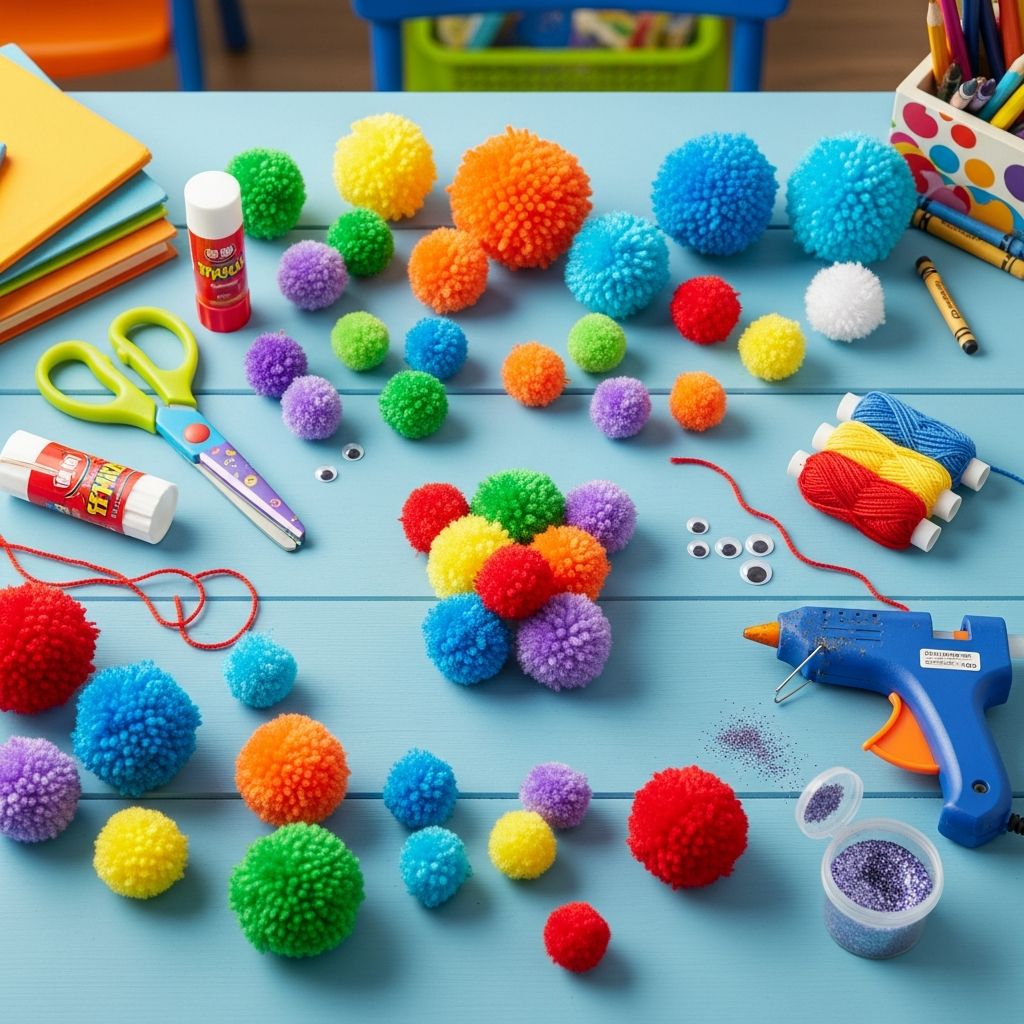
Pom-poms are one of the simplest and most joyful craft materials around. With a little yarn and creativity, they can transform ordinary school supplies into colorful, personalized treasures that kids love to use and show off.
Why Pom-Poms Are Perfect for School Season
Back-to-school time often feels busy and stressful, but simple crafts can help kids feel more prepared and excited for the year ahead. Pom-pom projects are ideal because they are inexpensive, forgiving, and easy to adapt for different ages.
These fuzzy little yarn balls can be added to notebooks, backpacks, pencil cups, bookmarks, and even locker décor. They let kids express their personalities through color combinations, textures, and playful designs while practicing fine motor skills and creativity.
Basic Pom-Pom Making Methods
Before diving into school-themed projects, it helps to know a few reliable ways to create pom-poms. Each method uses simple supplies that are easy to find around the house or in a basic craft kit.
Common Supplies You Will Need
- Yarn in various colors (acrylic yarn works well for kids).
- Sharp scissors reserved for fabric or crafts.
- Cardboard scraps, a fork, or a store-bought pom-pom maker.
- Craft glue or hot glue gun (with adult supervision).
- Optional: key rings, paper clips, elastic cord, safety pins, and tape.
Three Simple Techniques
Any one of these methods will give you a fluffy pom-pom; choose the one that matches your child’s age and attention span.
| Method | Best For | Difficulty | Key Tip |
|---|---|---|---|
| Cardboard ring | Larger pom-poms and older kids | Moderate | Cut a small slit to slide the yarn through more easily. |
| Fork wrap | Small pom-poms, quick projects | Easy | Use a sturdy metal fork so the yarn doesn’t bend the tines. |
| Pom-pom maker | Uniform size, multiple matching sets | Easy to moderate | Wrap more yarn than you think you need for extra fullness. |
Whichever method you use, the basic process is similar: wrap yarn around a form, tie it tightly in the center, cut the loops, then trim the edges into a neat sphere. Encourage kids to experiment with multicolored wraps to create stripes, color blocks, or confetti-style pom-poms.
Pom-Pom School Supplies Kids Will Love
Once you have a handful of pom-poms ready, turn them into practical and fun school accessories. These ideas help kids feel ownership over their supplies, which often makes them more motivated to stay organized and take care of their belongings.
1. Fluffy Pencil and Pen Toppers
Pom-pom toppers turn ordinary writing tools into cheerful favorites. They also make it less likely that pencils disappear in the classroom because they’re easier to recognize at a glance.
- Choose smaller, tightly trimmed pom-poms so they don’t feel too heavy while writing.
- Secure them to the top of pens or pencil eraser ends using strong craft glue or tape.
- For removable toppers, attach pom-poms to pen caps instead of directly to the pen.
2. Custom Bookmarks with Personality
A soft pom-pom bookmark makes reading time more inviting and adds a touch of whimsy to textbooks and chapter books. They are simple enough for group activities, reading clubs, or class rewards.
- Cut a strip of ribbon or sturdy cardstock long enough to stick out from a closed book.
- Glue or tie a pom-pom to one end; leave the other end flat for sliding between pages.
- Decorate the ribbon or card with the child’s name, doodles, or subject labels like “Math” or “Science.”
3. Notebook and Folder Edges with Pom-Pom Borders
Kids often have similar-looking notebooks and folders, which can create confusion. A border of small pom-poms along one edge helps kids quickly spot their own supplies while adding a soft, playful detail.
- Use mini pom-poms to avoid bulk; large ones may catch on backpacks or shelves.
- Glue pom-poms along the edge of a front cover or around a corner, leaving the spine free to open fully.
- Coordinate colors with each subject to help kids organize: for example, blue for science, green for math, and so on.
Pom-Poms for Organization and Storage
Pom-poms are not just decorative; they can quietly support better habits and routines. Add them to storage containers, labels, and schedule boards for a system that is both practical and visually rewarding.
4. Labeled Bins and Baskets with Yarn Accents
Color-coded storage helps kids remember where items belong, which makes cleanup faster and less stressful. Pom-poms can act like colorful tags on bins and baskets.
- Assign each category a color, such as red pom-poms for art supplies, yellow for homework folders, and blue for reading materials.
- Tie or glue pom-poms to the front of baskets, adding a written label beneath or beside the yarn decoration.
- Invite kids to choose the colors and help attach the pom-poms; involvement increases the chance they’ll use the system.
5. Desk Drawer Helpers
Even tidy kids can struggle with cluttered desks. Pom-poms make drawer dividers and organizers more appealing so that kids feel encouraged to keep things in their place.
- Glue pom-poms to the edges of small cardboard boxes or tins used as compartments inside a desk drawer.
- Use different colors for each type of item: one for erasers, another for paper clips, and another for flashcards.
- Consider adding a matching pom-pom to the outside drawer handle as a fun reminder to keep the inside neat.
Wearable Pom-Pom Accessories for School Days
Packing a little handmade flair into school outfits can boost confidence and help kids feel more expressive. Simple wearable pom-pom crafts are lightweight and comfortable, making them suitable for everyday use.
6. Backpack Charms and Zipper Pulls
Backpacks line the hallways and classroom walls, and many of them look alike. A bold pom-pom charm gives each bag a unique touch and makes it easier for younger kids to find theirs quickly.
- Attach pom-poms to key rings or clips so they can easily be moved between backpacks, lunch bags, and jackets.
- Use sturdy yarn and ensure the knot is tight; school bags experience a lot of movement.
- Create themes, such as school colors for spirit days or favorite color combinations for everyday wear.
7. Hair Accessories with Soft Flare
Pom-poms can be added to hair clips, headbands, or elastic ties to complement school uniforms or casual outfits. These accessories are especially fun for picture day, concerts, or spirit week.
- Choose small pom-poms for hair ties and barrettes to keep them lightweight and comfortable.
- Glue pom-poms onto the top of plain clips or wrap yarn around a headband, securing a pom-pom on one side.
- Coordinate with school colors or team colors for sports days and special events.
Classroom and Study Space Décor with Pom-Poms
Whether at home or in the classroom, a cozy and colorful learning environment can make study time more enjoyable. Pom-pom décor is an easy, low-cost way to refresh a corner, desk area, or reading nook.
8. Mini Garlands for Shelves and Bulletin Boards
Soft garlands made from yarn pom-poms can frame a corkboard, shelf, or wall area above a desk. They help define a space as a special “learning zone” without overwhelming small rooms.
- String several pom-poms along a length of yarn, leaving equal spacing between them.
- Secure the ends of the garland with removable hooks or tape so you can adjust it as needed.
- Alternate colors or sizes for a playful pattern, or stick to one color for a calmer, minimalist look.
9. Pom-Pom Photo Frames and Achievement Boards
Displaying photos, artwork, and certificates highlights a child’s progress and efforts. Adding pom-poms to frames or achievement boards gives them an inviting, handcrafted touch.
- Glue pom-poms around the edges of inexpensive photo frames or lightweight cardboard frames.
- Create a “success board” where kids pin test results, drawings, or goal sheets framed with pom-pom borders.
- Use colors that match the room or classroom theme for a coordinated feel.
Crafting with Kids: Safety and Age Tips
Pom-pom crafts are generally safe, but some tools and materials require adult oversight. Adjust the projects and responsibilities according to the age and skill level of the children involved.
Safety Considerations
- Very young children should not handle sharp scissors or hot glue; adults can prepare pom-poms and let kids handle decorating or assembly.
- Keep small pom-poms away from toddlers who may put them in their mouths.
- Always supervise when using glue guns, and consider using low-temperature models for older children.
Age-Appropriate Roles
- Preschoolers can choose colors, count pom-poms, and stick pre-made pom-poms onto larger surfaces like posters or boxes.
- Elementary-aged kids can learn to wrap and trim pom-poms with help, as well as design their own accessories and borders.
- Older kids and tweens can handle more complex details like patterns, color schemes, and gift sets for friends and teachers.
Planning a Back-to-School Pom-Pom Craft Session
Organizing a dedicated craft time at home or in a group helps kids ease into the new school year. It can become a tradition that marks the transition from vacation mode to school routines in a positive way.
Simple Session Outline
- Start by choosing a small set of projects, such as pencil toppers and bookmarks, so kids can finish them in one sitting.
- Prepare pom-pom bases ahead of time for younger groups to keep the focus on decorating rather than cutting.
- End with a quick “show and tell” where each child shares a favorite creation and what they’re excited about for the school year.
Using Crafts to Support Routines
When pom-pom creations become part of daily routines, they reinforce positive habits. For example, a pom-pom bookmark can signal reading time, while labeled storage with yarn accents reminds kids to put away supplies.
Consider creating a small reward system where kids earn additional yarn colors or accessories after using their organizers or tools responsibly for a week or two.
Frequently Asked Questions About Pom-Pom School Crafts
How durable are pom-poms on school supplies?
With strong glue and tightly tied yarn, pom-poms can withstand regular school use on items like pencil toppers, bookmarks, and backpacks. They may flatten slightly over time but can usually be fluffed back into shape by rolling them gently between your hands.
What kind of yarn works best for kid-friendly projects?
Soft acrylic yarn is a practical choice because it is budget-friendly, widely available, and comes in many colors. Cotton yarn can give a more defined look, while very fuzzy or specialty yarns are better suited to decorative garlands and room décor.
How can I prevent pom-poms from shedding?
Wrapping more yarn and tying the center very tightly helps reduce shedding. After trimming, roll the pom-pom in your hands over a trash can to shake off any loose strands before attaching it to school items.
Can these crafts be used in classrooms with many students?
Yes, pom-pom activities scale well for groups as long as supplies are prepared in advance. Teachers or group leaders can pre-cut yarn or pre-make basic pom-poms so that class time focuses on quick, low-mess decorating and assembly.
Are there no-glue options for kids who are sensitive to adhesives?
Instead of glue, you can tie pom-poms onto items with extra yarn tails, thread them onto key rings, or stitch them lightly to fabric accessories. Velcro dots and twist ties can also offer removable, low-mess attachment options.
Making Back-to-School More Colorful
Simple yarn pom-poms can turn everyday school items into personal, meaningful tools that kids enjoy using. From pencil toppers and bookmarks to storage labels and décor, these crafts offer a gentle way to channel back-to-school nerves into creativity.
By setting aside time for a few pom-pom projects at the start of the year, families and classrooms can build excitement, foster independence, and create colorful reminders that learning can be both organized and fun.