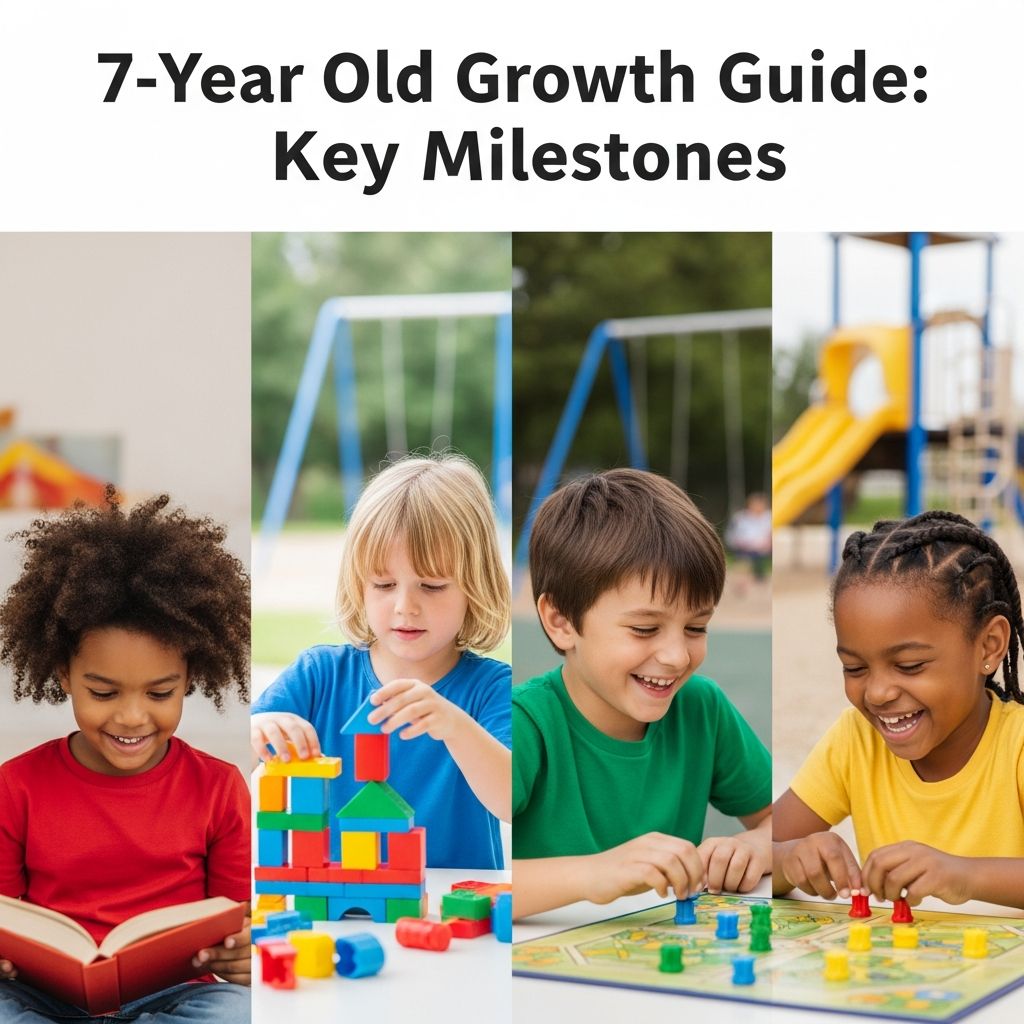
At age 7, children enter a dynamic phase of school-age development, marked by rapid advances in coordination, reasoning, and social awareness. This period builds foundational skills for lifelong learning and independence, as kids navigate second grade and beyond with growing confidence.
Physical Transformations and Motor Skills
Seven-year-olds experience steady physical growth, typically gaining about 2.5 inches in height and 4-7 pounds in weight annually. Baby teeth continue falling out, replaced by permanent ones, while first molars emerge, emphasizing the importance of consistent oral hygiene routines.
Gross motor skills sharpen significantly. Children master balance, enabling them to ride two-wheeled bikes without training wheels, perform somersaults, and engage in sports like climbing or swimming with improved coordination. They throw balls accurately at targets and catch with one hand, showing control over large muscle groups.
Fine motor abilities progress too. Kids write their names legibly with pencils, use safety scissors proficiently, and draw detailed figures with at least eight body parts. These skills support school tasks like handwriting and crafting.
- Rides bike independently
- Executes basic gymnastics
- Throws and catches precisely
- Draws complex shapes
- Ties shoelaces with practice
Daily physical activity—at least 60 minutes—is crucial for health, reducing risks of obesity and boosting focus in class.
Cognitive and Learning Advancements
Cognitively, 7-year-olds think more logically and organized. They grasp cause-and-effect, group similar objects, name days, months, seasons, and understand numbers, time-telling, and basic arithmetic like adding/subtracting two-digit numbers or simple fractions.
Attention spans lengthen, aiding problem-solving and academic challenges. They distinguish reality from imagination, past from present, and begin pondering the future or reversibility (e.g., 2+4=6, so 6-4=2).
| Skill Area | Typical Achievements |
|---|---|
| Math Concepts | Adds/subtracts multi-digit numbers, understands fractions |
| Time Awareness | Tells time, sequences days/months |
| Logical Thinking | Groups objects, cause-effect reasoning |
| Memory | Repeats numbers backward |
School performance improves, but monitor for reading struggles or attention issues, which may signal needs like ADHD screening.
Language and Communication Progress
Language blooms as children form complex sentences, follow multi-step directions, and get understood by all listeners. They appreciate puns, jokes, and words with multiple meanings, fostering humor.
Reading advances, though vowel sounds may challenge. They chat extensively in comfortable settings, respond to comments, and later write stories. Encourage reading aloud to build fluency.
- Speaks clearly to strangers
- Understands idioms/jokes
- Reads simple books independently
- Follows 3+ step instructions
Social Dynamics and Peer Relationships
Socially, 7-year-olds prioritize friends over family, forming stronger bonds and planning playdates. They cooperate, share, take turns, and grasp rules, though gender-segregated play is common.
Peer pressure emerges, alongside empathy and perspective-taking. They navigate group games, understand fairness, and show less frequent mood swings with better anger control.
Encourage extracurriculars like sports or arts to enhance teamwork and confidence.
Emotional Maturity and Self-Regulation
Emotionally, children articulate feelings better, crave love/understanding, and exhibit quick mood shifts or impatience. Self-esteem can be fragile amid self-criticism, so praise efforts over outcomes.
They develop moral awareness, distinguishing right/wrong, with occasional lying or testing boundaries as they explore independence. Empathy grows, alongside self-regulation and private thoughts.
- Expresses emotions verbally
- Manages anger appropriately
- Shows empathy for others
- Handles peer rejection better
Body image awareness begins, with puberty hints and complaints like tummy aches signaling increased self-perception.
Fostering Independence and Daily Routines
Independence surges: kids dress, groom, and prepare for school solo, make simple decisions, and pursue hobbies. They understand personal space and future planning.
Support by assigning chores, allowing choices in clothes/activities, and promoting responsibility like tooth-brushing amid tooth loss.
Potential Concerns and Red Flags
Variation is normal, but consult a pediatrician for persistent issues:
- Avoids praise or seems chronically sad/anxious
- Struggles sharing or playing cooperatively
- Can’t self-dress/feed or do fine motor tasks like writing
- Reading/math delays or attention problems
- Excessive aggression or withdrawal
Early intervention aids outcomes; track via regular checkups.
Parenting Strategies for Optimal Development
Boost growth through:
- Active Play: Encourage biking, sports for motor skills.
- Reading Time: Daily stories enhance language/math.
- Emotional Check-Ins: Discuss feelings to build resilience.
- Structured Routines: Consistent bedtime/homework fosters independence.
- Healthy Habits: Balanced diet, 60min exercise, 9-11 hours sleep nightly.
Monitor screen time, prioritizing interactive play.
Frequently Asked Questions (FAQs)
Is it normal for my 7-year-old to lose baby teeth rapidly?
Yes, expect several losses yearly as permanent teeth emerge; reinforce brushing routines.
What if my child struggles with reading at 7?
Common with vowels; extra practice helps. Consult teachers/doctors if persistent.
How much exercise does a 7-year-old need?
At least 60 minutes daily of moderate-vigorous activity like running or sports.
Should I worry about mood swings?
Typical due to emotional growth; provide support. Seek help if chronic sadness occurs.
When do kids outgrow same-gender play preferences?
Often by pre-teen years as social circles broaden.
References
- Developmental Milestones for Grade Schoolers (6–12 Years) — JoinCoralCare. 2024. https://www.joincoralcare.com/developmental-guides/milestones-grade-schoolers-6-12-years
- 7 Year Old Child Developmental Milestones — WebMD. 2024. https://www.webmd.com/parenting/child-at-7-milestones
- Milestones for 7-Year-Olds — MyHealth Alberta. 2024-10-24. https://myhealth.alberta.ca/Health/pages/conditions.aspx?hwid=ue5719
- Your Checkup Checklist: 7 Years Old — HealthyChildren.org (American Academy of Pediatrics). 2024. https://www.healthychildren.org/English/ages-stages/Your-Childs-Checkups/Pages/your-checkup-checklist-7-years-old.aspx
- Milestones for 7-Year-Olds — Kaiser Permanente. 2024. https://healthy.kaiserpermanente.org/health-wellness/health-encyclopedia/he.milestones-for-7-year-olds.ue5719
- Growth & Development: 6 to 12 Years (School Age) — CHOC. 2024. https://choc.org/ages-stages/6-to-12-years/
- CDC’s Developmental Milestones — Centers for Disease Control and Prevention. 2024. https://www.cdc.gov/act-early/milestones/index.html