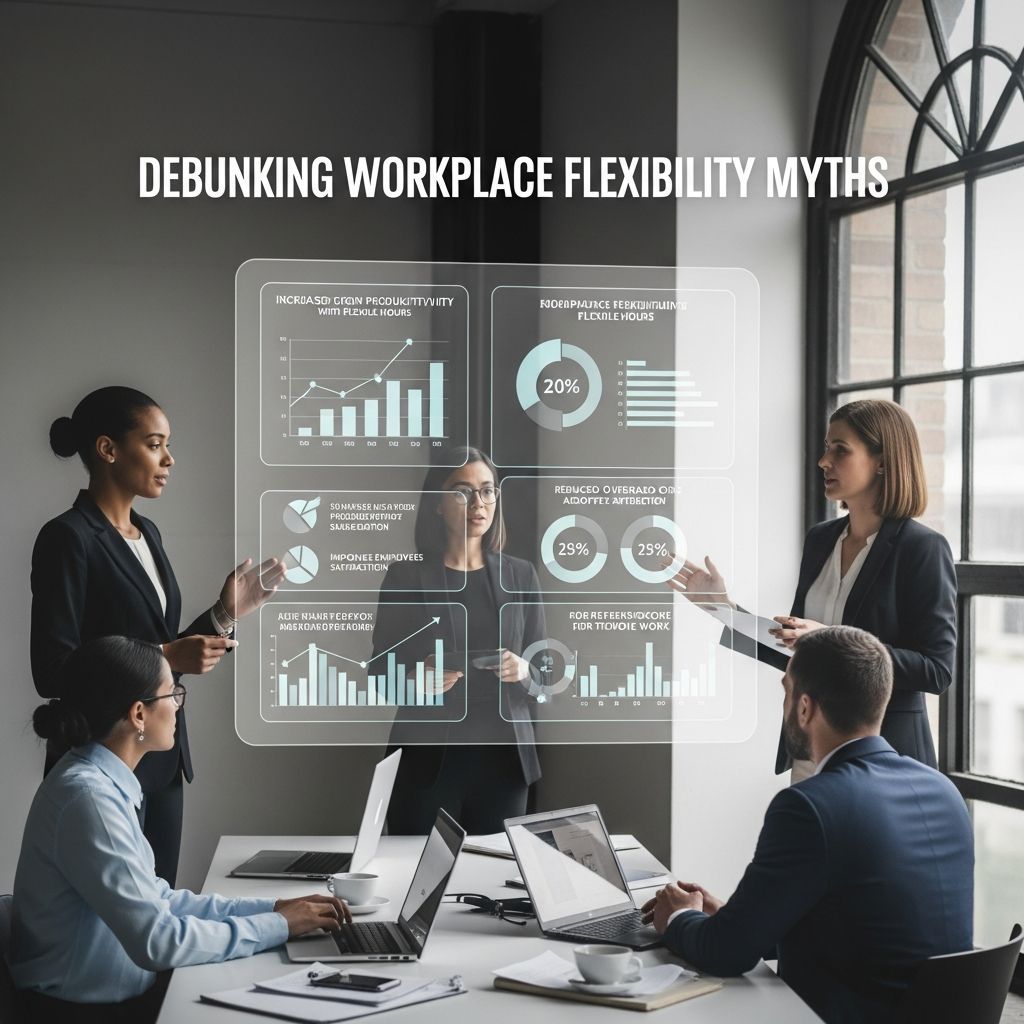
Workplace flexibility has transformed from a niche perk into a cornerstone of modern employment strategies. Yet, persistent misconceptions continue to hinder its adoption. This comprehensive guide examines seven widespread myths, drawing on credible research to reveal how flexible arrangements enhance productivity, employee satisfaction, and organizational performance. By addressing these falsehoods head-on, employers and workers alike can embrace schedules that truly work.
Understanding the Rise of Flexible Work Models
Flexible work encompasses options like remote setups, adjustable hours, compressed weeks, and hybrid models. According to recent analyses, these arrangements are not mere accommodations but strategic tools for talent retention and innovation. A survey indicates that 78% of employees feel more productive with schedule autonomy, challenging rigid traditional structures.
Organizations implementing flexibility report lower turnover rates and higher engagement. Far from being a post-pandemic trend, data from intergovernmental bodies underscores its long-term viability across industries, including client-facing roles.
Myth 1: Flexible Schedules Eliminate the Need for Team Meetings
One common belief is that autonomy means isolation, with no live interactions required. In reality, technology enables seamless synchronous communication regardless of location or time zone. Tools like shared calendars and video platforms allow teams to align on mutually convenient times, fostering collaboration without fixed office hours.
- Calendar apps facilitate real-time availability checks.
- Brief adjustments accommodate individual preferences.
- Flexibility inherently supports adaptive planning.
This myth ignores how digital connectivity has made global teams standard, ensuring productivity remains high through intentional check-ins.
Myth 2: Autonomy Leads to Lower Productivity
Critics argue that self-directed schedules breed laziness. Evidence proves the opposite: workers with control over their time often outperform peers in rigid environments. The freedom to align tasks with peak energy levels boosts output and accountability.
A key statistic reveals that 78% of flexible workers report heightened productivity, as they avoid the drag of mismatched start times. Forcing unnatural rhythms, conversely, stifles focus and creativity.
| Myth | Reality | Supporting Data |
|---|---|---|
| Less productive | More responsible | 78% productivity increase |
| Forced hours help | Autonomy empowers | Reduced stress levels |
Myth 3: Flexibility Burdens Management with Extra Oversight
Managers fear losing oversight, envisioning chaos from varied schedules. Properly structured policies dispel this: clear expectations and autonomy build trust, reducing conflicts and administrative load. Diversity Council Australia emphasizes team-wide job reviews over individual tweaks, promoting equity.
When guidelines are transparent, supervisors focus on outcomes, not hours logged. Happier teams mean less micromanagement and more innovation.
Myth 4: It’s Only for Women or New Parents
A outdated view limits flexibility to caregivers, particularly mothers. Research shows it’s vital for all demographics: older workers extend careers with options, while millennials prioritize it for retention. Men in senior roles often access remote work more readily due to industry norms.
- 73% of older Australians would work longer with flexibility.
- Younger generations demand it for work-life balance.
- Benefits span genders, ages, and life stages.
This inclusivity levels the playing field, countering biases that stigmatize flexible workers.
Myth 5: Client-Facing Businesses Can’t Afford Flexibility
Traditional sectors claim 9-5 alignment is mandatory. Yet, even hospitals offer shift variations and per diem roles, proving adaptability works. Clients value results over presence; async updates and flexible coverage maintain service levels.
Industries once deemed inflexible now thrive with hybrid models, using tools for off-hours responsiveness without burnout.
Myth 6: Flexible Workers Slack Off and Do Less
The assumption is reduced hours mean less effort. Studies contradict this: flex employees often log more time, with lower burnout and higher satisfaction. They balance intense focus periods with restorative breaks, yielding better results.
- Less family-work conflict.
- Improved well-being.
- Higher job satisfaction across roles.
Academic reviews confirm flex workers display greater commitment, debunking the slacker stereotype.
Myth 7: Flexibility Signals Reduced Ambition
Many believe opting for flex means career stagnation. Catalyst research shows 90% of high-potentials with access report boosted aspirations. Bain & Co. notes proof of progression is key to positive experiences, enabling ambitious paths alongside balance.
Far from dead-ends, flexibility fuels advancement by attracting top talent and sustaining motivation.
Real-World Benefits: Data-Driven Insights
Beyond myths, flexibility drives measurable gains. Organizations see enhanced retention, with Deloitte highlighting its role in millennial loyalty. Wellbeing improves, reducing stress and conflicts.
| Benefit | Impact | Source |
|---|---|---|
| Productivity | +78% | Owl Labs |
| Retention | Longer careers | Diversity Council |
| Ambition | 90% boost | Catalyst |
These outcomes position flexibility as a competitive edge.
Implementing Flexibility Effectively
Success requires strategy: define policies, train managers, and evaluate regularly. Encourage team input for tailored solutions like shift swaps or flex-time. Start small, scale with feedback.
- Set clear outcome metrics.
- Use tech for coordination.
- Promote inclusivity.
Frequently Asked Questions (FAQs)
Does flexible work really improve productivity?
Yes, 78% of employees report higher output with schedule freedom, as it aligns work with personal rhythms.
Can flexibility work in traditional industries?
Absolutely; sectors like healthcare use varied shifts successfully, proving adaptability across fields.
Is flexibility only for parents?
No, it benefits all workers, from older employees extending careers to young professionals seeking balance.
Does it harm career progression?
On the contrary, access boosts ambitions for 90% of high-potentials.
How do managers handle oversight?
Focus on results via clear policies builds trust, reducing administrative burdens.
Conclusion: Embrace Flexibility for Future Success
Dismantling these myths unlocks flexibility’s potential. It’s a business imperative fostering resilient, innovative teams. Leaders who adapt will lead in talent wars.
References
- Top 7 Myths About Flexible Schedules — Owl Labs. 2023. https://resources.owllabs.com/blog/flexible-schedule-myths
- Myth Busting Flexibility — Diversity Council Australia. 2023-06. https://www.dca.org.au/wp-content/uploads/2023/06/busting_flexibility_myths_online_report-1.pdf
- Dispelling Three Flexible Work Myths — Shape Talent. 2023. https://shapetalent.com/dispelling-three-flexible-work-myths/