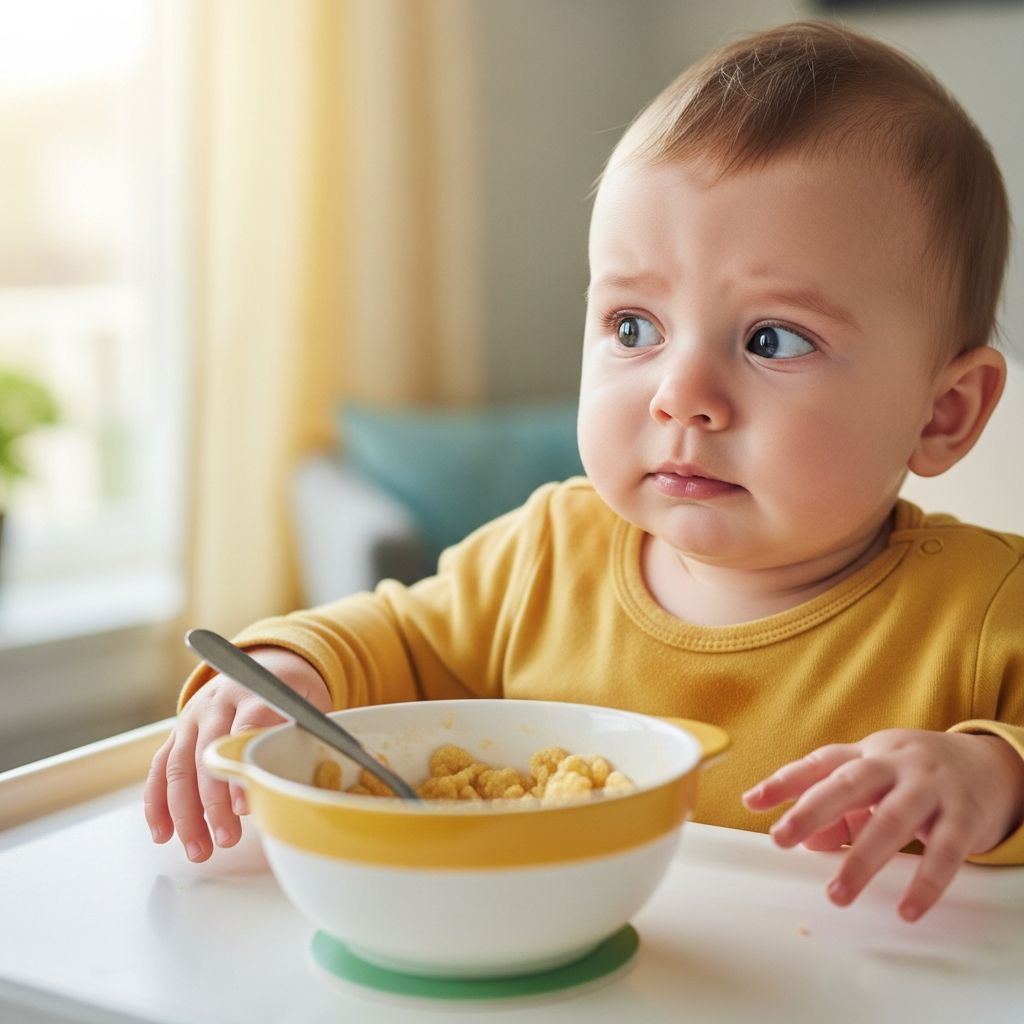
Seeing a 6-month-old turn away from the spoon can make any parent wonder if something is wrong. You may worry about nutrition, iron intake, or feel pressure because everyone else’s baby “is already eating bowls of cereal.” In reality, many healthy, thriving babies are slow to warm up to solids, and cereal refusal alone is almost never an emergency.
This article walks through what’s normal, why some babies resist cereal, and how to gently support your baby’s eating without stress or power struggles. It offers practical, parent-tested strategies, while respecting your baby’s pace and your need for reassurance.
Understanding What “Ready for Solids” Really Means
Age is only one part of the picture. A baby can be 6 months old on the calendar but not fully ready to manage solid food. Looking at developmental signs helps you match expectations to your baby’s abilities, which can quickly reduce frustration.
Key signs your baby is ready
- Sits with minimal support and can hold their head steady for the entire meal.
- Shows interest in food: watching others eat, leaning toward your plate, opening their mouth when you bring food close.
- Loss of the strong tongue-thrust reflex, meaning food no longer automatically gets pushed straight out.
- Can grab objects and bring them to the mouth, an early step toward self-feeding.
If several of these signs are missing, refusal of cereal may simply be your baby saying, “I’m not quite there yet.” Giving them a couple more weeks and focusing on milk feeds usually helps more than trying to “train” them to eat.
Why cereal isn’t a magic food
For many years, iron-fortified cereal has been promoted as the default first food. While it can be a convenient source of iron, it is not the only way to start solids and not every baby likes the taste or texture of thinned cereal. Plenty of babies prefer vegetables, fruit, or soft finger foods and still grow beautifully.
Breast milk or formula remains the primary source of nutrition for most babies during the first year. Think of solids at 6 months as “practice and exploration,” not as the main meal of the day.
Common Reasons a 6-Month-Old Refuses Cereal
Once you know refusal is common, the next step is understanding possible reasons in your baby’s situation. Often, more than one factor is at play.
1. Texture and taste feel unfamiliar
Most babies have had one experience of food up to this point: smooth, warm, and liquid. Suddenly offering a grainy paste on a spoon can feel strange or unpleasant. Some babies object by turning their heads, clamping their mouths shut, or grimacing.
- Thin cereal may run in the mouth and trigger a gag or cough.
- Thicker cereal can feel sticky and hard to move around on the tongue.
- Plain cereal often tastes bland compared with sweet breast milk or formula.
2. Baby is simply not hungry
If your baby has just taken a full bottle or a long breastfeed, they may have no interest in practicing solids. A comfortably full baby will do exactly what they’re designed to do: turn away from additional food.
Refusal in this case is a healthy, protective cue, not a problem to fix. Adjusting timing is usually more helpful than changing the food itself.
3. Developmental focus somewhere else
Babies pour their energy into one major task at a time—rolling, crawling, babbling, or teething. When your baby is busy conquering a new skill, mealtime experiments might feel less interesting, leading to short, distracted feeds or clear refusals.
4. Sensitive gag reflex or oral sensitivities
Some babies gag easily with new textures or seem to dislike anything touching their lips or inside their mouths. Gagging looks alarming, but it is a built-in safety mechanism that helps babies learn to manage food. Overreacting can accidentally teach a baby that eating is scary or stressful.
5. Emotional climate around feeding
Babies are exquisitely tuned to their parents’ feelings. If a caregiver is anxious, insistent, or visibly disappointed during meals, the baby may associate the spoon and the high chair with tension. Over time, this can look like arching, crying when seated for meals, or clamping the lips at the sight of the spoon.
Is My Baby Getting Enough Nutrition Without Cereal?
At 6 months, the most important piece of your baby’s diet is still breast milk or formula. Solids add experience with flavors and textures, and over time, they contribute iron and other nutrients. In the short term, cereal refusal rarely causes nutritional harm.
| Source | Role | What it Mainly Provides |
|---|---|---|
| Breast milk or formula | Main source of calories and hydration | Energy, fat, protein, many vitamins and minerals including some iron |
| Iron-rich solids (cereal, meats, beans, etc.) | Gradually increasing support for iron and nutrient needs | Iron, zinc, additional vitamins, new textures and flavors |
| Other solids (fruits, vegetables, grains) | Exposure and variety | Fiber, vitamins, learning to chew and swallow different textures |
If your baby is growing steadily along their growth curve, has plenty of wet diapers, and seems energetic and alert, you can be reassured that milk is meeting most needs while you gradually expand their menu.
Gentle Strategies to Encourage Solids Without Pressure
Instead of focusing on “getting” a certain number of spoonfuls in, shift the goal to building a relaxed, curious relationship with food. That mindset lowers pressure for everyone at the table and often leads to better eating over time.
Time solids thoughtfully
- Offer solids when your baby is alert and calm, not overly hungry or about to fall asleep.
- Try giving milk first, then waiting 45–90 minutes to offer cereal or other foods, so baby is comfortable but not stuffed.
- Keep meals short and sweet in the beginning—5 to 15 minutes is often plenty.
Start with very small amounts
Your baby doesn’t need a whole bowl. A few tiny spoonfuls are enough to explore taste and texture without feeling overwhelmed.
- Begin with 1–2 teaspoons of cereal mixed thinly with breast milk or formula.
- If your baby turns away, end the meal pleasantly and try again another day.
- Aim for consistency—offering solids once or twice a day—rather than volume.
Play with texture, temperature, and flavor
If plain cereal is consistently rejected, it is often helpful to change how it feels and tastes rather than insisting on the exact same version.
- Adjust thickness: some babies prefer almost drinkable cereal; others respond better to a thicker, pudding-like consistency.
- Vary temperature: try slightly cooler or a bit warmer, always checking that it’s comfortable on your wrist.
- Mix with familiar flavors: combining cereal with a little breast milk, formula, or a small amount of smooth fruit or vegetable puree can make it more appealing.
Offer alternatives to cereal
Cereal is convenient, but not mandatory. If your baby is rejecting it but appears interested in other foods, you can lean into that interest while still paying attention to iron.
- Smooth purees: sweet potato, pear, apple, carrot, pumpkin, or avocado.
- Iron-rich options: well-pureed lentils or beans, pureed meat or poultry, or iron-fortified oat or barley cereal instead of rice.
- Soft finger foods (if developmentally ready and safely prepared): very soft strips of cooked vegetables or ripe fruit, or softly scrambled egg.
Making Mealtimes Calm and Connection-Focused
How you feed can be as important as what you feed. Babies are more likely to explore and accept food when they feel safe, unhurried, and emotionally connected.
Create a predictable mealtime routine
- Use a comfortable high chair that supports your baby’s body with feet resting on a surface when possible.
- Begin meals with simple cues: washing hands, a short song, or placing a bib, so baby starts to understand what’s coming.
- Limit distractions like television or loud background noise; your face and voice are the most important “entertainment.”
Follow your baby’s cues
Responsive feeding means offering food and deciding what and when, while allowing your baby to decide how much—or whether—to eat.
- Signs of interest: leaning forward, opening mouth, grabbing the spoon, watching food closely.
- Signs of “all done”: turning away, pushing food or spoon away, sealing lips, fussing or crying.
- Respecting “no” teaches your baby that their body signals matter, which supports healthy eating patterns later in life.
Model enjoyment of food
Babies learn from watching you. Sharing mealtimes, even briefly, sends powerful messages about food.
- Eat with your baby when you can, showing chewing and swallowing slowly and clearly.
- Use warm, simple language: “This is tasty,” “I’m taking a bite,” “Mmm, that’s smooth.” Avoid commenting on how much baby is or isn’t eating.
- Celebrate engagement—touching, smelling, or licking food—even if little actually goes into the mouth.
Supporting Self-Feeding Safely
Some 6-month-olds dislike being spoon-fed but show real enthusiasm when allowed to explore food with their own hands. Letting your baby participate more actively can reduce battles and increase curiosity.
Ways to involve your baby
- Hand your baby their own spoon to hold while you offer small spoonfuls with another.
- Place a small puddle of cereal or puree on the high-chair tray so they can touch, smear, and eventually bring their hands to their mouth.
- Offer soft, easy-to-grasp pieces of food (prepared according to safe-feeding guidelines) that your baby can pick up and gum.
Mess is part of the learning
It is tempting to wipe constantly or control where food goes, but mess is how babies perform their own “research.” Squishing, smearing, and dropping are all ways of collecting information about texture and cause-and-effect.
- Use a wipeable mat or old towel under the chair and dress baby in clothes you don’t mind staining.
- Wipe hands and face gently at natural breaks—before and after the meal—rather than after every smear.
Common Pitfalls to Avoid
Good intentions can sometimes backfire at the table. Knowing what to avoid can keep the feeding relationship positive even when progress feels slow.
Forcing or tricking your baby
- Using distraction (constant videos or toys) to “sneak in” bites can prevent your baby from learning to listen to hunger and fullness cues.
- Insisting on “just one more bite” when your baby is clearly done can turn mealtimes into a power struggle.
- Worry tends to rise when you focus on each spoonful; shift attention toward connection and routine instead.
Sticking rigidly to one food
Continuing to serve the same cereal in the same way, day after day, despite strong refusal, can entrench resistance. Babies benefit from repeated exposure, but also from variety and flexibility.
- Alternate between cereal and other iron-rich foods throughout the week.
- Re-introduce cereal in a new form—mixed with a different puree, slightly thicker, or offered as part of a spoon your baby controls.
When to Talk to Your Pediatrician
Occasional refusal at 6 months is usually part of normal learning, but there are situations where a professional assessment is wise. Trust your instincts if something feels off.
Red flags worth checking
- Persistent refusal of all solids beyond a couple of months, not just cereal.
- Frequent coughing, choking, or wet-sounding breathing during feeds.
- Difficulty gaining weight, very few wet diapers, or a noticeable drop on the growth chart.
- Signs of pain when swallowing, arching and screaming at most feeds, or major battles at every attempt.
Discussing these concerns with your pediatrician or a pediatric feeding specialist can bring clarity and targeted strategies. Sometimes small changes in positioning, texture, or schedule make a big difference, and occasionally there are medical or oral-motor issues that deserve specific support.
Sample Day: Balancing Milk and Solids Around 6 Months
Every baby is unique, but seeing an example can make the transition to solids feel more manageable. Think of this as a template to adapt, not a schedule to copy exactly.
| Time of Day | Feeding Focus | Notes |
|---|---|---|
| Early morning | Breastfeed or bottle feed | Baby wakes hungry; milk first. |
| Mid-morning | Small solids “practice” session | Offer a few spoonfuls of cereal or puree when baby is alert. |
| Midday | Breastfeed or bottle feed | Milk remains main source of nutrition. |
| Afternoon | Optional second solids exposure | Try a different food or texture if baby is interested. |
| Evening | Breastfeed or bottle feed | Keep bedtime routine calm and predictable. |
Some days your baby may eagerly taste several spoonfuls; other days, they may ignore the food entirely. Over weeks and months, the overall trend matters more than daily variation.
Frequently Asked Questions
Is my baby going to be a picky eater if they refuse cereal at 6 months?
Refusing cereal at 6 months does not predict long-term picky eating. Many children who ignore cereal at first go on to enjoy a wide range of foods. What matters more is keeping mealtimes positive, offering variety repeatedly, and avoiding pressure or battles over bites.
Do I have to start solids with cereal for iron?
No. Iron-fortified cereal is one option, but not the only one. Pureed meats, lentils, beans, and other fortified grains can also support iron intake. If your baby consistently refuses cereal yet enjoys other iron-rich foods, that is perfectly acceptable.
How often should I offer solids if my baby keeps refusing?
Offering solids once or twice a day is usually enough at this age. Think of each offer as an opportunity, not an obligation. If your baby resists strongly for several days, it is fine to take a short break of a few days, then gently try again.
What if my baby chokes or gags on cereal?
Gagging is common as babies learn to move food around in their mouths and does not automatically mean something is wrong. True choking, where airflow is blocked and the baby cannot cry or cough, is an emergency and requires immediate first aid. If gagging is very frequent, distressing for your baby, or you are unsure what you’re seeing, seek guidance from your pediatrician or a pediatric feeding specialist.
Can I skip purees and go straight to soft finger foods?
Some families choose a more baby-led approach, offering appropriately prepared soft finger foods instead of spoon-feeding purees. Whether this is right for your baby depends on their developmental readiness, ability to sit and manage pieces, and your comfort with safe-feeding practices. If you are considering this approach, learning about infant choking prevention and safe food shapes is essential.
Supporting Yourself as Well as Your Baby
Feeding is emotional. It’s easy to feel judged when your baby doesn’t eat “by the book,” or to compare them with other babies who seem to devour everything. Reminding yourself that learning to eat is a marathon, not a sprint, can lower the emotional temperature dramatically.
- Notice and celebrate small wins: a curious look at the spoon, a lick, a new texture touched without tears.
- Reach out for reassurance from your pediatrician or a qualified feeding professional if worry is taking over your thoughts.
- Give yourself credit: you are showing up, paying attention, and learning alongside your baby, which is exactly what they need.
With time, patience, and a focus on connection rather than control, most babies move from resisting cereal to confidently exploring a wide world of foods. Your calm presence is the most nourishing ingredient of all.