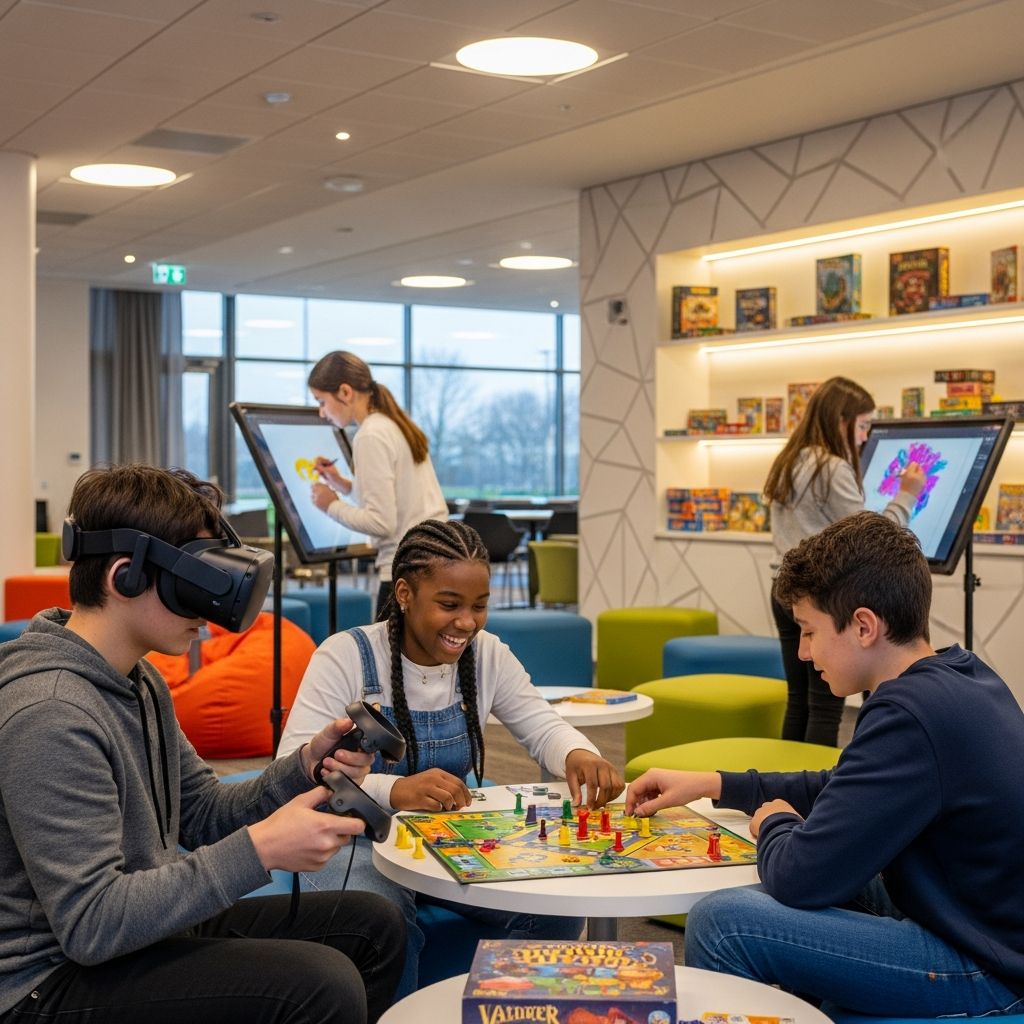
Revitalizing Family Time with Meaningful Indoor Experiences
The challenge of keeping adolescents and emerging adults entertained during indoor gatherings has become increasingly complex in contemporary family dynamics. When weather restricts outdoor options or schedules demand at-home entertainment, parents and guardians often find themselves searching for activities that transcend the default of passive screen consumption. The solution lies not in elaborate or expensive undertakings, but rather in thoughtfully designed experiences that acknowledge the interests and developmental stage of older youth while creating genuine opportunities for family connection.
This exploration examines six distinct categories of indoor entertainment that have proven effective in maintaining engagement and fostering meaningful interaction among teenagers and young adults. Each approach offers flexibility, affordability, and the potential to transform routine family gatherings into occasions that participants actually anticipate and remember fondly.
Reimagining Traditional Games with Contemporary Twists
The standard collection of board games that entertained younger children often fails to capture the interest of teenagers and young adults. This demographic requires intellectual stimulation and social dynamism that traditional game formats may not provide. However, the solution involves shifting toward games that emphasize creativity, quick thinking, and interpersonal engagement rather than relying on manufactured boards and pieces.
One particularly effective approach involves creating custom trivia experiences tailored to family history and shared experiences. Rather than relying on pre-packaged trivia content, family members can collaboratively develop questions spanning various categories relevant to their collective memories. This approach simultaneously entertains while reinforcing family bonds and shared history.
Another compelling option presents itself through games like “fact or fiction,” where participants compose statements ranging from historically accurate to entirely fabricated. This format encourages creative thinking, demands active listening from all participants, and often generates substantial amusement as players attempt to determine which claims represent truth and which constitute invention. The beauty of this approach lies in its scalability—groups of any size can participate, and the challenge level remains entirely adjustable based on participant preferences.
Charades and similar pantomime-based games continue to resonate with older youth when participants select categories or references aligned with their interests rather than limiting selections to commercial game suggestions. Incorporating contemporary media references, inside jokes, or specific to their social circles elevates engagement considerably.
Culinary Competitions as Entertainment and Skill Development
The popularity of competitive cooking programming has created a cultural moment where adolescents and young adults view culinary activity as entertainment rather than mere domestic responsibility. Transforming kitchen time into structured competitions taps into this existing enthusiasm while simultaneously building practical skills.
Organizing a family cook-off requires minimal preparation yet yields substantial entertainment value. The process begins by selecting a competition category—appetizers, entrées, desserts, or full multi-course meals depending on time availability and ambition level. Assigning one family member the role of judge adds theatrical dimension to the proceedings. The judge can evaluate entries based on predetermined criteria including presentation, taste, originality, and adherence to any specific guidelines established before competition begins.
Recognition beyond simple victory enhances the experience. Distributing awards for various categories—”most creative flavor combination,” “best presentation,” “people’s choice,” or “improvement from last competition”—ensures that multiple participants experience recognition regardless of overall outcomes. Incorporating this cook-off into regular dinner routines transforms the meal itself into an extension of the entertainment experience, allowing participants to enjoy and critique their collaborative culinary efforts.
This activity successfully accomplishes multiple objectives simultaneously. It entertains through competition and social interaction, it develops genuine life skills applicable to adult independence, it creates shared accomplishment, and it generates tangible results that the family directly benefits from consuming.
Artistic Expression Through Painting and Creative Projects
Visual arts activities hold particular value for older youth because they offer pathways to expression without requiring prior talent or experience. Painting specifically provides therapeutic benefits alongside entertainment value, particularly for individuals who may not typically identify as artistic.
The accessibility of painting as an activity has improved substantially due to expanded availability of affordable supplies through discount retailers and online marketplaces. A dedicated painting session requires nothing more elaborate than securing appropriate surfaces, assembling basic supplies, and designating a space where cleanup concerns become irrelevant. Basements, garages, or workrooms serve perfectly, allowing participants to work without anxiety about damaging household areas.
One particularly practical approach involves recruiting household members to assist with actual painting projects requiring completion—refreshing a room’s appearance, painting exterior spaces, or tackling accumulated maintenance tasks. This dual-purpose strategy combines genuine home improvement with entertainment and physical activity. Participants experience the satisfaction of visible accomplishment while simultaneously improving the household environment.
Alternatively, abstract painting sessions focused purely on creative expression offer meditative qualities alongside social connection. Playing music during painting sessions, establishing themes or prompts, and creating gallery-style presentations of finished works all enhance the experience and encourage continued participation.
Learning Movement Through Structured Dance Instruction
Dance occupies a central position in contemporary youth culture, making it an ideal vehicle for family entertainment and physical activity. The traditional barrier of requiring specialized studios or instructors has been largely eliminated through digital instruction platforms offering diverse dance styles and experience levels.
Online dance classes provide unprecedented flexibility, allowing families to participate together in their homes without scheduling constraints or transportation requirements. The variety of available styles—from ballroom and Latin to hip-hop and contemporary—accommodates diverse preferences and interests within the same household.
Successfully implementing a family dance session involves straightforward preparation: clearing sufficient floor space, accessing appropriate instructional content through reliable platforms, and establishing a social atmosphere where participants feel comfortable engaging in movement. The addition of appropriate music amplification enhances the experience considerably.
Beyond entertainment value, family dance participation offers cardiovascular benefits, coordination development, and stress relief. The combination of physical activity, musical engagement, and social participation creates a well-rounded activity suitable for varying fitness levels and age ranges. The potential for humor—particularly when family members attempt unfamiliar movement styles—adds substantial entertainment dimension to the experience.
Intellectual Challenge Through Puzzle-Based Engagement
Contrary to assumptions that puzzles appeal primarily to older adults, many adolescents and young adults find genuine satisfaction in puzzle-solving activities when appropriate difficulty levels are selected. Puzzles demand focused attention, encourage collaborative problem-solving, and provide continuous, visible progress toward completion.
Jigsaw puzzles remain consistently popular when featuring complexity sufficient to engage older youth. Second-hand markets including online platforms offer substantially reduced pricing compared to retail costs, making puzzle acquisition economically feasible. Selecting puzzles with image complexity, piece counts, or thematic interest aligned with household preferences increases likelihood of sustained engagement.
Digital alternatives and online brain teasers expand available options significantly. Logic puzzles, cryptic challenges, and digital escape room experiences provide technological engagement while maintaining the intellectual stimulation and group problem-solving benefits of physical puzzles. Some platforms offer real-time multiplayer experiences allowing friends to participate simultaneously from different locations.
The kitchen table becomes the ideal gathering location for puzzle engagement, creating an environment where conversation flows naturally alongside mental focus. The low-pressure nature of puzzle work, absence of time constraints, and collaborative approach all contribute to reduced stress and increased enjoyment compared to competitive activities.
Heritage Exploration and Genealogical Discovery
Adolescence and early adulthood represent developmental periods when interest in family history and ancestral connections naturally emerges. This developmental trajectory creates ideal timing for collaborative family tree projects that simultaneously satisfy curiosity while creating lasting records and artifacts.
Beginning a genealogical exploration requires gathering existing resources—photo albums, family documents, historical records, and informal knowledge held by older family members. Rather than treating this as a research task assigned to one individual, approaching it as a collaborative investigation transforms the process into shared discovery.
The creation of physical or digital family trees serves multiple purposes. It preserves historical information that might otherwise be lost, educates younger family members about ancestral backgrounds, and creates visual representations of family connections spanning generations. The process often reveals stories and historical contexts that add richness to family identity and provide conversation topics extending well beyond the initial project.
Digital tools and genealogical websites have made documentation and visualization substantially easier than in previous generations. However, the human element—older relatives sharing memories, stories, and contextual details—remains irreplaceable. This intergenerational knowledge transfer strengthens family bonds while capturing invaluable information.
Practical Considerations for Implementation Success
Effective implementation of these activities benefits from several foundational principles:
- Advance Communication: Consulting with prospective participants regarding preferences and interests increases enthusiasm and engagement likelihood.
- Realistic Time Allocation: Allowing adequate time without rushing creates relaxed atmospheres where genuine enjoyment flourishes.
- Minimal Pressure Dynamics: Emphasizing enjoyment over competition or perfection reduces stress and encourages authentic participation.
- Flexibility and Adaptation: Remaining responsive to emerging interests or preferences within activities maintains engagement and demonstrates respect for participant input.
- Environmental Preparation: Ensuring adequate lighting, comfortable seating, appropriate temperature, and necessary supplies removes barriers to sustained engagement.
- Technology Accessibility: For activities requiring digital platforms, confirming reliable internet connectivity and appropriate equipment prevents frustration and interruption.
Addressing Common Implementation Challenges
Parents and guardians frequently encounter predictable obstacles when attempting to implement these activities. Understanding potential challenges and developing responses enhances success probability.
Initial resistance from participants, particularly those accustomed to autonomous screen-based entertainment, represents a common barrier. Framing activities as optional invitations rather than mandatory participation, selecting activities aligned with expressed interests, and maintaining positive attitudes despite initial hesitation often overcome this resistance.
Coordination difficulties when household members maintain varied schedules may necessitate flexible approaches, such as initiating activities with available participants while remaining open to others joining later, or scheduling dedicated times communicated well in advance.
Physical space limitations in some households require creative adaptation—using bedroom space for dance instruction, converting dining tables into puzzle centers, or utilizing outdoor spaces seasonally expands available options.
Frequently Asked Questions
What if my teenager shows initial reluctance to participate in family activities?
Frame participation as optional invitations, select activities aligned with their interests, explain the purpose of family engagement, and model enthusiasm without pressure. Often, initial resistance diminishes once activities begin and enjoyment becomes apparent.
How much advance planning do these activities require?
Most activities function well with minimal preparation—often just gathering supplies and communicating the plan. More elaborate approaches like competitive cooking may benefit from slightly more advance planning, but nothing extensively complicated is necessary.
Can these activities accommodate mixed age groups within families?
Yes, most activities remain enjoyable across age ranges when difficulty levels and expectations are appropriately adjusted. Adults and older children often find particular value in activities involving younger siblings.
What budget considerations apply to these activities?
These activities generally require minimal financial investment. Supplies for painting, puzzle purchases from second-hand sources, and digital resources represent low-cost options for entertainment.
How frequently should families engage in these activities?
Frequency depends on family preferences and schedules. Monthly gatherings provide meaningful connection without becoming burdensome, though more frequent participation is certainly possible.
References
- 6 Indoor Activities for Teens and Young Adults — Child Development Information. Accessed February 2026. https://childdevelopmentinfo.com/child-activities/6-indoor-activities-teens-young-adults/
- 35 Fun Things to Do With Teenagers — iMOM. Accessed February 2026. https://www.imom.com/35-fun-things-to-do-with-teenagers/
- Activities for Teens – 88 Things for Bored Teenagers to Do At Home — Actually Mummy. Accessed February 2026. https://actuallymummy.co.uk/activities-for-teenagers-during-lockdown/
- 100 Activities for Bored Teens (No Screens) — Mommy Poppins. Accessed February 2026. https://mommypoppins.com/anywhere-kids/boredom-busters/100-activities-for-bored-teens-no-screens