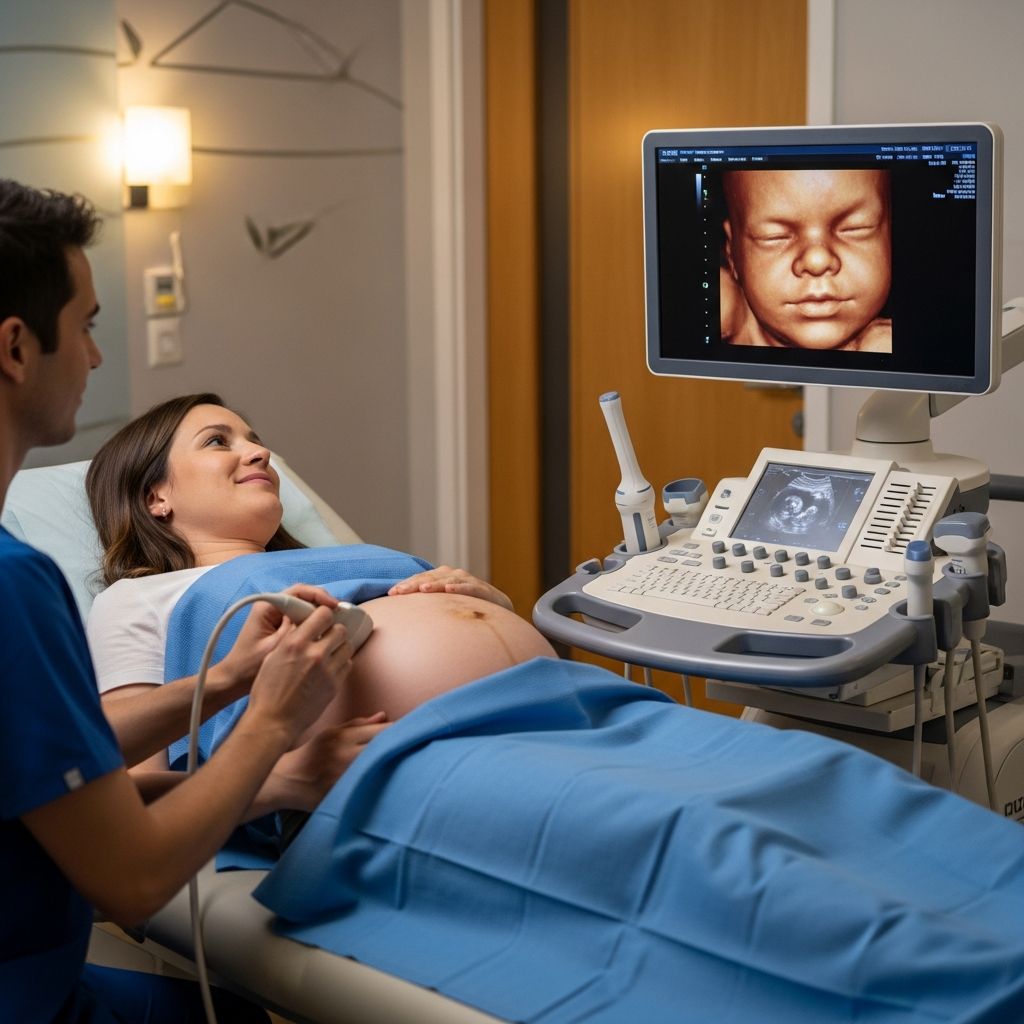
5D ultrasounds represent the latest advancement in prenatal imaging, delivering high-definition, lifelike images of the fetus that surpass traditional scans in clarity and detail. These scans use sophisticated software to process volume data, providing expectant parents with vivid glimpses of their baby’s features and movements.
Understanding Ultrasound Evolution: From 2D to 5D
Pregnancy ultrasounds have progressed significantly over decades, each generation building on the last to offer clearer insights into fetal development. Traditional 2D ultrasounds produce flat, grayscale images essential for basic diagnostics like measuring growth and detecting anomalies. These scans excel in medical assessments but lack visual appeal for bonding.
3D ultrasounds add depth by combining multiple 2D slices into a three-dimensional model, revealing facial structures and body contours more realistically. 4D technology introduces real-time motion, allowing parents to watch their baby yawn or kick live. 5D, often termed high-definition or HD live ultrasound, elevates this further with automated algorithms that enhance resolution, color, and texture for hyper-realistic renders.
| Ultrasound Type | Key Features | Primary Use |
|---|---|---|
| 2D | Black-and-white, flat images | Diagnostic checks, heartbeat |
| 3D | Static 3D models | Structural details, keepsakes |
| 4D | Real-time 3D motion | Live movements |
| 5D | HD enhanced, automated, lifelike | Bonding, detailed monitoring |
This table highlights how 5D integrates automation and AI-driven processing for consistent, superior quality.
The Technology Powering 5D Scans
At its core, 5D ultrasound employs high-frequency sound waves bounced off the fetus to generate raw data. Advanced software then applies artificial intelligence to automate image acquisition from volume datasets, reducing operator variability and sharpening details like skin tones and subtle expressions.
Unlike 4D, which streams raw motion, 5D uses HD live enhancements for virtual lighting and depth perception, mimicking natural flesh colors and shadows. This results in images so detailed that parents can spot dimples, hair tufts, or tiny fingers.
- Volume data processing: Combines multiple angles for comprehensive views.
- AI automation: Speeds up workflows and ensures high consistency.
- Real-time rendering: Captures dynamic actions like stretching or thumb-sucking.
Key Benefits for Parents and Medical Teams
5D ultrasounds foster profound emotional connections by offering photorealistic previews of the baby, helping families visualize their child earlier. Parents report stronger bonding, especially when sharing videos of smiles or eye openings.
Medically, the enhanced clarity aids in spotting subtle anomalies, such as cleft lips, earlier than standard scans. Sequential 5D sessions track growth patterns, limb development, and position, providing reassurance.
Gender determination becomes more reliable, aiding preparations for nurseries or reveals. Overall, it complements routine care without replacing it.
Best Timing for a 5D Ultrasound Experience
The prime window for 5D scans is 24 to 34 weeks gestation. At this stage, the baby has developed distinct features—nose, lips, ears—while remaining active enough for engaging movements. Earlier scans may show less definition, and later ones limit motion due to space constraints.
- 24-28 weeks: Ideal for facial details and initial personality glimpses.
- 28-32 weeks: Peak for full-body views and expressions.
- 32-34 weeks: Good for final growth checks, though movement slows.
Safety Profile of Advanced 5D Imaging
Like all diagnostic ultrasounds, 5D uses non-ionizing sound waves, posing no known risks to mother or baby when performed by qualified technicians. Organizations worldwide endorse its safety for prenatal use, emphasizing thermal and mechanical index limits to prevent tissue heating.
Elective 5D sessions are typically brief (15-30 minutes), minimizing exposure. No evidence links them to adverse outcomes, making them a safe bonding tool.
Comparing 5D with Other Prenatal Imaging Options
While 2D remains the gold standard for medical diagnostics due to its proven efficacy, 5D shines in elective settings. 3D/4D offer intermediates, but 5D’s automation yields superior consistency and detail, ideal for keepsakes.
For comprehensive care, combine 5D with Doppler for blood flow insights or standard anatomy scans.
Realistic Expectations: What 5D Reveals and Limitations
5D images approximate reality through software enhancements but aren’t photographs—factors like amniotic fluid, fetal position, and maternal BMI influence quality. Babies may appear ‘waxy’ or shadowed if uncooperative.
Not all features guarantee visibility; every pregnancy varies. It’s not a diagnostic replacement but an enhancement.
Choosing a Provider for Your 5D Scan
Seek FDA-approved machines and certified sonographers. Reputable studios offer packages with prints, videos, and heartbeats. Verify hygiene, privacy, and medical oversight.
Costs range from $100-$300, often not insured as elective.
Frequently Asked Questions About 5D Ultrasounds
Is 5D ultrasound truly a fifth dimension?
No, it’s marketing for HD-enhanced 4D with automation; the ‘5D’ denotes advanced processing.
Can 5D detect all birth defects?
It aids visualization but requires medical 2D/3D for full diagnostics.
How long does a 5D session last?
Typically 20-45 minutes, depending on baby cooperation.
Are 5D scans safe multiple times?
Yes, in moderation, as exposure remains low.
What if images aren’t clear?
Rescheduling or adjustments often help; not every scan is perfect.
The Future of 5D and Beyond in Prenatal Care
Emerging AI integrations promise even smarter diagnostics, like placental analysis, revolutionizing monitoring. As costs drop, 5D may integrate into routine care, blending bonding with health insights.
Consult your obstetrician to incorporate 5D into your journey for memorable, informed pregnancy experiences.
References
- UC Baby uses High-Definition 5D Ultrasound Technology — UC Baby. 2023. https://www.ucbaby.ca/uc-baby-uses-high-definition-5d-ultrasound-technology
- Exploring the Future of Baby Imaging: The Rise of 5D Ultrasound — 3D Baby Vision. 2023. https://www.3dbabyvision.com/blog/the-rise-of-5d-ultrasound/
- What Parents See In 5D Sonograms Vs Reality — 3D4D Studio. 2023. https://3d4dstudio.com/what-parents-see-in-5d-sonograms-vs-reality/
- 5D, 4D, and 3D Ultrasound Machines – What Is the Difference? — DirectMed Imaging. 2023. https://directmedimaging.com/5d-4d-and-3d-ultrasound-machines/
- What Is a 5D Baby Ultrasound Scan and What Does It Show? — Baby Insight 3D. 2023. https://babyinsight3d.com/what-is-a-5d-baby-ultrasound-scan/
- Four-Dimensional (5-D) Fetal Ultrasound(s) — Wellmark Blue Cross Blue Shield. 2023. https://digital-assets.wellmark.com/adobe/assets/urn:aaid:aem:2958b4a8-3abf-4162-b739-8ee2f7ab226f/original/as/Ultrasound-In-Maternity-Care.pdf
- Is 5D Ultrasound Safe for Baby? — Beautiful Beginnings Ultrasound. 2023. https://beautifulbeginningsultrasound.com/shrewsbury-5d-ultrasound