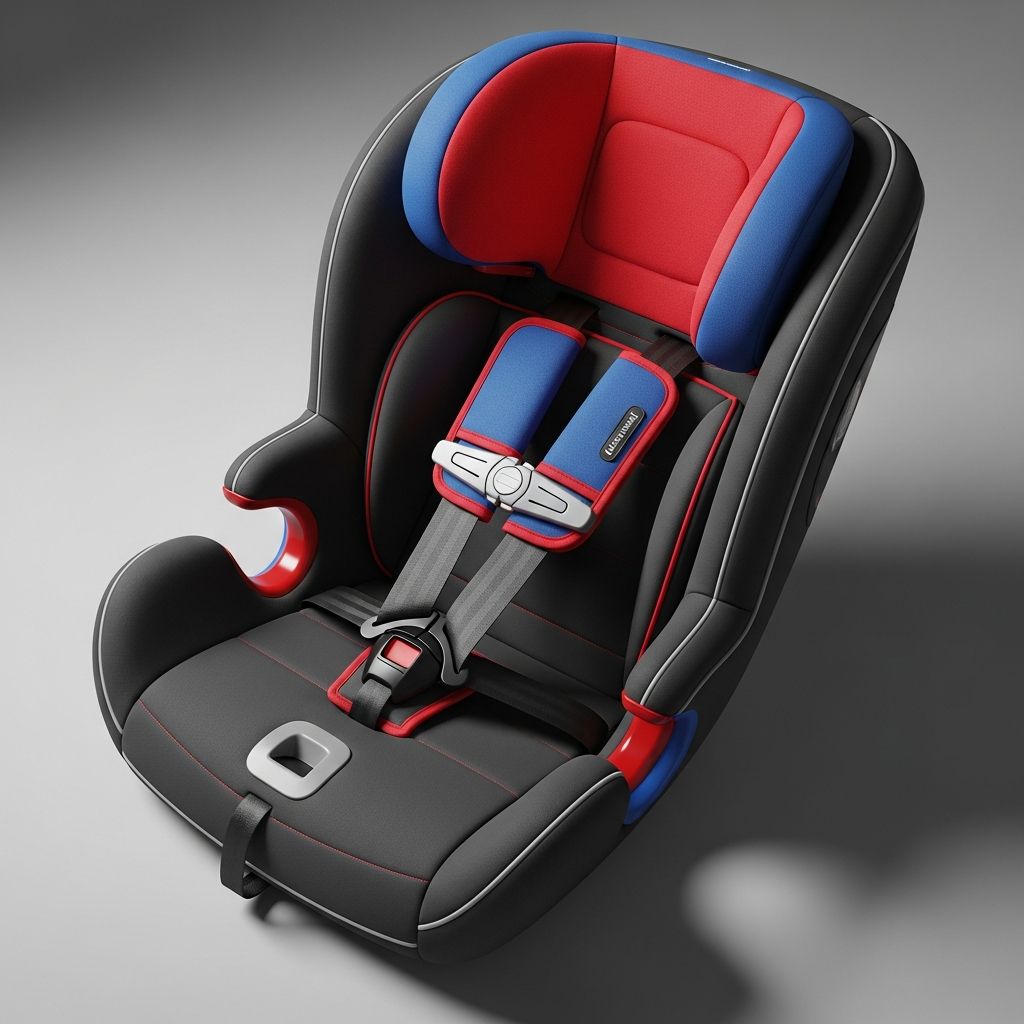
Protecting children in vehicles demands the most reliable restraint systems, and **5-point harness car seats** stand out as the top choice for infants and toddlers. These seats use five straps—two over the shoulders, two at the hips, and one between the legs—to secure kids firmly, distributing crash forces across their strongest body areas like the pelvis and shoulders. Unlike simpler systems, this design minimizes movement during impacts, reducing injury risks significantly.
Understanding the Mechanics of 5-Point Harness Systems
A **5-point harness** excels by anchoring the child at multiple points, preventing the body from shifting violently in a collision. The shoulder straps control upper body motion, hip straps secure the pelvis, and the crotch strap stops sliding under the belt, known as submarining. This setup contrasts sharply with 3-point harnesses, which only use shoulder and crotch straps or hip and crotch straps, offering less control over torso movement.
Children’s bodies differ from adults’—their heads are proportionally larger, necks weaker, and bones more fragile. A 5-point system cradles them properly, supporting head and neck control during sudden stops or crashes. Testing shows these harnesses limit head excursion and maintain positioning, crucial for rear- and forward-facing seats.
Key Advantages Over Other Restraint Types
- Superior Crash Force Distribution: Forces spread across shoulders, hips, and pelvis, avoiding abdominal or neck strain.
- Anti-Ejection Protection: Keeps children from being thrown out, even in high-speed impacts.
- Prevents Slouching and Wiggling: Holds active toddlers in place, ideal for naps or long trips.
- Adaptable to Growth: Adjustable straps fit from infancy through preschool years.
Compared to boosters, which rely on vehicle belts, 5-point harnesses provide full containment until a child outgrows them, typically around 4-7 years old depending on height and weight. Research indicates forward-facing harness seats reduce injury risks more effectively than boosters for smaller children.
Proper Harness Positioning for Rear-Facing Seats
For rear-facing positions, recommended up to age 2 or longer, position shoulder straps at or below the child’s shoulders. This setup ensures the harness catches the body as the seat pivots backward in a frontal crash, preventing upward sliding or pitching forward. Incorrect height can allow the head to hit the vehicle interior, increasing injury odds.
| Seat Orientation | Shoulder Strap Position | Reason |
|---|---|---|
| Rear-Facing | At or below shoulders | Prevents jackknifing and head contact |
| Forward-Facing | At or above shoulders | Keeps child down and back in seat |
Forward-Facing Harness Setup Essentials
Switching to forward-facing? Raise shoulder straps to or above the shoulders to keep the child seated low during forward deceleration. The chest clip must align at armpit level, ensuring straps stay on shoulders and not slip to the neck. A snug fit—no pinchable slack at the collarbone—is vital; loose harnesses double injury risks.
Step-by-Step Guide to Adjusting Your Harness
- Check Child’s Fit: Ensure 1 inch of shell above head; outgrown seats compromise safety.
- Perform Pinch Test: Cannot pinch fabric at shoulders when buckled.
- Adjust Height: Use no-rethread designs for ease—lift headrest to auto-adjust straps.
- Tighten Fully: Pull front strap until flat against body; pads should compress slightly.
- Position Chest Clip: Armpit height to prevent slipping.
No-rethread harnesses simplify this, reducing errors common in manual systems. Magnetic chest clips aid buckling squirmy kids, though not for main buckles due to crash standards.
Common Mistakes and How to Avoid Them
Parents often overlook harness slack, wrong slot heights, or twisting straps, all halving effectiveness. Growth spurts demand monthly checks—signs include straps slipping, digging, or looseness. Never use after accidents without inspection; replace seats post-moderate crashes per NHTSA.
- Twisted straps: Always flatten before buckling.
- Loose fit: Retighten religiously.
- Outgrown seat: Switch before limits hit.
When to Transition from 5-Point Harness to Booster
Keep harnesses until upper weight/height limits (often 65 lbs, 49 inches), then move to high-back boosters. Studies show harnesses outperform boosters for kids under 5-6 years. NHTSA advises rear-facing longest possible, then forward-facing harness before boosting.
Choosing the Right 5-Point Harness Car Seat
Select seats with easy-adjust harnesses, side-impact protection, and NHTSA 5-star ratings. Features like infinite recline and rotation simplify use. All CR-recommended models include 5-point systems for proven performance.
| Feature | Benefit |
|---|---|
| No-Rethread Harness | Quick growth adjustments |
| Easy Tighten | Snug fit every time |
| Chest Clip | Proper shoulder positioning |
Installation Best Practices for Maximum Safety
Use LATCH for lighter seats, seatbelts for heavier; achieve less than 1 inch movement at belt path. Lockoff mechanisms prevent slack. Professional checks at stations confirm correctness—80% of seats are misused.
Beyond Car Seats: 5-Point Harnesses in Everyday Gear
Strollers, high chairs, and swings benefit too, preventing falls from wiggling out. 5-point designs contain better than 3-point, especially for escape artists.
Frequently Asked Questions (FAQs)
What makes a 5-point harness safer than a 3-point?
It secures hips separately, preventing submarining and distributing forces better across strong bones.
How often should I check harness fit?
Before every ride, plus after growth spurts or clothing changes.
Can I use a 5-point harness past age 4?
Yes, until height/weight max; longer is safer.
What’s the pinch test?
Pinch shoulder strap; no slack means snug.
Do all car seats need 5-point harnesses?
Infant/toddler seats should; boosters don’t.
Real-World Impact: Statistics and Expert Insights
Properly used car seats cut fatal injury risk by 70%; 5-point harnesses enhance this. CR experts affirm they’re gold standard for containing young passengers.
Investing time in correct use yields lifelong peace of mind. Prioritize 5-point harness seats, fit them right, and extend rear-facing—your child’s safety depends on it.
References
- Why a 5-Point Harness for Your Child’s Car Seat Safety — babyark.com. 2023. https://babyark.com/blogs/news/five-point-harness-car-seat-for-child-passenger-safety
- Why a 5-Point Harness Matters for a Car Seat or Stroller — Consumer Reports. 2023-10-12. https://www.consumerreports.org/babies-kids/child-safety/what-is-a-5-point-harness-a1550236871/
- Car Seat & Booster Seat Safety, Ratings, Guidelines — NHTSA. 2025. https://www.nhtsa.gov/equipment/car-seats-and-booster-seats
- Harness or Booster: When to Make the Switch! — CSFTL. 2022. https://csftl.org/harness-or-booster/
- Effectiveness of Boosters vs. Forward-facing Five-point Harness — CHOP Research. 2023. https://cchips.research.chop.edu/effectiveness-of-boosters-vs-forward-facing-five-point-harness