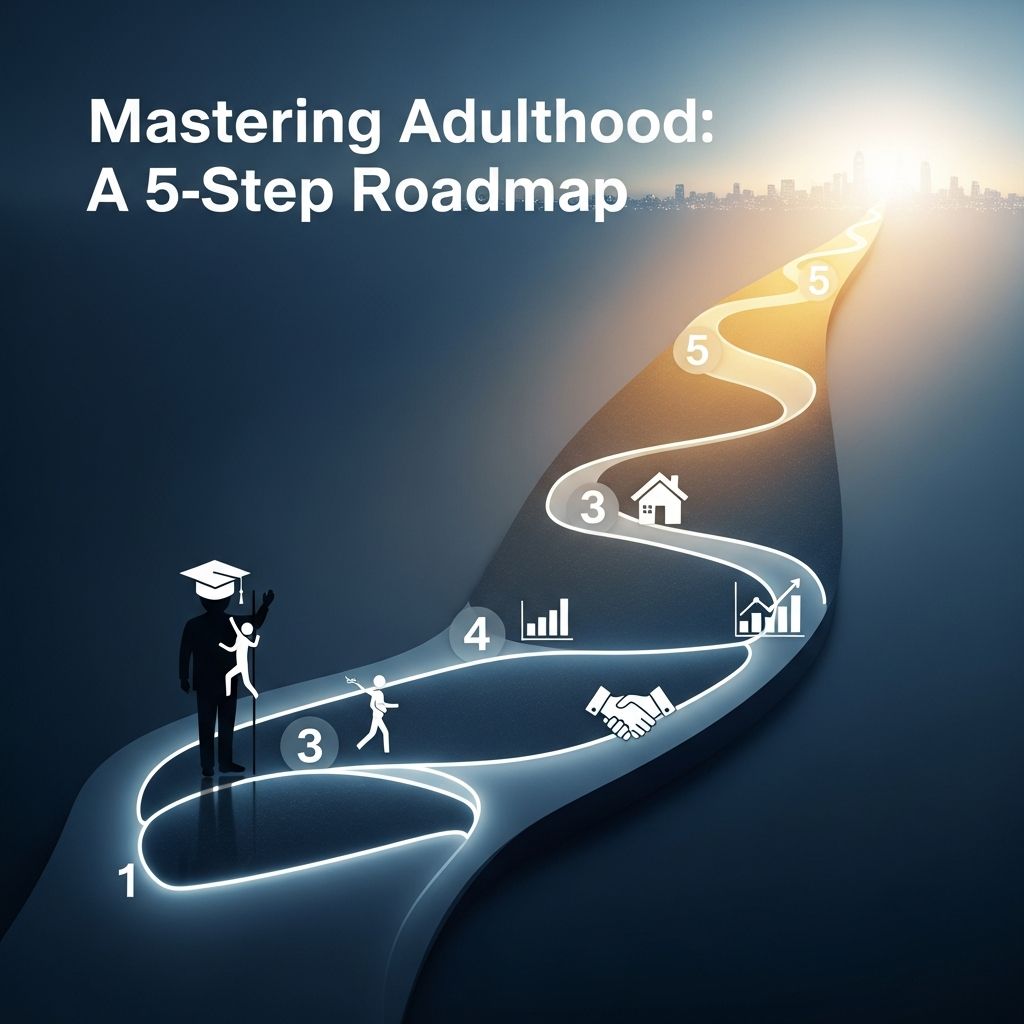
Transitioning into full adulthood involves more than just paying bills or holding a job—it’s about cultivating a mindset of responsibility, self-reliance, and continuous growth. This guide outlines five essential steps drawn from psychological research and practical wisdom, helping you navigate life’s complexities with confidence. Whether you’re a young professional juggling career demands or a parent balancing family needs, these strategies foster long-term stability and personal fulfillment.
Step 1: Secure Your Financial Foundation
Financial independence forms the bedrock of adult life, shielding you from unexpected crises and enabling freedom to pursue passions. Begin by establishing an emergency fund covering 3-6 months of living expenses, as recommended by financial experts for weathering job loss or medical emergencies. Track daily spending with a simple allowance system: allocate a fixed amount for discretionary use, reviewing it weekly to curb impulse buys and build savings habits.
Contribute consistently to retirement accounts like a 401(k) or IRA, leveraging compound interest for future security. Automate transfers to prioritize savings before lifestyle inflation erodes gains. Beyond basics, diversify income through side gigs or investments, recognizing that adulthood means enduring short-term discomfort for long-term prosperity.
- Prioritize high-interest debt repayment using the debt snowball method: tackle smallest balances first for motivational wins.
- Budget with the 50/30/20 rule: 50% needs, 30% wants, 20% savings/debt.
- Build credit wisely by paying cards in full monthly and limiting inquiries.
These practices transform financial anxiety into empowerment, aligning with stage 4 self-authorship where personal values dictate fiscal decisions.
Step 2: Cultivate Self-Awareness and Inner Authority
True maturity emerges when you author your own identity, moving beyond external validation to an internal compass. Psychologist Robert Kegan describes this as the ‘Self-Authoring Mind,’ where adults—about 35% of the population—prioritize self-defined beliefs over societal pressures. Question inherited norms: Are your career choices yours or echoes of family expectations? Develop a ‘seat of judgment’ by journaling core values and testing them against daily choices.
Embrace emotional responsibility: identify feelings without letting them dictate actions. Practice self-regulation through mindfulness or therapy, fostering resilience against criticism. Adulthood demands viewing yourself objectively, analyzing strengths and growth areas without defensiveness. Mark Manson emphasizes that maturity means acting on principles ‘right for their own sake,’ even amid suffering, rejecting pleasure for wrong reasons.
| Developmental Stage | Key Traits | Actionable Shift |
|---|---|---|
| Imperial Mind (Stage 2) | Self-focused needs | Shift to shared experiences |
| Socialized Mind (Stage 3) | External validation | Build internal direction |
| Self-Authoring (Stage 4) | Personal values guide | Question and refine beliefs |
This table illustrates progression toward self-mastery, urging deliberate evolution.
Step 3: Forge Meaningful Relationships and Support Networks
Adults thrive through intentional connections, not superficial ties. Build a robust support system: identify 5-10 reliable contacts for advice, empathy, and accountability. Dynamic communication is key—practice active listening, expressing needs clearly without passive-aggression. Seek a solid intimate partnership grounded in mutual respect, where vulnerability strengthens bonds rather than weakens them.
Learn to cope collectively: share burdens during hardships, celebrating wins together. Julie Lythcott-Haims notes adulthood involves showing up reliably for others, researching decisions collaboratively, and honoring commitments. At higher stages, like the rare ‘Interconnected Mind’ (1% of adults), relationships evolve identities through empathetic exploration of differing views, yielding win-win solutions. Nurture family ties mindfully, setting boundaries to prevent codependency.
- Schedule regular check-ins with mentors or friends.
- Practice conflict resolution: ‘I feel… because… I need…’ statements.
- Volunteer to deepen community roots and perspective.
Step 4: Set and Achieve Purposeful Daily Goals
Directionless drifting marks immaturity; purposeful adults set micro-goals aligning with macro-visions. Start mornings with a gratitude ritual—list three appreciations—followed by 3-5 achievable tasks: one fitness-related, one professional, one personal. Use tools like planners or apps to track progress, adjusting for realism.
Think bigger: define a 5-year vision encompassing career, health, and legacy. Break it into quarterly milestones, reviewing monthly. Lythcott-Haims stresses adulting as a mindset igniting action—wanting, having to, and learning how independently. Embrace failure as data: analyze setbacks without self-judgment, iterating toward mastery. This mirrors stage 5’s constant self-reinvention, questioning even personal convictions for growth.
Incorporate habits like reading developmental psychology or biographies of resilient figures to inspire sustained motivation.
Step 5: Embrace Resilience and Self-Acceptance
Resilience crowns adulthood, turning adversity into evolution. Get comfortable with your appearance and quirks: reject social comparison fueling anxiety, prioritizing self-kindness. Develop coping skills from childhood foundations—therapy refines them for adult stressors like loss or failure.
Manson articulates maturity as conquering suffering by remaining unmoved, choosing principled pain over misguided ease. Practice exposure: face fears incrementally, building tolerance. Maintain physical health through sleep, nutrition, and movement, as bodily vitality underpins mental fortitude.
- Daily meditation: 10 minutes for emotional regulation.
- Reframe challenges: ‘What can I learn?’
- Seek therapy proactively, not just in crisis.
Integrate all steps holistically: financial security frees energy for relationships, self-awareness sharpens goals, resilience sustains the cycle.
Frequently Asked Questions (FAQs)
What is the biggest barrier to adulting?
The shift from external dependence to self-authorship often stalls people in stage 3, relying on others’ approval.
How long does it take to build an emergency fund?
Aim for 3-6 months’ expenses; at 10% of income monthly, it takes 2.5-5 years, adjustable with windfalls.
Can you skip stages in adult development?
Stages build sequentially; rushing leads to fragility. Focus on mastering current level.
Why set daily goals if big dreams matter?
Micro-habits compound into macro-change, preventing overwhelm.
Is stage 5 achievable for everyone?
Rare (1%), it requires lifelong inquiry; aspire through stage 4 mastery.
Adulthood is iterative: revisit steps annually, adapting to life’s phases like parenting or career shifts. This roadmap equips you for a rich, autonomous life.
References
- From Psychology Today: Understanding the 5 Stages of Adult Development — The Journeyman Life. 2023-01-15. https://thejourneymanlife.com/from-psychology-today-understanding-the-5-stages-of-adult-development/
- How to Grow Up: A Guide to Being Human — Mark Manson. 2018-05-20. https://markmanson.net/how-to-grow-up
- 10 Steps to Become a Fully Loaded Grown-Up — Live Happy. 2022-07-10. https://livehappy.com/self/10-steps-to-become-a-fully-loaded-grown-up
- ‘How To Be An Adult’ Guides Young People Through The Challenges — WBUR Here & Now. 2021-04-07. https://www.wbur.org/hereandnow/2021/04/07/how-to-be-an-adult-book
- 5 Easy Steps to “Adult” Starting Today — IFoundCarmen. 2016-09-01. https://ifoundcarmen.wordpress.com/2016/09/01/5-easy-steps-to-adult-starting-today/
- How To “Adult” in 5 Steps — Mother.ly. 2023-11-12. https://www.mother.ly/career-money/how-to-adult-a-5-step-guide/