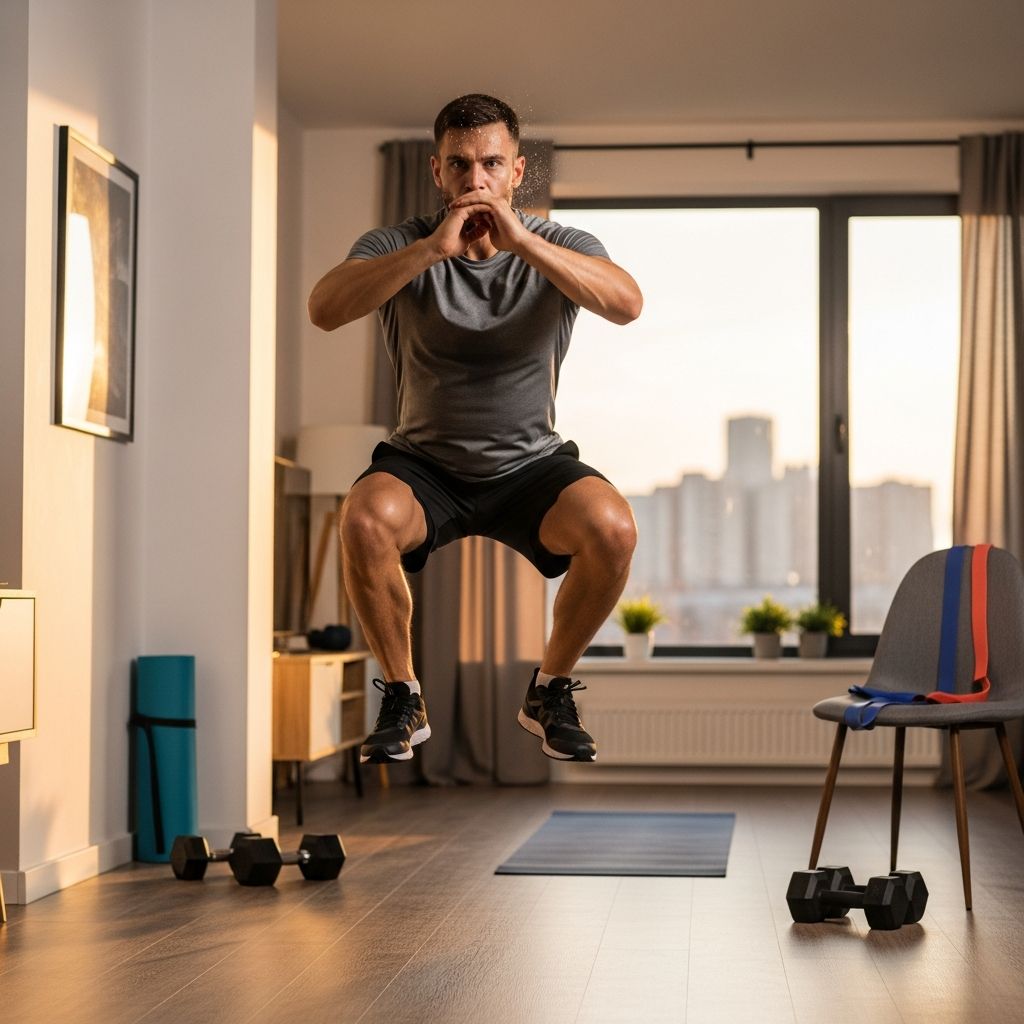
Transform your living space into a high-performance gym with these demanding bodyweight routines. Perfect for those tired of basic exercises, these workouts target full-body strength, explosive power, and unyielding core stability using only your body weight. No fancy gear required—just grit and space to move.
Why Intense Home Training Delivers Results
Bodyweight exercises at advanced levels spike muscle engagement and metabolic rate far beyond standard reps. Research from the American College of Sports Medicine highlights how high-intensity bodyweight protocols enhance VO2 max and lean mass without external loads. These routines incorporate plyometrics, unilateral movements, and dynamic holds to mimic professional training, ensuring progressive overload right at home.
Commit to proper form to avoid injury: warm up with 5-10 minutes of light jumping jacks and arm circles, and cool down with stretches. Aim for 3-4 sessions weekly, resting 48 hours between for recovery. Track progress by noting reps or hold times to stay motivated.
Workout 1: Explosive Upper Body Assault
This circuit hammers shoulders, chest, triceps, and stabilizers with moves demanding coordination and power. Perform as a circuit: complete one set of each exercise back-to-back, rest 60-90 seconds, then repeat for 4 rounds. Total time: 25-30 minutes.
- Spiderman Press-Outs (10 reps per side): From plank, lower into a push-up while driving one knee to the opposite elbow, mimicking a climbing motion. Alternate sides explosively. Targets obliques alongside upper body.
- Elevated Pike Press (12 reps): Feet on a sturdy chair, hips piked high, lower head toward floor by bending elbows. Builds shoulder endurance like overhead presses.
- One-Leg Archer Push-Ups (8 reps per leg): In push-up position, lift one leg and shift weight to the opposite arm, lowering deeply. Switch legs halfway. Amplifies unilateral strength.
- Plank-to-Handstand Tuck (20 seconds): From plank, explode hips up into a tuck handstand hold against a wall if needed, then return. Repeat for time.
Pro tip: Breathe rhythmically—exhale on effort phases to maintain core tension throughout.
Workout 2: Lower Body Power Builder
Focus on quads, glutes, hamstrings, and calves with single-leg dominance for balanced development. Do 3 sets per exercise, 45-60 seconds rest between sets. Switch legs each set. Total: 20-25 minutes.
| Exercise | Sets x Reps | Key Muscles |
|---|---|---|
| Bulgarian Jump Squats | 3 x 10/leg | Quads, Glutes |
| Single-Leg Hip Thrusts | 3 x 15/leg | Hamstrings, Glutes |
| Pistol Squat Progressions | 3 x 6-8/leg | Full Lower Body |
| Explosive Calf Hops | 3 x 20 seconds | Calves, Achilles |
For Bulgarian Jump Squats, rear foot elevated, drop into split squat then explode up switching legs mid-air. Single-Leg Hip Thrusts: Lie supine, one foot planted, drive hips skyward while extending the other leg straight. Progress pistol squats by using a door frame for assist if full depth eludes you. Finish with rapid calf hops on toes for vascular pump.
Workout 3: HIIT Inferno Circuit
High-Intensity Interval Training torches calories via 40/20 work-rest ratios. String these full-body blasters for metabolic chaos. 5 rounds, no rest between exercises, 2 minutes between rounds. 30 minutes total.
- Burpee-to-Tuck Jump (10 reps): Standard burpee into squat, then explode knees to chest.
- Jump Lunge Switches (20 seconds max reps): Lunge low, jump and swap legs continuously.
- Mountain Climber Sprints (30 seconds): Plank position, knees to chest at double speed.
- Squat Jump Overs (15 reps): Squat, jump laterally over an imaginary line, alternate sides.
HIIT elevates EPOC (excess post-exercise oxygen consumption), prolonging fat burn for hours post-workout, per Journal of Strength and Conditioning Research findings. Scale intensity by reducing jump height initially.
Workout 4: Core Annihilator Series
Shred abs, obliques, and deep stabilizers with isometric and dynamic holds. 4 rounds, 30-45 seconds per move, 15-second transitions. 20 minutes.
- V-Ups with Twist (12 reps): Seated, reach arms and legs to V, twist torso side-to-side.
- Plank Jack Taps (40 seconds): High plank, jack feet out/in while alternating shoulder touches.
- Bicycle Crunch Pulses (20/side): Tabletop legs, crunch elbow to knee with a three-pulse hold.
- Leg Raise Windshield Wipers (10 reps/side): Hanging from a sturdy bar or floor inverted, swing legs side-to-side controlled.
These isolate the transverse abdominis for a cinched waistline, outperforming crunches in EMG studies. Engage fully—no momentum cheating.
Workout 5: Total Body Crusher Tabata
Tabata protocol: 20 seconds all-out, 10 seconds rest, 8 rounds per exercise (4 minutes each). Chain three for 12 minutes of hell, repeat twice with 3-minute breather. Total: 35 minutes.
- Push-Up to Squat Thrust: Push-up, then feet to hands into squat jump.
- High Knee Burpees: Burpee with rapid knee drives on stand-up.
- Alternating Lunge Plyos: Jump lunge with max height.
Developed by Dr. Izumi Tabata, this format yields superior aerobic and anaerobic gains in minimal time. Hydrate heavily; expect full-body shake.
Progression Strategies for Long-Term Gains
To avoid plateaus, employ these tactics:
- Increase reps/sets weekly by 10%.
- Shorten rest periods gradually.
- Add pauses at end-ranges (e.g., 3-second squat bottom).
- Incorporate isometrics: hold final rep 10-20 seconds.
Monitor with a journal. Fuel with protein-rich meals post-session for repair.
Common Mistakes and Fixes
| Mistake | Fix |
|---|---|
| Locked knees/joints | Soft bends for joint safety |
| Core disengaged | Breathe and brace abs always |
| Rushing form | Prioritize control over speed |
| No warm-up | Dynamic moves first |
Frequently Asked Questions (FAQs)
Can beginners try these workouts?
Scale down reps and omit jumps; build up over weeks. Consult a doctor if new to exercise.
How often should I do these?
3-5 days/week, alternating focus areas for recovery.
Do I need space or equipment?
6×6 foot area; optional chair for elevation.
Will these build muscle?
Yes, via progressive overload—expect hypertrophy with consistency.
What if I feel pain?
Distinguish soreness from sharp pain; stop and seek professional advice.
References
- Need a challenge? Try these hard workouts at home — Centr. 2023-05-15. https://centr.com/blog/show/16775/need-a-challenge-try-these-hard-workouts-at-home
- 30 Moves to Make the Most of Your At-Home Workout — Healthline. 2024-08-20. https://www.healthline.com/health/fitness-exercise/at-home-workouts
- 10 of the Best Workout Routines You Can Do at Home — Svetness. 2024-03-10. https://www.svetness.com/blogs/best-workout-routines-at-home
- No Equipment Home Workouts: strength workouts — UT RecSports. 2020-03-01. https://www.utrecsports.org/public/upload/files/general/SP20_FW_PT_AtHome_Workouts_Strength.pdf
- Unlock True Strength with These 20 Bodyweight Exercises — Men’s Health. 2023-11-12. https://www.menshealth.com/fitness/a26202141/best-bodyweight-exercises/