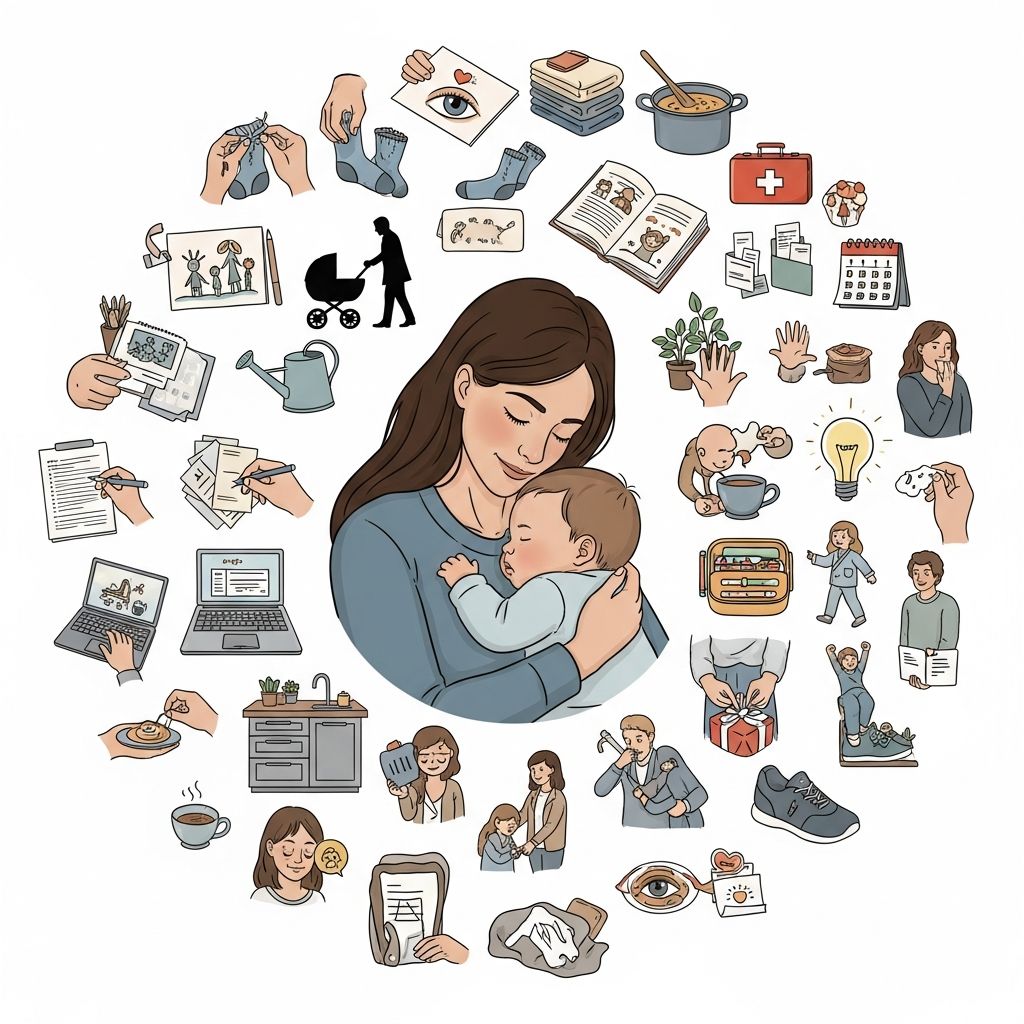
Mothers perform an extraordinary array of tasks daily that form the backbone of family life and societal stability. These roles, often invisible and unpaid, encompass everything from nurturing care to logistical mastery. While society benefits immensely, this labor remains uncompensated, with women dedicating hours equivalent to full-time employment. This article delves into 40 such critical responsibilities, highlighting their scope and significance.
The Economic Weight of Maternal Contributions
Before exploring specific roles, it’s crucial to understand the scale. Mothers in California alone invest the equivalent of 37 hours weekly in unpaid care and household duties, roughly twice the time fathers spend. Nationally, unpaid caregiving by women totals over $683 billion annually, part of a $1.1 trillion contribution to the U.S. economy. Globally, women’s unpaid work could represent over 40% of GDP in some nations, performed at 2.5 times the rate of men. These figures underscore why recognizing these roles matters—not just for equity, but for economic accuracy.
Core Household Management Duties
Mothers often serve as the central coordinators of home life, managing resources and routines with precision. Here are key examples:
- Meal Planner and Nutritionist: Designing balanced weekly menus, accounting for allergies, preferences, and budgets while ensuring nutritional needs are met.
- Grocery Strategist: Researching sales, compiling lists, shopping efficiently, and organizing storage to minimize waste.
- Head Chef and Kitchen Manager: Preparing three meals daily, plus snacks, cleaning up, and maintaining kitchen hygiene standards.
- Laundry Supervisor: Sorting, washing, drying, folding, and distributing clothes for the entire family, often multiple loads daily.
- Wardrobe Curator: Selecting age-appropriate outfits, maintaining clothing quality, and teaching personal grooming habits.
- Home Organizer: Decluttering spaces, assigning storage solutions, and creating functional living areas amid constant use.
- Supply Chain Coordinator: Tracking household essentials like toiletries and restocking before shortages occur.
These tasks alone demand strategic foresight akin to professional logistics roles, consuming hours that compound over time.
Childcare and Developmental Guidance
The heart of motherhood lies in raising children, a multifaceted endeavor blending education, health, and emotional growth. Mothers spend 75% more time on childcare than fathers.
- Full-Time Educator: Facilitating learning through play, reading, homework help, and skill-building activities.
- Health Monitor: Tracking illnesses, administering medications, scheduling check-ups, and promoting wellness routines.
- Hygiene Enforcer: Overseeing baths, teeth brushing, nail trimming, and teaching hygiene independence.
- Sleep Architect: Establishing bedtime rituals, managing naps, and troubleshooting sleep issues.
- Activity Director: Planning playdates, outings, and indoor games to foster social and physical development.
- Discipline Coach: Setting boundaries, enforcing rules, and guiding behavior with patience and consistency.
- Emotional Therapist: Listening to fears, validating feelings, and providing comfort during tantrums or upsets.
- Creative Spark: Encouraging arts, crafts, and imaginative play to nurture creativity.
Logistical and Transportation Expertise
Mothers master the art of scheduling and mobility, juggling family calendars like pros.
- Family Scheduler: Coordinating school, extracurriculars, appointments, and events without overlap.
- Chauffeur Service: Driving to practices, events, and errands, often in heavy traffic.
- Event Planner: Organizing birthdays, holidays, and family gatherings from invitations to cleanup.
- Homework Overseer: Monitoring assignments, providing resources, and ensuring completion.
- Tech Support Specialist: Troubleshooting devices, setting up accounts, and teaching digital safety.
Working mothers add 62% more childcare time despite paid jobs, highlighting the ‘second shift’.
Emotional and Relational Pillars
Beyond logistics, mothers build the family’s emotional foundation.
- Conflict Mediator: Resolving sibling disputes and family tensions diplomatically.
- Motivational Speaker: Boosting confidence with encouragement during challenges.
- Memory Keeper: Documenting milestones through photos, journals, and stories.
- Relationship Builder: Fostering bonds with extended family and friends.
- Crisis Manager: Handling emergencies calmly, from injuries to household mishaps.
Administrative and Financial Oversight
Many mothers double as family CFOs and admins.
| Role | Description | Weekly Time Estimate |
|---|---|---|
| Bill Auditor | Reviewing statements, paying utilities, and avoiding late fees. | 2-4 hours |
| Budget Analyst | Tracking expenses, allocating funds, and planning savings. | 3-5 hours |
| Insurance Navigator | Managing policies, claims, and renewals. | 1-3 hours |
| Records Keeper | Organizing medical, school, and legal documents. | 2 hours |
- Advocate Extraordinaire: Liaising with schools, doctors, and services for family needs.
- Gift Coordinator: Selecting and wrapping presents for all occasions.
Health, Wellness, and Self-Care Facilitators
Mothers prioritize family health while often neglecting their own.
- Fitness Instructor: Leading family exercises and promoting active lifestyles.
- Mental Health Guide: Detecting stress and facilitating coping strategies.
- Gardener and Nutrition Grower: Maintaining home gardens for fresh produce.
- Pest Control Officer: Safely managing household bugs and cleanliness.
This exhaustive list reaches 40 roles, from toy maintainer to storyteller-in-chief, each vital yet unpaid. Latina mothers, for instance, perform over twice the domestic labor of Latino fathers.
Impacts on Mothers’ Lives and Careers
The toll is profound: mothers enjoy 41% less free time than fathers. Caretaking drives joblessness for 61% of women with young children. Lifetime earnings drop 15%, equating to $350,000 losses. Globally, 45% of women exit the workforce due to care duties.
Valuing and Sharing the Load
Policies like paid leave could alleviate burdens, preventing choices between family and income. Sharing tasks equitably benefits all, as total work (paid + unpaid) often exceeds men’s.
Frequently Asked Questions (FAQs)
What is the estimated value of unpaid care work in the U.S.?
It exceeds $1.1 trillion annually, with women contributing $683 billion through nearly 300 hours per woman yearly.
How much more time do mothers spend on childcare?
Mothers dedicate 75% more time than fathers overall, and 62% more when working.
Why does unpaid work matter economically?
If counted, it could surpass 40% of GDP in some countries, forming societies’ backbone.
Do working mothers face extra burdens?
Yes, they do twice the housework on workdays and have less free time.
How does caregiving affect women’s careers?
It leads to part-time work, joblessness, and $350,000 in lifetime earnings loss.
References
- When Time Isn’t on Your Side: Unpaid Work and the Free-Time Gender Gap in California — Gender Equity Policy Institute. 2024. https://thegepi.org/when-time-isnt-on-your-side-unpaid-work-and-the-free-time-gender-gap-in-california/
- Invisible Yet Indispensable: Why the World Runs on Women’s Unpaid Care Work — United Nations Department of Economic and Social Affairs. 2025. https://social.desa.un.org/world-summit-2025/blog/invisible-yet-indispensable-why-the-world-runs-on-womens-unpaid-care-work
- The Choices Working Mothers Make — U.S. Census Bureau. 2020-05-01. https://www.census.gov/library/stories/2020/05/the-choices-working-mothers-make.html
- Unpaid Caregiving Valued at More Than $1.1 Trillion — National Partnership for Women & Families. 2025-06-26. https://nationalpartnership.org/news_post/unpaid-caregiving-valued-at-more-than-1-trillion-per-new-analysis/