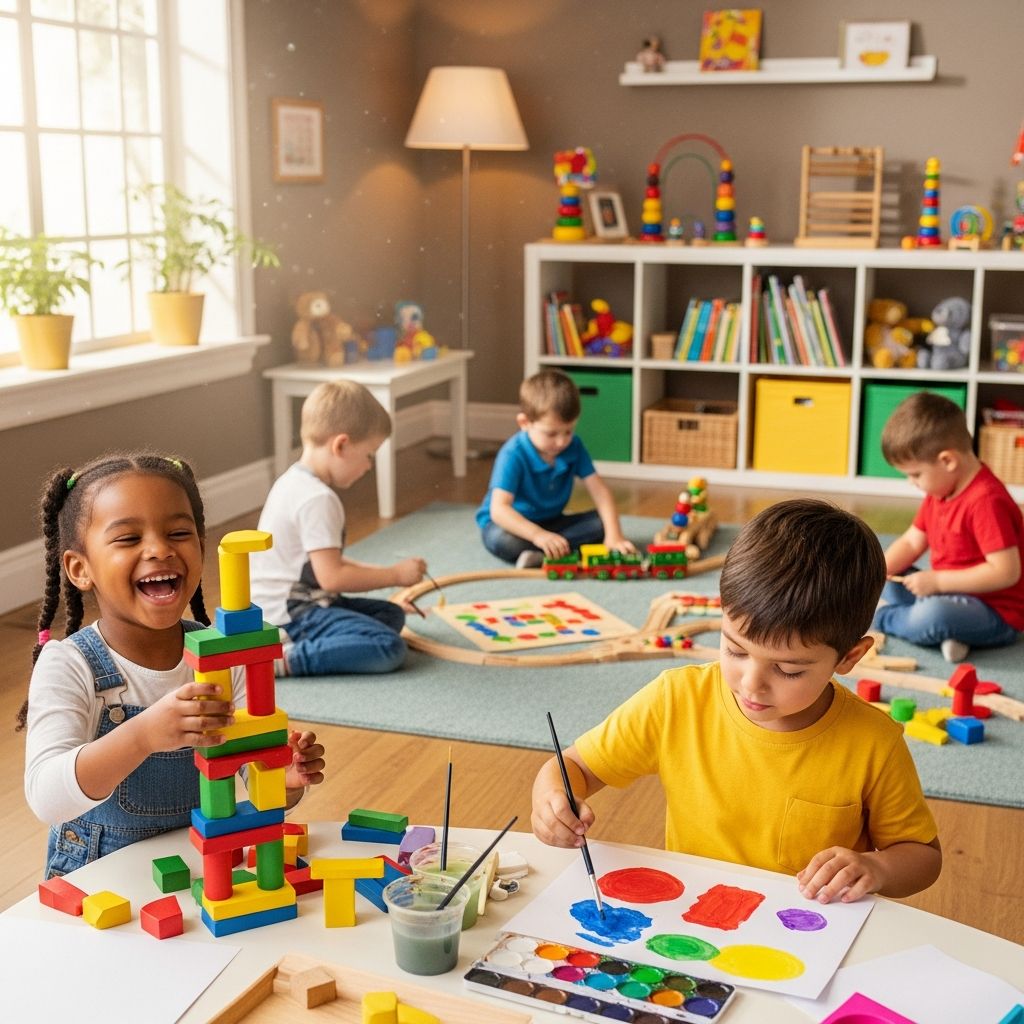
Preschoolers aged 3-5 have boundless energy and curiosity, making it challenging for parents to balance daily tasks with supervision. This guide offers over 40 original, screen-free activities designed to captivate young minds, promote skill-building, and encourage independent play. Drawing from child development principles, these ideas use everyday household items to create engaging experiences that support cognitive, motor, and social growth.
Why Screen-Free Play Matters for Young Children
Screen-free activities are essential for preschoolers’ holistic development. According to the American Academy of Pediatrics, excessive screen time can hinder language development and physical activity in children under 5. Instead, hands-on play builds fine motor skills, problem-solving abilities, and creativity. These activities not only keep children occupied for 30-60 minutes but also foster independence, reducing parental burnout.
Indoor Sensory and Exploration Activities
Sensory play engages multiple senses, helping preschoolers process the world around them. Set up these low-prep stations to spark curiosity without constant oversight.
- Texture Treasure Hunt: Fill a large bin with safe items like cotton balls, rice, pom-poms, and fabric scraps. Provide tongs or scoops for transferring. This builds hand-eye coordination and sensory discrimination.
- Bubble Wrap Symphony: Lay out bubble wrap sheets and let children pop them rhythmically with hands or toy hammers. Extend by creating patterns or ‘composing’ music.
- Shaving Cream Canvas: Spray shaving cream on a tray, add food coloring drops, and swirl into art. Wipe clean for endless reuse, teaching cause-and-effect.
- Water Bead Wonder: Use non-toxic water beads in a container with funnels and cups for pouring. Supervise closely to prevent ingestion.
Creative Building and Construction Projects
Building activities enhance spatial awareness and persistence. Stock a ‘maker station’ with recyclables for unstructured creation.
- Cardboard City: Provide empty boxes, tape, and markers to construct towers, roads, and vehicles. Encourage storytelling about the city’s inhabitants.
- Popsicle Stick Structures: Glue or interlock sticks to form bridges or houses. Challenge them to make it ‘earthquake-proof’ by testing stability.
- Straw and Connector Engineering: Use flexible straws and pipe cleaners to invent 3D shapes. Discuss engineering concepts like balance.
- Box Fort Metropolis: Drape sheets over furniture with chairs for walls, adding battery lights for ‘nighttime’ play.
Artistic Expression Without the Mess
Channel creativity with contained art projects that double as skill-builders.
| Activity | Materials Needed | Skills Developed | Duration |
|---|---|---|---|
| Contact Paper Collage | Contact paper, tissue scraps, leaves | Fine motor, color recognition | 45 mins |
| Paint Chip Patterns | Paint sample cards, stickers | Patterning, matching | 30 mins |
| Finger Paint Ziplocs | Ziploc bags, paint | Sensory, no-mess art | 40 mins |
| Dot Marker Mandalas | Do-a-dot markers, paper | Precision, symmetry | 35 mins |
These contained crafts minimize cleanup while maximizing fun. Rotate supplies weekly to maintain novelty.
Active Indoor Movement Games
When weather keeps you inside, these games burn energy safely.
- Balloon Keep-Up: Blow up balloons and challenge keeping them aloft with taps. Add rules like ‘no hands’ for variety.
- Animal Freeze Dance: Play music (phone or radio), mimic animals, freeze on stop. Enhances listening and gross motor skills.
- Scavenger Hunt Relay: List household items (red sock, spoon) for timed collection. Builds memory and speed.
- Yoga Storytime: Narrate a story with poses (tree, cat stretch). Improves flexibility and focus.
Outdoor Adventures for Endless Energy
Fresh air amplifies engagement. These ideas work in backyards or parks.
- Nature Scavenger Symphony: Collect sticks, leaves, stones to create ‘instruments’ for a band performance.
- Chalk Obstacle Maze: Draw paths with challenges (hop, spin) leading to a ‘treasure’ like fruit snacks.
- Bug Habitat Hunt: Use magnifying glasses to observe insects, draw findings in journals.
- Water Relay Races: Sponge or cup relays to fill buckets, teaching teamwork if siblings join.
Quiet Time Independent Play
For downtime, curate self-directed options that require minimal intervention.
- Mystery Tool Exploration: Introduce safe gadgets like locks, flashlights, or gears for experimentation.
- Sorting Sensory Bins: Categorize buttons, beads, or pasta by size/color into muffin tins.
- Story Creation Station: Provide props (puppets, paper figures) for improvised tales recorded on paper.
- Puzzle Piece Hunt: Hide puzzle pieces around rooms for assembly quests.
Kitchen Helper Tasks for Skill-Building
Involve preschoolers in chores disguised as play for practical learning.
- Ingredient Mix-Up: Safe mixing of yogurt, oats, fruits into ‘potions’ (snack time bonus).
- Table Setting Puzzle: Match utensils/plates like a giant puzzle.
- Veggie Chop Champions: Plastic knives for soft produce like bananas.
- Baking Shape Sort: Cookie cutters for dough pressing and patterning.
Social Play with Siblings or Friends
Pair activities for cooperative fun when playmates are available.
- Fort Takeover: Teams build and defend blanket forts.
- Photo Safari: Kid-safe camera for capturing ‘adventures’ together.
- Pattern Parade: Create clothing from paper and march in sequences.
Preparation Tips for Busy Parents
Maximize success with these strategies:
- Prep activity kits in advance and rotate bi-weekly.
- Set timers for ‘independent play’ to build routine.
- Use trays or tarps for mess containment.
- Observe preferences to customize future setups.
According to child development experts, consistent independent play routines enhance self-regulation by age 5.
Frequently Asked Questions (FAQs)
What age group are these activities best for?
Primarily 3-5-year-olds, with adaptations for 2-6. Simplify for toddlers, add challenges for kindergartners.
How do I encourage independent play?
Model briefly, then step away. Praise efforts, not perfection, and gradually increase solo time.
Are these activities safe without supervision?
Most are, but check small parts and supervise sensory/water play initially.
What if my child resists new activities?
Introduce during high-energy times, pair with favorites, and persist—novelty wins eventually.
Can these work for neurodiverse children?
Yes, customize for sensory needs (e.g., quieter options) and consult pediatric guidelines.
References
- Media and Young Minds — American Academy of Pediatrics. 2016-11-01. https://publications.aap.org/pediatrics/article/138/5/e20162591/52528/Media-and-Young-Minds
- The Power of Play: A Pediatric Role in Enhancing Development in Young Children — American Academy of Pediatrics. 2018-09-01. https://publications.aap.org/pediatrics/article/142/3/e20182058/38649/The-Power-of-Play-A-Pediatric-Role-in-Enhancing
- Early Childhood Development Overview — World Health Organization. 2023-05-15. https://www.who.int/health-topics/early-childhood-development
- Screen Time and Preschool Children — Centers for Disease Control and Prevention. 2024-02-10. https://www.cdc.gov/ncbddd/childdevelopment/positiveparenting/preschoolers.html
- Play Activities for 3 to 5 Year Olds — Head Start Early Childhood Learning & Knowledge Center (U.S. Dept. of Health). 2022-08-22. https://headstart.gov/curriculum/article/play-activities-3-5-year-olds