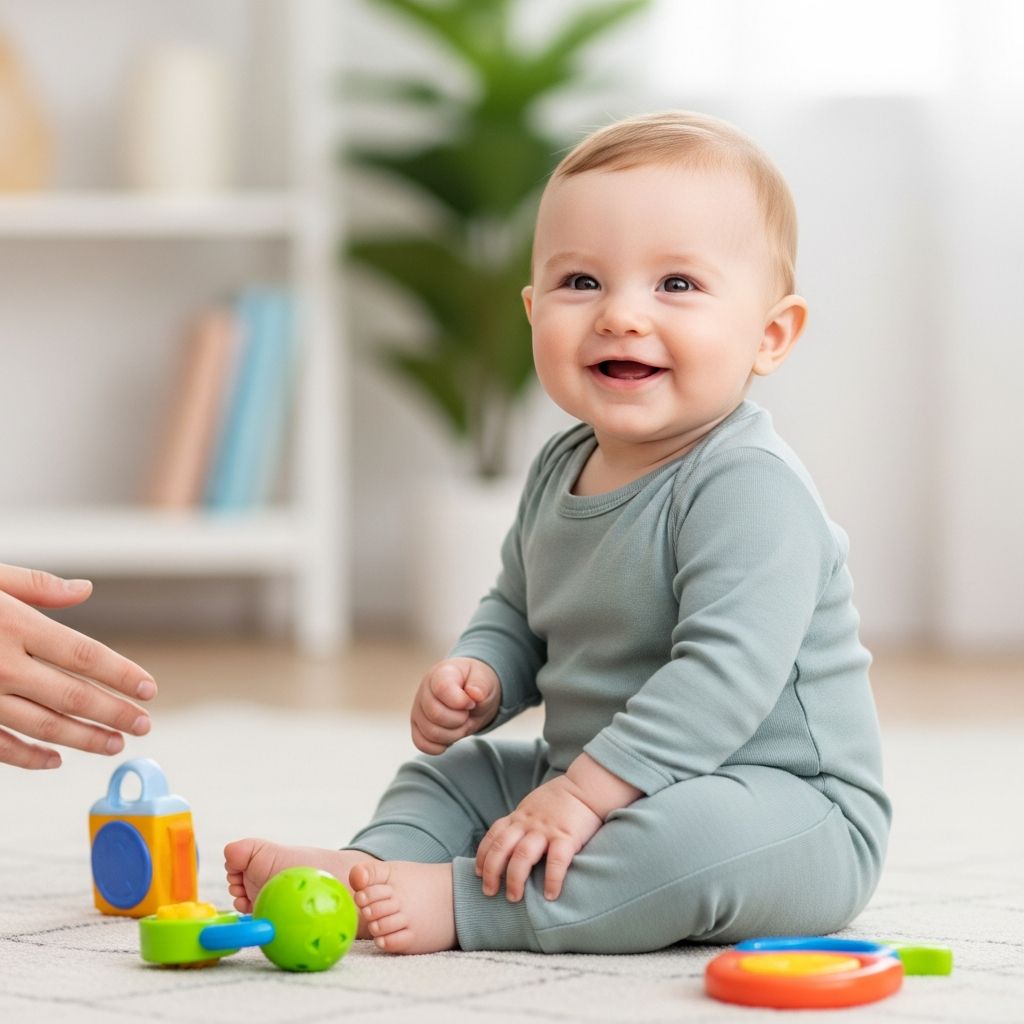
Your 4-week-old baby is transitioning from the newborn phase, showing subtle yet exciting signs of growth in movement, senses, and social responses. At this stage, infants typically focus on basic reflexes, brief head control, and recognizing familiar voices, laying the foundation for future skills.
Physical Growth and Motor Abilities
Around 4 weeks, babies experience steady weight gain and length increases, often regaining birth weight by this point. Their movements remain jerky but start gaining slight control, particularly in the neck and arms.
- Head control beginnings: During tummy time, most babies briefly lift their head, turning it side to side, strengthening neck muscles essential for later sitting.
- Hand discovery: Fists unclench occasionally; infants bring hands near face or mouth, exploring fingers instinctively.
- Limb coordination: Arms and legs move symmetrically, with improved arm waving when excited.
These motor developments signal neural maturation. Pediatricians monitor them at check-ups to ensure typical progress.
Sensory Development: Sight, Sound, and Touch
Sensory systems sharpen rapidly. Vision focuses on objects 8-12 inches away, preferring high-contrast patterns and faces.
| Sensory Area | 4-Week Milestone | Parental Tip |
|---|---|---|
| Vision | Tracks moving objects side-to-side; eyes may cross occasionally | Use black-and-white toys 10 inches from face |
| Hearing | Turns toward familiar voices; startles at loud noises | Speak softly, vary pitch to engage |
| Touch/Smell | Prefers sweet scents; calms with skin-to-skin contact | Snuggle during feeds for bonding |
Hearing refines as babies gurgle vowels like ‘o’ or ‘a’ and respond to parents’ speech. Touch sensitivity heightens, making swaddling soothing.
Newborn Reflexes at Play
Reflexes dominate actions, aiding survival and feeding. They fade gradually, indicating maturing control.
- Rooting reflex: Head turns, mouth opens when cheek stroked, guiding to nipple; lasts to 4 months.
- Sucking reflex: Triggers on palate touch; matures late pregnancy, supports strong feeds.
- Moro (startle): Arms fling out on sudden noise/drop; resolves by 2 months.
- Palmar grasp: Fingers curl around objects; persists to 5-6 months.
- Stepping reflex: Leg movements when feet touch surface; aids early positioning.
These automatic responses ensure feeding success and comfort-seeking.
Feeding, Sleep, and Daily Routines
4-week-olds feed 8-12 times daily, staying awake 30-90 minutes per cycle, with overnight wakes for nourishment. Sleep totals 14-17 hours, fragmented.
- Feeding cues: Rooting, hand-to-mouth, fussing; breastfed babies cluster feeds.
- Sleep patterns: Shorter naps; swaddling promotes longer stretches.
- Output: 6+ wet diapers, soft stools daily signal good intake.
Consistent routines build security. Burp midway through feeds to ease gas.
Social and Emotional Connections
Babies show joy via body language, calming to voices or cuddles. Eye contact fosters attachment.
- Looks at faces intently.
- Appears content seeing caregivers.
- Quietens when held or spoken to.
Social smiles emerge soon after; respond with faces to encourage.
Supporting Development with Activities
Daily interactions boost skills. Supervise always; back-sleeping prevents SIDS.
Essential Tummy Time
Start 3-5 minutes, 2-3 times daily, building to 15-30 minutes total. Builds upper body strength.
- Place on chest first for comfort.
- Use firm, flat surface.
- Pair with toys or mirrors.
Vision and Hearing Games
Mobile high-contrast cards or singing stimulate senses.
Safe Play
Gentle bicycle legs relieve colic; avoid walkers.
Health Checks and Warning Signs
Well-baby visits confirm growth. Vaccinations begin.
- Red flags: No weight gain, poor feeding, excessive fussiness, no head lift in tummy time, unequal movements.
Consult pediatrician promptly for concerns. Most variations normal.
Frequently Asked Questions
Is my 4-week-old hitting all milestones?
Most do, but ranges exist. Track with apps; discuss at check-ups.
How much tummy time is enough?
Start short sessions, totaling 15+ minutes daily by week 4.
When does the umbilical cord stump fall off?
Typically 1-3 weeks; sponge baths until then.
Should I wake my baby to feed?
If under birth weight or sleepy, yes; otherwise, on demand.
Are crossed eyes normal?
Yes, temporarily; vision coordinates by 2-3 months.
Nutrition and Growth Expectations
Exclusive breastfeeding or formula supports brain growth. Expect 0.5-1 ounce daily gain post-2 weeks.
Track via scales; plot on WHO charts at visits.
Parental Well-Being Tips
New parents face fatigue. Accept help, nap when baby does, prioritize self-care for bonding.
Skin-to-skin contact regulates baby temperature, heart rate.
References
- Baby development at 1-2 months — Raising Children Network. 2023. https://raisingchildren.net.au/newborns/development/development-tracker/1-2-months
- 1 month old baby milestones: Development, growth, and more — Huckleberry. 2023. https://huckleberrycare.com/blog/1-month-old-baby-milestones-development-growth-and-more
- Infant development: Birth to 3 months — Mayo Clinic. 2024-10-15. https://www.mayoclinic.org/healthy-lifestyle/infant-and-toddler-health/in-depth/infant-development/art-20048012
- Milestones by 2 Months — Centers for Disease Control and Prevention (CDC). 2024. https://www.cdc.gov/act-early/milestones/2-months.html
- Newborn Baby: Development, Feeding, Milestones and More — The Bump. 2023. https://www.thebump.com/baby-month-by-month/0-month-old-baby
- Baby Developmental Milestones By Month — Cleveland Clinic. 2024-05-01. https://my.clevelandclinic.org/health/articles/22063-baby-development-milestones-safety