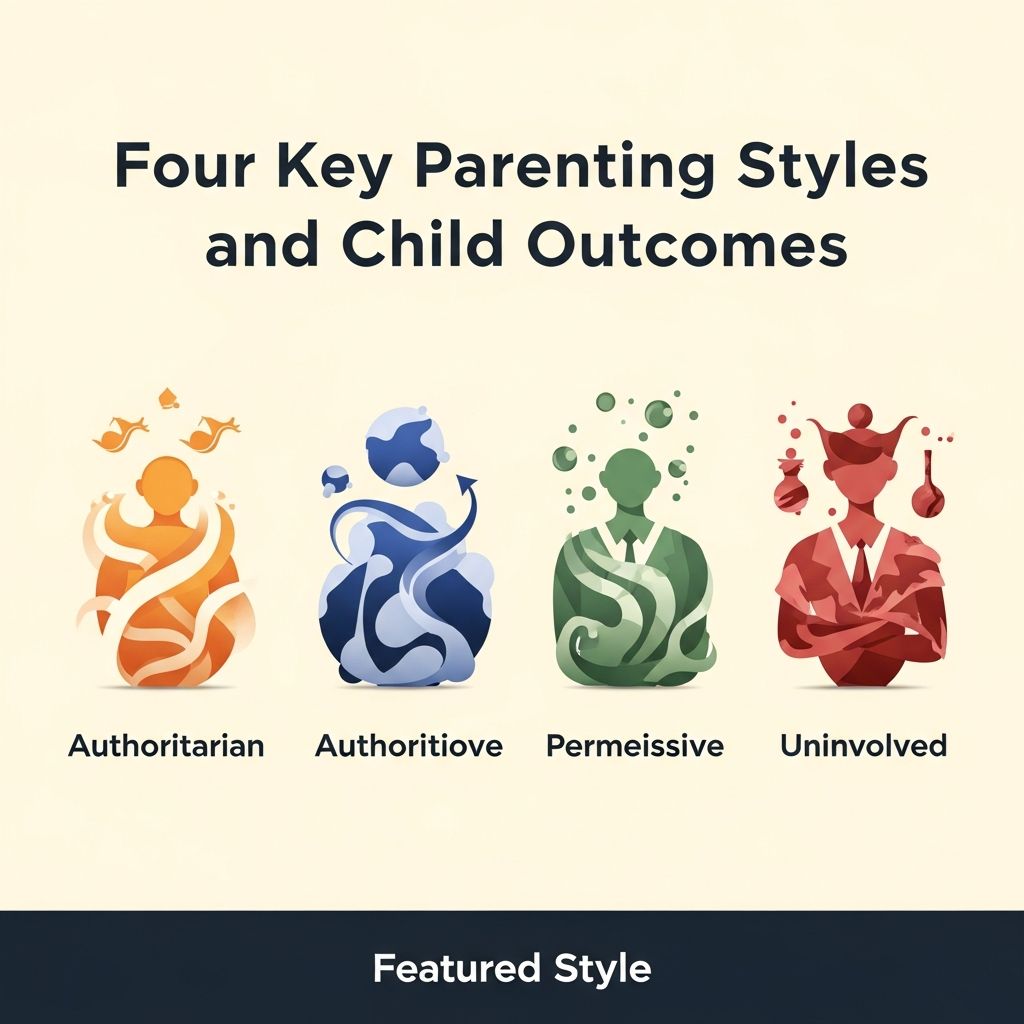
Parenting approaches profoundly influence how children develop emotionally, socially, and cognitively. Researchers, starting with Diana Baumrind in the 1960s, have identified four primary styles based on two core dimensions: responsiveness (warmth and support) and demandingness (expectations and control). These styles—authoritative, authoritarian, permissive, and uninvolved—yield distinct outcomes for children, as confirmed by decades of studies.
Understanding the Core Dimensions of Parenting
Responsiveness refers to the degree of warmth, support, and sensitivity parents show toward their child’s needs. High responsiveness involves nurturing, open communication, and emotional availability. Demandingness measures the extent of expectations, rules, and supervision parents impose. High demandingness means clear boundaries and accountability. These dimensions create a matrix defining the four styles.
- High responsiveness + High demandingness: Authoritative
- Low responsiveness + High demandingness: Authoritarian
- High responsiveness + Low demandingness: Permissive
- Low responsiveness + Low demandingness: Uninvolved
This framework, expanded by later researchers including psychological control (manipulative tactics like guilt induction), helps explain variations in child behavior and achievement.
Authoritative Parenting: The Balanced Approach
Authoritative parents combine warmth with firm limits, fostering independence while maintaining structure. They explain rules rationally, encourage dialogue, and use positive discipline like reasoning over punishment. Children of authoritative parents typically excel in self-regulation, academic performance, and social skills.
Studies show these children develop high self-esteem, resilience, and optimism. For instance, longitudinal research links authoritative parenting to better psychosocial competence and school success. Parents listen actively, validate feelings, and adjust expectations to the child’s age, promoting intrinsic motivation.
| Characteristics | Child Outcomes |
|---|---|
| Warm, nurturing communication | Higher emotional regulation |
| Clear, consistent rules with explanations | Better academic achievement |
| Encourages autonomy | Strong social competence |
Authoritarian Parenting: Strict Control and Obedience
Authoritarian parents prioritize obedience through high demands and low warmth. They enforce rigid rules with punishments, rarely explaining decisions, and value compliance over discussion. This style often stems from cultural norms emphasizing hierarchy but correlates with negative outcomes in many contexts.
Children may become obedient but struggle with self-esteem, showing higher anxiety, aggression, or poor social skills. Research indicates poorer emotional regulation and academic results compared to authoritative peers, though some studies note benefits in structured environments. Psychological control elements, like shaming, exacerbate issues.
- Emphasis on absolute authority
- Frequent use of harsh discipline
- Limited emotional expression allowed
Permissive Parenting: Indulgence Without Boundaries
Permissive parents offer high warmth but few rules, acting more like friends than authority figures. They avoid confrontation, provide little discipline, and let children self-regulate prematurely. While nurturing, this lacks the structure needed for long-term success.
Outcomes include creativity and good self-esteem but frequent behavioral problems, poor academic focus, and impulsivity. Cluster analyses confirm permissive styles link to negative developmental trajectories, with children showing lower resilience. Parents might justify laxness as promoting freedom, but evidence favors balanced guidance.
Uninvolved Parenting: Emotional Distance and Neglect
Uninvolved parents exhibit low responsiveness and demandingness, providing basic needs but minimal guidance, emotional support, or supervision. Often due to stress or personal issues, this style leaves children to fend for themselves.
Children face the worst outcomes: low self-esteem, poor academic performance, delinquency, and mental health challenges. Studies label this as producing the poorest results across domains, with elevated psychological control in some variants worsening intrusive behaviors. Early intervention is crucial for affected youth.
Comparing Outcomes Across Parenting Styles
Research consistently ranks authoritative highest, followed by others in descending order. A review of global studies affirms authoritative parenting yields superior emotional regulation, prosocial behavior, and adjustment.
| Style | Self-Esteem | Academic Success | Behavior | Social Skills |
|---|---|---|---|---|
| Authoritative | High | High | Positive | Strong |
| Authoritarian | Moderate-Low | Moderate | Mixed (obedient but aggressive) | Moderate |
| Permissive | Moderate | Low | Impulsive | Moderate |
| Uninvolved | Low | Low | Problematic | Poor |
Cultural factors modulate effects; authoritarian styles may benefit collectivist societies. Socioeconomic status and genetics interact, but parenting remains a key determinant.
Factors Influencing Parenting Choices
Parents adopt styles based on culture, education, and experiences. Western studies favor authoritative, while some Asian contexts succeed with authoritarian elements. Modern challenges like work demands can push toward uninvolved traits. Awareness allows adaptation.
Adapting Your Parenting Style for Better Results
Most parents blend styles; flexibility improves outcomes. To shift toward authoritative:
- Build emotional connections daily
- Set age-appropriate expectations
- Use consistent, non-punitive discipline
- Model self-regulation
Programs teaching these skills enhance child development. Track progress via child behavior and feedback.
Frequently Asked Questions (FAQs)
What is the best parenting style?
Authoritative parenting consistently shows the best outcomes for most children, balancing warmth and structure.
Can parenting styles change over time?
Yes, parents often evolve styles as children grow, influenced by experience and education.
Does culture affect parenting effectiveness?
Absolutely; styles like authoritarian may work better in collectivist cultures, but authoritative generally excels cross-culturally.
How does uninvolved parenting impact teens?
It leads to higher risks of delinquency, substance use, and mental health issues due to lack of support.
Are there gender differences in parenting styles?
Cluster studies show similar profiles for mothers and fathers, but combinations (e.g., authoritarian father, authoritative mother) vary outcomes.
Long-Term Implications for Adult Life
Parenting styles echo into adulthood. Authoritative-raised individuals often thrive professionally and relationally, with better mental health. Others may face challenges like authority conflicts or dependency. Early patterns can be overcome with therapy or self-reflection.
Investing in positive parenting yields lifelong dividends, shaping resilient, capable adults.
References
- Parenting Styles and Their Influence on Child Development — Premier Science. 2025. https://premierscience.com/pjss-25-752/
- Parenting Styles: A Closer Look at a Well-Known Concept — PMC (NCBI). 2018-10-10. https://pmc.ncbi.nlm.nih.gov/articles/PMC6323136/
- Nature, Nurture, and the Four Types of Parenting Styles — Bright Horizons. 2023. https://www.brighthorizons.com/article/parenting/parenting-style-four-types-of-parenting
- A Review of Controlling, Guiding, and Permitting Parenting Styles — ScholarWorks (William & Mary). 2023. https://scholarworks.wm.edu/bitstreams/3e00311e-900b-4c96-a5f5-e08fc45abf25/download
- Parenting Styles and Their Effect on Child Development and Outcome — Journal of Student Research. 2023. https://www.jsr.org/hs/index.php/path/article/view/3679
- Types of Parenting Styles and Effects on Children — NCBI Bookshelf (StatPearls). 2023-07-03. https://www.ncbi.nlm.nih.gov/books/NBK568743/