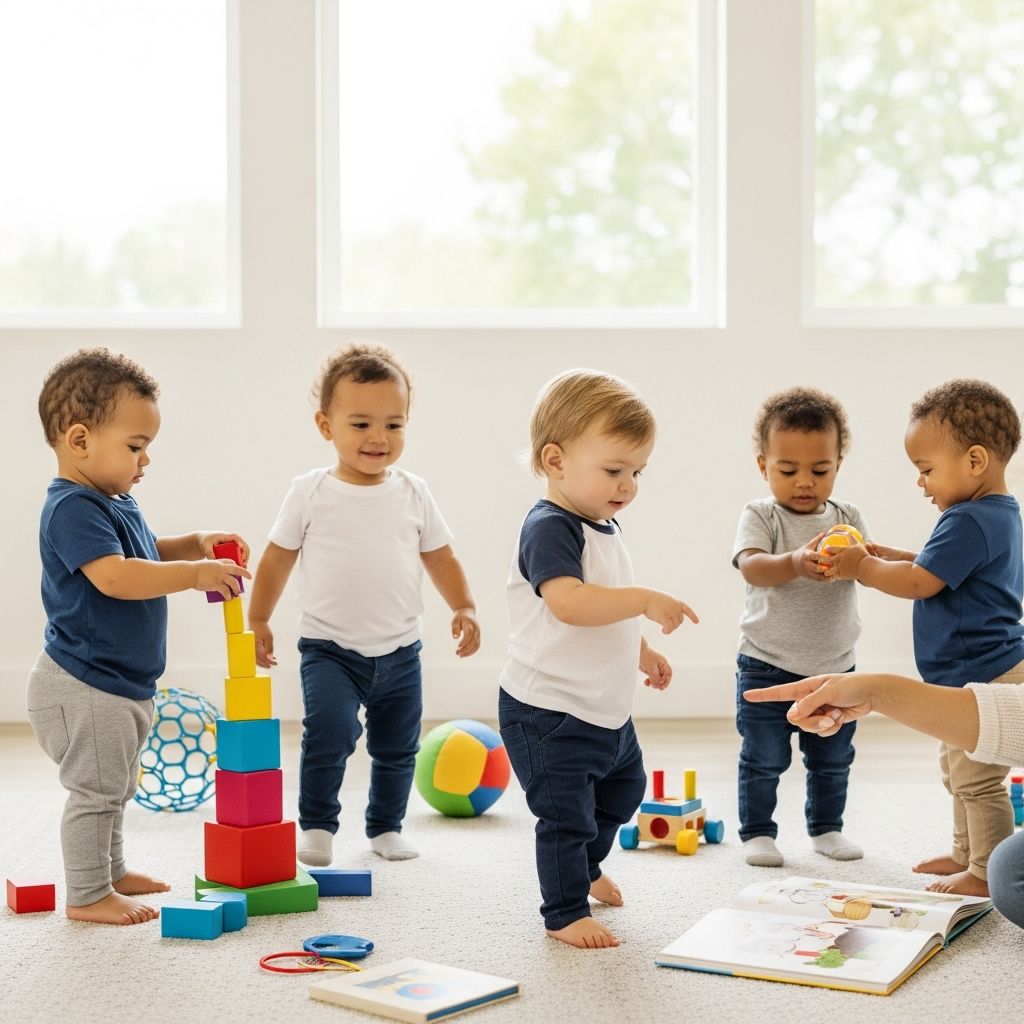
At 30 months, or 2.5 years old, toddlers enter a vibrant phase of exploration and self-assertion. They transform from wobbly explorers into confident adventurers, mastering new physical challenges, expanding their vocabulary, and navigating social dynamics with growing independence. This period marks significant strides in multiple developmental domains, helping children build foundational skills for future learning and interactions. Parents often witness bursts of energy, curiosity, and personality as toddlers test boundaries and imitate the world around them.
Understanding these milestones provides reassurance and guidance. While every child develops at their own pace, recognizing typical benchmarks—from jumping with both feet to forming simple sentences—empowers caregivers to foster growth effectively. This guide draws from established health authorities to outline expectations, offer practical support strategies, and highlight when professional input may be beneficial.
Physical Growth and Motor Abilities
Physical development at 30 months emphasizes enhanced coordination, strength, and precision. Toddlers refine gross motor skills for dynamic movement and fine motor abilities for everyday tasks, supporting independence in play and self-care.
Gross Motor Achievements
Gross motor skills involve large muscle groups, enabling toddlers to navigate their environment with agility. By this age, most children can run smoothly, climb playground structures, and jump in place using both feet simultaneously. They often kick a ball forward with control and throw overhand, demonstrating improved balance and spatial awareness. Walking up and down stairs—alternating feet or stepping with both on each—becomes feasible, as does walking backwards or on tiptoes for short distances.
- Jumps with both feet, landing steadily
- Climbs furniture or equipment confidently
- Kicks and throws a ball with purpose
- Walks up/down stairs, often with railing support
- Balances briefly on one foot during play
Fine Motor Progress
Fine motor development focuses on hand dexterity and control. Toddlers stack six or more blocks into towers, turn book pages singly, and grasp crayons with a thumb-forefinger pincer grip for scribbling. They twist objects like doorknobs or lids, unzip clothing, and use utensils with reduced spilling, aiding self-feeding and dressing.
| Skill | Description | Support Tips |
|---|---|---|
| Block Stacking | Builds towers of 6-8 cubes | Provide varied blocks; praise efforts |
| Utensil Use | Spoons/forks with minimal help | Offer child-sized tools during meals |
| Dressing | Pulls off clothes, zips/unzips | Practice with loose garments |
| Drawing | Holds pencil properly, makes lines | Supply washable markers on large paper |
These skills enhance hand-eye coordination, seen in puzzle-fitting or bead-threading, preparing toddlers for more complex tasks.
Language and Communication Breakthroughs
Language explodes at 30 months, with vocabularies reaching 50-100+ words and early sentence formation. Toddlers name objects, people, and colors, follow two-step directions (e.g., “Pick up the toy and close the door”), and use pronouns like “I,” “me,” or “we.” They combine 2-3 words into phrases, such as “More juice please,” and engage in pretend talk during play.
- Speaks 50+ words clearly
- Forms short sentences (2-4 words)
- Identifies at least one color
- Repeats phrases from stories or songs
- Asks simple questions like “What’s that?”
Expressive gestures, facial animations, and tone convey emotions, bridging verbal gaps. Reading daily, narrating routines, and responding to babble accelerate this domain.
Cognitive and Problem-Solving Skills
Cognitive growth shines through imaginative play and basic reasoning. Toddlers pretend-feed dolls or blocks as food, solve simple problems like using a stool to reach items, and follow routines like cleanup. They recognize familiar sequences, sort shapes, and show early memory by recalling hidden toys.
Key indicators include:
- Pretend play with objects
- Two-step instruction compliance
- Basic color/shape recognition
- Simple puzzles (3-4 pieces)
- Initiates play ideas independently
Encourage exploration with open-ended toys, avoiding screens to prioritize hands-on learning.
Social-Emotional Growth and Independence
Socially, 30-month-olds shift from solitary to parallel play, occasionally cooperating with peers. They seek attention with “Look at me!”, express affection via hugs, and test limits through tantrums or “no” phases, signaling emotional awareness. Independence surges in “I do it!” declarations, alongside routine adherence and imitation of adults.
- Plays alongside/with other children
- Shows defiance but follows simple rules
- Displays empathy, like comforting upset playmates
- Names self and asserts preferences
- Manages big emotions with guidance
Tantrums peak as self-regulation emerges; model calm responses and validate feelings to build resilience.
Daily Routines and Self-Care Advances
Self-care integrates across domains. Toddlers drink from open cups without spilling, chew with closed mouths, and show toilet interest, often pulling pants up/down. Brushing teeth or washing hands follows modeled routines, fostering hygiene habits.
To support:
- Establish consistent schedules for meals, sleep, play
- Involve in chores like toy pickup
- Introduce potty training patiently
- Praise efforts over perfection
Nutrition, Sleep, and Health Essentials
Average 30-month-olds measure 34-38 inches tall, weighing 26-32 pounds, with steady growth. Offer balanced meals: fruits, veggies, proteins, whole grains. Limit sugars; encourage family-style eating. Sleep needs: 11-14 hours daily, including naps. Active play combats screen time; aim for 3+ hours outdoors.
Red Flags and When to Consult Professionals
Most toddlers hit milestones variably, but persistent delays warrant checks. Contact pediatricians if your child:
- Uses fewer than 50 words or no two-word phrases
- Struggles with two-step directions
- Avoids eye contact or peer interaction
- Cannot jump, stack blocks, or scribble
- Shows regression in skills
Early intervention, like speech therapy, yields best outcomes. Screenings are recommended at well-visits.
Practical Strategies to Nurture Development
Daily engagement maximizes potential:
- Play-based learning: Free play with blocks, balls, books
- Language boost: Describe actions, read interactively
- Emotional coaching: Name feelings, use positive discipline
- Physical outlets: Parks, dancing, obstacle courses
- Routine power: Predictable days reduce anxiety
Limit screens to quality content under 1 hour; prioritize real-world bonds.
Frequently Asked Questions (FAQs)
Is it normal if my 30-month-old isn’t fully potty trained?
Yes, toilet training varies; many start around now but complete by 3-4 years. Offer opportunities without pressure.
What if my toddler has a small vocabulary?
Under 50 words? Discuss hearing/speech screening with your doctor; early support helps.
How much should a 30-month-old sleep?
11-14 hours total, often with a 1-2 hour nap. Consistent bedtimes aid regulation.
Are tantrums a concern at this age?
Common due to big feelings/limited words. Stay calm, redirect, and teach coping.
Should I worry about picky eating?
Typical; expose varied foods repeatedly. Growth curves matter more than daily intake.
References
- 30 month old toddler milestones: Development, growth, speech… — Huckleberry Care. 2023. https://huckleberrycare.com/blog/30-month-old-toddler-milestones-development-growth-speech-language-and-more
- Milestones by 30 Months | Learn the Signs. Act Early. — CDC. 2024-10-01. https://www.cdc.gov/act-early/milestones/30-months.html
- Developmental Milestones – 25 through 30 Months — Nebraska Department of Education. 2023. https://edn.ne.gov/cms/developmental-milestones-25-through-30-months
- 30-Month-Old Development Milestones – Toddler — The Bump. 2024. https://www.thebump.com/toddler-month-by-month/30-month-old
- Your Child’s Development: 2.5 Years (30 Months) — KidsHealth. 2024. https://kidshealth.org/en/parents/development-30mos.html
- Your child at 30 months – CDC Milestone Moments Checklist — CDC. 2021. https://www.cdc.gov/ncbddd/actearly/pdf/checklists/eng.-30-mo.-milestone-moments-checklist-2021-p.pdf