What to Expect: The Three-Year-Old Development Journey
Three-year-olds represent a fascinating developmental stage where children transition from toddlerhood into the preschool years. At this age, children demonstrate remarkable growth across multiple developmental domains, including physical abilities, language skills, cognitive understanding, and social interactions. Every child develops at their own pace, but understanding typical milestones helps parents recognize their child’s progress and identify any areas where additional support might be beneficial.
Physical Growth and Body Development
During the third year of life, children experience steady but gradual physical growth. Three-year-olds typically gain approximately 4 to 5 pounds annually and grow about 2 to 3 inches per year. By age three, most children have reached approximately half of their adult height, providing insight into their future growth trajectory. Vision continues to improve during this period, with most children achieving vision near 20/20.
Dental development is largely complete by age three, as children typically have all 20 primary teeth. Sleep needs remain substantial, with most three-year-olds requiring 11 to 13 hours of sleep per day, which may include a brief afternoon nap. Many children begin establishing daytime control over bowel and bladder functions during this year, though nighttime dryness may take additional time to develop.
Motor Skills and Physical Abilities
Three-year-olds demonstrate impressive improvements in both gross and fine motor skills, allowing them greater independence in play and self-care activities.
Gross Motor Development
Large muscle control advances significantly at age three. Children at this stage can run and jump with ease, walk up and down stairs without assistance, and maintain improved balance. Many three-year-olds can balance briefly on one foot and hop, though duration and consistency vary among children. Tricycle riding becomes possible, with children able to pedal effectively. Ball skills emerge during this period, including the ability to kick a ball forward and throw a ball overhand, though catching may still present challenges.
Additional physical accomplishments include climbing on and off furniture with minimal assistance, standing on tip-toes, and moving forward and backward with increasing agility. These expanding physical capabilities reflect strengthening muscles and improved coordination throughout the body.
Fine Motor Development
Hand and finger control improve markedly during the third year. Three-year-olds can now hold crayons with a proper tripod grip rather than a fist and draw simple shapes including circles and lines. Many children begin copying circles and can construct towers using more than nine blocks. Fine motor skills extend to self-care, as children can operate spoons effectively, use child-safe scissors, and manipulate small objects into small openings.
Communication and Language Expansion
Language development accelerates dramatically during the third year, with vocabulary and sentence structure expanding considerably. Three-year-olds typically develop a vocabulary of several hundred words, with expectations of 500 to 900 words by the end of the year or early fourth year. Most three-year-olds speak in sentences of three words, progressing toward four- to five-word sentences as the year advances.
Speech clarity improves significantly, with most children now understandable to others most of the time. Children demonstrate understanding of basic grammar concepts, using plurals, pronouns (he/she), and increasingly correct pronoun usage (I, you, he, me). They begin using polite language, saying “please” and “thank you,” and frequently ask “why” questions, reflecting emerging curiosity about their environment.
Beyond vocabulary and sentence structure, three-year-olds understand and use language in increasingly complex ways. They comprehend past tense and understand long sentences with multiple concepts. Many children can recall simple rhymes or song lyrics and demonstrate early letter recognition, including singing the alphabet song. They answer questions about pictures and stories, name colors, and recount simple events from their day.
Cognitive Development and Thinking Skills
Cognitive abilities expand significantly during the third year, enabling more sophisticated thinking and problem-solving. Three-year-olds can count to three objects and demonstrate understanding of quantity concepts, with some children able to count up to 10 objects by age four. They understand basic size differences such as “big” and “little” and comprehend simple prepositions including “on,” “under,” and “behind.”
Attention span lengthens considerably during this period, with children able to concentrate on tasks for 8 to 9 minutes. This improved focus enables longer engagement with activities like puzzles, construction play, and story listening. Children at this age begin developing a clearer sense of time, understanding concepts like “yesterday” and demonstrating awareness of sequences in familiar stories.
Imaginative thinking flourishes at age three. Children engage in pretend play, creating scenarios with dolls, toy vehicles, and play kitchen items. They may develop imaginary concerns, such as fears of monsters or unfamiliar figures, reflecting their emerging understanding that things exist beyond their immediate perception. Problem-solving remains relatively simple at this stage, with children typically approaching problems from a single viewpoint, but this foundation supports more complex reasoning as they mature.
Self-Care and Independence Skills
Three-year-olds make significant strides toward independence in daily living activities. Most children can dress and undress themselves, though they may require assistance with buttons, shoelaces, and other complex fasteners. Feeding skills advance, with children using spoons effectively and eating with minimal spillage. Bathroom independence emerges, with many children establishing daytime bladder and bowel control and beginning to use the potty chair or toilet.
Hand washing and drying become possible with coaching, and many children can wipe their hands and face independently. These emerging self-care abilities reflect both physical skill development and growing cognitive understanding of routines and expectations.
Social and Emotional Development
Three-year-olds demonstrate expanding social awareness and emerging ability to regulate emotions. They begin to share toys and enjoy playing with other children, though parallel play may still predominate alongside interactive play. Turn-taking emerges during this period, with children increasingly able to wait for their turn in games and conversations.
Temper tantrums decrease in frequency compared to earlier toddlerhood, though strong emotions remain characteristic of this age. Children increasingly express feelings in socially acceptable ways, such as comforting others who are upset or hurt. Self-awareness expands, with children knowing their own name, age, and biological sex, and beginning to recognize themselves as separate individuals with preferences and opinions.
Separation anxiety diminishes during this year, with children becoming less fearful when separated from primary caregivers for short periods. Social play becomes more purposeful, with children enjoying games with rules and engaging in cooperative play activities. They begin to demonstrate preference for playing with specific peers and may ask to play with other children if none are readily available.
Fostering Development Through Play and Activities
Parents and caregivers can support three-year-old development through intentional engagement and environmental preparation. Physical activity remains essential, with children benefiting from daily opportunities to run, jump, climb, and ride tricycles. Structured games like follow-the-leader, ring-around-the-rosy, and hide-and-seek develop both physical skills and social understanding.
Language development flourishes with regular conversation, storytelling, and reading activities. Children benefit from hearing stories read aloud, being asked to name pictures and retell story parts, and engaging in back-and-forth conversations about their experiences and observations. Singing songs and nursery rhymes supports both language and memory development.
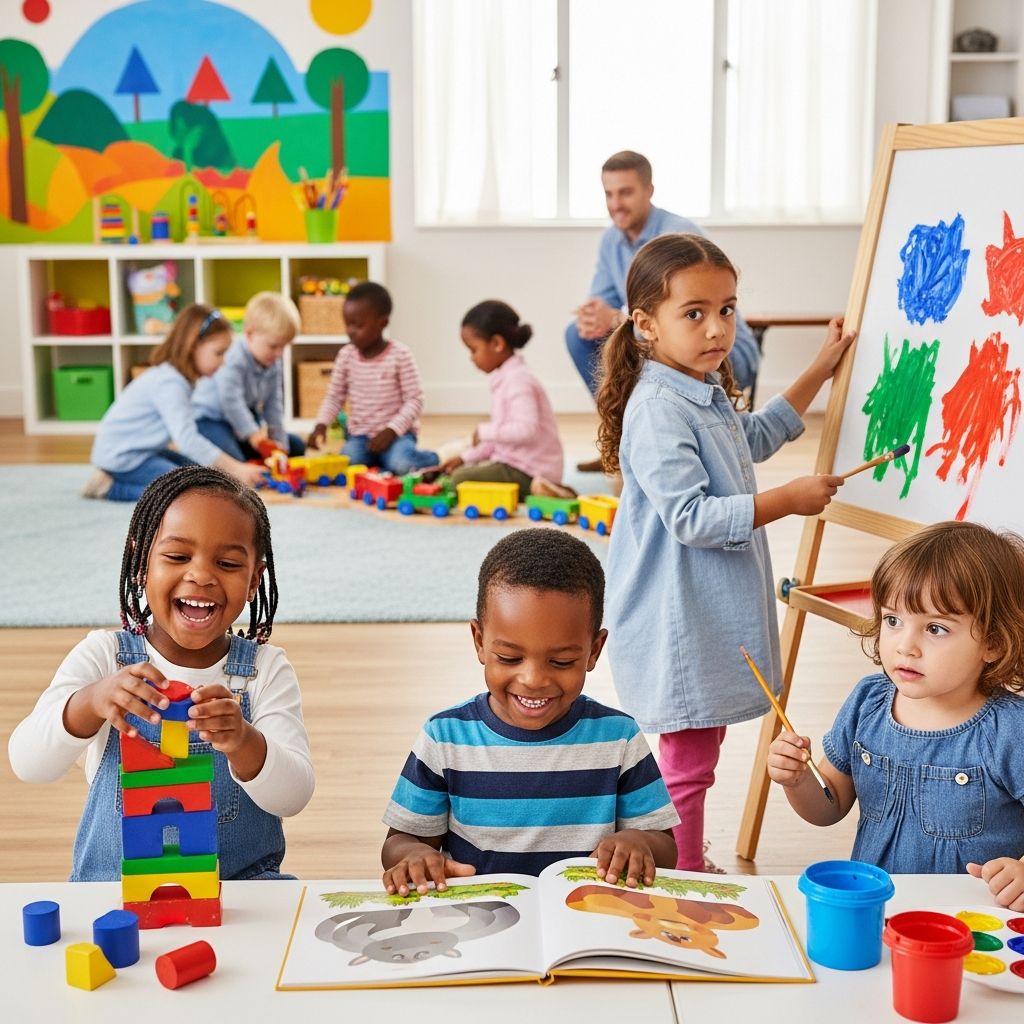
Cognitive development accelerates through block building, puzzle assembly, and guided drawing activities. Parents might demonstrate how to draw circles and lines, which children gradually combine into simple figures. Counting practice, color naming, and games involving matching and classification support mathematical and conceptual thinking.
Social-emotional development benefits from cooperative play opportunities, whether through organized group activities at community centers or informal play with peers. Pretend play with dolls, toy cooking equipment, and vehicles encourages imaginative thinking and social scenario exploration.
When to Seek Professional Guidance
While developmental variation is normal, parents should consult pediatricians or developmental specialists if concerned about significant delays. Warning signs might include limited vocabulary growth, difficulty understanding simple directions, minimal interest in social interaction, or marked inability to engage in pretend play. Early identification of developmental concerns enables timely intervention, which can significantly improve outcomes across multiple domains.
Frequently Asked Questions
Q: What if my three-year-old isn’t speaking as much as peers?
A: Speech development varies considerably among children. While the typical range includes 500 to 900 words by age four, some children develop language more slowly without any underlying concern. However, if your child shows minimal progress, doesn’t understand simple directions, or rarely engages in back-and-forth communication, consulting your pediatrician or speech-language pathologist can provide reassurance or identify any support needs early.
Q: How much physical activity should my three-year-old get daily?
A: Three-year-olds benefit from multiple daily opportunities for active play, including running, jumping, climbing, and tricycle riding. Rather than specific time requirements, focus on providing safe spaces and varied activities that encourage movement throughout the day, interspersed with quiet play and rest periods.
Q: Is it normal for my three-year-old to still have accidents?
A: Yes, accidents are completely normal during the third year. While many children establish daytime bladder and bowel control by age three, the timeline varies significantly. Nighttime dryness typically develops later and may not be achieved until ages five to seven. Patience and positive reinforcement support this developmental milestone without pressure.
Q: How can I support my child’s language development?
A: Engaging in frequent conversations, reading stories together, singing songs, and responding enthusiastically to your child’s communication efforts all support language growth. Ask open-ended questions about pictures and activities, narrate daily routines, and listen attentively to your child’s attempts to communicate, which builds confidence and motivation to expand language skills.
Q: What types of play support three-year-old development?
A: A mix of physical play (running, climbing, dancing), pretend play (with dolls and toy scenarios), construction play (blocks and puzzles), artistic exploration (drawing and painting), and social play (games with peers) supports development across all domains.
References
- Developmental Milestones Record – 3 Years — MedlinePlus. Retrieved from https://medlineplus.gov/ency/article/002014.htm
- Development Milestones for Your 3-Year-Old Child — Children’s Hospital of Orange County (CHOC). Retrieved from https://choc.org/ages-stages/3-years/
- Developmental Milestones: 3 to 4 Year Olds — American Academy of Pediatrics, HealthyChildren.org. Retrieved from https://www.healthychildren.org/English/ages-stages/preschool/Pages/Developmental-Milestones-3-to-4-Year-Olds.aspx
- Developmental Milestones: 3 Years — Children’s Hospital of Philadelphia. Retrieved from https://www.chop.edu/primary-care/developmental-milestones
- Milestones by 3 Years — Centers for Disease Control and Prevention, Learn the Signs. Act Early. Retrieved from https://www.cdc.gov/act-early/milestones/3-years.html
- The Growing Child: 3-Year-Olds — Stanford Medicine Children’s Health. Retrieved from https://www.stanfordchildrens.org/en/topic/default?id=the-growing-child-3-year-olds-90-P02296