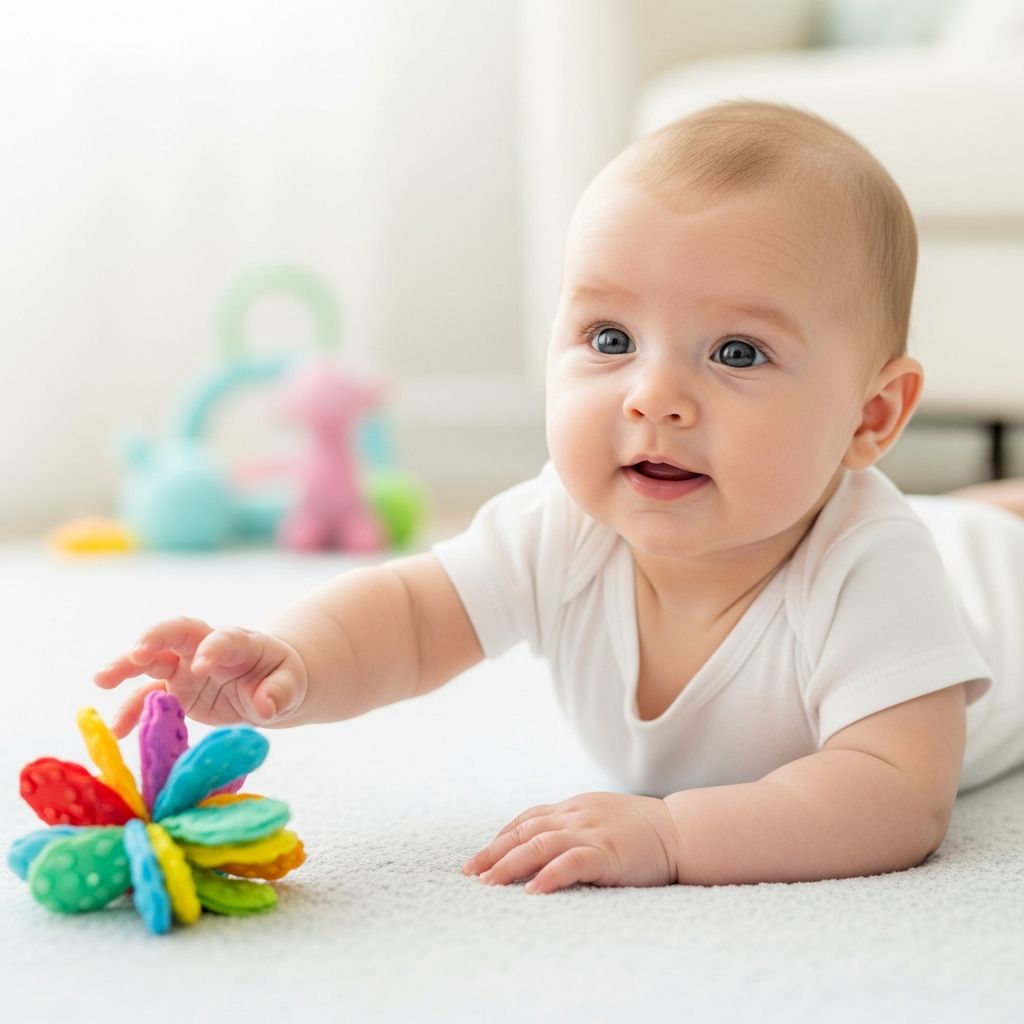
At three months, your baby transitions from a newborn’s reflexive behaviors to more purposeful actions, marking a pivotal stage in early infancy. This period brings noticeable advances in strength, awareness, and interaction, as infants gain better control over their bodies and surroundings. Parents often witness their little ones engaging more actively with the world, responding to voices and faces with delight.
Physical Growth and Motor Achievements
Three-month-olds experience rapid physical changes, building muscle tone and coordination. Newborn reflexes like the Moro start fading, allowing voluntary movements to emerge. Babies relax their initially tight postures, extending arms and legs more fluidly.
During tummy time, a cornerstone activity recommended by pediatric experts, infants prop up on forearms, lift heads steadily for several seconds, and even push chests off the surface. This strengthens neck and upper body muscles essential for future rolling and sitting. Leg movements become vigorous; babies kick powerfully, stretching limbs outward, which signals improving lower body control.
- Lifts head and chest 45-90 degrees prone
- Supports upper body on arms during tummy time
- Kicks legs alternately with force
- Head control improves when pulled to sit
- May show early rolling preparations by shifting weight
Fine motor skills also flourish. Hands open and close deliberately, transitioning from fisted grasps. Infants bring hands to mouth for exploration, watch their fingers intently, and bat at dangling mobiles or toys. They hold rattles briefly before dropping, honing hand-eye coordination.
| Motor Type | Key Milestones | Support Tips |
|---|---|---|
| Gross Motor | Head lift, kicking, tummy propping | Daily tummy time (3-5 sessions, 3-5 mins each) |
| Fine Motor | Hand opening, swatting toys, mouthing objects | Offer safe rattles, high-contrast mobiles |
Sensory Progress: Vision, Hearing, and Exploration
Sensory development accelerates, sharpening perception. Vision refines from nearsighted focus (8-12 inches) to tracking objects up to 2-3 feet. Babies follow moving lights, faces, or toys smoothly, preferring high-contrast patterns and bold colors over pastels. Familiar faces captivate them, even from afar, fostering recognition.
Hearing hones too; infants turn toward sounds, distinguish voices—especially parents’—and respond rhythmically with limb wiggles. Touch exploration ramps up via mouthing hands or toys, integrating senses for cognitive growth.
- Tracks moving objects horizontally and vertically
- Recognizes family faces at distance
- Turns head to localize sounds
- Prefers black-white patterns
- Studies own hands closely
Social and Emotional Bonds Strengthen
The ‘social smile’ debuts around this age, a genuine grin in response to faces or voices, distinct from reflexive newborn smiles. Babies coo, gurgle, and ‘talk’ back during interactions, enjoying play and protesting when it ends with cries.
Emotional range expands: excitement shown through arm/leg waves, contentment via calm gazing. They signal needs clearly—hunger via rooting and hand-to-mouth, tiredness through fussing. Prolonged colicky crying typically resolves by now.
These interactions build secure attachments. Respond promptly to cues, mimic expressions, and narrate daily routines to enhance emotional security.
Communication Breakthroughs Begin
Vocalizations evolve beyond cries. Cooing (‘oo’, ‘ah’) and vowel-like sounds emerge, often imitating caregiver tones. Babies ‘converse’ by pausing after adult speech, inviting replies. Different cry pitches convey hunger, discomfort, or overstimulation.
To nurture language: Sing lullabies, read board books with rhymes, describe actions (‘I’m changing your diaper’). Face-to-face play boosts turn-taking skills.
Daily Routines and Nutrition Insights
Feeding solidifies; strong suck-swallow coordination supports longer sessions. Breastfed or formula-fed babies may take 24-32 ounces daily, every 3-4 hours. Watch for readiness cues like hand sucking.
Sleep patterns mature: 14-17 hours total, with longer nighttime stretches (4-6 hours). Naps shorten to 2-4 daily. Establish rituals like dim lights and white noise.
- Feed on demand, burp midway
- Track wet diapers (6+/day)
- Promote safe sleep: back, firm crib
Engaging Activities to Boost Development
Interactive play drives progress. Place baby under high-contrast mobiles for visual tracking. During tummy time, dangle toys to encourage reaching. Gentle bicycle legs aid digestion and strength.
Safe toys: soft rattles, teething rings, mirrors at crib level. Avoid small parts or loose bedding. Limit screens; prioritize human interaction.
- Tummy time on varied textures
- Baby massage post-bath
- Music and rhythmic rocking
- Skin-to-skin for bonding
- Outdoor fresh air walks
Health Checks and When to Seek Advice
Regular pediatric visits monitor growth. Average weight gain: 5-7 ounces/week; length +1-1.5 inches/month. Vaccinations continue per schedule.
Red flags warrant prompt evaluation:
- No head lift or smile by 3 months
- Doesn’t track faces/objects
- Persistent fisting, no hand regard
- Doesn’t respond to sounds/voices
- Stiff/floppy muscle tone
- Losing previously met milestones
Early intervention via CDC’s Act Early program can address delays effectively. Track via apps or charts, celebrating each step.
Frequently Asked Questions (FAQs)
Is my 3-month-old on track if they haven’t rolled yet?
Yes, rolling typically starts at 4-6 months. Focus on tummy time to build strength; consult if no propping by end of month.
How much tummy time is enough?
Aim for 15-30 total minutes daily, in short bursts. Increase gradually as tolerance grows.
Why does my baby cry less now?
Colic peaks at 6 weeks and fades by 3-4 months as nervous system matures and communication improves.
Can I use swaddling at this age?
Stop if rolling signs appear for safety; transition to sleep sacks.
What if my baby favors one side?
Alternate carry/position holds to prevent flat head (plagiocephaly). Tummy time helps.
Every baby develops uniquely; variations are normal. Celebrate progress, nurture with love, and partner with your pediatrician for peace of mind.
References
- 1-3 Months Old Baby Development — CHOC Children’s. Accessed 2026. https://choc.org/ages-stages/1-to-3-months/
- 3 Month Old Baby Milestones — Huckleberry. Accessed 2026. https://huckleberrycare.com/blog/milestones-for-3-month-olds
- Developmental Milestones: 3 Months — American Academy of Pediatrics (healthychildren.org). Accessed 2026. https://www.healthychildren.org/English/ages-stages/baby/Pages/Developmental-Milestones-3-Months.aspx
- Baby Development at 3-4 Months — Raising Children Network (Australian Govt-funded). Accessed 2026. https://raisingchildren.net.au/babies/development/development-tracker-3-12-months/3-4-months
- CDC’s Developmental Milestones — Centers for Disease Control and Prevention (CDC.gov). Accessed 2026. https://www.cdc.gov/act-early/milestones/index.html
- Baby Developmental Milestones By Month — Cleveland Clinic. Accessed 2026. https://my.clevelandclinic.org/health/articles/22063-baby-development-milestones-safety