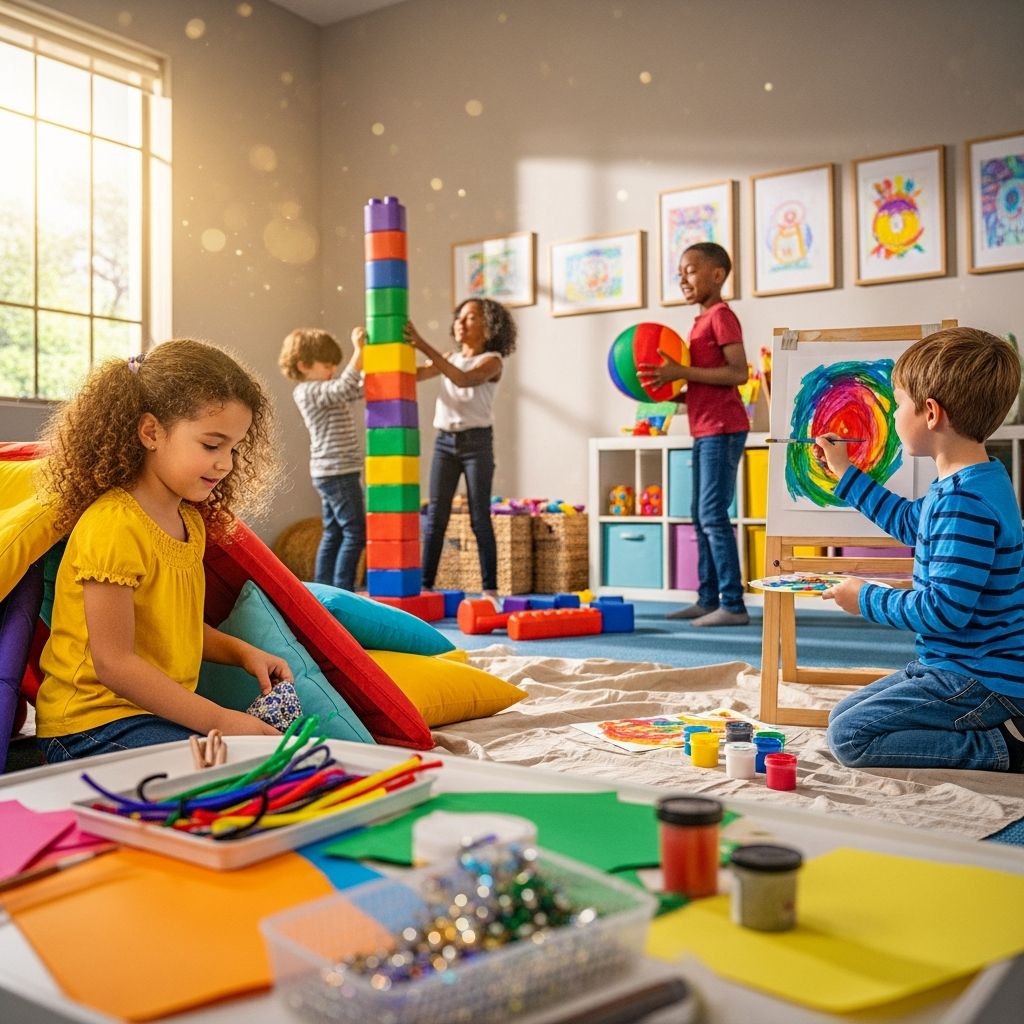
Keeping children entertained indoors doesn’t have to involve screens or expensive toys. These 25 activities use everyday household items to foster imagination, physical activity, skill-building, and family connections. Ideal for rainy days, school holidays, or sick days at home, they cater to kids from toddlers to preteens, ensuring everyone stays engaged and happy.
Why Indoor Play Matters for Child Development
Indoor activities go beyond mere distraction; they support essential developmental milestones. Physical games build gross motor skills and coordination, while crafts enhance fine motor abilities and creativity. Role-playing and games sharpen cognitive thinking, problem-solving, and social skills. According to child development experts, unstructured play helps children process emotions, build resilience, and learn self-regulation. Parents report that regular indoor play reduces tantrums and improves sleep quality, creating a win-win for the whole family.
Physical Movement Games to Burn Energy
Get hearts pumping and giggles flowing with these active indoor games that require minimal space and no special equipment.
- Balloon Volleyball Tournament: Inflate a few balloons and divide into teams. Use hands or pool noodles to keep the balloon aloft without letting it touch the floor. Add rules like no stepping past a tape line for added challenge. This game improves hand-eye coordination and teamwork.
- Freeze Dance Party: Play upbeat music and dance wildly. When the music stops, everyone freezes in silly poses. The last to freeze is out—or becomes the DJ. It teaches listening skills and body control.
- Indoor Obstacle Course: Arrange cushions, chairs, and tunnels from boxes. Time each child navigating the course. Variations include crawling under tables or hopping on one foot to target different skills.
- Sock Slide Relay: On a carpeted floor, slide across in socks while carrying a stuffed animal. Race against siblings or parents for competitive fun.
- Yoga Storytime: Follow along with simple yoga poses shaped like animals or trees, narrating a story where poses advance the plot. Combines flexibility with narrative imagination.
Crafty Creations with Household Supplies
Turn recyclables and kitchen staples into art masterpieces. These projects encourage experimentation and pride in handmade items.
- Recycled Robot Sculptures: Use cardboard boxes, toilet paper rolls, foil, and tape to build robots. Add markers for details and stage a robot parade.
- Nature-Inspired Collages: Collect leaves, feathers, or printed images; glue onto paper with pasta shapes for texture. Discuss ecosystems while creating.
- DIY Jewelry Studio: String cereal loops, buttons, or pipe cleaners into necklaces. Younger kids use elastic; older ones tackle knots and clasps.
- Sponge Stamp Art: Cut kitchen sponges into shapes, dip in paint, and stamp patterns on paper or fabric. Experiment with layering colors.
- Puppet Theater from Boxes: Transform a large box into a stage with fabric curtains. Craft sock or paper bag puppets for an impromptu show.
Imaginative Role-Play Adventures
Role-play transports kids to new worlds, honing empathy and storytelling abilities without leaving the living room.
- Blanket Fort Kingdom: Drape sheets over furniture to create castles or spaceships. Assign roles like king, explorer, or alien ambassador inside.
- Teddy Bear Picnic: Set a table for stuffed animals with play food or real snacks. Plan menus and host a formal tea service.
- Superhero Training Academy: Design capes from towels and practice powers like ‘super jumps’ or ‘laser vision’ tag.
- Time Traveler’s Workshop: Dress in makeshift historical costumes and ‘visit’ eras using books or drawings as portals.
- Pet Shop Fantasy: Line up toys as animals for sale, complete with price tags and adoption papers.
Brain-Teasing Games and Challenges
Stimulate young minds with puzzles, riddles, and inventions that promote logical thinking and memory.
| Game | Ages | Materials Needed | Skills Developed |
|---|---|---|---|
| Scavenger Hunt Riddle Quest | 4+ | Paper, household items | Reading, observation |
| Custom Board Game Design | 6+ | Cardboard, markers | Strategy, creativity |
| I Spy Detective Agency | 3+ | None | Vocabulary, attention |
| Memory Match Maker | 2+ | Index cards | Concentration, recall |
| Code Breaker Challenge | 5+ | Paper, symbols | Problem-solving |
Start with simple hunts hiding 5-10 items with clues like ‘Find something that rhymes with cat.’ Escalate to themed mysteries for older kids.
Learning Through Play: Educational Twists
Infuse fun with subtle education, turning playtime into opportunities for growth in math, science, and literacy.
- Marble Run Engineering: Tape toilet paper rolls into ramps for marbles. Test gravity and angles, predicting paths.
- Story Chain Circle: Each person adds one sentence to a group story. Record and illustrate the epic tale.
- Herb Garden Lab: Plant seeds in egg cartons with soil. Track growth daily in journals, learning about photosynthesis.
- Math Maze Tape Game: Create floor mazes with painter’s tape; solve by answering math problems at junctions.
- Star Gazing Diorama: Use flashlights and black paper to simulate constellations, naming real ones from charts.
Family Bonding Experiences
Activities that bring everyone together strengthen relationships and create lasting memories.
- Family Talent Showcase: Rehearse dances, songs, or magic tricks for a living room performance.
- Recipe Remix Kitchen: Invent silly recipes like ‘pizza tacos’ with safe ingredients.
- Photo Booth Shenanigans: Use props and phone cameras for themed photo shoots.
- Gratitude Jar Filling: Write daily appreciations on slips, reading them weekly.
- Indoor Campout: Pitch blanket tents, tell stories by flashlight, roast marshmallows in the microwave.
Frequently Asked Questions (FAQs)
What ages are these activities suitable for?
Most adapt from ages 2-12. Simplify for toddlers (e.g., larger pieces) and add complexity for tweens (e.g., timers, scores).
Do I need to buy supplies?
No—use household items like socks, boxes, and tape. Optional additions like paint enhance but aren’t essential.
How do I handle mess?
Use drop cloths, washable markers, and contained areas like trays. Cleanup becomes part of the fun learning responsibility.
What if my kids fight over activities?
Rotate turns as ‘activity leader’ or vote on choices. Themes like ‘team challenges’ promote cooperation.
Can these replace outdoor play?
They complement it, providing vital indoor alternatives. Balance with outside time when weather allows for holistic health.
Customizing Activities for Your Family
Tailor these ideas to interests: Sports fans can theme games around teams; artists focus on crafts. Track favorites in a family journal to repeat successes. Rotate categories daily—physical Monday, crafts Tuesday—to maintain variety. For large families, scale up with teams; for singles, parent-child duos work perfectly. Safety first: Supervise young ones, avoid small parts for toddlers, and clear spaces for active play.
Implementing a weekly ‘boredom buster board’ with activity magnets lets kids choose, fostering independence. Track progress with stickers for motivation. These strategies ensure sustained engagement, turning potential whine-fests into joyful discoveries.
References
- Physical Activity Guidelines for Americans, 2nd edition — U.S. Department of Health and Human Services. 2018-10-07. https://health.gov/sites/default/files/2019-09/Physical_Activity_Guidelines_2nd_edition.pdf
- The Importance of Play in Promoting Healthy Child Development — American Academy of Pediatrics. 2024-01-20. https://publications.aap.org/pediatrics/article/119/1/182/70699/The-Importance-of-Play-in-Promoting-Healthy-Child
- Indoor Recess Games and Activities — Scholastic. 2023-05-15. https://www.scholastic.com/teachers/teaching-tools/articles/indoor-recess-games.html
- Benefits of Arts Education for Children — Americans for the Arts. 2022-11-10. https://www.americansforthearts.org/by-topic/arts-education
- Screen Time and Children — American Academy of Pediatrics. 2024-03-12. https://www.aap.org/en/patient-care/media-and-children/