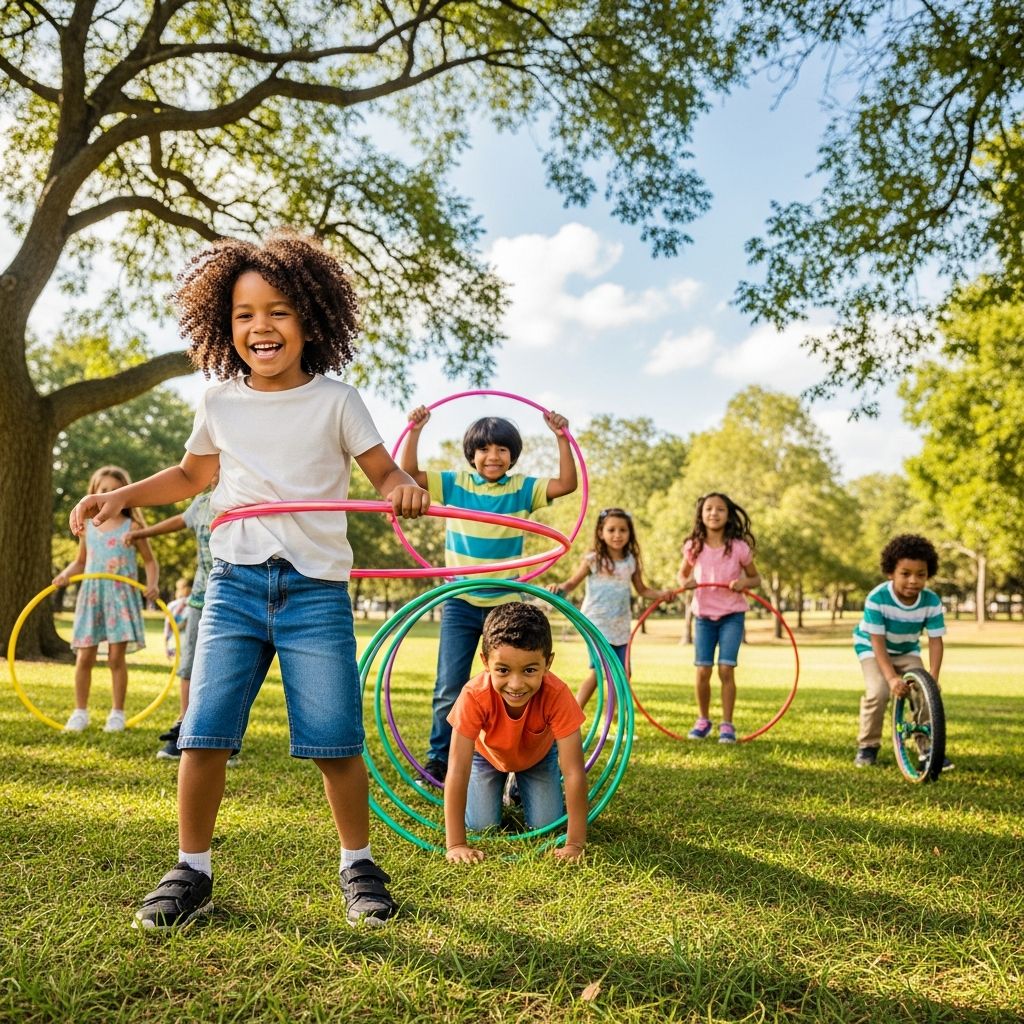
Hula hoops are versatile, inexpensive tools that transform ordinary playtime into exciting adventures for children. These colorful rings encourage movement, sharpen motor skills, and foster social interaction, making them ideal for family gatherings, classroom sessions, or backyard fun. Whether indoors or outdoors, hula hoop games adapt to any space and age group, helping kids burn energy while developing essential physical and cognitive abilities.
Benefits of Incorporating Hula Hoops into Play
Engaging in hula hoop activities offers numerous advantages for child development. Regular play improves cardiovascular health by elevating heart rates through dynamic movements. It also enhances hand-eye coordination, as many games require precise tossing, catching, and aiming. Balance and agility develop through hopping, rolling, and navigating obstacles, which are crucial for overall motor skill progression.
From a social perspective, these games promote teamwork and communication, especially in relay or group challenges. They build confidence as children master new techniques and celebrate successes with peers. For younger kids, simple tasks like stepping through hoops aid spatial awareness, while older children benefit from strategic elements in competitive formats. Studies from physical education resources highlight how such activities contribute to better focus and reduced screen time, supporting holistic growth.
Classic Hula Hoop Challenges for Beginners
Start with straightforward games to build foundational skills. These activities require minimal setup and suit toddlers to early elementary ages.
- Hoop Rolling Race: Children roll hoops along a straight path or around markers. The first to complete the course without dropping wins. This teaches control and persistence.
- Beanbag Target Toss: Place hoops on the ground as targets. Players throw beanbags or small balls to land inside. Vary distances for skill levels, promoting accuracy.
- Step-Through Relay: In a circle, kids pass a hoop around while stepping through without using hands. It emphasizes cooperation and body control.
These entry-level options quickly hook kids, leading to more complex play. Adjust rules, like adding one-footed hops, to increase difficulty.
Team-Based Relay Games to Build Cooperation
Relay-style games turn individual efforts into collective triumphs, perfect for parties or PE classes. Divide participants into teams for high-energy competition.
- Flip and Advance Relay: Each player tosses an object into their team’s hoop, flips it forward if successful, and tags the next teammate. The team reaching the finish line first celebrates victory.
- Obstacle Navigation Relay: Set hoops as gates or hurdles in a course. Teams race through, incorporating jumps or spins. Add cones or ropes for variety.
- Spinning Catch Relay: Pairs toss spinning hoops to partners who catch them mid-air before passing onward. It hones timing and partnership skills.
Such relays not only boost endurance but also teach strategy, like pacing teammates. For larger groups, rotate roles to ensure everyone participates actively.
Creative Individual Skill-Builders
Solo or small-group games focus on personal achievement, allowing kids to practice at their pace.
| Game Name | Skills Developed | Setup Tips |
|---|---|---|
| Hoop Limbo | Flexibility, balance | Hold hoop horizontally; lower gradually |
| Basketball Hoop Shoot | Aiming, throwing | Hang on branch or use stand |
| Rolling Catch Chase | Speed, prediction | Roll across grass; catch before fall |
These activities encourage self-challenge. Track personal bests, like longest limbo pass or most catches in a row, to motivate improvement.
High-Energy Tag and Chase Variations
Infuse excitement with pursuit games that get everyone running.
- Blob Tag with Hoops: Designated “it” wears a hoop; tagged players join by donning hoops, growing the blob until all are caught.
- Zombie Hoop Pursuit: Zombies with hoops tag others, who then join the horde. Safe zones via hoops add strategy.
- Hoop Freeze Tag: Freeze tagged players until freed by a spinning hoop pass from a free teammate.
These ramp up cardio while teaching evasion and quick thinking. Limit playtime to avoid fatigue, especially for younger participants.
Imaginative and Musical Hoop Adventures
Blend hoops with creativity for non-competitive fun.
- Dance Freeze within Hoop: Dance inside hoops to music; freeze on song stop. Simplest dancer wins judges’ votes.
- Hoop Musical Chairs: Circle hoops fewer than players; walk around music, grab and enter a hoop when it stops.
- Aerobics Routine: Sequence waist spins, arm circles, and jumps with hoops for a workout playlist.
Music elevates mood and rhythm sense. Customize routines to favorite songs for repeat engagement.
Outdoor and Nature-Integrated Ideas
Leverage natural environments for immersive play.
- Sand Tunnel Course: Bury partial hoops in sand; crawl through or leap over.
- Bottle Ring Toss: Set weighted bottles as targets; toss hoops to ring them.
- Nature Hoop Soccer: Use hoops as goals in grass fields with soft balls.
These connect kids to outdoors, enhancing sensory experiences alongside physical ones.
Adapting Games for Different Ages and Abilities
Tailor activities to ensure inclusivity. For toddlers, enlarge hoops and simplify to stepping or gentle rolls. School-age kids handle relays and precision tosses. Teens enjoy competitive twists like timed challenges or team tournaments.
Accommodate varying abilities: widen courses for mobility aids, offer seated versions for tossing games, or pair stronger players with others for support. The goal is participation and joy for all.
Safety Guidelines for Hoop Play
Prioritize safety to maximize fun. Inspect hoops for cracks; use lightweight plastic ones. Clear play areas of hazards, supervise closely during tags, and enforce no-throwing-at-others rules. Hydrate frequently, especially outdoors, and limit sessions to 20-30 minutes with breaks. These precautions prevent mishaps while sustaining enthusiasm.
Frequently Asked Questions
What age group are hula hoop games best for?
They suit ages 3 and up, with modifications for younger toddlers focusing on basic stepping and rolling.
How many hula hoops do I need for a group of 10 kids?
At least one per two children for pairs, or 5-10 for relays and courses, depending on game type.
Can these games be played indoors?
Yes, in gyms or large rooms; opt for smaller hoops to fit space constraints.
Do hula hoops help with fitness?
Absolutely; they improve coordination, endurance, and flexibility through varied movements.
Essential Supplies and Storage Tips
Stock durable, colorful hoops in assorted sizes. Store by hanging on walls or stacking in bins to prevent warping. Budget options from sports stores work well; weighted ones add challenge for advanced play.
Incorporate into daily routines: 15-minute sessions post-school or weekend park visits. Track progress with charts to sustain interest.
References
- The Top 15 Hula Hoop Games for PE That’ll Get Kids Moving! — Castle Sports. Accessed 2026. https://castlesports.com/blogs/news/the-top-15-hula-hoop-games-for-p-e-thatll-get-kids-moving
- 5 Totally Great Games to Play with a Hula Hoop — KinderCare. 2015-06. https://www.kindercare.com/content-hub/articles/2015/june/5-totally-great-games-to-play-with-a-hula-hoop
- 10 Fun Hula Hoop Games & Activities for Kids — Davies Sports (YouTube). 2019-11-21. https://www.youtube.com/watch?v=1uM7rk6INpw
- Hula Hoop Challenge — Playworks. Accessed 2026. https://www.playworks.org/game-library/hula-hoop-challenge/
- 7 Creative Hula Hoop Games to Engage Your Troop — Leader Connecting Leaders. Accessed 2026. https://leaderconnectingleaders.com/blogs/game-ideas/can-hula-hoop