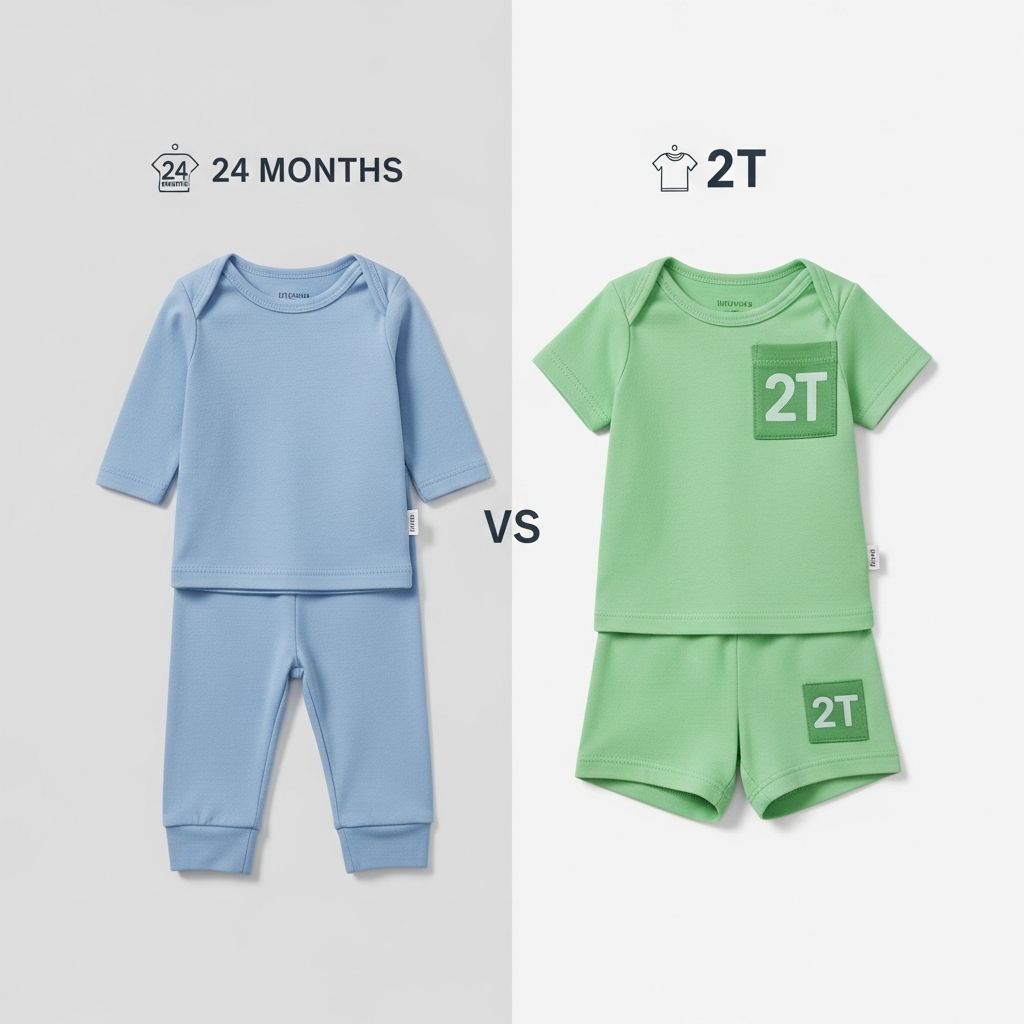
Parents often discover that 24 months and 2T clothes are not identical, even when they seem to be meant for the same age range.
These two sizes are usually designed with different stages of toddler development in mind, which affects the cut, length, and overall fit of the clothing.
Why These Two Sizes Exist
Clothing brands typically treat 24 months as the final size in the “baby” range and 2T as the beginning of the “toddler” line.
This transition reflects expected changes in how children move, communicate, and grow between their second birthday and the following year, rather than a strict age cutoff.
How Toddlers Grow Around Age Two
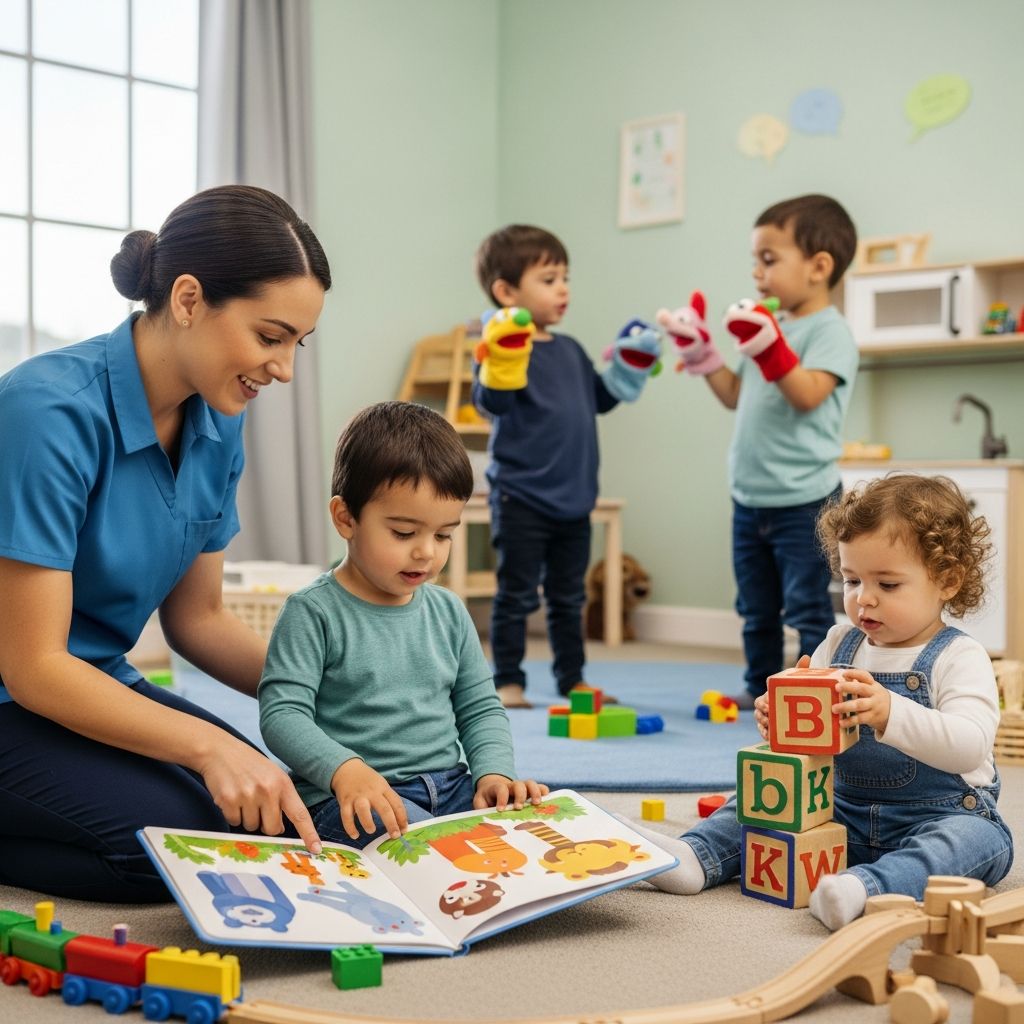
Around 18 to 24 months, children usually go from toddling to confident walking, running, climbing, and navigating furniture with growing independence.
By age two, many toddlers can kick a ball, go up a few stairs, and use short phrases or two- to three-word sentences, which changes how their bodies move and how clothing must flex and stretch.
Main Design Idea Behind Each Size
- 24 Months: Cut for a rounder, more baby-like body with extra room for diapers, including bulkier styles.
- 2T: Shaped for a slightly slimmer, more active toddler who may be starting toilet learning and moving more vigorously.
24 Months vs 2T at a Glance
| Feature | 24 Months | 2T |
|---|---|---|
| Target stage | Older baby approaching age two, often still in full-time diapers | New toddler around age two, more mobile and independent |
| Fit through torso | Roomier, especially around belly and seat for diapers | More streamlined and straight through waist and hips |
| Length of pants | Often slightly shorter to avoid tripping for newer walkers | Usually a bit longer to suit taller, active toddlers |
| Extra diaper space | Commonly has more depth in the seat area | Less diaper allowance; assumes slimmer undergarments over time |
| Style details | More snaps, onesie styles, and baby-like designs | More “little kid” styling like separate tops and bottoms |
Key Differences in Fit and Features
While sizing varies by brand, there are consistent design tendencies that separate 24 months from 2T garments.
Understanding these details makes it easier to choose what will be comfortable today and what allows room for growth without being unsafe or impractical.
Room for Diapers and Potty Training
- 24 months bottoms often have more space in the back rise to accommodate bulky diapers and frequent changes.
- 2T pieces may assume a slimmer diaper or early potty use, so they can feel snug if your toddler still wears thick overnight products.
Proportions: Baby Shape vs Toddler Shape
In the second year of life, many children lengthen out, with legs and arms appearing relatively longer compared to their earlier baby proportions.
24 months items are built for a shorter, rounder frame, while 2T sizes assume a taller and slightly leaner silhouette, even when weight is similar.
Practical Design Details
- 24 months clothing often relies on snaps at the crotch or along the legs, which help with diaper changes when children are not yet using the toilet.
- 2T clothing is more likely to use pull-on waistbands, regular T-shirts, and fewer snaps, since children at this age are encouraged to help with dressing.
How to Decide Between 24 Months and 2T
The size you choose should prioritize current comfort, safety in movement, and your child’s specific body type over the number printed on the tag.
Consider height, weight, developmental stage, and toileting habits rather than relying solely on age recommendations.
When 24 Months Is Often the Better Choice
- Your child is shorter or has a rounder build and tends to outgrow width before length.
- They are still fully in diapers and you change them lying down multiple times a day.
- You want one-piece outfits, rompers, or sets that feel more like babywear.
When 2T Usually Works Best
- Your toddler is tall or slim and needs more leg length but not much extra width.
- They are starting or actively working on toilet learning, so quick pull-down pants are more convenient.
- You prefer more grown-up styles that resemble preschool clothing.
Reading Brand Size Charts the Smart Way
Most children’s clothing brands provide size charts that list height and weight ranges for each size, often including both 24 months and 2T.
Since each manufacturer uses its own patterns, these charts are a more reliable reference than just the age printed in the size label.
Steps to Use a Size Chart
- Measure your child’s height from head to heel and note the result in centimeters or inches.
- Weigh your child with minimal clothing and compare to the chart’s range.
- Check both height and weight columns; if your child is between sizes, consider how fast they are currently growing.
What If Your Toddler Falls Between 24 Months and 2T?
Children near the top of the 24 months range and the bottom of 2T may be able to wear both, but they may prefer one size depending on their build and growth pattern.
In that case, it can be practical to choose 24 months for items with snaps or onesie styles and 2T for casual play clothes that need more leg length.
Seasonal Shopping and Growth Spurts
Growth during the second year can be unpredictable, with some toddlers gaining height rapidly over short periods.
Planning ahead by season can reduce wasted purchases and help ensure that items fit during the right weather.
Tips for Planning by Season
- For clothes needed immediately, choose the size that fits comfortably now, even if it offers only modest room to grow.
- For a season 3–6 months away, many parents size up to 2T for a nearly two-year-old, especially if the child has recently had a growth spurt in height.
- Layering pieces like leggings or cardigans can extend the life of slightly shorter or longer garments.
Comfort and Safety Considerations
Clothes that are too big can cause tripping hazards, especially for toddlers learning to run, climb stairs, or navigate playground equipment.
Conversely, items that are too tight may restrict movement, irritate the skin, and interfere with exploration, which is crucial for development in this age range.
Signs a Garment Is Too Small
- Deep marks from waistbands, leg holes, or sock cuffs after short wear.
- Difficulty snapping a onesie or pulling pants over a diaper.
- Limited arm or leg movement, making climbing, squatting, or reaching uncomfortable.
Signs a Garment Is Too Large
- Pants pooling around the ankles, easily getting under the child’s heel.
- Necklines slipping off the shoulder or armholes revealing too much of the torso.
- Frequent tripping or frustration when walking or running due to excess fabric.
Budget-Friendly Strategies When Sizes Overlap
Since many toddlers can wear 24 months and 2T around the same time, families often want to avoid buying a full wardrobe in both sizes.
Focusing spending on a small set of versatile, mix-and-match basics can help manage costs during this transitional stage.
Smart Items to Prioritize
- Neutral-colored pants or leggings that pair with multiple tops.
- Comfortable, stretchy tops that can be layered over or under other pieces.
- Outerwear and sleepwear in the slightly larger size, since they tolerate a looser fit better than play clothes.
Frequently Asked Questions About 24 Months vs 2T
Is 2T bigger than 24 months?
In many brands, 2T tends to be a little longer and sometimes slightly narrower than 24 months, but exact measurements differ between manufacturers.
The two sizes can overlap in weight range, so some children may fit both at the same time and prefer one due to style or comfort.
Should my child move into 2T right at their second birthday?
There is no requirement to change sizes on a specific date; some two-year-olds remain in 24 months for several more months, while others wear 2T earlier.
The best indicator is how the clothing fits, allowing free movement without excess fabric that causes tripping or discomfort.
Which size is better for potty training?
Clothing in 2T often lacks crotch snaps and uses pull-on waistbands, which many families find easier for toilet learning.
However, if your toddler still needs extra room for diapers or training pants, some 24 months bottoms may offer more space and comfort.
Can I mix 24 months tops with 2T bottoms?
Combining sizes can work well if your child’s torso and legs grow at different rates, such as needing longer pants but still benefiting from a roomier top.
Paying attention to how individual pieces fit, rather than matching the size number on every tag, gives the most practical wardrobe.
What if height and weight suggest different sizes?
Many children sit at the top of one range for weight and the next one for height or vice versa, which is normal.
In these cases, think about which garments need length more than width, and consider buying different sizes for tops and bottoms accordingly.
Making Size Labels Work for Your Family
Clothing labels such as 24 months and 2T provide a general guideline, but each toddler grows and develops at an individual pace.
By observing how your child moves, measuring their body, and trying on both sizes when needed, you can build a comfortable, flexible wardrobe that supports play, learning, and emerging independence.