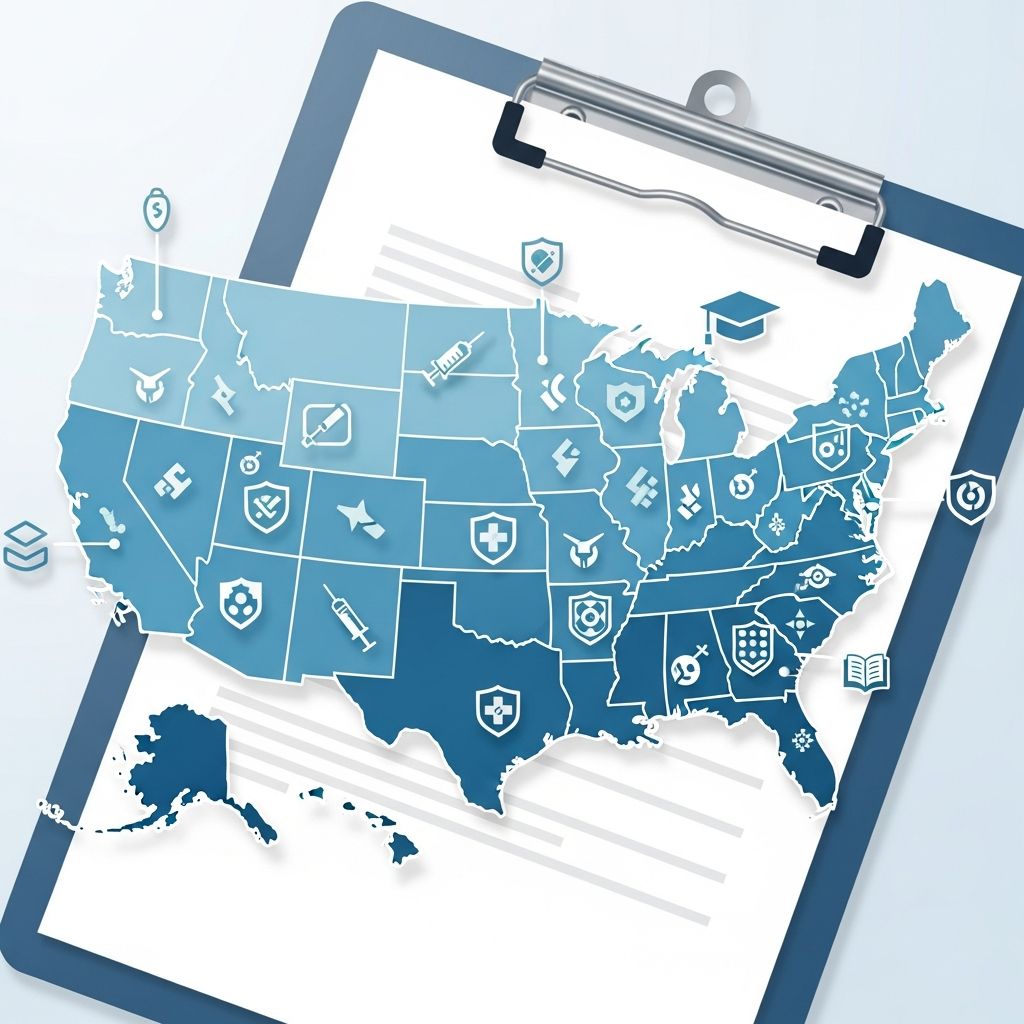
Navigating school vaccination requirements is crucial for parents as children head back to classrooms. In 2026, all 50 states mandate immunizations for school entry against key diseases like polio, chickenpox, measles, mumps, rubella, and diphtheria-tetanus-pertussis (DTaP), regardless of recent federal adjustments. The federal schedule, updated January 5, 2026, by HHS, now recommends routine vaccines for only 11 diseases down from 17, shifting others like influenza and rotavirus to high-risk or shared decision-making categories. States, however, retain authority over mandates, often aligning loosely with CDC guidance but prioritizing public health[11]. This guide details requirements, exemptions, and changes.
Core Vaccines Required Nationwide
Every state requires protection against foundational diseases to curb outbreaks. Universal mandates include:
- DTaP (Diphtheria, Tetanus, Pertussis): Multiple doses from infancy through adolescence.
- Polio (IPV): Four doses typically by kindergarten.
- MMR (Measles, Mumps, Rubella): Two doses.
- Varicella (Chickenpox): Two doses for unvaccinated children.
- Hib (Haemophilus influenzae type b): Series for younger kids.
- Pneumococcal (PCV): Protects against pneumonia and meningitis.
These align with the trimmed 2026 federal list: diphtheria, tetanus, pertussis, Hib, pneumococcal, polio, MMR, HPV (one dose now), and varicella. Vaccines like hepatitis B, though federal-routine previously, remain state-required in most places. Federal changes do not alter existing state laws immediately, but monitoring is advised as some states may adapt[11].
How Federal Changes Affect State Mandates
The HHS overhaul, effective immediately post-January 5, 2026, responded to a presidential directive comparing U.S. schedules to peer nations, deeming America an outlier with excessive doses[10]. Now, routine shots target 11 diseases; others (RSV, hep A/B, rotavirus, COVID-19, influenza, meningococcal) are for high-risk kids or provider consultation. Insurance covers all prior vaccines through 2026 via VFC, Medicaid, and private plans. Experts warn of risks amid rising exemptions and outbreaks. States like Florida eye mandate reductions, while others like Michigan affirm current rules.
| Disease Group | Pre-2026 Federal Routine | 2026 Federal Status | State School Impact |
|---|---|---|---|
| Core (e.g., MMR, DTaP, Polio) | Yes | Routine for all | Mandated in all 50 states |
| Hepatitis B | Yes | High-risk/SCDM | Required in 49 states |
| Influenza | Some states | SCDM | Mandated in 7 states (e.g., CT, NY) |
| HPV | Recommended | Routine (1 dose) | Mandated in 10+ states (e.g., RI, VA) |
Regional Breakdown of Requirements
Northeast States
Northeast states enforce strict rules with limited exemptions. Massachusetts requires DTaP, polio, MMR, varicella, hep B, Hib, pneumococcal, and meningococcal for grades 7-12. New York mandates the same plus influenza for childcare. Connecticut and New Jersey align closely, emphasizing booster doses. Philosophical exemptions are rare; only medical and religious allowed.
Mid-Atlantic and South
Pennsylvania and Maryland demand core vaccines plus hep A in some districts. Southern states like Virginia mandate HPV for girls (and boys since 2021), while Texas requires hep A. Florida, post-2026, plans broader exemptions, potentially dropping non-core mandates. Georgia and North Carolina stick to basics amid outbreak concerns[11].
Midwest Heartland
Illinois requires 11 vaccines including meningococcal for teens. Michigan, responding to federal shifts, upholds all prior mandates via MDHHS, covering hep A/B despite changes. Ohio and Indiana allow religious exemptions but push high compliance. Minnesota mandates pneumococcal for daycare.
West Coast and Mountain States
California bans non-medical exemptions since 2016, requiring DTaP, polio, MMR, varicella, hep B, and more. Washington and Oregon mirror this rigor. Colorado allows philosophical opt-outs but monitors closely. Arizona mandates hep A amid past outbreaks.
Southeast and Plains Variations
Alabama and Louisiana require core plus hep B. North Dakota and South Dakota permit philosophical exemptions, with lower rates than national averages. Oklahoma emphasizes tetanus boosters.
Exemption Types Across the U.S.
Exemptions vary, fueling debates amid rising non-medical rates.
- Medical: Allowed everywhere; needs doctor certification (e.g., allergies).
- Religious: 45 states; personal belief suffices in some.
- Philosophical/Personal Belief: 15 states like Michigan, Oregon; tightening in others.
Federal changes may boost exemption claims, but states like California prohibit non-medical. Rates climbed pre-2026, risking measles resurgence.
Special Cases: Childcare, Colleges, and High-Risk Groups
Childcare often mirrors K-12 but adds Hib/pneumococcal for infants. Colleges require meningococcal, tetanus boosters. High-risk kids (e.g., immunocompromised) get extra shots like RSV per 2026 guidance. Homeschoolers face fewer rules, varying by state.
Steps for Parents to Comply
- Check state health department site for exact doses/ages.
- Request records from prior providers.
- File exemptions if eligible; renew annually.
- Consult pediatricians on federal shifts.
- Use VFC for free vaccines if uninsured.
Track via apps or state portals; provisional entry possible with partial compliance.
Frequently Asked Questions
Do federal changes eliminate state vaccine mandates?
No, states control school requirements; federal schedule influences but doesn’t override[11].
Which vaccines are still universal federally?
DTaP, Hib, pneumococcal, polio, MMR, HPV (1 dose), varicella.
Can I get exemptions everywhere?
Medical yes; religious/philosophical depend on state—banned in CA, NY, ME.
Are vaccines free post-changes?
Yes, via insurance/VFC through 2026 at least.
What if my child missed doses?
Catch-up schedules available; schools often allow grace periods.
Public Health Implications and Expert Views
While HHS cites trust-building[10], critics fear disease spikes without ACIP process. Hospitals follow pediatric guidelines over new federal ones. Parents should verify locally as states evolve.
References
- The New Federal Vaccine Schedule for Children: What Changed and What Are the Implications? — KFF. 2026-01. https://www.kff.org/other-health/the-new-federal-vaccine-schedule-what-changed/
- Rising US nonmedical childhood vaccination exemption rates may portend disease resurgence — CIDRAP, University of Minnesota. 2026. https://www.cidrap.umn.edu/childhood-vaccines/rising-us-nonmedical-childhood-vaccination-exemption-rates-may-portend-disease
- Hospitals and doctors are ignoring RFK Jr.’s new vaccine schedule — STAT News. 2026-01-15. https://www.statnews.com/2026/01/15/new-vaccine-schedule-largely-ignored-major-healthcare-providers/
- MDHHS issues statement about federal changes to childhood vaccine schedule — Michigan Department of Health and Human Services. 2026-01-06. https://www.michigan.gov/mdhhs/inside-mdhhs/newsroom/2026/01/06/vaccines-state
- U.S. Drops the Number of Vaccines It Recommends for Every Child — Education Week. 2026-01. https://www.edweek.org/leadership/u-s-drops-the-number-of-vaccines-it-recommends-for-every-child/2026/01
- HHS Announces Changes to Recommended Vaccine Schedule for Children — Georgetown University Center for Children and Families. 2026-01-15. https://ccf.georgetown.edu/2026/01/15/hhs-announces-changes-to-recommended-vaccine-schedule-for-children/
- HHS announces unprecedented overhaul of US childhood vaccine schedule — CIDRAP, University of Minnesota. 2026. https://www.cidrap.umn.edu/childhood-vaccines/hhs-announces-unprecedented-overhaul-us-childhood-vaccine-schedule