Camping offers endless opportunities for families to disconnect from screens and connect with nature and each other. These activities turn ordinary campsites into playgrounds of adventure, helping children develop motor skills, creativity, and social bonds through play. From high-energy races to quiet evening reflections, there’s something for every age group and energy level.
High-Energy Outdoor Challenges
Keep the little ones moving with games that use the natural environment as your playground. These activities require minimal equipment and promote physical fitness while encouraging teamwork.
- Nature Baton Relays: Gather sticks, pinecones, or stones to serve as batons. Divide into teams and set up a course with fun obstacles like hopping over logs or balancing on one foot. This builds coordination and excitement, adaptable for toddlers to teens.
- Flag Capture Missions: Split into two teams, each hiding a ‘flag’ (like a brightly colored bandana). Players strategize to steal the opponent’s flag without getting tagged. It teaches planning and stealth in a safe, open area away from fire pits.
- Site Olympics: Organize events such as sack hops using pillowcases, ring toss with ropes and bottles, or three-legged races with bandanas tying ankles. Award points with leaves or pebbles for prizes, fostering friendly competition.
These games ensure active playtime, burning energy during the day so evenings are calmer. Always check the terrain for safety, avoiding steep drops or water edges.
Exploration and Discovery Hunts
Turn curiosity into structured fun with hunts that sharpen observation skills and respect for the outdoors. Print lists beforehand or sketch them on paper at camp.
- Color and Shape Quests: Challenge kids to find items matching descriptions like ‘something fuzzy and green’ or ‘a curved twig.’ Younger children collect non-living items only to practice Leave No Trace principles.
- Bingo Nature Boards: Draw 3×3 grids with squares for ‘feather,’ ‘mossy rock,’ or ‘ant trail.’ First to complete a row wins a small treat like extra s’mores. This quiet activity works well during downtime.
- Treasure Map Trails: Create simple maps leading to hidden spots with clues tied to landmarks like ‘big oak tree.’ Include educational facts about local flora along the path.
Such hunts encourage mindfulness of surroundings, turning walks into lessons on biodiversity. Remind participants to observe without disturbing wildlife.
| Age Group | Best Hunt Type | Materials Needed |
|---|---|---|
| 3-5 years | Color Quest | Paper list, bag |
| 6-9 years | Nature Bingo | Grid cards, markers |
| 10+ | Treasure Maps | Paper, pencils |
Creative Nature Crafts
Harness the campsite’s bounty for hands-on art projects that double as souvenirs. These foster fine motor skills and imagination using foraged materials.
- Pinecone Feeders: Roll pinecones in peanut butter (or sunflower seed butter for allergies) and birdseed, then hang from branches. Watch birds visit, combining craft with wildlife education.
- Painted Stone Stories: Collect smooth rocks and decorate with markers or watercolors as characters, animals, or patterns. Use them later for storytelling or as trail markers.
- Leaf Impression Journals: Press leaves, flowers, or bark rubbings into notebooks. Add daily entries with drawings or notes on discoveries, creating personalized trip logs.
- Twig Sculptures: Build mini structures like towers or animals with sticks, vines, and stones. Challenge kids to create the tallest stable design before dismantling responsibly.
Crafts like these provide calm counterpoints to active play, ideal for rainy afternoons in the tent. Supply non-toxic materials and supervise to avoid splinters or allergens.
Evening Entertainment Around the Fire
As dusk falls, shift to cozy group activities that build memories under the stars. Firelight adds magic, but prioritize safety with adult supervision.
- Collaborative Tale Weaving: Sit in a circle passing a stick; each person adds one sentence to a building story. Themes like ‘lost in the woods’ spark giggles and creativity.
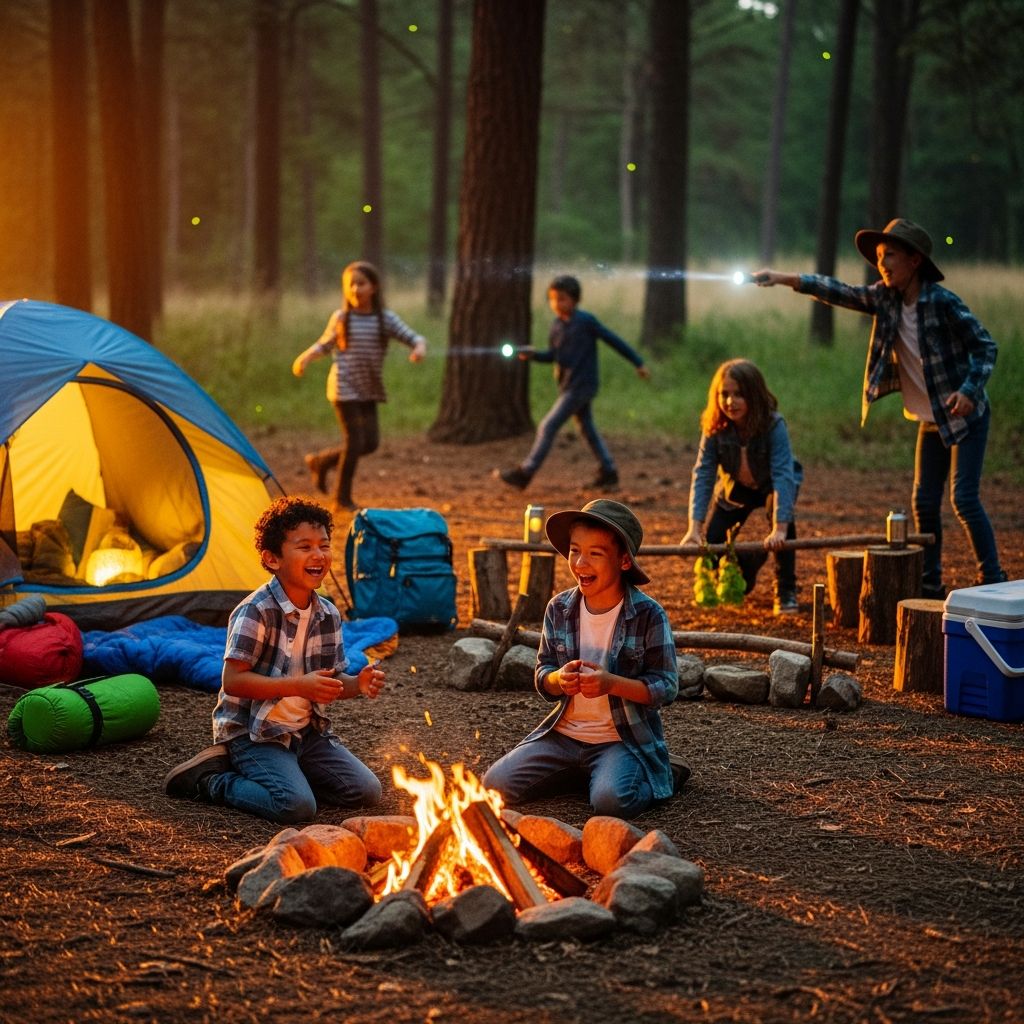
- Flashlight Adventures: Play tag where the beam ‘tags’ instead of hands, or create shadow animals on tent walls. Transition to stargazing, using free apps to spot constellations.
- Song and Rhythm Circles: Teach classics like ‘Row Row Row Your Boat’ with actions, or invent rhythms clapping on knees. No musical talent required—just enthusiasm.
These wind down high spirits gently, promoting bonding. Keep sessions short for young kids to avoid fatigue.
Water-Based Fun Near Campsite
If your site has streams, lakes, or beaches, incorporate water play for cooling off. Always life-jacket children and stay in shallow areas.
- Shallow Wading Hunts: Search for pebbles, shells, or minnows in ankle-deep water. Use buckets for temporary collections, releasing finds after observation.
- Float Races: Race leaf boats or sticks in gentle currents, predicting winners based on shape. Teaches basic physics playfully.
- Tidepool Safaris: At coastal spots, gently explore pools for crabs or anemones with a field guide, noting behaviors without touching.
Water activities refresh everyone, but monitor weather and currents for safety.
Skill-Building Nature Lessons
Introduce practical outdoor skills through gamified challenges, empowering kids with confidence.
- Compass Orienteering: Use a basic compass to find directional clues hidden around camp. Start simple, like ‘north to the pine tree.’
- Knot-Tying Contests: Learn bowlines or square knots with string challenges, like tying shelters or bundles. Race for speed and strength.
- Leave No Trace Patrol: Walk the site as ‘inspectors,’ picking litter and discussing packing out waste to protect habitats.
These instill responsibility and self-reliance, backed by principles from the U.S. Forest Service.
Frequently Asked Questions
What essential items should I pack for kids’ camping activities?
Bags for collections, notebooks, markers, string, bandanas, flashlights, and sunscreen. Focus on multi-use items to keep packs light.
How do I adapt games for mixed ages?
Pair older kids as team leaders for younger ones, or create parallel simpler versions. Everyone participates with scaled challenges.
Are these activities safe near campfires or water?
Yes, with supervision: clear play zones 20 feet from fires, life jackets for water, and no running in low light.
What if it rains during camping?
Shift to tent crafts like shadow puppets or journal making. Tarps create covered areas for relays.
Can toddlers join these games?
Absolutely—modify with sensory hunts or simple tossing games to match their abilities.
These FAQs address common concerns, ensuring inclusive fun. Expand your trip with site-specific perks like trails or pools.
Maximizing Family Bonding
Beyond games, integrate downtime: read aloud, hammock swings, or group picnics. Rotate activity leadership to build ownership. Track progress in shared journals for reflection on return home. Such trips cultivate resilience and appreciation for nature, creating stories retold for years.
With 20+ ideas spanning day to night, your camping becomes a highlight reel of laughter and learning. Adjust for group size and location, always prioritizing safety and environmental stewardship.
References
- Leave No Trace Principles — U.S. Forest Service. 2023-01-15. https://www.fs.usda.gov/visit/know-before-you-go/leave-no-trace
- Family Camping Safety Guidelines — National Park Service. 2024-05-20. https://www.nps.gov/articles/family-camping.htm
- Youth Outdoor Activity Benefits — Centers for Disease Control and Prevention (CDC). 2023-08-10. https://www.cdc.gov/healthyschools/physicalactivity/toolkits.htm
- Children and Nature Network Research — Children & Nature Network. 2024-02-14. https://www.childrenandnature.org/resources/research-digest/
- Outdoor Recreation Guidelines for Families — American Academy of Pediatrics. 2023-11-05. https://publications.aap.org/pediatrics/article/152/5/e2023062924/193058