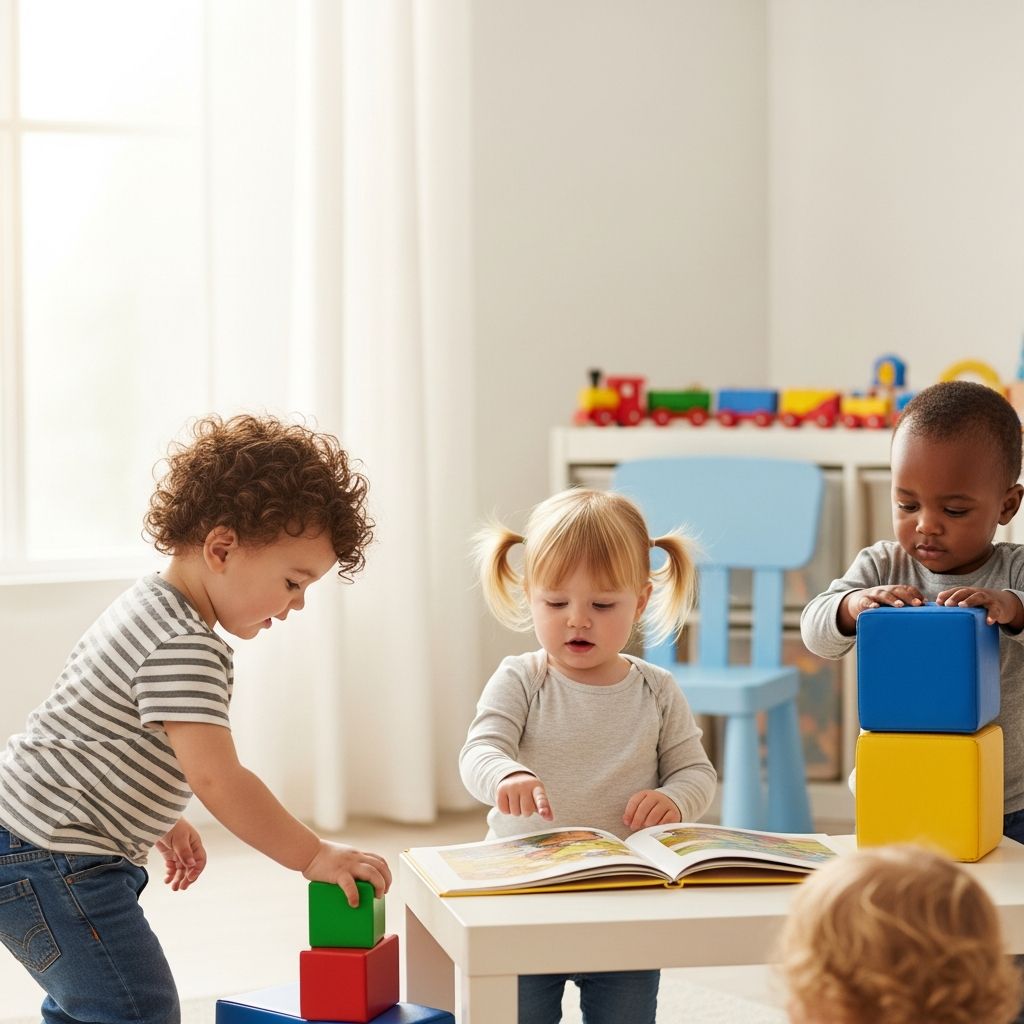
Your 2-year-old is entering a vibrant phase of exploration and independence. At this age, children typically master skills that allow them to move confidently, communicate basic needs, form simple social bonds, solve everyday problems, and handle personal routines. These advancements vary slightly among individuals, but recognizing patterns helps parents foster growth effectively.
Mastering Movement: Physical Achievements
Physical development surges around 24 months, transforming toddlers into energetic explorers. Gross motor skills enable broader adventures, while fine motor abilities refine precision tasks.
Common accomplishments include running smoothly without frequent falls, climbing furniture or playground equipment with ease, and navigating stairs by placing one foot per step, often independently. Many can jump a few inches off the ground, kick a ball forward purposefully, and throw overhand with some accuracy. Balance improves, allowing standing on tiptoes or walking heel-to-toe in a straight line.
Fine motor progress supports creative play. Toddlers stack 4-6 blocks into towers, scribble lines or circles on paper, turn book pages singly, and manipulate small objects like inserting shapes into sorters. Self-feeding with utensils becomes reliable, and they unscrew lids or string large beads.
- Daily growth trends: Expect 4-6 pounds and 2-3 inches gained yearly, tracked via pediatric charts.
- Promotion ideas: Offer outdoor play for running, blocks for stacking, and crayons for drawing to build coordination.
Building Words: Language and Communication Progress
Language explodes, with vocabularies reaching 10-50 words or more, though comprehension far exceeds spoken output. Toddlers follow two-step instructions like “Pick up the toy and put it on the shelf,” name familiar items, and identify body parts such as eyes or nose.
They combine two to three words into phrases, e.g., “More juice please,” and use pronouns like “me,” “you,” or basic plurals. Strangers often understand their speech, and they echo words or mimic conversations. Stuttering may occur as skills integrate but usually resolves.
| Skill | Examples | Support Strategies |
|---|---|---|
| Vocabulary | Names objects, colors, animals | Read daily, label items |
| Sentences | “Big dog run” | Expand: “Yes, the big dog is running!” |
| Understanding | Follows “in/on/under” | Use gestures with directions |
Engage through books, songs, and responsive talking to accelerate this domain.
Emotions and Bonds: Social-Emotional Growth
Socially, 2-year-olds imitate adults, copy peers during play, and show independence by saying “no” or trying tasks alone. They play alongside others (parallel play) but may struggle sharing, becoming possessive over toys.
Emotional range widens: excitement, frustration, affection via hugs or kisses without prompts. They notice others’ feelings, comforting a crying friend or mirroring parental reactions. Separation anxiety lessens, though routines matter—changes can upset them. By late second year, concepts like “mine” vs. “yours” emerge, alongside basic turn-taking.
- Model kindness and patience.
- Use simple rules and praise cooperation.
- Validate feelings: “I see you’re mad; let’s breathe.”
Curious Minds: Cognitive and Problem-Solving Skills
Cognitively, toddlers sort shapes/colors, complete 3-4 piece puzzles, and engage in pretend play like feeding a doll. They understand “two” items, build 6+ block towers, and work button/lever toys.
Memory strengthens for routines, and they experiment cause-effect, e.g., pushing a car to see it move. Attention spans lengthen for short stories or songs. Self-help blooms: undressing pants/shoes, washing hands, pouring from cups.
Potty training signs appear: staying dry for hours, signaling needs via words/gestures, following bathroom instructions.
Daily Living Skills: Fostering Independence
Toddlers crave autonomy in routines. They feed independently with spoons/forks, drink from open cups or straws, and help with simple chores like wiping spills. Dressing involves pulling off clothes; some attempt putting on.
Toilet readiness includes predictable bowels, dry periods post-nap, and verbal cues. Encourage with child-sized tools and positive reinforcement, avoiding pressure.
Nutrition and Health Essentials
Balanced diets fuel growth: whole grains, proteins, fruits/veggies, dairy. Offer varied textures; self-feeding builds skills. Limit sugars/juices; aim for 16-24 oz milk daily. Regular checkups monitor height/weight curves.
Safety Priorities for Active Toddlers
Energy demands vigilance: secure homes with gates, outlet covers; supervise water/play areas. Teach “no touch” for hazards; use car seats properly. Promote sleep (11-14 hours/night + naps) via consistent bedtime.
Activities to Boost Development
Daily play enhances all areas:
- Physical: Park runs, ball games, dance.
- Language: Picture books, rhymes.
- Social: Playdates, group music.
- Cognitive: Puzzles, nesting toys.
Screen time minimal; prioritize interactive fun.
Frequently Asked Questions (FAQs)
Is my 2-year-old on track if they aren’t speaking in full sentences?
Variation is normal; vocabularies grow rapidly. If under 50 words or no two-word combos by 24 months, consult a pediatrician.
How can I encourage potty training?
Watch for readiness like dryness/awareness. Use praise, routine sits; no punishment.
What if my child seems clumsy or delayed in walking stairs?
Most manage stairs with/without help by 24 months. Persistent issues warrant evaluation.
Should I worry about tantrums or saying ‘no’ often?
Common as independence grows. Stay calm, offer choices to teach control.
How much should a 2-year-old weigh and measure?
Average boys: 26-28 lbs, 33-35 inches; girls similar but slightly less. Track individually.
Monitoring Progress and Seeking Help
Track milestones via apps or charts from trusted sources like CDC. Celebrate achievements; intervene early for delays. Contact providers if no progress in running, two-word speech, pointing/naming, or pretend play by 24 months. Early therapy maximizes outcomes.
This guide draws from pediatric standards to empower parents. Every child shines uniquely—nurture with patience and play.
References
- Growth & Development: 24 Months — Riley Children’s Health. Accessed 2026. https://www.rileychildrens.org/health-info/growth-development-24-months
- 24-36 Month Developmental Milestones — Together by St. Jude. Accessed 2026. https://together.stjude.org/en-us/emotional-support-daily-life/early-childhood-development/24-to-36-months.html
- 2 Year Old Milestones: Development, Growth, Speech — Huckleberry. Accessed 2026. https://huckleberrycare.com/blog/2-year-old-milestones-development-growth-speech-language-and-more
- Developmental Milestones 19-24 Months — Nebraska Department of Education. Accessed 2026. https://edn.ne.gov/cms/developmental-milestones-19-through-24-months
- Ages and Stages: Toddler (12-24 Months) — University of Nebraska-Lincoln Extension. Accessed 2026. https://extensionpubs.unl.edu/publication/1362/html/view
- CDC’s Developmental Milestones — Centers for Disease Control and Prevention (CDC). Accessed 2026. https://www.cdc.gov/act-early/milestones/index.html
- Developmental Milestones: 2 Year Olds — American Academy of Pediatrics (HealthyChildren.org). Accessed 2026. https://www.healthychildren.org/English/ages-stages/toddler/Pages/Developmental-Milestones-2-Year-Olds.aspx