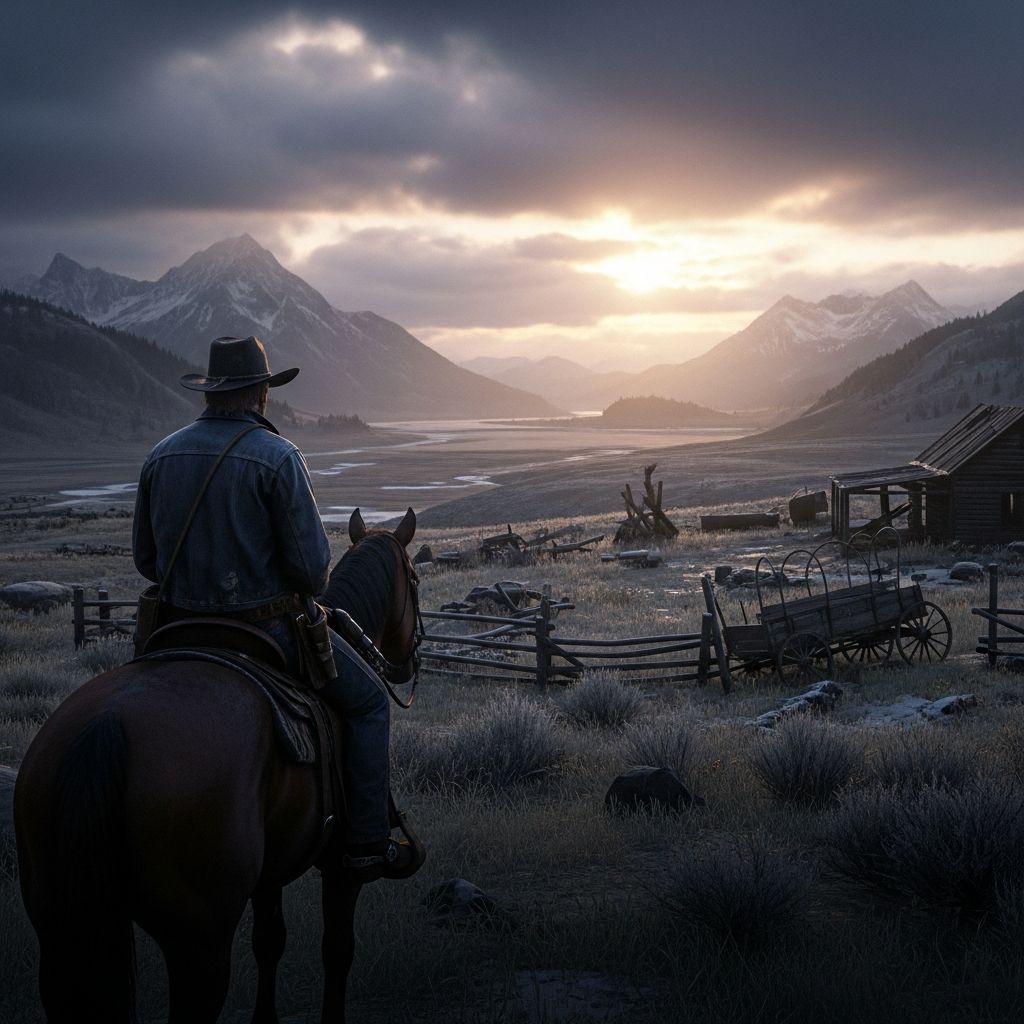
The Season 1 finale of 1923 is less a neatly wrapped conclusion and more a controlled catastrophe, scattering the Dutton family across continents while tightening a financial noose around the Yellowstone ranch. Instead of heroic triumph, the episode leans into loss, unresolved journeys, and a looming sense that the land itself may no longer be secure.
The Duttons at a Breaking Point
By the end of Season 1, the Dutton family stands on the edge of collapse: their money is nearly gone, their best hope of reinforcement is stranded overseas, and their enemies are shifting from open violence to colder, legal warfare. The finale underlines that this generation is not building an empire from strength, but trying to keep it alive in the face of modern forces they barely understand.
- Jacob Dutton is weakened, struggling with age and injury just as his ranch faces its worst financial strain.
- Cara Dutton is emotionally exhausted, forced to hold the family together while facing the real possibility of failure.
- The next generation, from Spencer to Jack, is scattered by distance, grief, and uncertainty about the future.
Spencer and Alexandra: A Love Story Torn Apart at Sea
Spencer Dutton spends the entire season fighting his way back to Montana, only to be ripped away at the last possible moment in the finale. His journey shifts from physical survival in the African wilderness to political and social survival aboard a luxury ship where power is measured in titles and influence, not guns.
On that ship, Alexandra’s former fiancé, Arthur, becomes the embodiment of the old aristocratic world that refuses to accept her choice. What begins as a clash of pride and jealousy escalates into a formal duel, with Spencer’s lethal skill and Arthur’s grief-fueled rage colliding on the deck in front of wealthy spectators.
A Duel with Lasting Consequences
The duel ends with Arthur dead after charging Spencer with a pistol, but the real damage is done afterward, when Arthur’s powerful family uses social status and legal pressure to retaliate. Spencer is briefly imprisoned and then forcibly removed from the ship, while Alexandra is kept on board, essentially imprisoned by etiquette and her in-laws’ influence rather than iron bars.
- Spencer is exiled to shore, left in Europe with no clear path back to the United States.
- Alexandra vows to find him in Montana, promising to reunite at the Dutton ranch, but they are now separated by an ocean and systems stacked against them.
This separation matters because Spencer has been framed all season as the Dutton “savior,” a hardened warrior who could tip the balance in Jacob’s favor. The finale pulls that safety net away, making the looming showdown over the ranch feel far more precarious.
Teonna Rainwater: Survival Beyond the School
While the Duttons fight over land and legacy, Teonna Rainwater’s storyline exposes the brutality of the boarding school system designed to erase Indigenous identity. Her arc in the finale is less about victory and more about the ongoing cost of survival, even after an apparent escape.
Teonna has already killed abusive priests and fled the school, but the finale clarifies that the system she’s running from is relentless. Her reunion with family and allies offers short-lived relief, yet hunters remain on her trail, and the violence she has endured and inflicted leaves deep emotional scars.
- Teonna’s family and protectors try to move her to safety, fully aware that the church and state will not simply let her go.
- Her story reframes the wider Yellowstone universe by connecting past injustices against Native people to present-day tensions over land and power.
Donald Whitfield: A New Kind of Villain
As Banner Creighton embodies rage and open conflict, Donald Whitfield represents something more dangerous: wealth that weaponizes the legal system. He is less interested in revenge by bullet and more in taking the Duttons’ land in a way that looks entirely legitimate on paper.
In the finale, Whitfield delivers his most devastating move yet by quietly paying the property taxes on the Yellowstone, effectively placing the ranch in his debt. Jacob and Cara, already struggling to feed their cattle and secure a loan from increasingly modernized banks, learn that if they cannot repay Whitfield by year’s end, he will legally own their land.
Financial Warfare at the Yellowstone
Whitfield’s strategy contrasts sharply with the shootouts and ambushes that have defined previous Dutton conflicts. His method underlines a key theme of 1923: the end of the “Old West,” where guns settle disputes, and the rise of a new era in which contracts, titles, and debt are even more lethal.
- Whitfield can claim he is simply following the rules, using money to outmaneuver a family that still thinks in terms of fences and cattle drives.
- His cruelty behind closed doors reveals that the polished exterior hides a violent streak equal to, or greater than, the show’s more obvious villains.
The Next Generation on the Ranch
Back in Montana, the younger generation faces its own tragedies and disappointments, further dimming the Duttons’ hopes for the future. Jack and Elizabeth, once positioned as a hopeful, romantic counterpoint to the show’s brutality, are forced to confront the cost of continuing the family line.
Elizabeth suffers a heartbreaking miscarriage, leaving their future children—and by extension, the continuity of this branch of the Dutton family tree—suddenly uncertain. Their loss sits alongside the ranch’s financial peril, amplifying the sense that the Duttons are losing ground on every front: emotional, economic, and generational.
- The collapse of Jack and Elizabeth’s dreams raises questions about which descendants actually carry the Yellowstone name forward in later series.
- Meanwhile, ranch hands and their families also suffer under Whitfield’s influence, including a brutal response to an interracial marriage that exposes the era’s entrenched racism.
Key Power Shifts in the Finale
| Character | Position at Start of Season | Status in Finale | Power Shift |
|---|---|---|---|
| Jacob Dutton | Firm leader of the Yellowstone, physically strong and in control of the range. | Weakened by injury and age, struggling financially and strategically. | Loss of physical dominance; forced to navigate modern finance and legal traps. |
| Cara Dutton | Resilient matriarch managing family affairs and a long-distance connection with Spencer. | Emotionally shaken, brought to tears as letters go unanswered and hope dims. | Shift from unshakable pillar to a figure who finally cracks under the weight of looming defeat. |
| Spencer Dutton | War-scarred hunter abroad, detached from the ranch but crucial if he returns. | Stranded in Europe, separated from Alexandra and still far from Montana. | From potential savior to distant hope, making the family’s survival far less certain. |
| Donald Whitfield | Outsider mining magnate with growing interest in Dutton land. | Legal creditor to the Yellowstone, positioned to seize the ranch through unpaid taxes. | From background antagonist to primary threat with systemic, financial power. |
| Teonna Rainwater | Student trapped in a violent boarding school aimed at erasing her culture. | On the run with family support, but still pursued and deeply traumatized. | From captive to fugitive survivor, connecting Indigenous resistance to the wider Yellowstone mythos. |
How the Finale Rewrites the Family Tree
The Yellowstone franchise often circles back to one idea: every acre of the Dutton land is paid for, over and over, in blood. The 1923 finale sharpens that idea by showing that blood alone is no longer enough; now it must be matched by legal savvy, political influence, and the ability to survive crushing grief.
The separation of Spencer and Alexandra complicates the Dutton lineage, since fans know later shows feature descendants whose exact ancestry has been heavily debated. The miscarriage on the ranch deepens that uncertainty, implying that not all branches of the tree will grow as expected, and some may be cut off entirely.
- Future seasons are positioned to clarify which couples ultimately carry the Dutton name forward.
- The show uses ambiguity as a storytelling tool, keeping viewers guessing how this generation’s choices echo into the era of John Dutton III.
Seeds for Season 2 and the Wider Yellowstone Saga
By ending with problems rather than resolutions, the finale deliberately loads Season 2 with narrative fuel. Spencer must still find a way back home, Teonna’s pursuers are far from finished, and Whitfield’s deadline for repayment hangs over every scene that will follow.
This approach also strengthens the bridge between 1923 and the modern Yellowstone era. Viewers can see how legal pressure, economic anxiety, generational trauma, and unresolved Indigenous resistance all shape the conditions that later Duttons inherit, long before they ride out under the same sky.
FAQs About the 1923 Season 1 Finale
Why doesn’t Spencer make it back to the ranch in the finale?
Spencer’s journey is deliberately interrupted to heighten tension and emphasize how difficult it is for him to return to Montana, both physically and socially. His removal from the ship and separation from Alexandra ensure that Season 2 will focus heavily on the long road home rather than an immediate showdown in Montana.
Is Donald Whitfield now the main villain?
Banner Creighton remains a threat, but Whitfield’s financial ambush and willingness to use systems of power make him the central antagonist going forward. He is positioned as a long-game villain who seeks not just to hurt the Duttons, but to own the very ground they stand on.
What does Teonna’s storyline have to do with the Duttons?
Teonna’s journey reveals the broader historical forces at work in the same era, particularly the state-backed violence against Native communities whose land overlaps with ranching territories like the Yellowstone. Her story enriches the franchise by showing that the fight for land and identity is not just a Dutton problem but a regional and cultural struggle.
How does the finale connect to other Yellowstone series?
The finale plants narrative roots that later shows build on, especially the idea that the ranch survives more than once by the narrowest of margins. It hints that legal battles, uneasy alliances, and personal sacrifices will continue shaping the Dutton legacy all the way to the present-day Yellowstone timeline.
Is the Dutton ranch really in danger of being lost?
Yes, within the world of 1923, the ranch is in immediate danger because Whitfield’s payment of the property taxes gives him a legal claim if the Duttons cannot repay him by year’s end. This looming deadline creates a ticking-clock scenario that will drive much of the conflict in the next season.