What Your 18-Month-Old is Experiencing
At 18 months, your child has entered an exciting phase of development characterized by rapid learning and expanding capabilities. During this period, toddlers transition from infants who are heavily dependent on caregivers to more independent explorers who can communicate their needs, understand basic concepts, and engage more meaningfully with their environment. This milestone represents a fundamental shift in how your child interacts with the world around them, displaying personality traits, preferences, and increasing autonomy in daily activities.
Every child develops at their own pace, and variations in the timeline of achieving specific milestones are entirely normal. Some children may excel in physical abilities while taking their time with language, while others follow a different trajectory. Understanding the typical range of development helps parents recognize when their child is progressing appropriately while remaining sensitive to individual differences.
Physical Capabilities and Motor Development
Physical development at 18 months encompasses both large muscle movements and fine motor coordination. Your toddler’s body is becoming stronger and more coordinated, enabling them to tackle new physical challenges with increasing confidence.
Gross Motor Skills
Most toddlers at this age can walk independently without assistance, having moved beyond the wobbly early-walker phase. Your child likely demonstrates improved balance and can navigate their environment with greater speed and agility. Many 18-month-olds begin exploring vertical spaces by climbing onto furniture such as chairs, couches, and low-height storage units. This climbing behavior, while sometimes nerve-wracking for parents, represents important development of strength, spatial awareness, and problem-solving abilities.
Running capabilities are emerging during this period, though movements may still appear somewhat uncoordinated. Kicking a ball forward, even if not with remarkable accuracy or distance, becomes possible as leg strength and directional control improve. Some children may attempt jumping motions, though consistent jumping ability typically emerges closer to age two.
Fine Motor Development
Hand-eye coordination continues refining, enabling your child to handle eating utensils with growing competence. Using a spoon to eat becomes possible, though expect spillage as precision is still developing. Similarly, drinking from a cup without a lid becomes achievable, with the understanding that accidents will happen frequently during this learning phase.
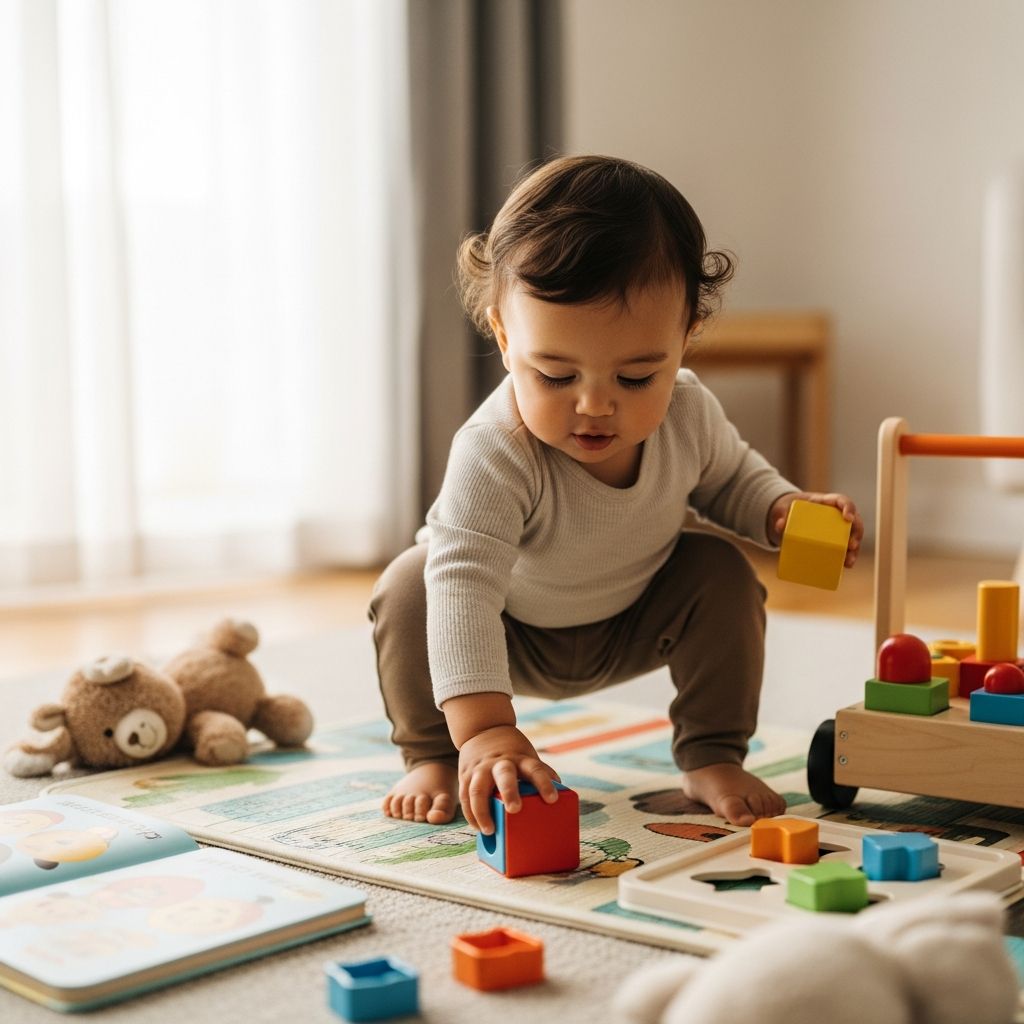
Drawing and scribbling represent important milestones in fine motor control. Providing crayons and paper allows your child to practice grip strength and hand control through creative expression. Stacking blocks—typically three or more—demonstrates improved finger dexterity and planning abilities. Puzzle play, particularly simple puzzles with larger pieces, supports the development of spatial reasoning alongside fine motor skills.
Language Expansion and Communication Progress
Language development varies considerably among 18-month-olds, yet most demonstrate clear advances in vocabulary and comprehension. Rather than viewing language development as a single measure, it’s helpful to consider both expressive language (words a child uses) and receptive language (words a child understands).
Vocabulary and Word Usage
By 18 months, many children can produce between three and eight recognizable words beyond “mama” and “dada,” though some may have larger vocabularies while others use fewer words. These words often represent important people, favorite objects, or meaningful actions in a child’s daily life. Importantly, children understand significantly more words than they can produce—receptive vocabulary at this age may encompass 100 to 200 words.
Two-word combinations begin emerging for many toddlers, such as “more cookie” or “want book,” representing a significant leap in communicative complexity. These short phrases demonstrate developing grammar awareness and the ability to convey more nuanced requests and observations. Some children may still rely more heavily on gestures than words to communicate their needs and desires, which remains within the normal range of development.
Understanding and Following Directions
Receptive language skills strengthen considerably during this period. Your child can likely follow one-step directions presented without accompanying gestures or demonstrations, such as “Give me the ball” or “Get your shoes.” Understanding simple negation—grasping the meaning of “no”—becomes evident, and your child can indicate agreement or disagreement either through words or head shaking. This comprehension of language rules and social conventions marks important cognitive development.
Cognitive Development and Learning Abilities
Thinking skills flourish at 18 months as children develop more sophisticated ways of understanding how their world operates. Cognitive development during this period involves learning about object functions, engaging in imaginative play, and understanding simple cause-and-effect relationships.
Play and Problem-Solving
Play becomes increasingly purposeful rather than random. Your child can push a toy car with understanding of its function, demonstrating knowledge that objects have intended uses. This functional understanding extends to household items—your toddler knows that a comb is for hair, a toothbrush for teeth, and a spoon for eating.
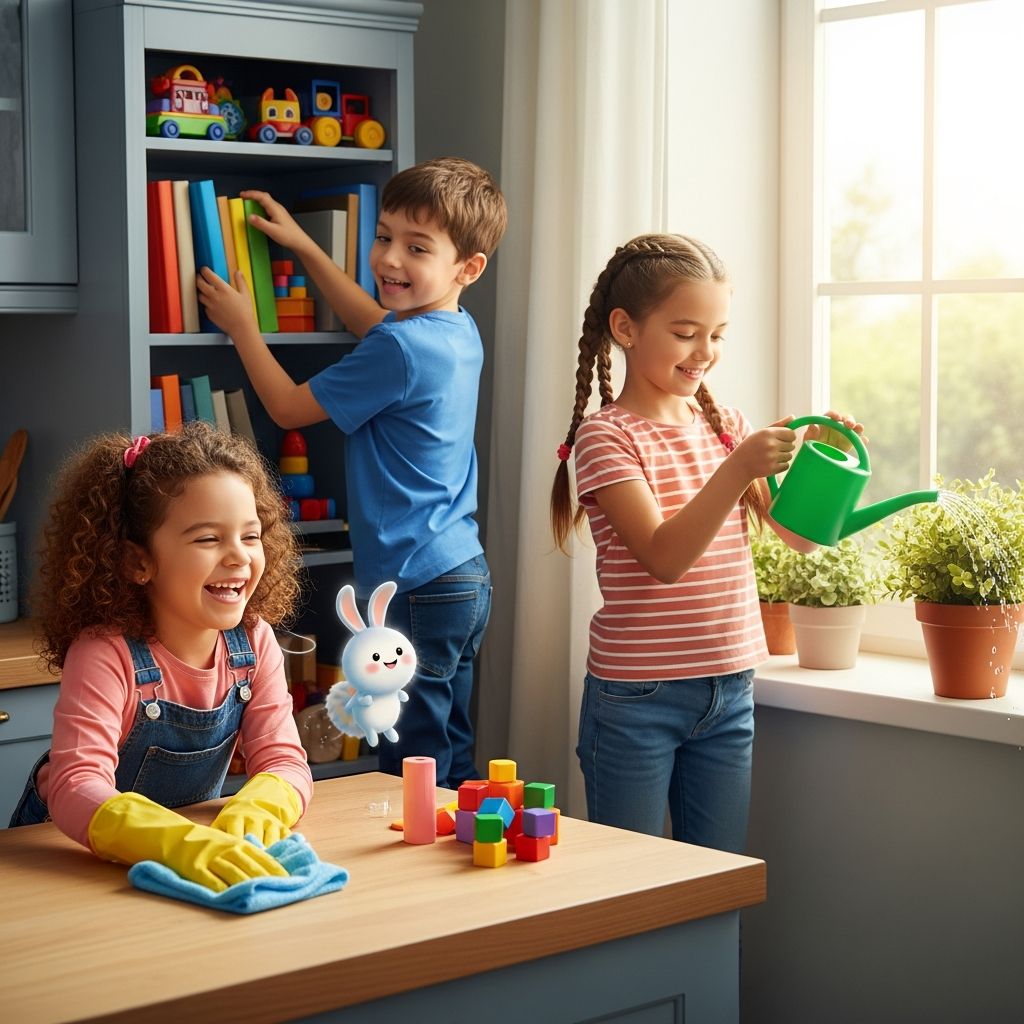
Imitation of adult activities represents a hallmark of cognitive development at this age. Children observe caregivers performing household tasks like sweeping and attempt to replicate these actions with age-appropriate tools. This imitative play supports learning about daily routines while strengthening bonds with caregivers through shared activities. Hide-and-find games become engaging as children develop object permanence and memory skills.
Sorting and Classification
Emerging abilities to organize objects by categories appear during this period. Matching and sorting colors—placing all red items together and blue items separately—challenges children’s observational and categorization skills. These simple sorting activities lay groundwork for more complex mathematical thinking that develops in subsequent years.
Social Bonding and Emotional Expression
Your 18-month-old’s emotional world becomes increasingly complex as they experience a wider range of feelings and begin expressing them in varied ways. Social interactions with caregivers deepen while interest in peer relationships also emerges.
Attachment and Independence
Children this age typically show comfort with moving away from caregivers while maintaining what researchers call “secure base” behavior—checking back frequently to confirm that a trusted adult remains nearby. This balance between exploration and reassurance represents healthy attachment security. Your child may show affection toward dolls or stuffed animals, demonstrating emerging capacity for nurturing behaviors and emotional projection onto objects.
Emotional Regulation Challenges
Tantrums may emerge or intensify at this developmental stage, particularly when frustration arises from difficulty communicating complex thoughts or executing intended physical actions. These emotional outbursts, while challenging for parents, reflect normal developmental processes as children experience the gap between their desires and their abilities. Limited emotional vocabulary and impulse control contribute to these episodes, which typically decrease as language skills expand and self-regulation abilities strengthen.
Social Awareness and Peer Interest
Your toddler shows increasing interest in other children, though parallel play (playing alongside rather than with peers) remains the norm. Pointing to share interesting observations with caregivers demonstrates developing awareness that others have perspectives worth considering. Interactive games like peek-a-boo continue delighting children while supporting understanding of social routines and turn-taking concepts.
Self-Care Skills and Independence
Emerging self-sufficiency appears in various daily routines as children gain physical capability and motivation to participate in their own care. These early independence efforts, though sometimes inefficient from an adult perspective, represent crucial confidence-building opportunities.
Children may assist with dressing by pushing arms through sleeves or lifting feet for pants, demonstrating understanding of body parts and clothing functions. Helping with handwashing by putting hands out for cleaning shows emerging hygiene awareness. Some children display toilet-training interest, though formal training typically occurs somewhat later for most toddlers.
Developmental Activities to Foster Growth
Intentional, playful engagement significantly supports development across all domains. The most effective activities feel natural and enjoyable rather than formal or structured, allowing children to learn through exploration and interaction with caregivers they trust.
Language-Building Activities
- Read picture books together regularly, pointing to images and naming objects, people, and animals while discussing simple stories
- Engage in singing and dancing, which combines language exposure with physical movement and emotional expression
- Narrate daily routines by describing actions, objects, and feelings throughout the day using rich vocabulary
- Ask simple questions about pictures and activities, pausing to allow your child time to respond with words or gestures
- Repeat and expand upon your child’s utterances to model correct pronunciation and grammar naturally
Physical Development Activities
- Take walks in varied environments where your child can observe different settings while practicing walking skills
- Visit parks or outdoor spaces offering climbing structures, slides, and open areas for running and exploring
- Engage in ball play by rolling or tossing balls back and forth, supporting coordination and social interaction
- Provide child-safe art materials like crayons, markers, and large paper for scribbling and creative expression
- Create obstacle courses using household items like cushions and blankets to challenge gross motor abilities safely
Cognitive and Sensory Activities
- Sort household items by color, size, or category using safe, age-appropriate objects
- Explore sensory experiences by smelling flowers or fruits while discussing scents and textures
- Engage in pretend play by mimicking household activities like sweeping, cooking, or caring for dolls
- Play with building materials such as blocks and Legos, supporting spatial awareness and fine motor practice
- Create simple puzzles or shape-sorting toys that encourage problem-solving and persistence
Age-Appropriate Expectations Summary
| Development Area | Typical 18-Month Abilities |
|---|---|
| Language | 3-8+ words, understands 100-200 words, follows one-step directions, attempts two-word phrases |
| Physical Skills | Walks independently, climbs furniture, uses spoon/cup, scribbles, kicks ball, stacks blocks |
| Cognitive | Understands object functions, imitates activities, plays with toys purposefully, hides/finds objects |
| Social-Emotional | Shows affection, maintains secure base with caregiver, interested in peers, may have tantrums |
| Self-Care | Assists with dressing, helps with handwashing, shows toilet training interest, feeds self partially |
Frequently Asked Questions About 18-Month Development
Q: My 18-month-old uses only a few words while my friend’s child speaks in sentences. Should I be concerned?
A: Language development shows wide variation at this age, and the range of normal is broader than many parents realize. If your child understands simple directions, communicates through gestures or sounds, and shows interest in interaction, development is likely progressing well. However, if you have specific concerns about hearing, comprehension, or complete lack of communication attempts, discussing these with your pediatrician provides valuable perspective and potential early intervention resources if needed.
Q: My toddler’s tantrums are intense and frequent. Is this typical?
A: Tantrums frequently emerge around 18 months as children experience frustration from the gap between their desires and their abilities to communicate or accomplish tasks. Staying calm, ensuring safety, and validating emotions while setting consistent boundaries helps children gradually develop better emotional regulation. If tantrums seem extreme or you’re concerned about safety, consulting your pediatrician can provide guidance tailored to your specific situation.
Q: How much supervision does my increasingly mobile 18-month-old need?
A: Constant close supervision remains essential at this age. As climbing and exploring abilities expand, home safety becomes increasingly important. Securing furniture to walls, removing climbing hazards, and maintaining watchful presence protects your child while allowing the exploration and risk-taking necessary for developing confidence and competence. Creating safe spaces where your child can explore somewhat independently while you remain visible and within reach balances safety with developmental needs.
Q: What’s the best way to encourage language development?
A: Regular, natural conversation integrated throughout daily routines proves more effective than structured lessons. Narrating activities, reading together frequently, singing, and responding enthusiastically to your child’s communication attempts all support language growth. Limiting screen time and prioritizing face-to-face interaction maximizes exposure to natural language patterns and responsive communication that supports optimal development.
Q: Should I be concerned if my child shows little interest in other children?
A: At 18 months, preference for parallel play over interactive play is developmentally typical. Children are still learning to recognize and respond to peers. Providing regular opportunities for safe peer interaction through parent-led groups or playgroups supports emerging social skills without pressure. Interest in and ability to interact with peers typically increases substantially between ages two and three.
Supporting Your Child’s Unique Development
Every child develops according to their own timeline, influenced by genetics, temperament, experiences, and environmental factors. While awareness of typical milestones helps parents recognize normal progress, it’s equally important to avoid comparing your child’s development to others or to arbitrary standards. Some children excel in specific areas while progressing more slowly in others, and these individual profiles often normalize over time.
Creating an environment rich with opportunities for play, exploration, conversation, and safe risk-taking provides the foundation for healthy development. Your responsive, engaged presence as a caregiver offers the security and support that allows children to confidently explore their expanding capabilities. Regular check-ups with your pediatrician provide professional perspective on your child’s individual development and opportunities to address any specific concerns with evidence-based guidance.
References
- Your 18-Month-Old: Understanding Normal Development and Signs of Concern — Nicklaus Children’s Hospital. 2024-03-20. https://www.youtube.com/watch?v=HLw1pELRGVQ
- Milestones by 18 Months | Learn the Signs. Act Early. — Centers for Disease Control and Prevention. Accessed 2026-01-17. https://www.cdc.gov/act-early/milestones/18-months.html
- Developmental Milestones: 18 Months — Children’s Hospital of Philadelphia. Accessed 2026-01-17. https://www.chop.edu/primary-care/developmental-milestones
- Developmental Milestones: 18 to 24 Months — Nationwide Children’s Hospital. Accessed 2026-01-17. https://www.nationwidechildrens.org/family-resources-education/health-wellness-and-safety-resources/helping-hands/developmental-milestones-18-to-24-months
- Developmental Milestones: 18 Months (1.5 Years) for Parents — KidsHealth/Advocate. Accessed 2026-01-17. https://kidshealth.org/Advocate/en/parents/development-18mos.html
- Toddler Milestones – Safety — Cleveland Clinic. Accessed 2026-01-17. https://my.clevelandclinic.org/health/articles/22625-toddler-developmental-milestones–safety