The 18-month mark represents a fascinating transition period in your child’s development. Your toddler has evolved from an infant into an active explorer who is beginning to demonstrate increasing independence, curiosity, and communication skills. Understanding what constitutes typical development during this phase helps parents recognize when their child is progressing normally and when additional support might be beneficial.
At 18 months, children are typically walking with confidence, experimenting with language, and developing their own personalities. However, it’s important to recognize that development varies significantly from child to child, and progression isn’t always linear. This guide provides a comprehensive overview of the physical, cognitive, linguistic, and emotional developments you can expect during this important stage.
Physical Development and Gross Motor Abilities
The most visible changes at 18 months involve your toddler’s physical capabilities. Most children this age have mastered independent walking and are now exploring more advanced movement skills that demonstrate improved coordination and balance.
Key gross motor milestones during this period include:
- Walking steadily without support or assistance from caregivers
- Climbing onto furniture such as chairs and couches independently
- Navigating stairs with rail support, demonstrating improved safety awareness
- Kicking a ball forward with emerging coordination
- Beginning to run with increasing confidence, though movements may still appear somewhat uncoordinated
- Throwing small objects, developing arm strength and directional control
These gross motor achievements represent significant neurological development. As your toddler becomes more mobile, their world expands considerably. They can now explore their environment more thoroughly, reach items previously inaccessible, and engage in more complex play activities that require physical coordination.
Fine Motor Skills and Hand Coordination
While gross motor skills capture attention through active movement, fine motor development—involving smaller muscle groups and hand coordination—progresses simultaneously. Fine motor skills are essential for self-care activities, learning, and creative expression.
Expect your 18-month-old to demonstrate these fine motor abilities:
- Scribbling intentionally with crayons on paper
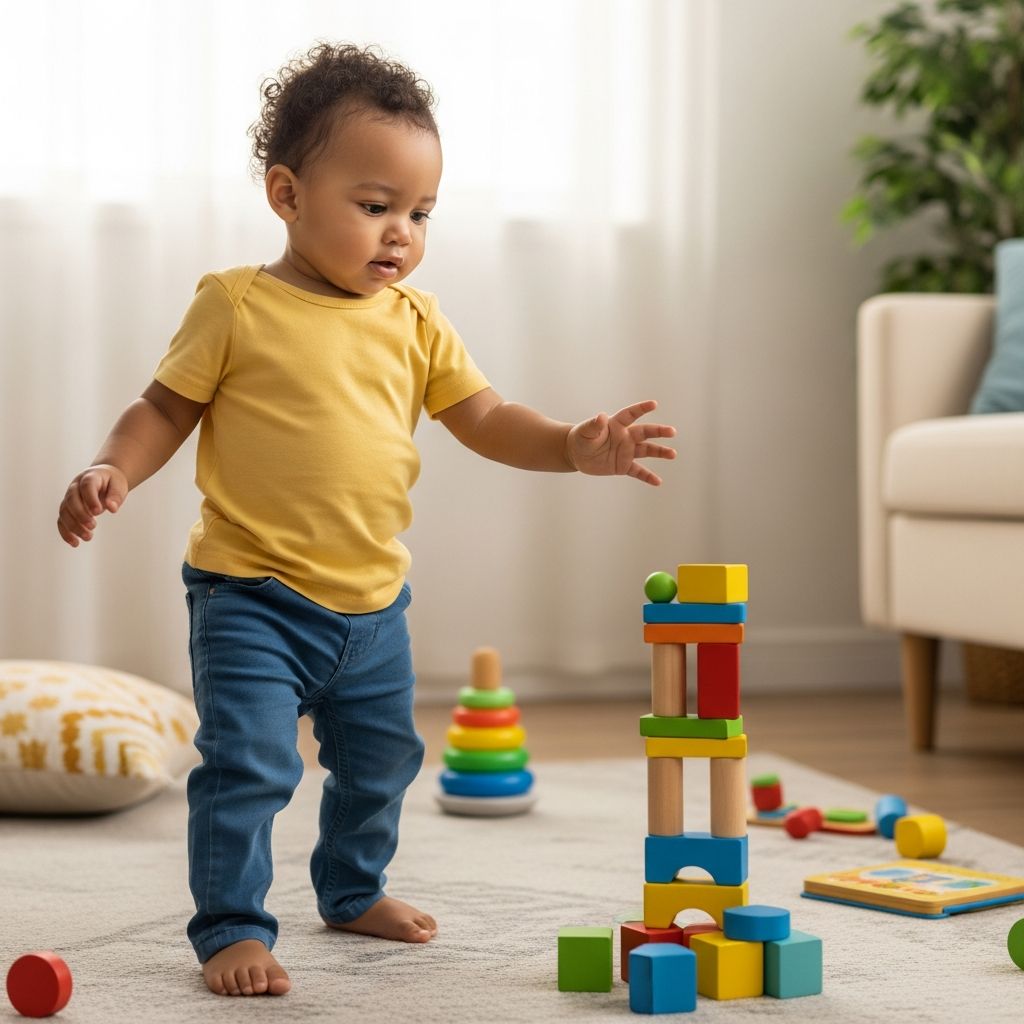
- Stacking multiple blocks, typically more than three in a single structure
- Using a spoon or fork to self-feed, though spills remain frequent
- Drinking from an open cup without a lid, accepting occasional spills as part of learning
- Beginning to manipulate lids and containers, taking items apart and putting them together
- Completing simple puzzles with larger pieces
These fine motor accomplishments reflect developing neural pathways connecting the brain to small muscle groups. Encouraging activities like drawing, block play, and self-feeding helps strengthen these skills while building confidence in your toddler’s ability to interact with their environment independently.
Language Development and Communication
Language development during the toddler years occurs at varying rates, and parents often have the most questions about their child’s speech and communication abilities. At 18 months, there is considerable variation in what constitutes typical language development, and this diversity remains completely normal.
Common language milestones at this age include:
- Speaking 8 or more distinct words beyond “mama” and “dada”
- Understanding 100 to 200 words, even if speaking fewer words
- Beginning to combine two words into simple phrases like “more milk” or “daddy up”
- Following single-step directions without your demonstration, such as “get your shoes”
- Pointing to familiar people, objects, and body parts when named
- Attempting to name common objects in their daily environment
- Indicating yes and no through words or head shaking
- Pointing to pictures in books when asked
Language comprehension typically exceeds spoken language production at this age. Your toddler understands far more than they can express, which is completely developmentally appropriate. This receptive language foundation supports future expressive language development.
Cognitive Development and Learning Capacity
Cognitive development involves how your child thinks, learns, solves problems, and understands their world. At 18 months, toddlers are developing symbolic thinking—the ability to understand that objects represent something else—which opens new pathways for learning and imagination.
Cognitive milestones at this stage typically include:
- Playing pretend games, such as pretending to eat or sleep
- Understanding the function of common household objects like cups, spoons, and toothbrushes
- Copying actions they observe you performing, like sweeping or wiping surfaces
- Playing with toys in purposeful ways, such as pushing a toy vehicle
- Beginning to match and sort by color
- Engaging with books by looking at pages and pointing at pictures
- Hiding and finding objects in games
- Demonstrating curiosity through exploration and investigation
These cognitive achievements reflect developing memory, attention span, and problem-solving abilities. Providing opportunities for exploration, imaginative play, and learning through everyday interactions supports continued cognitive growth.
Social and Emotional Development
Social-emotional development during the toddler years involves learning about themselves, recognizing emotions, and relating to others. At 18 months, children are balancing a growing desire for independence with continued reliance on caregivers for security and comfort.
Key social-emotional milestones include:
- Moving away from caregivers while looking back frequently to ensure they remain nearby
- Pointing to show caregivers things they find interesting or exciting
- Showing affection toward dolls, stuffed animals, or favorite people
- Demonstrating interest in other children, though interactive play remains limited
- Expressing a widening range of emotions, including frustration and excitement
- Beginning to display behaviors of temper tantrums when frustrated with communication limitations
- Imitating adult behaviors and activities they observe regularly
- Putting hands out for assistance with tasks like handwashing
- Participating in simple interactive games like peek-a-boo
Emotional regulation remains developing at this stage. Tantrums are a normal expression of frustration, particularly when toddlers struggle to communicate their needs and wants. Consistent, responsive caregiving helps children learn to manage emotions over time.
Eating, Nutrition, and Self-Care
As toddlers approach and pass 18 months, their eating patterns and nutritional needs evolve. Your child is likely showing more interest in self-feeding and participating in family meals, though parental involvement remains essential for nutrition and safety.
Typical feeding developments at this age include:
- Appetite fluctuations that may seem unpredictable from day to day
- Steady weight gain and growth at a slower pace than during infancy
- Emerging teeth, including first molars, facilitating improved chewing ability
- Growing independence with spoon and cup use, accepting occasional spills
- Interest in participating in meals with family members
- Beginning self-dressing with assistance, such as pushing arms through sleeves
- Possible emerging interest in toilet learning, though formal training typically begins later
At this age, toddlers benefit from exposure to varied textures and flavors. Offering age-appropriate foods, allowing messy self-feeding practice, and modeling healthy eating behaviors supports both nutritional intake and independence development.
Supporting Your Toddler’s Growth Through Activities
Parents play a crucial role in fostering continued development. Intentional engagement through play, reading, and conversation provides essential stimulation for growth across all developmental domains.
Evidence-based strategies for supporting 18-month development include:
- Reading books together daily, allowing your child to turn pages and point at pictures
- Narrating daily activities using descriptive language to build vocabulary
- Singing songs and dancing together to develop rhythm and coordination
- Playing color and shape sorting games to reinforce cognitive concepts
- Building with blocks and construction toys to develop fine motor skills and spatial reasoning
- Rolling or tossing balls back and forth to encourage gross motor practice and social interaction
- Taking nature walks and discussing observations to stimulate curiosity and language
- Providing sensory experiences like touching different textures and smelling flowers
- Allowing supervised exploration to build confidence and problem-solving abilities
- Creating a safe environment that permits climbing, running, and active play
These activities integrate naturally into daily routines, requiring no special materials or significant time commitments. The key is consistent, responsive interaction that communicates to your toddler that their exploration, efforts, and discoveries are valued.
Understanding Individual Variations in Development
While developmental guidelines provide helpful frameworks, it’s essential to remember that children progress at different rates. Some 18-month-olds may be speaking in sentences while others are just beginning to say words—both can be completely typical. Similarly, physical development shows considerable variation based on genetics, opportunity for practice, and individual temperament.
Cultural practices also influence developmental progression. Babies raised in cultures that emphasize certain activities may reach some milestones earlier than others, but these differences don’t indicate superior development. What matters most is that your child shows consistent progress across developmental domains over time.
When to Seek Professional Guidance
While variation is normal, certain patterns warrant professional evaluation. Consult your pediatrician if you notice:
- No attempts to speak or understand simple words by 18 months
- Inability to walk by 18 months without support
- Significant regression in skills previously acquired
- Lack of interest in interaction with caregivers or other children
- Concerns about hearing or vision
- Persistent frustration with communication despite your efforts to understand
Early intervention services are available for children showing developmental delays and can provide valuable support during these critical years. Having concerns evaluated professionally provides peace of mind and ensures access to resources if needed.
Frequently Asked Questions
Q: Is it concerning if my 18-month-old isn’t speaking many words?
A: Language development varies considerably at this age. While some toddlers speak 30+ words, others may use only a few. If your child understands language, follows simple directions, and communicates needs through gestures and sounds, this typically falls within normal variation. Consult your pediatrician if you have concerns about comprehension.
Q: How can I manage tantrums that seem to escalate around 18 months?
A: Tantrums at this age often reflect frustration with communication limitations. Offer emotional validation, maintain safety, and help label emotions using simple language. Maintaining consistent routines and providing advance notice of transitions can reduce trigger events. Most tantrums decrease as language skills improve.
Q: Should I be concerned about my toddler climbing on furniture?
A: Climbing is a normal milestone reflecting developing motor skills and confidence. Rather than preventing climbing, ensure your environment is safe by securing furniture to walls, providing appropriate climbing structures, and supervising actively. This allows skill development while minimizing injury risk.
Q: How much physical activity does an 18-month-old need?
A: Toddlers benefit from multiple opportunities daily for active play, including outdoor time when possible. There’s no set “amount,” but children this age are naturally active explorers. Regular access to safe spaces for climbing, running, and playing supports healthy development.
Q: When should I begin formal potty training?
A: While some 18-month-olds show interest in the toilet, most children aren’t ready for formal training until 2-3 years old. Watch for signs of readiness including staying dry for extended periods, communicating bathroom needs, and expressing interest—not just parental timing.
Q: How important is reading to my toddler at this age?
A: Reading provides invaluable benefits for language development, cognitive growth, and bonding. Daily reading, even brief sessions, exposes your child to vocabulary, concepts, and narrative structure. Interactive reading where you discuss pictures and allow page-turning enhances engagement.
References
- Understanding Normal Development and Signs of 18-Month-Old Development — Nicklaus Children’s Hospital. 2024-03-20. https://www.youtube.com/watch?v=HLw1pELRGVQ
- Milestones by 18 Months | Learn the Signs. Act Early. — Centers for Disease Control and Prevention (CDC). 2024. https://www.cdc.gov/act-early/milestones/18-months.html
- Developmental Milestones: 18 Months — Children’s Hospital of Philadelphia. 2024. https://www.chop.edu/primary-care/developmental-milestones
- Developmental Milestones: 18 to 24 Months — Nationwide Children’s Hospital. 2024. https://www.nationwidechildrens.org/family-resources-education/health-wellness-and-safety-resources/helping-hands/developmental-milestones-18-to-24-months
- Developmental Milestones: 18 Months (1.5 Years) (for Parents) — KidsHealth/Advocate Aurora Health. 2024. https://kidshealth.org/Advocate/en/parents/development-18mos.html
- Toddler Developmental Milestones and Safety — Cleveland Clinic. 2024. https://my.clevelandclinic.org/health/articles/22625-toddler-developmental-milestones–safety
- Milestones for an 18-Month-Old Child — Kaiser Permanente. 2024. https://healthy.kaiserpermanente.org/health-wellness/health-encyclopedia/he.milestones-for-an-18-month-old-child.ue5756