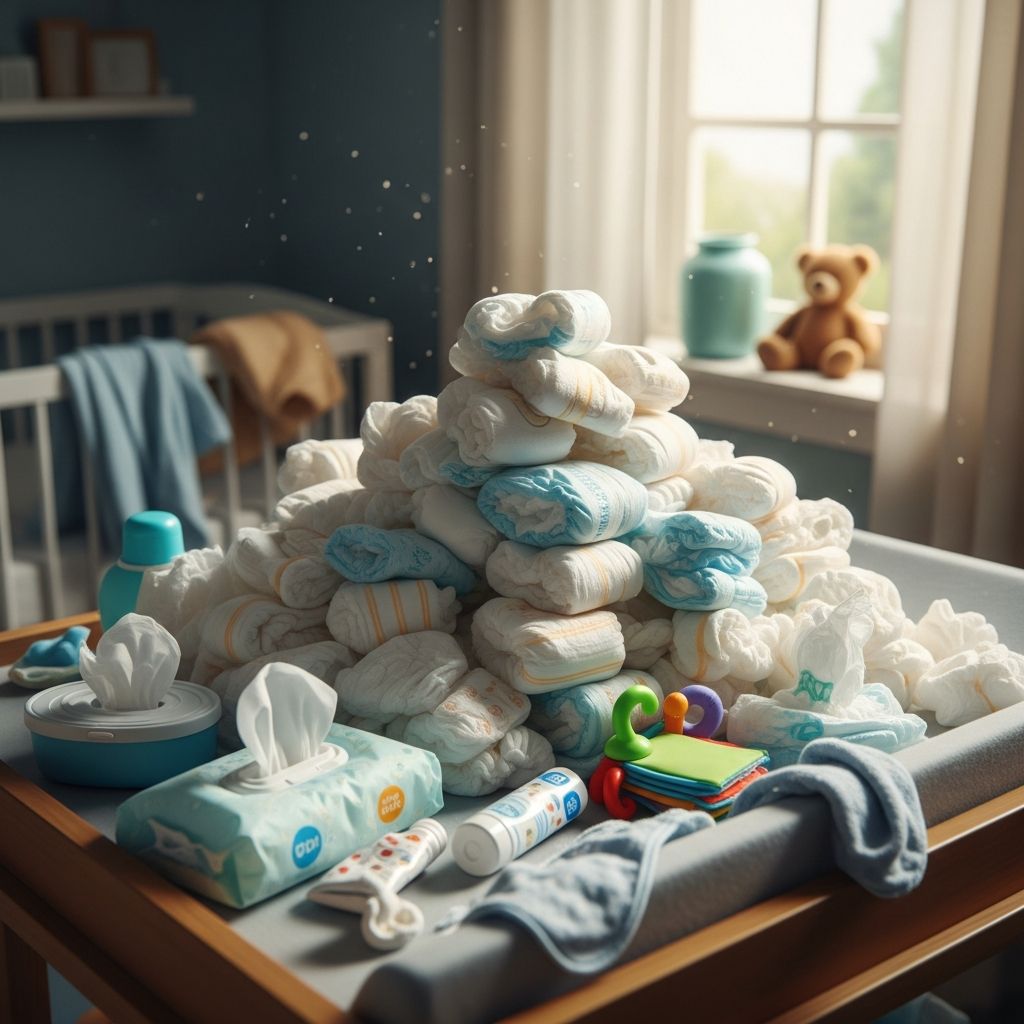
In the fast-paced world of social media, few trends capture the essence of everyday parenting struggles as vividly as the 17 Diapers phenomenon. Originating from a single TikTok video, this movement has evolved into a powerful symbol of validation for exhausted parents, particularly new mothers navigating the demands of newborns and older siblings. It underscores the relentless cycle of diaper changes, feedings, and minimal self-care that defines early parenthood.
Origins of a Viral Sensation
The story begins with Hannah, a nurse and mother of two, who posted a candid video on October 5, 2024. Fresh from giving birth to her second child just weeks earlier via C-section, she was solo parenting a three-week-old newborn and a toddler while her husband was away on a long-planned hunting trip. In the clip, Hannah embarks on a ‘diaper hunt’ around her home, discovering 17 used diapers scattered across living spaces—from the coffee table to behind the couch and on bedroom floors. What started as a lighthearted documentation of her chaotic day exploded into millions of views, igniting fierce debates.
Hannah later shared in interviews that she was surprised by the sheer number, admitting embarrassment over the home’s state and even joking about the lingering odors. Far from seeking pity, her intent was humor amid exhaustion. Yet, the video’s raw authenticity resonated, transforming a personal mess into a universal touchstone for parenting fatigue.
Backlash and the Rise of Mom-Shaming
Initial reactions were harsh. Online trolls flooded the comments with disgust, labeling the scene ‘gross’ and accusing Hannah of neglect. Phrases like ‘Ew, how can you live like that?’ dominated early responses, overlooking the context of her postpartum recovery and single-day parenting marathon. Critics fixated on the visible disarray, ignoring that the diapers evidenced frequent changes—proof of attentive care rather than abandonment.
This backlash exemplifies broader issues of mom-shaming, where societal expectations of flawless homemaking clash with real-life parenting. New mothers, still healing from birth, face hormonal shifts and sleep deprivation, yet online judgment amplifies their vulnerabilities. Hannah addressed this directly, noting that detractors lacked insight into her circumstances and that her husband’s absence was a one-day event in a supportive partnership.
A Wave of Solidarity and Shared Stories
Swiftly countering the negativity, a chorus of supportive voices emerged. Fellow parents reframed the 17 diapers as a badge of honor: ’17 dirty diapers means your baby is clean, fed, and loved.’ Comments poured in from moms recounting their own exhaustion—leaving diapers mid-change due to fatigue or prioritizing child needs over housework. One user quipped, ‘If you’ve never been too tired to tidy a diaper, consider yourself lucky.’
The trend snowballed as users created follow-up videos titled ‘My 17 Diapers Story.’ These spanned generations: a veteran mom recalled juggling a newborn, toddler, and kindergartener while crying herself to sleep; another described sinks overflowing with dishes and weeks without showers, yet always ensuring her child’s safety. This collective storytelling fostered a sense of community, with Hannah noting in a follow-up that the positivity outweighed 10,000 negative comments.
- Common themes in shared stories: Sleepless nights, piled laundry, and neglected self-care.
- Emphasis on survival mode: ‘We’re all just trying to get through the day.’
- Intergenerational empathy: Older parents validating younger ones’ struggles.
Postpartum Challenges Illuminated by the Trend
Beneath the viral surface lies a spotlight on postpartum realities. After birth, especially surgical deliveries like C-sections, physical recovery demands rest that young children rarely allow. Hormonal fluctuations can trigger postpartum depression, affecting up to 1 in 7 new mothers with symptoms like overwhelming anxiety and task paralysis. The 17 Diapers videos humanize this, showing that a messy home doesn’t equate to poor parenting—it’s often a sign of relentless caregiving.
According to the Centers for Disease Control and Prevention (CDC), new parents average less than 6 hours of sleep nightly in the first weeks, compounding fatigue. The American College of Obstetricians and Gynecologists (ACOG) highlights that self-care, including timely cleanups, often falls secondary to infant needs. This trend validates that survival trumps perfection.
| Postpartum Factor | Impact on Daily Life | Trend Connection |
|---|---|---|
| Sleep Deprivation | <6 hours/night | Explains scattered diapers from interrupted routines |
| Hormonal Shifts | Anxiety, overwhelm | Fuels vulnerability to online criticism |
| Physical Recovery | C-section healing | Limits energy for non-essential tasks like cleaning |
| Multiple Children | Toddler + newborn | Amplifies chaos, as in Hannah’s case |
Why This Trend Resonates in Modern Parenting
In an era of curated Instagram feeds, the 17 Diapers movement strips away facades, embracing #MotherhoodUnfiltered. It challenges the myth of the ‘supermom’ who effortlessly manages spotless homes and thriving kids. Instead, it celebrates incremental victories: each diaper changed amid exhaustion is a win.
Social media’s dual edge—amplifying judgment yet building tribes—shines here. Platforms like TikTok democratize parenting narratives, allowing marginalized voices (single moms, those with postpartum mood disorders) to find solidarity. Research from the Pew Research Center indicates that 81% of parents use social media for advice and support, making trends like this vital for emotional relief.
Moreover, it prompts reflection on partner dynamics. Hannah defended her husband’s planned absence, emphasizing pre-arranged responsibilities. This sparks discussions on equitable parenting loads, urging families to plan for such scenarios.
Practical Takeaways for New Parents
Beyond virality, the trend offers actionable insights:
- Prioritize ruthlessly: Babies first—housework can wait.
- Build a support network: Enlist partners, family, or apps for meal trains.
- Combat isolation: Share stories online or in mom groups to normalize chaos.
- Monitor mental health: Seek help for persistent overwhelm; ACOG recommends screening at postpartum checkups.
- Embrace imperfection: A diaper pile signals love, not failure.
Parents can track diaper counts as a progress metric: for newborns, 6-10 wet and 3-4 soiled daily signal health, per the American Academy of Pediatrics (AAP).
Broader Cultural Shifts Inspired by 17 Diapers
This phenomenon signals a pivot toward authentic parenting discourse. Media outlets from New York Family to Times of India covered it, amplifying calls to end shaming. It aligns with growing awareness of parental mental health, as evidenced by WHO reports on maternal well-being’s global impact.
Brands and influencers have latched on, creating supportive content, while policymakers note its role in destigmatizing help-seeking. Ultimately, 17 Diapers reminds us: parenting’s messiest moments often house its deepest joys.
Frequently Asked Questions
What started the 17 Diapers trend?
A TikTok video by nurse-mom Hannah showing 17 used diapers from one day of solo parenting her newborn and toddler.
Is leaving diapers around neglectful?
No—it’s often exhaustion from frequent changes. Babies were cared for, as the count proves attentive parenting.
How does it relate to postpartum depression?
It highlights overwhelm and fatigue that can exacerbate symptoms, normalizing the need for grace during recovery.
Can dads relate to 17 Diapers stories?
Absolutely—many share similar chaos, promoting shared parenting narratives.
What’s the average diaper use for newborns?
6-10 wet and 3-4 soiled daily, varying by age and feeding.
References
- 17 Diapers: TikTok’s Latest Trend is Surprisingly Striking a Chord with Moms — New York Family. 2024-10-01. https://www.newyorkfamily.com/17-diapers-tiktok/
- All about ’17 Diapers Mom’ and why people are annoyed with the viral video — Times of India. 2024-10-07. https://timesofindia.indiatimes.com/etimes/trending/all-about-17-diapers-mom-and-why-people-are-annoyed-with-the-viral-video/articleshow/114327628.cms
- Maternal Sleep and Infant Sleep — Centers for Disease Control and Prevention (CDC). 2024-05-15. https://www.cdc.gov/sleep/data-research/facts-stats/maternal-infant-sleep.html
- Optimizing Postpartum Care — American College of Obstetricians and Gynecologists (ACOG). 2023-11-01. https://www.acog.org/clinical/clinical-guidance/committee-opinion/articles/2018/05/optimizing-postpartum-care
- Parenting Children Today — Pew Research Center. 2023-01-24. https://www.pewresearch.org/social-trends/2023/01/24/parenting-children-today/
- Baby Poop Guide — American Academy of Pediatrics (AAP). 2024-08-12. https://www.healthychildren.org/English/ages-stages/baby/diapers-clothing/Pages/Baby-Poop-Guide.aspx
- Maternal Mental Health — World Health Organization (WHO). 2022-06-20. https://www.who.int/teams/mental-health-and-substance-use/promotion-prevention/maternal-mental-health