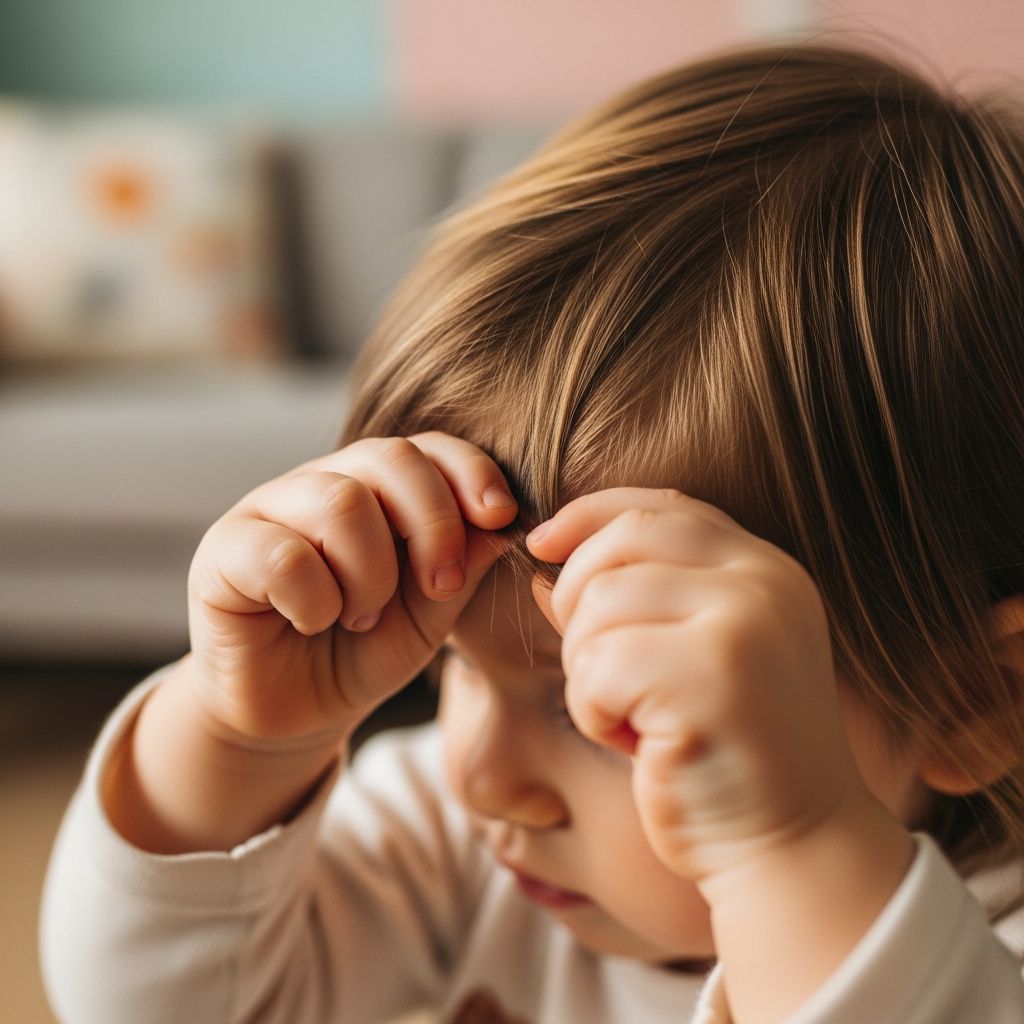
When a 16-month-old pulls hair, it can be shocking, painful, and embarrassing—especially when it happens to other children in public spaces. Yet this behavior is usually a normal part of development, not a sign that something is “wrong” with your child. With the right mix of calm limits, empathy, and realistic expectations, parents can reduce hair pulling and help toddlers learn safer ways to express themselves.
Why Toddlers Pull Hair at This Age
Around 16 months, children are intensely curious about how their actions affect the world and other people. Pulling hair can be an experiment, a way to seek connection, or a burst of emotion that the child cannot yet put into words.
- Cause and effect: Toddlers are fascinated by what happens when they push, throw, or pull. Hair pulling often starts as simple trial and error.
- Big feelings, few words: At this age, language is limited. Frustration, excitement, or jealousy may come out through the body instead of through sentences.
- Seeking sensory input: Hair is soft, springy, and visually interesting. Some children are drawn to touching and tugging it as a form of stimulation.
- Stress and change: Transitions like a new sibling, new caregiver, or daycare can increase tension, making physical impulses more frequent.
Seeing hair pulling as communication rather than defiance helps parents respond more effectively. The goal is not to “crack down” on a misbehaving child, but to guide an immature nervous system toward safer habits.
Normal Exploration vs. Concerning Patterns
Most hair pulling in toddlers is short-lived and situational, especially in crowded, noisy, or overstimulating environments. However, watching for a few key patterns can help you decide when simple parenting strategies are enough and when to seek further guidance.
| Pattern | What It Often Means | What Parents Can Do |
|---|---|---|
| Occasional tugging during play | Curiosity or clumsy social exploration; still learning boundaries. | Stay close, block gently, label the limit (“Hair stays on heads”) and model gentle touch. |
| Hair pulling when upset, tired, or overwhelmed | Expression of big feelings or sensory overload. | Reduce stimulation, offer comfort, keep limits firm, and help the child notice and name feelings over time. |
| Frequent, intense pulling of others’ hair in many settings | Stronger impulse control challenges, persistent stress, or a behavior that has become a habit. | Create a consistent response plan, increase supervision, and consider discussing patterns with a pediatric professional. |
| Pulling out own hair with bald patches | Possible stress coping mechanism or underlying condition that needs evaluation. | Document frequency and contact a healthcare provider for assessment. |
Staying Calm When Hair Is Pulled
The instinctive reaction to a hard tug on the scalp is to shout, yank the child away, or scold sharply. While understandable, big adult reactions can accidentally turn hair pulling into a high-drama event that the toddler wants to repeat, whether from anxiety or curiosity.
A calmer approach does not mean ignoring the behavior or pretending it does not hurt. It means responding in a way that protects everyone, sets clear limits, and still communicates to the child: “You are safe and loved, even when I stop you.”
Key principles for staying regulated
- Pause and breathe before speaking, even for two seconds.
- Use a low, steady tone instead of a loud or high-pitched one.
- Keep your words short and consistent: one simple phrase, repeated as needed.
- Focus on action—gently separating hands and hair—rather than long explanations.
Step-by-Step Response in the Moment
In the heat of the moment, parents need a simple script they can follow automatically. The following steps can be adapted to almost any hair-pulling situation, whether at home, in a playgroup, or on the playground.
1. Protect and separate
- Move in close and gently but firmly open your child’s hand to release the hair.
- If needed, hold your child’s hand for a few seconds to prevent another grab.
- Check that the person whose hair was pulled is physically okay.
2. State the limit briefly
- Use one clear phrase such as: “No pulling hair. Hair hurts.”
- Avoid lecturing or asking “Why did you do that?”; most toddlers cannot answer.
- Keep your face composed—firm, but not frightening.
3. Offer an acceptable alternative
- Guide your child’s hand to a gentle action: stroking an arm, patting a shoulder, or touching your own hair softly.
- Provide a replacement object like a small stuffed animal to squeeze or a textured toy to rub.
- Say what they can do: “Hands can touch gently” or “You may squeeze this toy.”
4. Support feelings that come up
- If your child cries or tantrums after you set the limit, stay nearby and calm.
- Offer brief empathy: “You’re upset. I’m here.”
- Remember that tears can be a healthy release, not a sign that you did something wrong.
Understanding the Feelings Behind the Behavior
Hair pulling can express many different inner states, even if they look the same from the outside. Over time, noticing patterns helps you respond to underlying needs rather than just the surface behavior.
- Excitement: Some toddlers pull hair when they are overjoyed and do not know how to contain their intensity.
- Frustration: Being told “no,” having a toy taken away, or waiting can lead to impulsive grabbing.
- Jealousy or competition: When another child gets attention, a toddler may pull hair to reestablish connection or control.
- Insecurity or fatigue: Overwhelmed children often show more aggressive or clingy behaviors.
You do not need to identify the exact emotion in the moment for your response to be effective. Consistent limits and warm presence gradually teach your child that feelings are allowed, but hurting others is not.
Preventing Hair Pulling: Setting Your Child Up for Success
Prevention is not about controlling every move your toddler makes. It is about adjusting the environment, your expectations, and routines to reduce the situations where hair pulling is most likely to happen.
Environment and routine adjustments
- Limit overwhelming situations: Shorten playdates, avoid crowded spaces at peak times, and build in quiet breaks.
- Protect tired times: Hair pulling often spikes before naps, at the end of the day, or when routines are disrupted.
- Offer sensory outlets: Provide safe items to squeeze, tug, or chew, such as soft balls, fabric tags, or chewable toys.
Proactive teaching through play
- Practice “gentle hands” on dolls, stuffed animals, or your own hair while you supervise.
- Turn it into a game: “Show me gentle touch” vs. “Show me silly waving hands.”
- Use simple pretend scenarios (“Baby is sad; we touch gently”) to rehearse kindness.
Handling Hair Pulling with Other Children
Many parents feel most distressed when their toddler pulls another child’s hair in public. Navigating the reactions of other adults while staying grounded and fair to your toddler can be challenging.
In the moment with other children
- Immediately separate the children and check on the one who was hurt.
- Offer a brief, sincere apology to the other parent without blaming your child: “I’m sorry, I see that hurt. I’m working with her on gentle hands.”
- Keep your attention mostly on safety and modeling, not on shame or punishment.
Deciding when to leave or take a break
- If hair pulling continues, calmly say, “It’s hard to be gentle right now. We’re going to take a break.”
- Step away to a quieter corner, your car, or home if needed. This is not “banishment” but a reset for a child who is overwhelmed.
- Later, reflect on whether the timing, location, or group size can be adjusted in the future.
Responding Without Punishment or Shame
Harsh discipline—yelling, threats, or punishment—may stop hair pulling temporarily, but often at the cost of increased fear or resentment. Toddlers learn best from limits that are firm yet anchored in connection.
What to avoid
- Calling your child mean, naughty, or bad.
- Forcing apologies when the child is too dysregulated to understand.
- Punishments unrelated to the behavior (for example, taking away a favorite toy hours later).
Healthy, respectful consequences
- Removing your child from the situation when safety cannot be maintained.
- Reducing access to hair within that moment (for instance, holding your child on your lap facing outward).
- Increasing supervision next time in similar situations until skills improve.
Tracking Patterns and Progress
Hair pulling does not usually disappear overnight, even with excellent parenting strategies. Keeping simple notes can make patterns more visible and reassure you that change is happening, even if slowly.
Sample behavior log structure
| Date & Time | Who Was Involved | What Was Happening | Possible Trigger | Parent Response | Child’s Reaction |
|---|---|---|---|---|---|
| Example | Friend at playgroup | Sharing a toy | Frustration, tired after nap | Separated, stated limit, offered toy | Cried briefly, then played again |
Looking back over a week or two often reveals that incidents cluster around tired times, transitions, or specific environments. These insights guide adjustments to routine and expectations, making success more likely for both you and your child.
When to Consider Professional Input
Parents are usually the first to sense when something feels off about a behavior pattern. Trust that instinct and reach out for support if hair pulling seems extreme or is part of a wider cluster of concerns.
- The child seems disconnected, rarely seeks comfort, or avoids touch.
- Hair pulling is frequent and intense despite consistent, calm responses over time.
- Your child pulls out their own hair, eyebrows, or eyelashes, or you notice bald areas.
- There are additional red flags, such as loss of developmental skills, very limited eye contact, or self-injurious behaviors.
Consulting with a pediatrician or child development specialist does not mean there is something “wrong” with your child or your parenting. It is simply a way to get more information, reassurance, and tailored guidance.
Frequently Asked Questions
Is my 16-month-old being “mean” when they pull hair?
No. At this age, toddlers lack the mature empathy and impulse control that older children and adults have. Hair pulling is a signal of immaturity and emotion, not cruelty.
Should I make my toddler apologize?
A forced apology may soothe adult discomfort but usually does not teach true empathy. Instead, model kindness yourself—comfort the hurt child and use simple phrases like “We help friends feel better.”
How long does this phase usually last?
There is no exact timeline, but many children show improvement over weeks or months when adults respond consistently and calmly. As language, self-control, and social understanding grow, hair pulling typically fades.
What if my child laughs when I correct them?
Laughter can be a sign of nervousness or confusion rather than disrespect. Stay steady, repeat the limit, and focus on your actions—blocking hands and redirecting—rather than on whether your child looks appropriately remorseful.
Will ignoring the behavior make it go away?
Ignoring is not appropriate when someone is getting hurt. Your child needs you to step in, stop the behavior, and offer a safer alternative while still providing emotional security.
Key Takeaways for Parents
- Hair pulling in a 16-month-old is usually a developmentally normal way of exploring or expressing big feelings.
- Calm, firm, and consistent responses are more effective than punishment or shaming.
- Prevention—through routines, environment changes, and proactive teaching—reduces opportunities for hair pulling.
- Your steady presence and boundaries help your child gradually replace hurtful impulses with kind, gentle actions.
Parenting a hair-pulling toddler can feel exhausting and lonely, but it is also an opportunity to practice the kind of leadership that builds trust. Each time you calmly protect, guide, and stay connected, you are shaping not only your child’s behavior but also their deep sense of safety in the world.