At age two, children are bursting with curiosity, eager to touch, taste, see, and hear everything around them. Sensory crafts provide the perfect outlet for this exploration, helping toddlers build essential skills like fine motor control, language development, and problem-solving while keeping playtime engaging and low-stress for parents. These activities use everyday items, require little preparation, and can be adapted to fit any schedule or space.
Why Sensory Crafts Matter for Toddlers
Sensory play isn’t just fun—it’s foundational for brain development. When toddlers manipulate textures, colors, and sounds, they strengthen neural connections that support everything from hand-eye coordination to emotional regulation. According to educational resources, activities involving tactile exploration enhance fine motor skills by practicing movements like pinching and pouring. Vocabulary also grows as parents narrate sensations, describing words like “squishy,” “crunchy,” or “smooth.” Best of all, these crafts calm overstimulated little ones and boost focus, making them ideal for rainy days or quick breaks.
With setups taking under 10 minutes, these crafts fit seamlessly into daily routines. They encourage independence, reduce screen time, and foster creativity without overwhelming mess. Let’s dive into a collection of straightforward ideas tailored for 2-year-olds.
Texture Treasure Hunts and Baskets
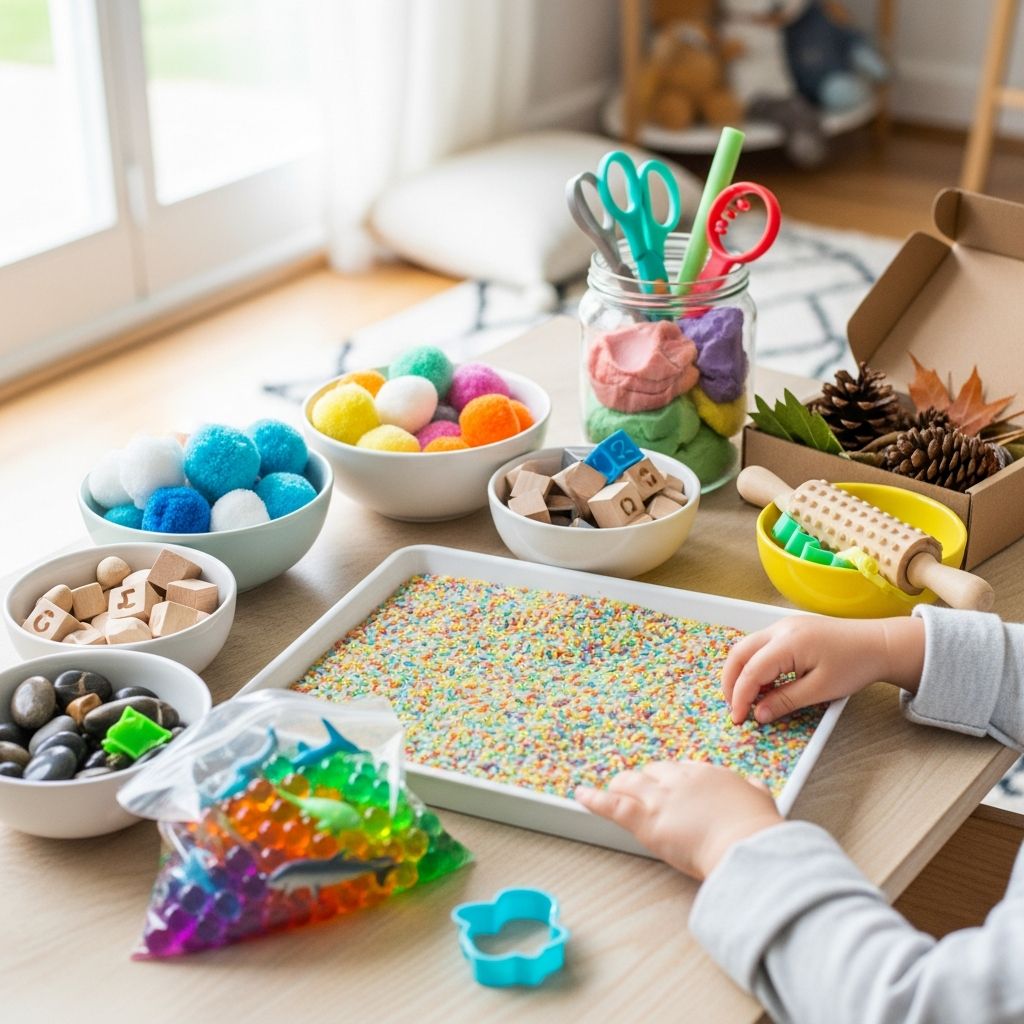
Start with a texture hunt basket to awaken tactile senses. Gather safe household items like soft scarves, bumpy sponges, smooth stones, and fuzzy pom-poms into a shallow basket. Your toddler can freely explore, naming sensations as they go. This low-mess activity builds descriptive language and sensory discrimination.
- Setup time: 5 minutes
- Materials: Fabric scraps, pinecones, rubber toys, empty toilet paper rolls
- Benefits: Enhances vocabulary (e.g., “rough” vs. “soft”) and hand strength
Extend the fun by hiding small treasures inside socks or mittens for a discovery twist. Supervise closely to ensure items are non-toxic and large enough to avoid choking hazards.
Colorful Edible Painting Sessions
Transform snack time into art with edible paints made from yogurt or pudding mixed with food coloring. Spread it on a high chair tray or butcher paper, and let your child finger-paint freely. The creamy texture invites squishing and swirling, while the safe ingredients mean tasting is no big deal.
| Color | Ingredient Mix | Sensory Focus |
|---|---|---|
| Red | Yogurt + beet juice | Cool, creamy slide |
| Green | Pudding + spinach puree | Thick, sticky grip |
| Yellow | Yogurt + turmeric | Smooth, vibrant spread |
This craft supports creative expression and introduces color theory playfully. Cleanup is simple with a wipe, and it doubles as a healthy snack.
Mini Discovery Sand Trays
Create a contained digging adventure using kinetic sand or flour in a baking tray. Bury small toys, beads, or animals for excavation play. The moldable texture keeps mess minimal while sparking imagination—like a tiny safari or treasure hunt.
- Fill tray with 2 inches of base material (flour, sand, or cereal crumbs).
- Add 5-10 hidden items.
- Provide spoons or scoops for digging.
Toddlers practice scooping motions that refine gross and fine motor skills. For variety, theme it around oceans with shells or farms with mini animals.
Swirling Sensory Bottles
These mesmerizing bottles are toddler magnets. Fill empty water bottles halfway with water, add glitter, sequins, or beads, then seal tightly with glue. Shake to watch colors and sparkles dance—a screen-free visual treat.
Pro tip: Use warm glue guns for a secure seal. Different fillers create unique effects: oil and water for slow lava lamps, or beads for rhythmic clinking. This calms fussy moments and teaches cause-and-effect.
Squishy Cloud Dough Creations
Mix 2 cups flour with 1/4 cup oil for instant cloud dough—soft, moldable, and scent-free. Add food coloring for rainbow versions. Kids knead, shape, and smash, developing pinch strength and bilateral coordination.
- No-cook recipe: Adjust oil for desired fluffiness.
- Play ideas: Roll snakes, flatten pies, or hide objects inside.
- Storage: Airtight bag for reuse.
Unlike playdough, it crumbles less and feels like clouds, perfect for sensory seekers.
Bubble and Foam Explorations
Whip up foam by blending dish soap and water, or use shaving cream on a tray. Add droppers for color mixing. Popping bubbles hones hand-eye skills, while the airy texture delights.
Outdoors, bubble wands amplify the fun—chase giant orbs for physical activity. Indoors, foam “paint” on windows creates glowing art when sunlight hits.
Sound and Rhythm Makers
DIY shakers from sealed film canisters or bottles filled with rice, pasta, or bells. Shake to compare sounds, fostering auditory discrimination vital for speech.
| Filler | Sound Produced | Skill Boost |
|---|---|---|
| Rice | Soft rustle | Quiet focus |
| Beans | Crisp rattle | Rhythm awareness |
| Bells | High jingle | Pitch recognition |
Pair with music for a mini band session, encouraging movement and joy.
Nature-Inspired Outdoor Touches
Bring the yard inside with leaf-stamping or rock sorting. Collect items on walks, then sort by texture in bins. This connects toddlers to nature, promoting eco-awareness.
- Stamp leaves in paint for prints.
- Sort rocks: smooth vs. rough.
- Listen to crunching dry grass.
Short nature walks double as listening adventures, tuning ears to birds or wind.
Quick Ice Melting Games
Freeze toys in ice trays overnight. Provide warm water sprays for “rescue” missions. The cold-to-warm transition thrills, teaching patience and tool use.
Benefits include temperature awareness and problem-solving as ice cracks under spoons.
Frequently Asked Questions (FAQs)
What age is best for sensory crafts?
Around 18-36 months, when toddlers crave hands-on exploration. Adapt for safety.
Are these crafts messy?
Most are contained; use trays and edibles to minimize cleanup.
How often should we do sensory play?
15-20 minutes daily boosts skills without overwhelm.
What if my child mouths everything?
Opt for edible or large-piece options; supervision is key.
Can these help with development delays?
They support motor and sensory growth; consult pros for concerns.
Enhancing Crafts for Maximum Learning
Narrate play: “Feel the bumpy rock!” to build words. Rotate activities weekly to sustain interest. Track progress in motor skills or attention. For groups, add turn-taking with timers.
These crafts turn ordinary moments into growth opportunities, strengthening bonds and sparking lifelong curiosity in your 2-year-old.
References
- 20 Sensory Activities for Toddlers That Are Actually Fun! — Primary Beginnings. 2023-05-15. https://www.primarybeginnings.com/blog/sensory-activities-for-toddlers
- Sensory Activities for Toddlers: 15 Easy Ideas to Try at Home — Pop Art Kids. 2024-02-10. https://www.popart.kids/sensory-activities-toddlers-home/cross-body-movement-child-development-art-3t9sz
- Explore 12 Sensory Activities for Toddlers to Boost Curiosity — Begin Learning. 2023-11-20. https://www.beginlearning.com/parent-resources/toddler-sensory-activities/
- 25 Sensational Sensory Activities for Toddlers — Rasmussen University. 2022-08-01. https://www.rasmussen.edu/degrees/education/blog/sensory-activities-for-toddlers/
- 7 Sensory Bins for Toddlers — The Artful Parent. 2023-06-12. https://artfulparent.com/7-sensory-play-ideas-for-toddlers/