Navigating Your Baby’s Fourth Month of Life
At 14 weeks, your infant is entering an exciting period of rapid growth and development. This phase marks significant changes in how your baby perceives the world, interacts with caregivers, and demonstrates new physical capabilities. Understanding what to expect during this developmental window helps parents recognize important milestones and provide appropriate support for their growing child.
Advances in Motor Development and Body Control
During the 14-week mark, babies typically show considerable improvements in muscular strength and coordination. One of the most notable developments is enhanced head control. When your infant is placed in a supported sitting position, they can usually maintain their head steady without excessive wobbling. Additionally, during tummy time, many babies at this age can lift their head and chest at approximately a 90-degree angle from the surface, using their arm muscles to support their upper body.
Hand coordination continues to progress as well. Your baby’s fingers are becoming more responsive to intentional commands. They can now deliberately open and close their hands, moving beyond the reflexive grasping that characterized earlier weeks. This emerging control allows them to swat at dangling objects, bat at toys, and begin to understand cause-and-effect relationships through their own movements.
Leg movements are also becoming more purposeful. While kicks were previously more reflexive, your baby now demonstrates increasing strength and control in their lower extremities. Extended leg movements and stretching become more coordinated, setting the foundation for future rolling and locomotion skills.
Visual Perception and Color Recognition
A remarkable transformation occurs in your baby’s visual world around 14 weeks. Unlike earlier weeks when colors appeared limited and muted, your infant now begins to perceive the environment in fuller color. The ability to distinguish subtle color variations develops during this period, though babies still show a preference for bold, primary hues such as red, blue, and yellow. These vibrant colors capture their attention more readily than pastels or muted tones.
Your baby’s tracking abilities also improve significantly. When you move across their visual field, your infant can now follow your movements with their eyes and head more smoothly. This visual tracking represents an important neurological development that reflects strengthening connections between the eyes and brain.
Additionally, your baby is beginning to distinguish between representations and reality. While a photograph of your face once held equal interest to your actual presence, your 14-week-old now shows noticeably stronger reactions to real people compared to images in books. They may smile more broadly, coo more enthusiastically, and display greater engagement when interacting with actual individuals rather than pictures.
Emerging Self-Awareness and Social Recognition
Self-awareness is beginning to develop during this period. Many 14-week-old babies show interest in mirrors, though they do not yet understand that the reflection is their own image. Instead, they find the reflection entertaining and fascinating, often smiling at what appears to be another infant looking back at them. This mirror play provides valuable sensory stimulation and entertainment.
Your baby’s social engagement has become increasingly selective and responsive. They show distinct preferences for familiar caregivers over strangers and demonstrate stronger reactions to real human interaction than to other stimuli. Vocalizations during these interactions become more sophisticated, including coos, gurgles, and early babbling sounds that mimic the speech patterns they hear.
Establishing Rhythms and Predictable Patterns
Around 14 weeks, a more consistent daily rhythm begins to emerge naturally. Your baby’s stomach capacity has increased to approximately the size of a plum, allowing for longer intervals between feedings. Sleep patterns become more organized, and feeding schedules typically follow a more predictable sequence. This increased predictability reflects maturation of your baby’s internal regulatory systems.
Establishing and maintaining consistent routines during this period offers multiple benefits. Predictable patterns help your baby anticipate upcoming events, reducing stress and uncertainty. This consistency provides a foundation of security that supports emotional development and helps minimize frustration during challenging transitions, such as the four-month sleep regression that many babies experience.
Nutrition and Feeding Patterns
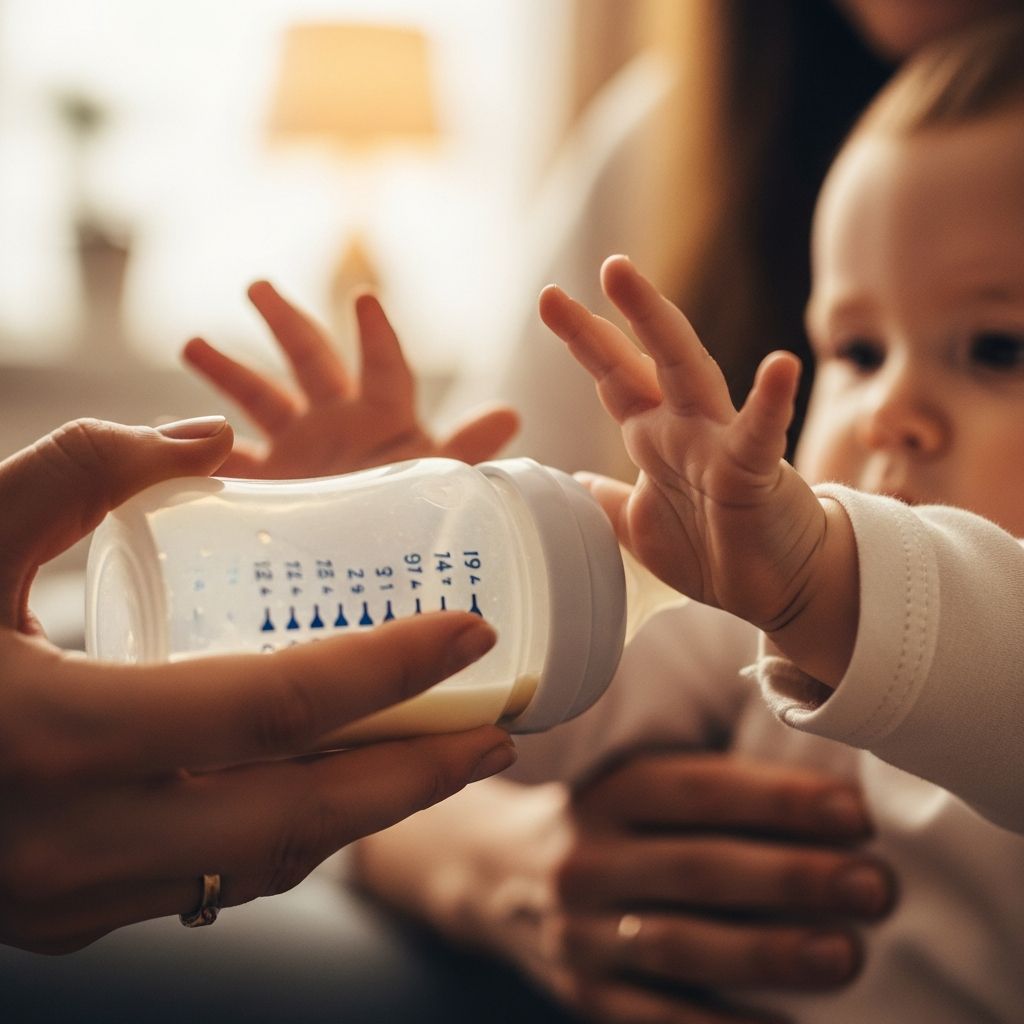
Feeding patterns at 14 weeks vary based on your chosen feeding method. Breastfed infants typically consume milk every three to four hours, while formula-fed babies generally take in approximately 6 to 7 ounces spread across five or six feedings throughout a 24-hour period. However, individual variation is significant—some babies may feed more frequently or consume larger quantities than these averages.
The most important indicators of adequate nutrition are consistent weight gain, adequate wet diapers (typically six or more per day), and your baby appearing satisfied after feedings. If your baby seems hungry despite feeding regularly or shows signs of inadequate weight gain, consulting with your pediatrician ensures proper assessment and guidance.
During this period, some families begin noticing signs of growth spurts. Babies experiencing a growth spurt may seem unusually hungry, feed more frequently throughout the day, appear fussier than usual, and display disrupted sleep patterns. These temporary changes typically resolve within a few days as your baby’s body adjusts to new nutritional demands.
Sleep Requirements and Nighttime Changes
Fourteen-week-old infants require between 14 and 15 hours of sleep within a 24-hour period. This sleep typically divides into approximately 9 to 10 hours of consolidated nighttime sleep and two to three daytime naps ranging from 30 minutes to two hours in duration. Individual babies show variation in their sleep architecture, so some may naturally sleep longer at night while others require shorter naps.
An important development at this age involves potential elimination of nighttime feedings. If your pediatrician confirms healthy growth and development, your baby may no longer require a middle-of-the-night feeding. This milestone varies considerably—some babies are physiologically ready while others continue needing nighttime nutrition. Your pediatrician’s assessment of your individual baby’s needs should guide decisions about nighttime feeding continuation.
The four-month sleep regression often occurs during this developmental window. This temporary disruption in sleep patterns reflects significant neurological changes in how your baby’s brain processes sleep and wake cycles. Understanding that this regression is developmental and temporary helps parents maintain perspective during what can be a challenging period.
Encouraging Development Through Play and Interaction
Play becomes increasingly important as a tool for supporting development. Rattles are particularly valuable toys at this stage, offering multiple developmental benefits. As your baby grasps a rattle, they strengthen hand muscles and improve fine motor coordination. When they discover that shaking the rattle produces sound, they begin understanding cause-and-effect relationships—a fundamental cognitive concept.
When offering a rattle to your baby, position it where they can see it clearly. During tummy time or when your baby is on their back, hold the rattle at an appropriate distance and allow them to reach for it. Some babies may swat at it before successfully grasping it—this is normal development. Once they hold it, the fascinating discovery that their own movements create sounds provides powerful motivation for continued practice.
Beyond rattles, tummy time play strengthens developing muscles and encourages head lifting, chest elevation, and eventual rolling. Talk, sing, and make faces at your baby during play sessions. These interactions stimulate language development, encourage social engagement, and provide the emotional connection that supports secure attachment.
Key Developmental Milestones Summary
| Developmental Area | 14-Week Milestones | Variations to Expect |
|---|---|---|
| Motor Skills | Improved head control in sitting; lifts head 90° on tummy; opens/closes hands intentionally | Some babies may show these skills slightly earlier or later; all variations within normal range |
| Visual Development | Perceives color more fully; tracks moving objects; distinguishes real people from pictures | Color preference intensity varies; tracking ability develops gradually |
| Social-Emotional | More responsive to caregivers; interested in mirror reflections; shows preference for familiar people | Temperament affects responsiveness level; some babies more reserved than others |
| Feeding | Breast: every 3-4 hours; Formula: 6-7 oz per feeding, 5-6 times daily | Individual babies vary significantly; growth and satisfaction are key indicators |
| Sleep | 14-15 hours total; 9-10 hours night; 2-3 naps of 30 min-2 hours | Some babies naturally sleep longer or shorter; four-month regression may disrupt patterns |
Supporting Healthy Development During This Period
Creating an environment that supports your baby’s developmental needs involves several practical approaches:
- Provide a visually stimulating environment with bright colors and safe objects for your baby to observe and eventually grasp
- Maintain consistent daily routines for feeding, sleeping, and play to help your baby feel secure and learn to anticipate events
- Engage in responsive interaction, answering your baby’s vocalizations with your own voice and facial expressions
- Ensure adequate tummy time during wakeful periods to strengthen developing muscles
- Offer safe, age-appropriate toys that your baby can grasp, mouth, and manipulate
- Monitor growth and development at regular pediatric check-ups to ensure your baby is progressing well
- Be flexible with routines when your baby shows signs of growth spurts or developmental leaps
Frequently Asked Questions
Is my 14-week-old baby on track developmentally?
Development varies significantly among babies. Key 14-week milestones include improved head control, intentional hand opening and closing, color perception, and social responsiveness. However, babies develop at different paces. Consult your pediatrician if you have concerns about specific areas of development.
When should my baby stop needing nighttime feedings?
This depends on individual development. If your pediatrician confirms healthy growth, your baby may be ready to eliminate nighttime feedings around 14 weeks. However, some babies continue needing nighttime nutrition longer. Your pediatrician can assess your baby’s readiness.
How can I help my baby develop better head control?
Regular supervised tummy time encourages neck and shoulder strengthening. Talk to your baby while they work on lifting their head, and position interesting objects where they’ll encourage head movement and tracking. Always supervise tummy time carefully.
What should I do if my baby seems less interested in eating suddenly?
Changes in feeding interest can result from growth spurts, teething discomfort, illness, or developmental changes in sleep patterns. If decreased feeding lasts more than a day or two, or if your baby shows signs of illness, contact your pediatrician.
Is the four-month sleep regression something to worry about?
The four-month sleep regression reflects normal neurological development and is temporary. It typically lasts one to two weeks. Maintaining consistent routines and nighttime practices helps your baby navigate this transition. It will resolve naturally.
What toys are best for my 14-week-old baby?
Rattles are excellent for this age, as are soft toys with different textures. Avoid small objects that present choking hazards. Choose toys that are easy for your baby to grasp and that provide visual, auditory, or tactile stimulation.
References
- Developmental Milestones — Centers for Disease Control and Prevention (CDC). 2024. https://www.cdc.gov/act-early/milestones/index.html
- Healthy Children: Ages & Stages – Baby Milestones — American Academy of Pediatrics. 2024. https://www.healthychildren.org/English/ages-stages/baby/pages/default.aspx
- The Development of the 14-Week-Old Infant — Vinmec International Hospital. 2023. https://www.vinmec.com/eng/blog/the-development-of-the-14-week-old-baby-after-birth-en
- 14-Week-Old Baby Development and Milestones — The Bump. 2024. https://www.thebump.com/baby-month-by-month/14-week-old-baby
- Baby Development at 2-3 Months — Raising Children Network. 2024. https://raisingchildren.net.au/newborns/development/development-tracker/2-3-months
- 3 Month Old Baby Milestones: Development, Growth, Speech, Language — Huckleberry Care. 2024. https://huckleberrycare.com/blog/milestones-for-3-month-olds
- Your 14-Week-Old Baby — Babylist. 2024. https://www.babylist.com/hello-baby/14-week-old-baby