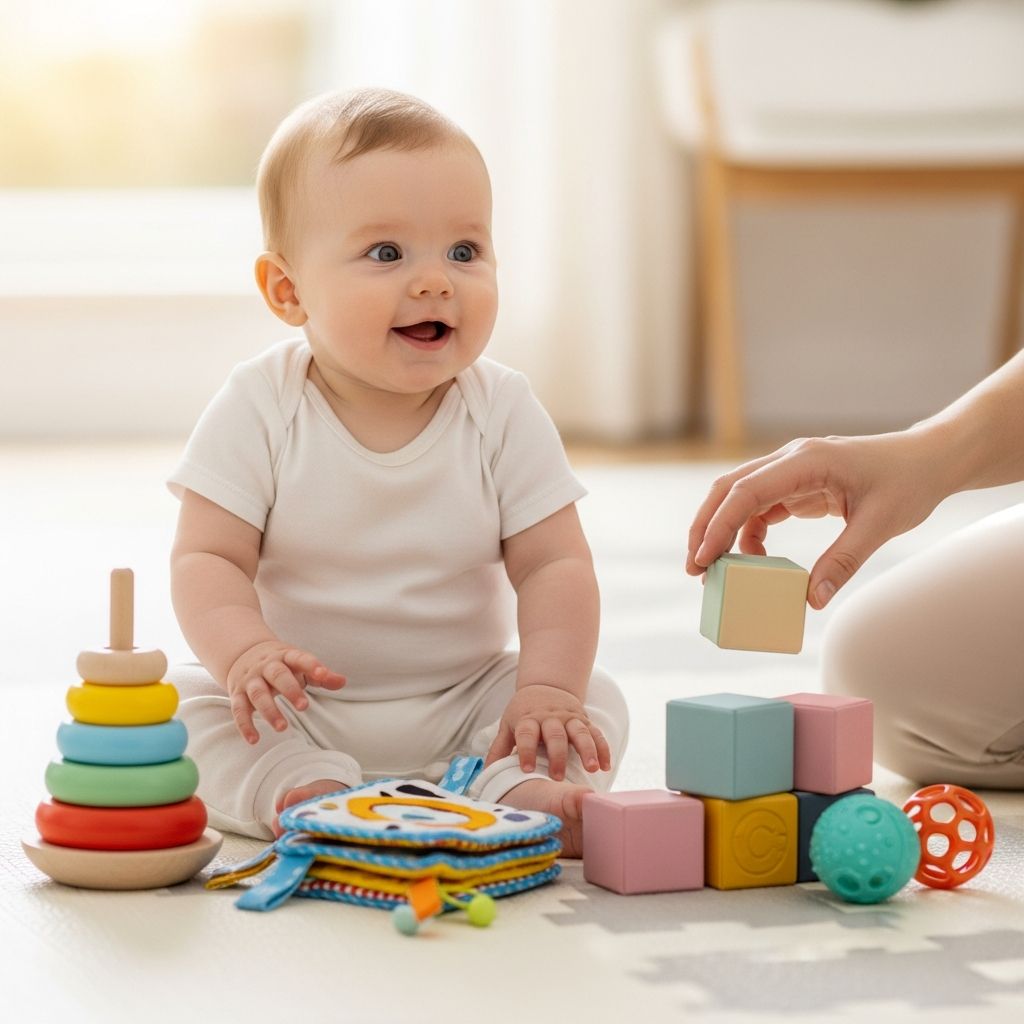
Babies between 6 and 12 months enter an exciting phase of rapid development, mastering skills like sitting independently, crawling, babbling, and understanding simple cause-and-effect relationships. Engaging in targeted play activities helps reinforce these milestones, fostering physical strength, hand-eye coordination, cognitive exploration, and social bonding. According to the CDC, by 6 months, most babies roll over, reach for toys, and engage in back-and-forth sounds, progressing to standing with support and walking with assistance by 12 months. This article outlines 12 original play ideas designed to match these stages, drawing from pediatric guidelines to ensure safe, effective stimulation.
Understanding Key Developmental Stages
From 6 to 9 months, infants typically roll in both directions, sit without support, transfer objects between hands, and begin scooting or crawling. The Mayo Clinic notes improved hand-eye coordination, such as using thumb and finger grasp (pincer grip), and teething, which increases mouthing of objects. By 9 to 12 months, babies pull to stand, cruise along furniture, and may take first steps with hand-holding, alongside pointing, banging toys, and imitating gestures. Nationwide Children’s Hospital emphasizes cognitive advances like playing peek-a-boo and understanding object permanence. Tailored activities build on these, promoting gross motor (large muscles), fine motor (small muscles), sensory, language, and social-emotional growth.
Play Activities for Motor Skill Development
Physical play strengthens muscles and balance. Focus on floor time to encourage safe movement.
- Tummy Time Treasure Hunt: Place colorful scarves or soft toys just out of reach during supervised tummy time. Babies push up on arms, roll, or scoot, building upper body strength. By 6 months, most roll tummy to back; extend to hands-and-knees position by 9 months.
- Standing Support Station: Secure a low, stable stool or box with pillows around it. Hold baby’s hands as they pull up and ‘cruise’ sideways. This prepares for independent standing, a 9-12 month milestone.
- Crawl-Through Tunnel Fun: Fashion a tunnel from large pillows or a lightweight sheet draped over chairs. Lure with a rattle inside to encourage belly crawling or hands-and-knees movement.
Sensory Exploration Games
Sensory play stimulates brain development through touch, sound, and sight. Cleveland Clinic highlights that by 6 months, babies mouth objects to explore textures.
- Texture Treasure Basket: Fill a shallow basket with safe items like wooden spoons, soft fabrics, crinkly paper, and rubber balls. Let baby grasp, bang, and mouth them, developing pincer grip and sensory discrimination.
- Music Maker Station: Provide pots, spoons, shakers made from rice-filled bottles (sealed tightly). Babies shake and bang, learning cause-and-effect as sounds emerge. Respond by mimicking to boost turn-taking.
- Bubble Chase: Blow gentle soap bubbles for baby to track visually, reach, and pop. This hones hand-eye coordination and tracking skills.
Cognitive and Problem-Solving Challenges
These activities teach persistence and logic. Children’s Minnesota notes putting objects in/out containers as a key fine motor milestone.
- Stack and Nest Surprise: Use nesting cups or boxes. Demonstrate hiding a toy inside, then let baby uncover it. Builds object permanence and container skills.
- Shape Sorter Basics: Start with large, soft shape toys. Guide baby to push shapes through slots, fostering problem-solving from 9 months.
- Cause-Effect Button Board: Offer toys with buttons that light up or play sounds. Babies press repeatedly, grasping ‘action leads to reaction’.
| Age Range | Key Milestone | Recommended Activity |
|---|---|---|
| 6 Months | Rolls over, reaches for toys | Tummy Time Treasure Hunt |
| 7-9 Months | Sits alone, pincer grasp | Texture Treasure Basket |
| 9-12 Months | Pulls to stand, points | Standing Support Station |
Language and Social Bonding Plays
Verbal interaction explodes here. CDC recommends daily reading and responding to babbles.
- Interactive Book Time: Read board books with textures or flaps. Point to pictures, name objects, and wait for babbles like ‘da-da’. Babies look at pictures by 6-12 months.
- Patty-Cake and Clap-Alongs: Sing rhymes while helping baby clap or pat hands. Imitate gestures to encourage copying.
- Mirror Mimic Game: Face baby in a mirror, make faces, wave, and name emotions. Builds recognition and social cues.
Safe Feeding and Self-Care Play
As babies self-feed, turn meals into learning. By 6 months, they close lips to signal ‘done’.
- Finger Food Fetch: Offer soft chunks on a tray. Encourage grasping with tongs-like motion for pincer practice.
Daily Routine Integration Tips
Weave play into bath, meals, and bedtime. Floor play daily aids crawling; hold hands for walking practice. Supervise closely to prevent falls or choking—avoid small parts under 3 years. Mayo Clinic advises no teething gels; use clean fingers or rings instead.
Frequently Asked Questions (FAQs)
What if my baby skips a milestone?
Development varies; track with CDC app. Consult pediatrician if no progress by expected ages, e.g., no sitting by 9 months.
How much playtime daily?
Aim for 30-60 minutes supervised tummy/floor time, plus integrated play. Quality over quantity.
Are toys necessary?
Household items work; prioritize safe, simple ones for exploration.
Safety first?
Always supervise; secure furniture, no walkers. CHOC stresses constant adult presence.
When to worry about delays?
If no babbling by 12 months or no crawling/standing attempts, seek early intervention.
These activities, grounded in expert milestones, empower parents to nurture well-rounded growth. Consistent, joyful play lays foundations for lifelong learning.
References
- Developmental Milestones: 6 to 12 Months — Nationwide Children’s Hospital. 2023. https://www.nationwidechildrens.org/family-resources-education/health-wellness-and-safety-resources/helping-hands/developmental-milestones-6-to-12-months
- Milestones by 6 Months | Learn the Signs. Act Early. — Centers for Disease Control and Prevention (CDC). 2024-10-01. https://www.cdc.gov/act-early/milestones/6-months.html
- Infant development: Milestones from 7 to 9 months — Mayo Clinic. 2023-08-15. https://www.mayoclinic.org/healthy-lifestyle/infant-and-toddler-health/in-depth/infant-development/art-20047086
- Baby Developmental Milestones By Month — Cleveland Clinic. 2024. https://my.clevelandclinic.org/health/articles/22063-baby-development-milestones-safety
- Developmental milestones 6 to 12 months — Children’s Minnesota. 2023. https://www.childrensmn.org/educationmaterials/childrensmn/article/15314/developmental-milestones-6-to-12-months/
- Child Development: Milestones, Ages and Stages — CHOC Children’s. 2024. https://choc.org/ages-stages/
- CDC’s Developmental Milestones | Learn the Signs. Act Early. — Centers for Disease Control and Prevention (CDC). 2024. https://www.cdc.gov/act-early/milestones/index.html