At 12 months, babies transform into active explorers, mastering movements, expressing emotions, and engaging with their surroundings. This stage marks a pivotal shift toward toddlerhood, filled with first steps, simple communications, and budding independence.
Physical Advancements and Motor Mastery
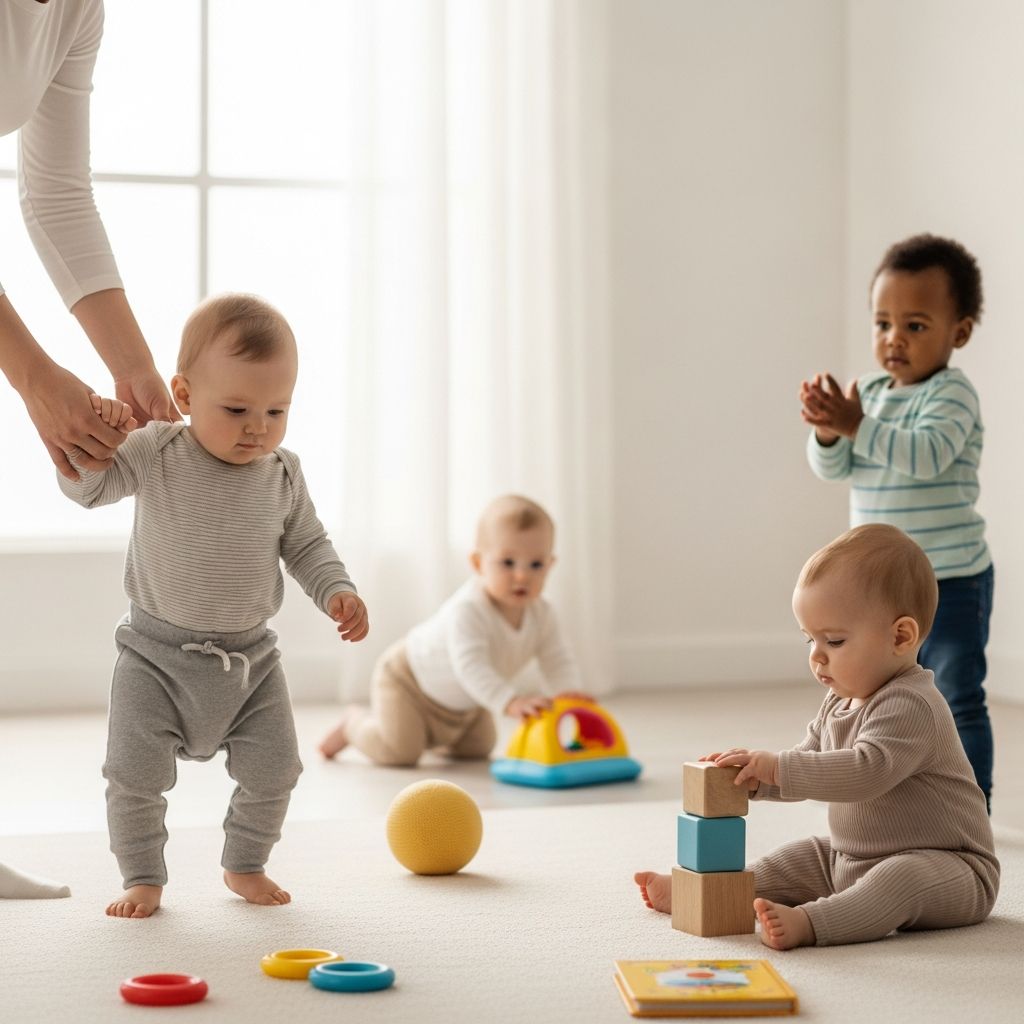
Babies around one year exhibit remarkable progress in gross and fine motor abilities. They often pull themselves up to a standing position using furniture or supportive surfaces, demonstrating strengthened leg and core muscles. Many begin ‘cruising,’ which involves walking sideways while holding onto stable objects like couches or tables, building confidence in balance.
Standing alone briefly or taking tentative independent steps becomes common, with some babies achieving steady walking by this age. Sitting down from a standing position without assistance further highlights improved control and coordination. Fine motor skills sharpen too; infants can pick up tiny items using the pincer grasp—thumb and forefinger pinch—and feed themselves small finger foods like cereal puffs or soft fruit pieces.
- Pulls to stand and cruises along furniture
- May stand unsupported or take first steps
- Sits independently after standing
- Grasps small objects precisely
- Throws or rolls a ball with intent
Climbing onto low furniture or stairs requires close supervision to prevent falls, as curiosity drives these adventurous attempts. Teething continues, with four to six teeth typically emerging, aiding in self-feeding. Sleep patterns stabilize to about 12 hours nightly plus two daytime naps, though night wakings for comfort may occur.
Cognitive Growth and Problem-Solving Skills
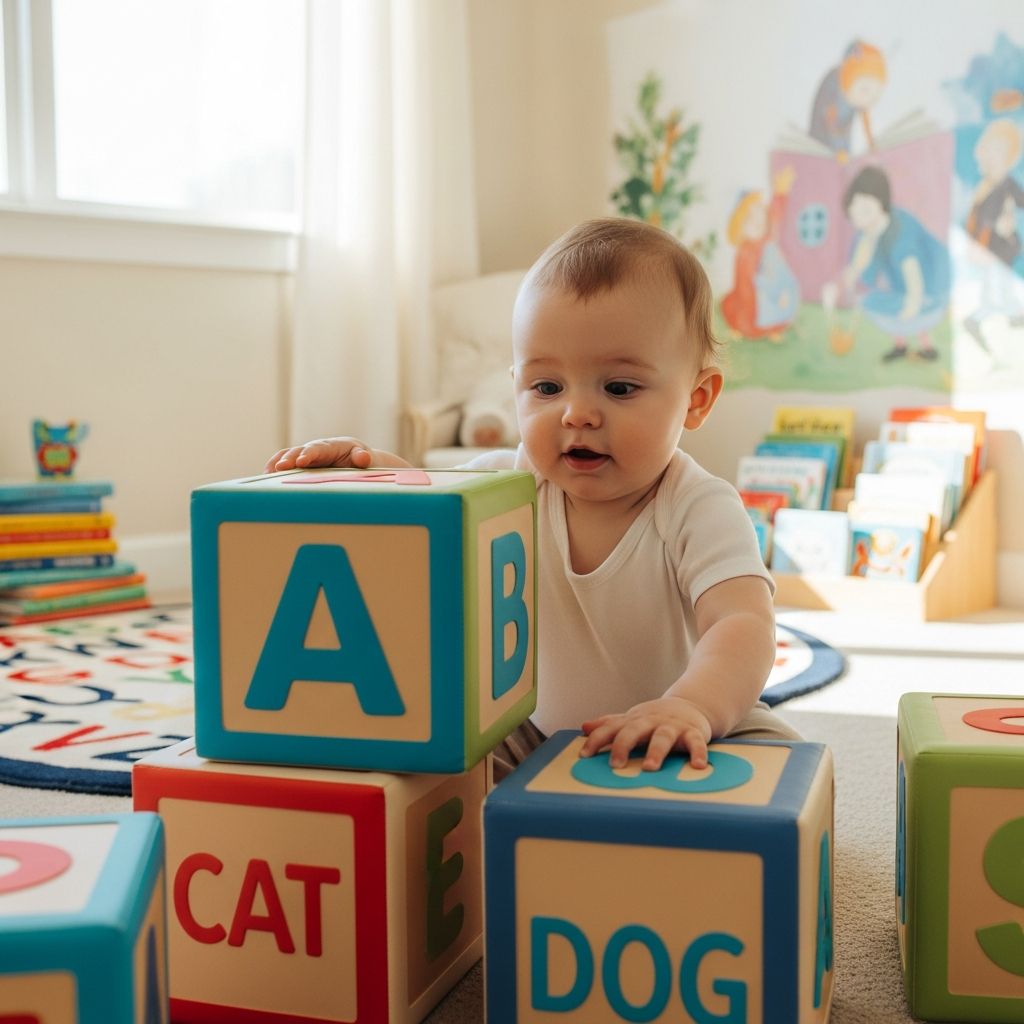
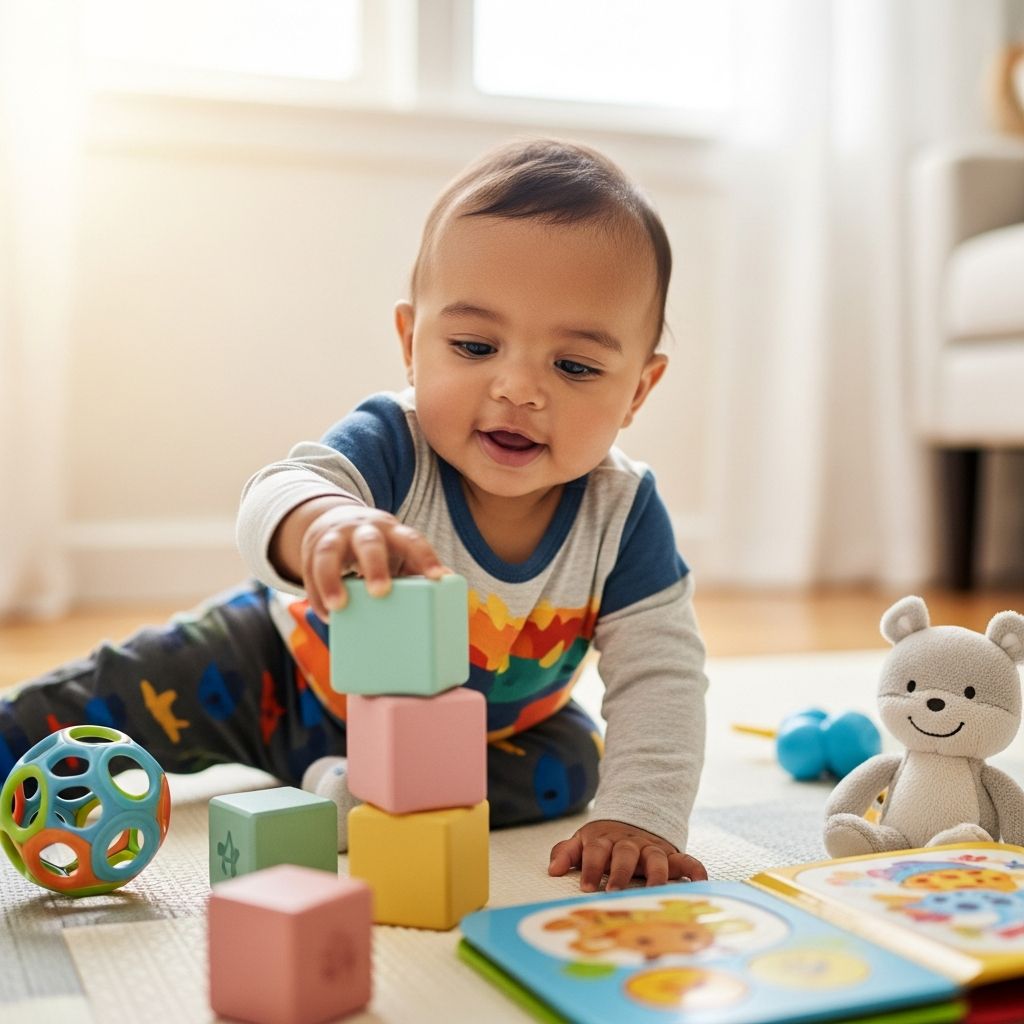
Cognitive development surges as babies understand object permanence—knowing hidden items still exist—and experiment with cause and effect. They bang objects together, stack blocks simply, or nest containers, fostering early problem-solving. Turning pages in board books, even multiple at once, shows interest in exploration over precision.
Imitating actions like scribbling with crayons or clapping hands reflects observational learning. Babies point to desired objects, follow basic directives such as ‘wave bye-bye,’ and recognize familiar items across a room, indicating sharpened memory and attention.
| Milestone | Description | Typical Signs |
|---|---|---|
| Exploration | Poking, shaking toys | Intentional manipulation |
| Book Interaction | Turning pages | Multiple pages at once |
| Imitation | Copying gestures | Clapping, scribbling |
These activities lay the foundation for logical thinking, as infants test boundaries and predict outcomes from repeated actions.
Language and Communication Breakthroughs
Verbal skills blossom with babbles evolving into meaningful sounds like ‘mama’ or ‘dada’ directed at specific people. Many say one to three words beyond these, imitating animal noises or simple terms they hear frequently. Non-verbal cues dominate: pointing to request items, waving, or shaking the head ‘no’.
Babies respond to their name, follow one-step instructions without gestures (e.g., ‘come here’), and engage in back-and-forth ‘conversations’ through gestures and sounds. This interactive phase strengthens social bonds and language comprehension, setting the stage for sentences in coming months.
Social-Emotional Bonds and Personality Emergence
One-year-olds display distinct personalities, showing preferences, joy, frustration, or shyness. They cling to primary caregivers in unfamiliar settings—stranger anxiety peaks—yet seek independence by playing briefly alone. Imitating daily routines, like ‘talking’ on a toy phone, reveals growing empathy and role-play.
- Clings during new encounters
- Shows affection via hugs or kisses
- Expresses clear emotions
- Checks for parental presence
- Imitates caregiver actions
These interactions build secure attachments, crucial for emotional regulation. Tantrums may emerge as desires outpace communication abilities.
Sensory Exploration and World Discovery
Senses refine, enabling richer environmental engagement. Babies spot distant objects, recognize faces from afar, and react to smells or textures with delight or caution. Touch exploration involves squeezing, patting, or mouthing items to discern properties. Hearing acuity supports responding to distant calls or commands.
Visual tracking across rooms and auditory orientation to sounds enhance navigation and safety awareness. Preferences for specific textures or scents emerge, personalizing experiences.
Feeding, Sleep, and Daily Routines
Self-feeding advances with cup drinking (spouted or open, held by adult), finger foods, and emerging spoon use. Whole milk introduction occurs around this age, limited to 16-24 ounces daily alongside solids. Growth benchmarks include tripling birth weight, reaching half again birth length, and head circumference matching chest.
Sleep totals 12-14 hours, with consolidated nights and shorter naps. Consistent routines promote healthy patterns amid teething disruptions.
Supporting Your Baby’s Journey: Parental Strategies
Encourage milestones through safe play: provide push toys for walking practice, stacking sets for dexterity, and interactive books for language. Supervise climbing, childproof environments, and offer varied textures for sensory input. Respond promptly to communications to reinforce learning.
Track progress using milestone charts from reliable sources; variations are normal, but consult pediatricians if delays concern. Daily physical activity, nutritious meals, and responsive caregiving optimize development.
Frequently Asked Questions
When do most babies take their first steps?
Many walk independently by 12-15 months, though some cruise longer; each child progresses uniquely.
Should I worry if my baby isn’t talking yet?
Babbling and gestures count as communication; consult a doctor if no sounds by 12 months, but most catch up soon.
How can I encourage fine motor skills?
Offer safe small objects, finger foods, and crayons for pinching, grasping, and scribbling practice.
What causes night wakings at this age?
Teething, separation anxiety, or developmental leaps; maintain routines for better sleep.
Is stranger anxiety normal?
Yes, it peaks around 12 months as attachment strengthens; comfort consistently.
References
- Developmental Milestones: 10-12 Month Baby — CHOC. 2023. https://choc.org/ages-stages/10-to-12-months/
- 12-Month-Old Baby Development & Milestones — Enfamil. 2024. https://www.enfamil.com/articles/12-month-baby-milestones/
- Infant development: Milestones from 10 to 12 months — Mayo Clinic. 2025-01-10. https://www.mayoclinic.org/healthy-lifestyle/infant-and-toddler-health/in-depth/infant-development/art-20047380
- Developmental Milestones for Pre-Toddlers (12–24 Months) — Coral Care. 2024. https://www.joincoralcare.com/developmental-guides/milestones-12-24-months-pre-toddlers
- Developmental Milestones — Children’s Hospital of Philadelphia. 2024. https://www.chop.edu/primary-care/developmental-milestones
- Milestones by 1 Year — CDC. 2025. https://www.cdc.gov/act-early/milestones/1-year.html