Many teens live with a constant background hum of anxiety: racing thoughts, tight muscles, trouble sleeping, and a sense that life is always “too much.” Healthy hobbies will not cure an anxiety disorder, but they can become powerful tools for calming the nervous system, building confidence, and giving anxious teens spaces where they feel competent and in control.
This guide offers practical, teen-friendly hobby ideas that are especially helpful for anxious minds, plus tips for parents and caregivers who want to gently encourage—not push—their teens toward supportive activities.
Why Hobbies Help Anxious Teens
Before diving into specific ideas, it helps to understand why hobbies are more than just “something to do” for a teen who worries a lot.
- Distraction with purpose: Focused activities give the brain a break from worry loops and intrusive thoughts.
- Sense of mastery: Learning a skill in small steps can slowly rebuild confidence that anxiety may have eroded.
- Body–mind regulation: Many hobbies naturally include slow breathing, rhythmic movement, or sensory focus, which can calm the nervous system.
- Social connection: Group or shared hobbies can reduce isolation, a common companion to teen anxiety.
- Safe self-expression: Creative outlets offer a way to process big feelings without having to find the perfect words.
Choosing the Right Hobby: What to Look For
Every teen is different, but certain qualities tend to be especially helpful for anxious young people.
- Low pressure: No grades, no competitions, no performance unless they want it.
- Small, clear steps: Projects that can be broken into tiny, doable actions feel less overwhelming.
- Built-in feedback: They can see or feel progress—a finished sketch, a planted herb, a completed level.
- Flexible time: Activities that can be done for 5 minutes or 2 hours depending on their energy.
- Optional social element: Something that can be solo at home but also shared online or in person if they choose.
| Hobby Feature | Why It Helps Anxiety | Examples |
|---|---|---|
| Repetitive, rhythmic actions | Soothes the nervous system and encourages mindfulness. | Knitting, coloring, gardening |
| Clear beginning and end | Builds a sense of accomplishment and control. | DIY kits, puzzles, short recipes |
| Grounding sensory input | Pulls attention away from spiraling thoughts. | Clay work, baking, nature walks |
| Gradual skill progression | Supports exposure to challenge in manageable steps. | Drawing, music, coding |
Calming Creative Hobbies for Anxious Teens
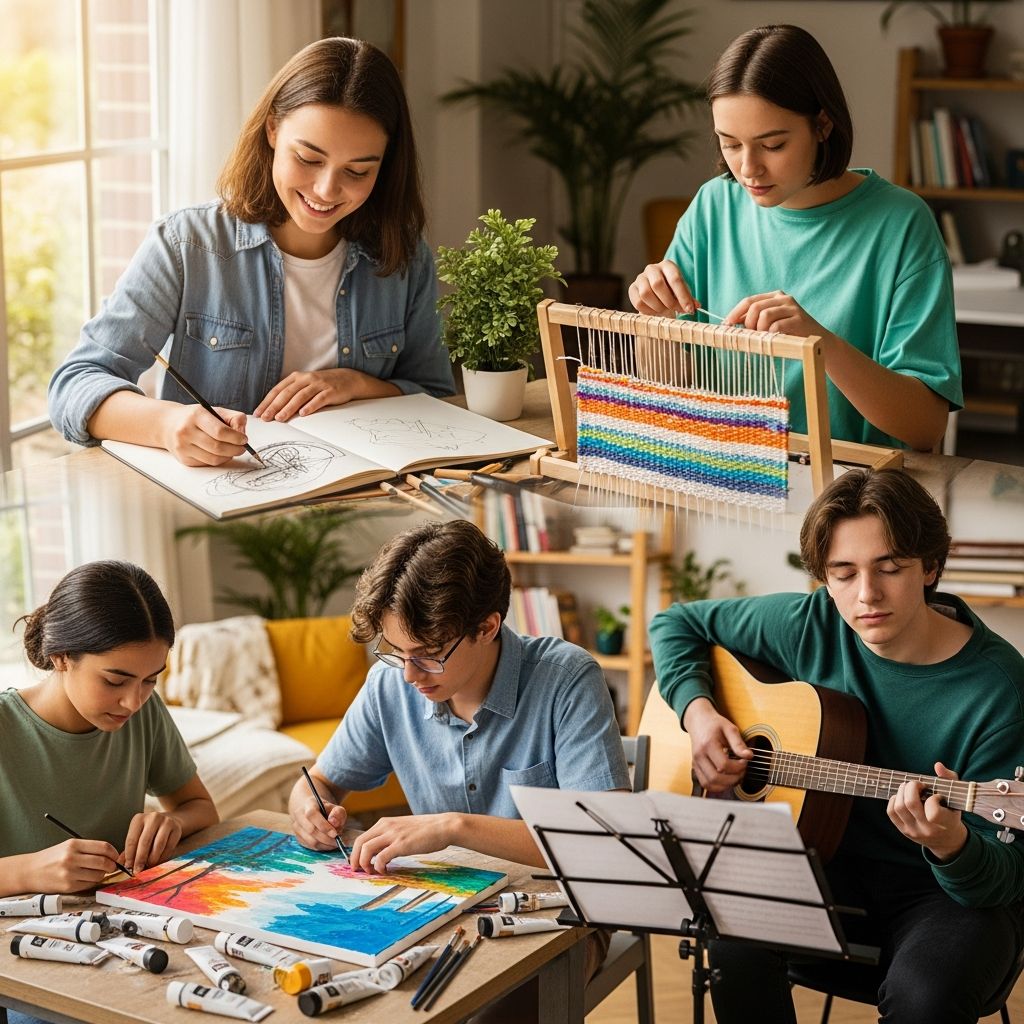
Art-based hobbies are especially helpful because they combine focus, expression, and often repetitive motions that can be soothing.
1. Drawing, Doodling, and Visual Journaling
Drawing does not need to be realistic or “good” to be therapeutic. Simple lines, doodles, and color blocks can help teens get out of their heads and into the present moment.
- Encourage “process over product”: the goal is to feel a bit calmer, not to create a masterpiece.
- Suggest visual journaling: combining quick sketches, symbols, and a few words or song lyrics.
- Offer low-stakes supplies: pencils, markers, sticky notes, or recycled paper to reduce perfectionism.
Visual activities pair well with anxiety-management strategies like grounding exercises and deep breathing.
2. Crafting with Your Hands
Working with the hands can be both grounding and empowering for teens whose anxiety shows up as restlessness or racing thoughts.
- Fiber crafts: simple knitting, crochet chains, friendship bracelets, or latch hook rugs.
- Paper crafts: collage, zines, origami, or making cards.
- Clay and sculpting: air-dry clay trinkets, tiny sculptures, or fidget objects.
The repetitive motions in these crafts echo elements of progressive muscle relaxation and mindfulness, both recommended in teen anxiety programs.
3. Music as a Regulating Hobby
Music can be a powerful way to influence mood and regulate emotions.
- Learning an instrument slowly, one short song at a time.
- Experimenting with simple beat-making apps or free software.
- Creating playlists for different emotional states: “winding down,” “need courage,” or “study focus.”
While not a replacement for therapy, intentionally using music can support coping plans that therapists often help teens build.
Movement-Based Hobbies That Ease Tension
Anxiety often shows up in the body as tight shoulders, headaches, or stomachaches. Movement hobbies can gently discharge that physical tension without the pressure of competitive sports.
4. Gentle Strength and Stretching
Short, approachable movement routines can help teens notice the connection between their body and mood.
- Bodyweight exercises like planks, wall sits, or slow lunges that require focus on the present moment.
- Stretching routines before bed to help transition away from screens and into sleep.
- Yoga-inspired flows focusing on breathing and simple poses rather than flexibility goals.
Deep breathing and progressive muscle relaxation—often woven into these activities—are core tools in many evidence-based anxiety programs for teens.
5. Mindful Walking and Nature Time
Nature-based hobbies can be appealing for teens who feel trapped by school, social media, or constant notifications.
- Short “sensory walks”: noticing 5 things they see, 4 things they feel, 3 things they hear, 2 they smell, 1 they can taste—an exercise similar to grounding techniques used in anxiety treatment.
- Casual photography of leaves, shadows, animals, or cityscapes.
- Urban nature spotting: birds, small plants in sidewalk cracks, interesting clouds.
These hobbies encourage teens to shift attention outward, a useful counterbalance to internal worry spirals.
Quiet Focus Hobbies for Overactive Minds
Some anxious teens feel safest with predictable, structured activities. Hobbies that involve patterns, steps, or clear rules can feel calming instead of restrictive.
6. Puzzles, Building, and Strategy Games
Logical, structured hobbies can offer a sense of control and achievable challenge.
- Jigsaw puzzles they can leave out and revisit in short bursts.
- Building sets (blocks, model kits, DIY cardboard builds) with clear instructions.
- Turn-based games (digital or board-based) that do not require fast reflexes or online chat.
For socially anxious teens, cooperative games with a trusted friend or family member can be a low-pressure way to connect without intense conversation demands.
7. Simple Cooking and Baking
Kitchen-based hobbies can support both independence and sensory soothing.
- Starting with very simple recipes (smoothies, mug cakes, sheet-pan meals).
- Using checklists so steps are clear and overwhelming parts (like using the stove) can be added later.
- Focusing on pleasant sensory details: smells, textures, the sound of chopping or stirring.
Breaking a task into small steps is similar to “ladder” or hierarchy approaches used to help teens face anxiety-provoking situations gradually.
Social and Service-Oriented Hobbies
Not every anxious teen wants group activities, but connection and purpose can be powerful antidotes to the isolation that anxiety often creates.
8. Low-Pressure Group Activities
For teens who are ready, it can help to start with social hobbies that don’t revolve around intense eye contact or constant talking.
- Art clubs, maker spaces, or library programs where everyone is focused on their own project.
- Interest-based groups (coding, robotics, anime, books, fandoms) that give built-in conversation topics.
- Casual sports or movement meetups with drop-in formats.
These activities can form part of a gentle, real-life exposure to feared situations, which evidence-based treatments for anxiety often encourage in small steps.
9. Helping Others and Volunteering
Some teens find that focusing on others gives them a break from constantly monitoring their own thoughts and feelings.
- Short-term or one-time volunteer projects like park cleanups.
- Helping younger kids with reading, homework, or sports skills.
- Animal care volunteering if available and appropriate.
Service-oriented hobbies should never be used to deny or minimize a teen’s anxiety, but they can add a sense of meaning and competence to their week.
Tech-Integrated and Offline Balance
Technology is deeply woven into teens’ lives. Instead of only restricting it, you can help them channel it into healthier hobbies while still protecting their mental health.
10. Creative Tech Hobbies
- Digital art with basic drawing apps or free design tools.
- Intro-level coding for games, websites, or automations.
- Video projects: simple edits, montages, or mini-documentaries.
These activities can reinforce the same skills as offline hobbies—focus, planning, and creativity—while meeting teens where they already are.
11. Protecting Downtime for Offline Hobbies
At the same time, constant notifications and comparisons can fuel anxiety. Many clinical tools for teen anxiety emphasize scheduled breaks and intentional calming practices.
- Agree together on tech-free windows when offline hobbies can thrive (for example, first 30 minutes after school).
- Use calming apps or playlists to support, not replace, real-world activities.
- Model balanced use by protecting your own device-free time when possible.
How Parents and Caregivers Can Support Without Pushing
The way adults respond to a teen’s anxiety—and their hobbies—matters as much as the activity itself.
Practical Tips for Gently Encouraging Hobbies
- Offer, don’t insist: Share options and supplies, but let the teen choose if and when to try them.
- Start tiny: Suggest five minutes, not an entire afternoon. Small, consistent practice is how many anxiety tools work best.
- Normalize experimentation: It is healthy to try a hobby and decide it is not a fit.
- Celebrate effort, not outcome: Praise their willingness to try, problem-solve, and come back after setbacks.
- Join in when invited: Family participation can make relaxation skills and hobbies feel more natural and less like homework.
When Hobbies Are Not Enough
Hobbies are a support, not a substitute for appropriate mental health care. Consider reaching out to a healthcare or mental health professional if you notice:
- Persistent physical symptoms like headaches, stomachaches, or trouble sleeping.
- Withdrawal from friends, school, or activities they previously enjoyed.
- Intense worry that interferes with daily life or leads to panic attacks.
- Signs of self-harm, hopelessness, or thoughts about not wanting to be alive.
Evidence-based treatments such as cognitive behavioral therapy, combined with self-management tools like relaxation exercises and gradual exposure, have been shown to help many anxious teens. Hobbies can be woven into these plans as practical, enjoyable ways to practice skills and reclaim a sense of joy.
Frequently Asked Questions (FAQs)
How many hobbies should an anxious teen have?
One or two activities they genuinely enjoy and can return to regularly are enough. Too many options can feel overwhelming; depth matters more than variety.
What if my teen quits every hobby after a week?
Short experiments are normal, especially when anxiety makes commitment feel risky. Keep supplies accessible, avoid criticism, and quietly notice what they return to most often.
Are competitive sports a bad idea for anxious teens?
Not necessarily. Some anxious teens thrive in structured sports, while others feel overwhelmed by performance pressure. Ask how their body and mood feel before and after practices to guide decisions.
How can hobbies support therapy for anxiety?
Therapists often teach skills such as relaxation, grounding, and gradual exposure. Hobbies offer real-life spaces to practice those skills in low-stakes, enjoyable ways.
What if my teen only wants screen-based hobbies?
Instead of banning screens outright, start by steering them toward creative or skill-building digital activities, then gently introduce short, predictable offline hobby times that do not feel like punishment.
References
- Guided Self-Management Tools for Anxiety: Parents of Teens 13–17 — Boston Children’s Hospital. 2022-11-01. https://www.childrenshospital.org/sites/default/files/2022-11/Guided%20Self-Management%20Tools%20for%20Anxiety%20-%20Parents%20of%20Teens%2013-17.pdf
- An Anxiety Self-Help Workbook for Young People in Secondary School — Cardiff & Vale University Health Board / NHS Wales. 2020-08-18. https://cavuhb.nhs.wales/files/resilience-project/rp-changes-18-8/anxiety-self-help-workbook/
- Guided Self-Management Tools for Anxiety (Teen Version) — Boston Children’s Hospital. 2022-11-01. https://www.pediatricassociatesct.com/storage/app/media/handouts/anxiety/CN-Guided-Self-Management-Tools-for-Anxiety-Teens-13-17.pdf
- How to Help Your Teenager With Anxiety — Canyon Ridge Hospital. 2023-04-10. https://canyonridgehospital.com/blog/how-to-help-your-teenager-with-anxiety/
- Anxiety – Activities – High School (9–12) — Grand Haven Area Public Schools (GHAPS). 2021-09-01. https://www.ghaps.org/parents/socialemotional-wellness/high-school-9-12/activities/anxiety/